Ugba
Nigeria, West Africa
Understanding : Ugba
🌿 UGBA: IDENTITY AND ORIGINS
Ugba is a traditional fermented food well-known in Nigerian cuisine, especially among the Igbo, where it holds a deep place in food history, family meals, and cultural habits. It is obtained from the seeds of the African oil bean tree, or Pentaclethra macrophylla, which grows in several areas of West Africa. After cooking, peeling, slicing, and fermenting, these seeds transform into a product with a powerful aroma, a supple texture, and a unique taste. In some regions, it is considered a simple everyday ingredient; in others, it is perceived as a true symbol of tradition and savoir-faire.
Ugba is not just food. It is a marker of culinary memory. It evokes home cooking, local markets, gestures learned from mothers and grandmothers, and the patience required for fermentation. Like many African condiments, it shows that food transformation is an integral part of the continent's gastronomic culture. Its importance thus extends far beyond its immediate use in dishes.
Where to find it
Look for the exact food-grade form required by the recipe at markets and specialist shops. Check the product name, ingredients, condition and storage instructions.
Explore further: Cooking tips · Food hygiene and safety advice.
History and uses
🍲 ITS PLACE IN AFRICAN CUISINE
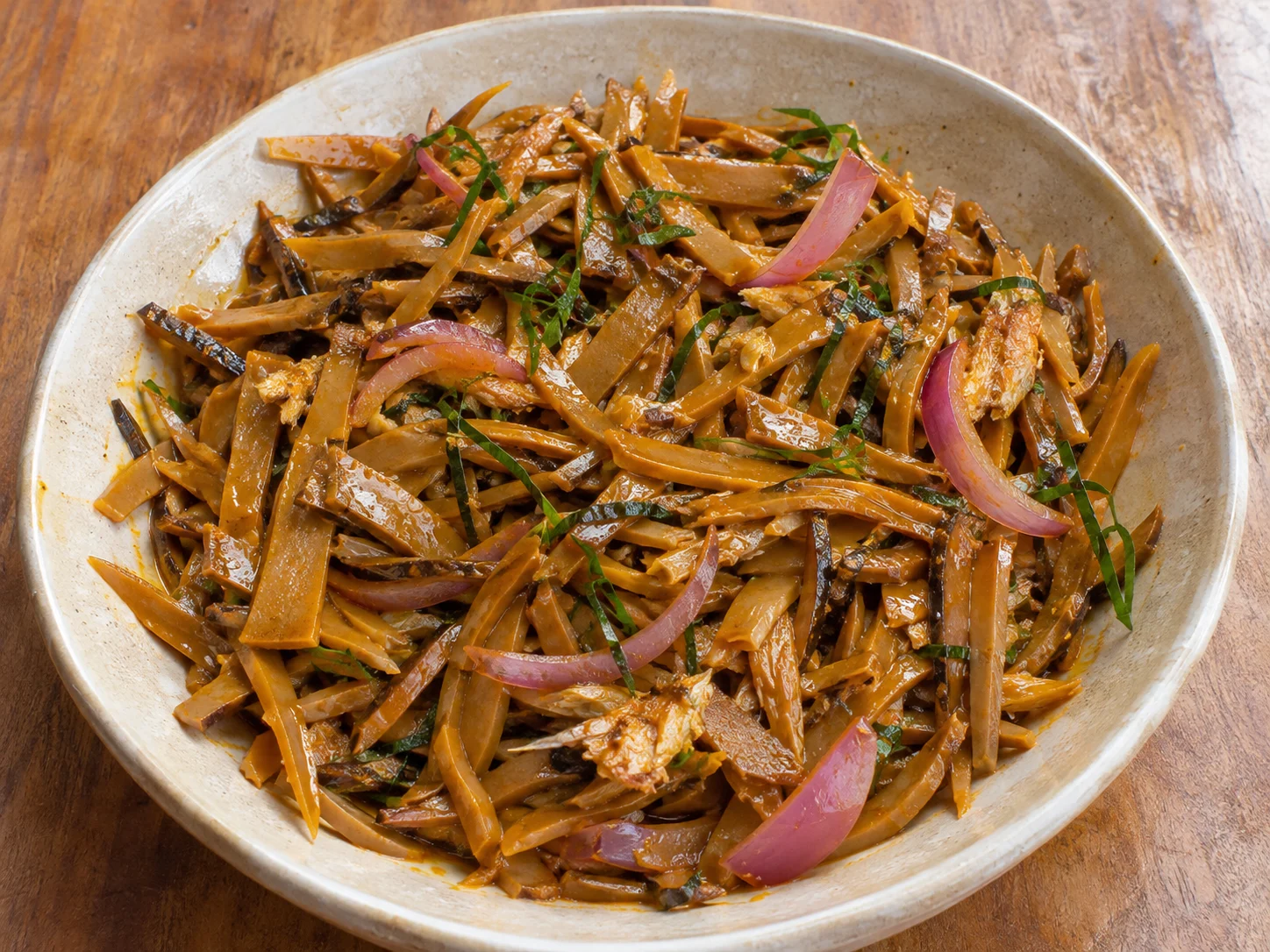
In African cuisine, ugba holds a very special place because it illustrates both the richness of fermented condiments and the diversity of textures used in traditional meals. It is often consumed as a main ingredient in a salad, as a side dish, or as a component of a more complex preparation. It is notably found in ugba and okporoko, a popular mix with dried fish, palm oil, onion, chili, and sometimes local vegetables or spices. This combination results in a dish that is simple, nourishing, and very expressive.
Ugba is one of those foods that add depth to African cuisine without requiring many expensive ingredients. Its deep, slightly fermented taste provides a strong aromatic base. In African cuisines, the taste logic often relies on the balance between several elements: chili, oil, vegetables, proteins, local condiments, and sometimes bitter leaves or smoky flavors. Ugba integrates perfectly into this flavor architecture.
It can be said that it belongs to the large family of products that structure the culinary identity of West Africa. Like soumbala, afitin, dawadawa, or ogiri, it testifies to the importance of fermentation in food preservation and transformation. These products do not just serve to nourish. They tell a story of cooking with time, observation, and local intelligence.
🫘 FLAVOR, TEXTURE, AND USES
Ugba possesses a complex flavor. It is slightly acidic, fermented, bittersweet, sometimes woody or earthy depending on the fermentation duration and preparation method. Its aroma is very recognizable and can be surprising when discovered for the first time. However, for those who have known it since childhood, this smell immediately evokes family meals, festive days, and home cooking.
Its texture is one of its great assets. The fermented seeds become tender but retain some firmness, allowing them to be cut into thin strips or pieces. This texture makes it a pleasant ingredient to chew and easy to combine with other foods. Often, it is seasoned with palm oil, raw or fried onions, chili, smoked fish, dried shrimp, or local seasonings. It can be served cold or slightly warmed, depending on regional customs.
In my books

Continue exploring the continent’s cuisines with Africa at the Table — 54 countries, 54 iconic dishes, by Alioune FALL. This book is in English.
Explore further
Ugba is also very versatile. It pairs well with starches like fufu, yam, akpu, gari, eba, or rice. It can be enjoyed as a starter salad, a nourishing snack, or a side dish. This versatility explains why it is still so present in African cuisines, despite the competition from industrial foods and modern seasonings.
🌍 CULTURAL AND SOCIAL VALUE
Ugba holds an important place in the collective memory of the communities that consume it. It is often linked to gathering meals, festivities, family visits, and traditional markets. In many households, its preparation or purchase is part of a food ritual known to all. It is not just a product; it is a way to stay connected to one's roots.
Its production is also associated with artisanal know-how passed down from generation to generation. The fermentation process requires precise knowledge of time, cooking, and hygiene. In many cases, it is women who master this process and transmit it to their daughters or younger family members. This gives ugba significant economic and social value, as it fuels local sales circuits and supports small commercial activities.
Ugba also shows how African cuisine values natural resources sometimes ignored elsewhere. The seeds of the African oil bean tree are not simply consumed as they are. They are patiently transformed to become a refined food. This act reflects a way of thinking about food as something to be worked on, refined, and shared.
🥣 NUTRITIONAL AND CONTEMPORARY VALUE
Nutritionally, ugba is appreciated for its contribution of plant proteins and the benefits associated with fermentation. Fermentation can improve digestibility, develop certain aromas, and enrich the overall value of the product. Even when consumed in small quantities, it helps make a meal more complete and satisfying.
Today, ugba retains a real place in contemporary African cuisine. It is being rediscovered by chefs, food bloggers, and traditional food enthusiasts who seek to highlight local products. In cities as well as in villages, it remains a living food, capable of crossing generations without losing its identity. It can be presented in modern recipes while retaining its traditional base.
This continuity is important because it shows that African fermented foods are not relics of the past. They are part of a living heritage, capable of interacting with and enriching current cuisine. Ugba, in particular, represents this meeting between tradition and modernity very well.
🌶️ SYNONYMS AND RELATED NAMES
ukpaka fermented African oil bean seeds fermented African oil bean Igbo fermented condiment
🔑 KEYWORDS
ugba, ukpaka, Igbo cuisine, African fermentation, traditional condiment
In the kitchen : Ugba
Recipes from the site to put your knowledge into practice:
Discover these cuisines at a restaurant
Explore our restaurant and caterer directories. Choose your destination and check the establishment’s menu to confirm which dishes are offered and available.
Continue exploring
Enjoy discovering ingredients and African cuisines? Join our newsletter. The illustrated PDF 10 sauces africaines incontournables is in French and is offered after confirming a subscription to the French or bilingual edition.