Bouye Juice
Senegal
Understanding : Bouye Juice
🌿 BOUYE JUICE: ORIGIN AND IDENTITY
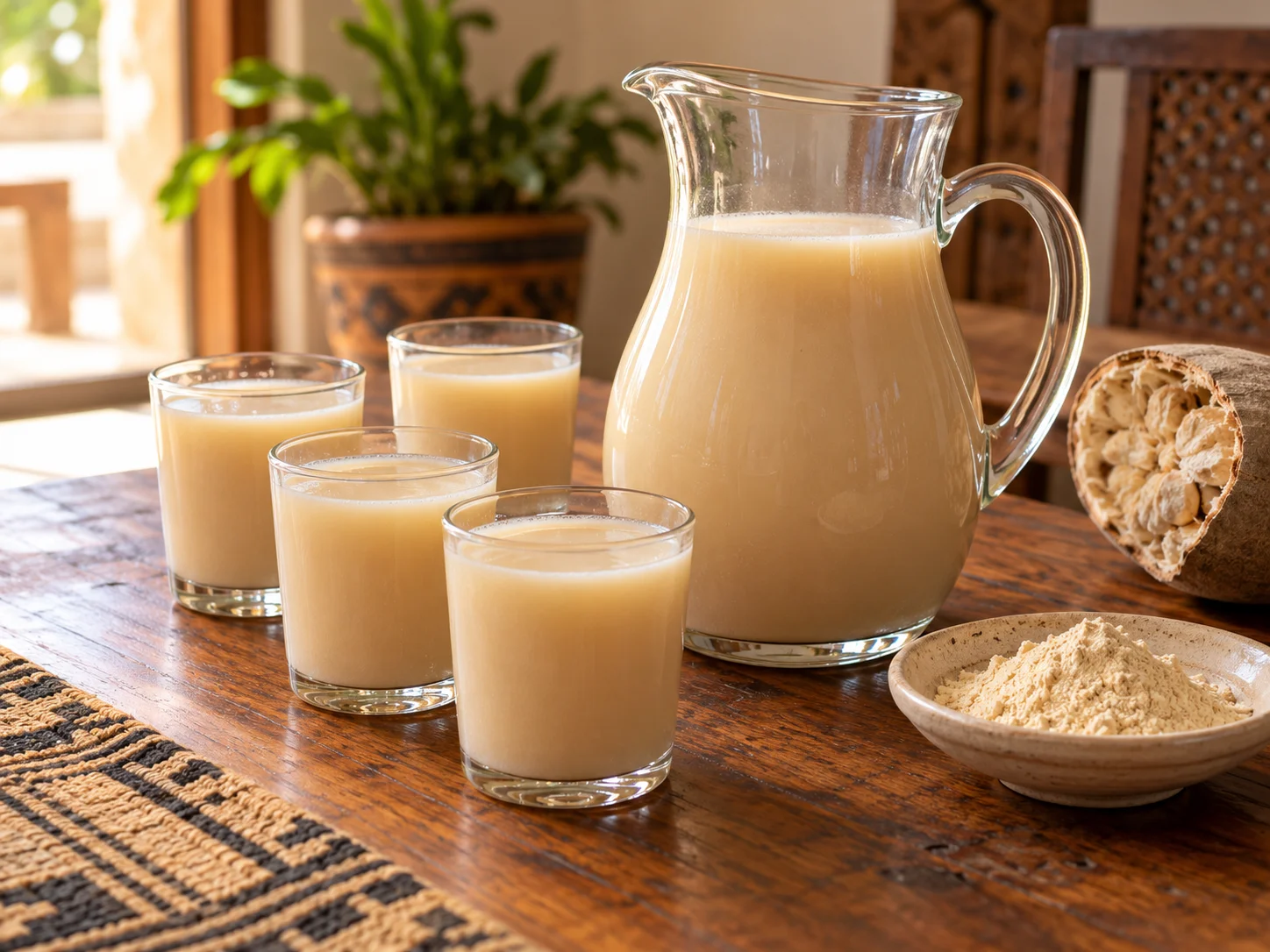
Bouye juice is a traditional drink highly appreciated in West Africa, especially in Senegal, Gambia, Mauritania, and several other countries where the baobab tree holds a significant place in daily life. It is prepared from the pulp of the baobab fruit, called bouye in Wolof. This fruit, from an emblematic tree of the African continent, has long been recognized for its nutritional qualities, its unique taste, and its strong cultural value. When we talk about bouye juice, we are not just talking about a refreshing drink: we are talking about a heritage, a symbol of conviviality, and a product deeply linked to African food identity.
Prepare this speciality
Choose a detailed recipe, adjust the portions and prepare your ingredients before starting. Our cooking tips and food safety advice complement the steps described in the recipes.
Explore further: Cooking tips · Food hygiene and safety advice.
History and uses
Bouye is distinguished by its taste, which is at once tangy, slightly sweet, and very fresh. Depending on how it is prepared, it can be sweeter, thicker, or more fragrant. It is often mixed with water, sugar, or milk, sometimes with vanilla, orange blossom, ginger, or other flavorings. This apparent simplicity actually hides great richness. Bouye juice is a perfect example of how African societies transform local natural resources into nourishing, tasty, and climate-adapted drinks.
🍹 AN ESSENTIAL PLACE IN AFRICAN CUISINE
In African cuisine, bouye juice holds a special place because it belongs to the family of traditional drinks that accompany social life, meals, and moments of sharing. In West Africa, it is consumed at home, in the street, during festivities, family ceremonies, and even in some religious or community gatherings. It is one of those drinks immediately associated with daily African life, market vendors, and childhood memories.
Its importance also stems from the fact that it meets several needs at once. First, it refreshes: in hot regions, a bouye-based drink provides a welcome sensation of coolness. Second, it nourishes: baobab pulp contains fiber, minerals, and various nutrients that give the juice a richer value than a simple sugary drink. Finally, it brings people together: serving bouye juice to guests is a way of expressing hospitality and respect.
Bouye juice is part of an African culinary logic where traditional drinks are never completely separated from food. They often accompany meals based on millet, rice, fonio, couscous, porridges, fish dishes, or sauced dishes. It can be served for breakfast, as a snack, or after a meal. Its versatility explains why it has remained so present in eating habits despite the arrival of sodas and industrial beverages.
🌍 FLAVOR, PREPARATION, AND VARIATIONS
One of the great strengths of bouye juice is its unique flavor. Baobab pulp naturally has a tangy note that somewhat resembles certain citrus fruits, but with a more earthy and rounder depth. When sugar is added, the drink becomes sweet and balanced. When milk is added, it becomes creamier and more nourishing. With ginger, it gains character and vibrancy. This ability to transform according to tastes and regions makes bouye juice a very lively drink.
In my books

Explore Senegalese cooking with Le Sénégal à table, my collection of 150 recipes, stories and traditions to share. This book is in French, by Alioune FALL.
Explore further
The traditional preparation is generally simple. The dry baobab fruit is broken open to extract the white pulp, which is mixed with water before being filtered. This liquid is then sweetened and sometimes flavored. In some recipes, bissap, tamarind, condensed milk, or yogurt are added to obtain a richer and more modern drink. In others, the raw, more natural, and authentic version is preferred. Whatever the method, bouye retains its unique identity that makes it so recognizable.
In African markets, bouye juice is often sold in bottles, sachets, cups, or jars. It is prepared artisanally by women or small producers who perpetuate local know-how. This artisanal dimension gives it a special value. It is not a standardized drink: each preparer can have her own dosage, texture, and way of flavoring it. This is also what makes it charming.
🥣 NUTRITIONAL AND CULTURAL VALUE
Bouye juice is appreciated not only for its taste but also for its nutritional qualities. Baobab pulp is known for its richness in fiber and certain minerals, as well as its ability to provide a feeling of satiety. This makes it an interesting drink in contexts where one seeks to combine pleasure and nutritional value. In many African households, it is considered both a pleasant and beneficial drink.
Culturally, bouye juice is a strong identity marker. It evokes the culinary traditions of West Africa, orally transmitted knowledge, market women, family preparations, and the importance of the baobab in the African imagination. The baobab itself is a symbolic tree, often associated with longevity, strength, and wisdom. Bouye juice somehow inherits this noble and protective image.
In cities as well as in villages, this drink remains very present. It crosses generations because it is simple to prepare, accessible, and deeply rooted in local habits. It is one of those products that show that African cuisine is not limited to solid dishes: it also includes local drinks, full of meaning and history.
🌺 A DRINK BETWEEN TRADITION AND MODERNITY
Today, bouye juice is gaining new visibility. It is increasingly found in modernized versions, sometimes sold in ready-to-drink bottles, sometimes associated with other fruits or spices. This evolution does not make it lose its soul. On the contrary, it shows that a traditional drink can continue to live and reinvent itself without breaking with its roots.
Chefs, promoters of local products, and African cuisine enthusiasts are also interested in bouye for its heritage value. It becomes a symbol of the rediscovery of authentic African flavors. In a world where consumers seek natural, original, and history-rich products, bouye juice has its rightful place. It tells the story of a creative Africa, nourished by its own plant heritage and capable of transforming a baobab fruit into an emblematic drink.
🌿 SYNONYMS AND RELATED NAMES
baobab juice bouye drink monkey bread juice bouye baobab pulp
🔑 KEYWORDS
Bouye juice, baobab, African drink, West African cuisine, culinary heritage Send message
In the kitchen : Bouye Juice
Recipes from the site to put your knowledge into practice:
Discover these cuisines at a restaurant
Explore our restaurant and caterer directories. Choose your destination and check the establishment’s menu to confirm which dishes are offered and available.
Continue exploring
Enjoy discovering ingredients and African cuisines? Join our newsletter. The illustrated PDF 10 sauces africaines incontournables is in French and is offered after confirming a subscription to the French or bilingual edition.