Makroud
Algeria, Maghreb
Understanding : Makroud
🌿 ORIGIN AND IDENTITY
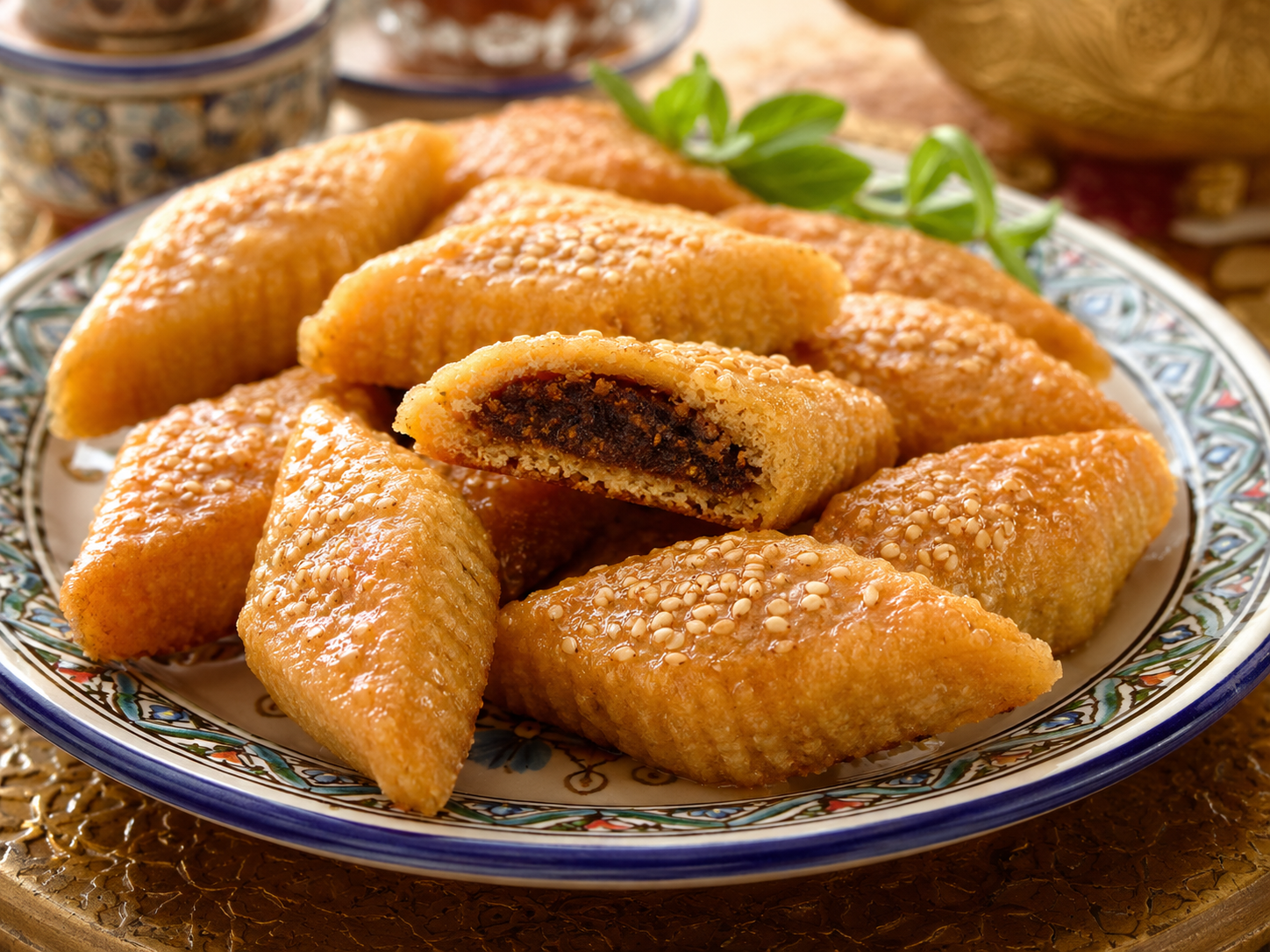
Makroud is an emblematic traditional pastry from North Africa, particularly prevalent in Algeria, Tunisia, and certain regions of Morocco and Libya. It is a semolina cake typically filled with dates, sometimes almonds, then fried or baked before being dipped in honey or a scented syrup. Its characteristic shape, often a diamond or a small, regular stick, makes it an instantly recognizable treat. Makroud is one of those sweets that transcend generations and hold an important place in family homes, religious festivals, weddings, and social gatherings.
This dessert has a strong identity because it relies on simple ingredients, but prepared with precision. Semolina, date paste, oil or butter, honey, and flavors like orange blossom water or cinnamon create a harmonious ensemble that truly represents Maghrebi pastry art. Makroud is not just a sweet cake: it is an expression of patience, precise technique, and family transmission. Its preparation requires attention, a balance in the dough and filling proportions, as well as mastery of cooking and honey coating.
Prepare this speciality
Choose a detailed recipe, adjust the portions and prepare your ingredients before starting. Our cooking tips and food safety advice complement the steps described in the recipes.
Explore further: Cooking tips · Food hygiene and safety advice.
History and uses
🍯 PLACE IN AFRICAN CUISINE
In African cuisine, makroud holds a special place as it is one of the most recognized festive pastries of the Maghreb. African cuisine is not limited to savory dishes; it also includes a rich tradition of desserts, sweets, and pastries made from cereals, dried fruits, honey, and spices. Makroud perfectly illustrates this sweet dimension of African culinary heritage. It accompanies mint tea, coffee, family gatherings, and religious celebrations. In many homes, it is prepared in advance to be served to guests or offered as a sign of hospitality.
Its importance also stems from its embodiment of a link between local resources and prestigious cuisine. Semolina, very common in North African diets, is transformed into a refined pastry. Dates, emblematic fruits of oases and Saharan regions, provide natural and nourishing sweetness. Honey, finally, gives the cake its shine, indulgence, and preservation. Thus, makroud reflects a logic of African cuisine based on the intelligent use of local products.
Makroud is also a symbol of hospitality. In Maghrebi culture, offering homemade pastries to visitors is an important gesture. Makroud is often among these sweets carefully presented on a tray, sometimes alongside gazelle horns (cornes de gazelle), baklava, ghriba, or other traditional cakes. It represents sharing, generosity, and respect for the guest. Its place in African cuisine therefore extends far beyond simple sweet pleasure: it participates in social life and the ritual of welcome.
🌾 FLAVOR, TEXTURE, AND TECHNIQUE
The taste of makroud relies on a remarkable contrast between the slightly grainy and crumbly outer dough and the soft, sweet filling hidden at the heart of the cake. Semolina provides a particular chewiness, more rustic than that of a classic cake batter. Dates, meanwhile, bring a deep, almost caramelized sweetness, often enhanced by cinnamon or orange blossom water. After cooking, dipping in honey gives makroud a shiny, melt-in-your-mouth, and deliciously sticky texture.
The preparation of makroud is a precise art. The semolina must be worked with melted butter, oil, or sometimes smen, depending on tradition, to obtain a flexible but non-sticky dough. The date filling is often flavored with cinnamon and shaped into long rolls. Then, the semolina dough is flattened, filled, rolled, and cut into regular diamonds. This geometry gives makroud its recognizable appearance. Cooking can be done in oil, for a crispier, golden result, or baked, for a lighter version. In both cases, the honey coating remains an essential step.
In my books

Continue exploring the continent’s cuisines with Africa at the Table — 54 countries, 54 iconic dishes, by Alioune FALL. This book is in English.
Explore further
What makes makroud so appreciated is also its relatively good shelf life. Like many oriental and North African pastries, it can be prepared in advance and served several days later, making it practical for parties and large gatherings. Its taste sometimes even improves in homogeneity after a resting period, once the honey has thoroughly permeated the semolina.
🌍 CULTURAL AND SYMBOLIC DIMENSION
Makroud is much more than a pastry. It is a strong cultural marker, associated with childhood memories, family kitchens, and religious festivals. In several regions of the Maghreb, it is prepared for Eid, weddings, births, or important visits. Its presence on the table often signals a moment of joy and abundance. It is one of those sweets that symbolize celebration and care for guests.
There is also a strong dimension of transmission around makroud. Recipes vary from family to family, from city to city, sometimes from country to country. Some versions are finer, others more rustic; some use pure honey, others a light syrup; some prefer frying, others baking. This diversity shows that makroud is a living heritage, constantly reinterpreted while remaining true to its original spirit.
In the African context, makroud also highlights the importance of cultural exchange in cuisine. North Africa has long been a crossroads between the Mediterranean world, the Sahara, and the rest of the continent. Makroud testifies to this history of the circulation of products, techniques, and tastes. It belongs to a large family of semolina and honey desserts that demonstrate the richness and refinement of Maghrebi pastry.
🌺 CONTEMPORARY AND GASTRONOMIC PLACE
Today, makroud retains a solid place in contemporary African cuisines. It is found in artisan bakeries, traditional pastry shops, cafes, markets, and home kitchens. It is also reinterpreted by pastry chefs who seek to lighten the recipe, modernize the presentation, or vary the fillings with dried fruits, almonds, or nuts. Despite these transformations, the heart of makroud remains the same: an alliance of semolina, sweet paste, and honey.
Its popularity also extends beyond the borders of the Maghreb. Thanks to migration, cultural exchanges, and the spread of African gastronomy, makroud is now known in many countries and appreciated far beyond its traditional birthplace. It represents a heritage African pastry, both simple in its ingredients and rich in its meaning.
🌿 SYNONYMS AND RELATED NAMES
makrout maqroud maqrout semolina makroud semolina date cake
🔑 KEYWORDS
makroud, Maghrebi pastry, semolina, dates, African cuisine
In the kitchen : Makroud
Recipes from the site to put your knowledge into practice:
Discover these cuisines at a restaurant
Explore our restaurant and caterer directories. Choose your destination and check the establishment’s menu to confirm which dishes are offered and available.
Continue exploring
Enjoy discovering ingredients and African cuisines? Join our newsletter. The illustrated PDF 10 sauces africaines incontournables is in French and is offered after confirming a subscription to the French or bilingual edition.