Moi moi
Nigeria
Understanding : Moi moi
🍽️ MOI MOI AND ITS CULINARY IDENTITY
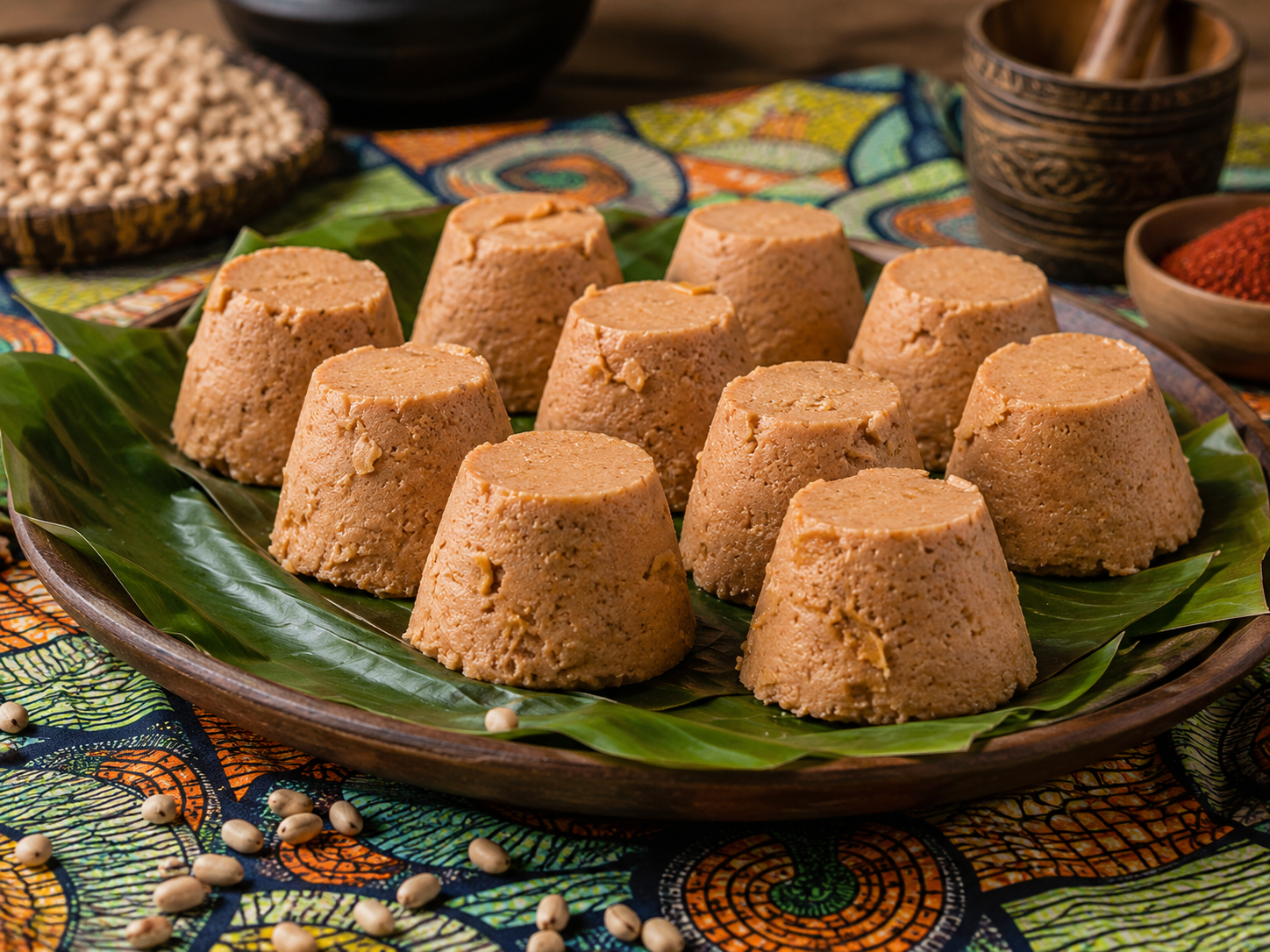
Moi moi, also called moin moin depending on the regions and linguistic habits, is a highly appreciated preparation in several West African countries, particularly in Nigeria, Benin, Togo, and some neighboring communities. It is a dish made from peeled and ground beans, mixed with onions, bell pepper, chili, oil, spices, and sometimes fish, eggs, or meat. Then, this paste is steamed or cooked in a bain-marie until it becomes firm, soft, and fragrant. The result is a nourishing dish, smooth in texture, rich in taste, and deeply rooted in West African food culture.
Moi moi is one of those recipes that showcase the creativity of African cuisines. From a simple ingredient like beans, an elegant, complete, and festive dish is obtained. It can be served for breakfast, lunch, at ceremonies, during large family gatherings, or in everyday meals. Its versatility explains its lasting popularity. It adapts to the tastes, means, and traditions of each household.
Prepare this speciality
Choose a detailed recipe, adjust the portions and prepare your ingredients before starting. Our cooking tips and food safety advice complement the steps described in the recipes.
Explore further: Cooking tips · Food hygiene and safety advice.
History and uses
🌍 PLACE IN AFRICAN CUISINE
In African cuisine, moi moi holds an important place because it well represents the art of transforming modest foods into generous dishes. Beans are a staple food in many African regions, appreciated for their protein content, their ability to satisfy hunger, and their ease of preservation. Moi moi is a refined and valued form of it. It shows that African cuisines are not only based on quantity but also on texture, seasoning, and cooking techniques.
In West Africa, moi moi often accompanies rice, garri, bread, grilled fish, ripe plantain, akara, or other popular dishes. It can be enjoyed alone, with a tomato sauce, with a cereal porridge, or with pap. In festive meals, it is often prepared in large quantities, as it is popular with many people and keeps well. Its presence on the table is often linked to sharing, hospitality, and generosity.
Moi moi also shows how African cuisine values steaming and gentle cooking. Where some preparations are fried or braised, moi moi relies on slow cooking that allows the aromas to blend harmoniously. This cooking method gives a tender yet compact texture, which is very recognizable. It reflects attentive, patient, and precise cooking.
📜 HISTORICAL AND CULTURAL CONTEXT
Moi moi is part of a long culinary history linked to beans and steaming techniques. In many West African societies, beans have always been a precious, available, nourishing, and accessible food. Their transformation into a spicy puree then cooked in leaves, molds, or ramekins shows great inventiveness. It is often thought that this preparation developed as a clever way to enrich meals without using much meat.
The cultural context of moi moi is very strong. It is often associated with family meals, ceremonies, religious celebrations, and community events. Preparing moi moi requires time, skill, and patience: one must peel the beans, blend them, season, pour into containers, and cook for a long time. This work is often collective in families, which strengthens social bonds around the dish.
In many households, moi moi also evokes the memory of mothers, aunts, grandmothers, and cooks who passed down the recipe. Each family has its habits: more or less chili, addition of eggs, fish, minced meat, palm oil, or vegetable oil. This diversity is part of its identity. Moi moi is not a fixed recipe; it is a living culinary base, which renews itself according to tastes and regions.
In my books

Continue exploring the continent’s cuisines with Africa at the Table — 54 countries, 54 iconic dishes, by Alioune FALL. This book is in English.
Explore further
🥣 TEXTURE, FLAVOR, AND TECHNIQUE
What distinguishes moi moi is its texture. Well-prepared, it should be smooth but not liquid, firm without being dry, soft without collapsing. Its flavor relies on the balance between the sweet taste of the beans, the freshness of the onion, the aroma of the bell pepper, the warmth of the chili, and the depth of the seasonings. Some add broth, smoked fish, shrimp, salt, ginger, or local spices to enrich the taste.
Steaming is essential. It allows the paste to set slowly, without burning, while retaining moisture. Moi moi can be cooked in banana leaves, corn husks, food pouches, or metal molds depending on habits and means. Each container brings a slight difference in flavor or consistency. It is a dish that requires mastery but always rewards the attention paid to its preparation.
🥗 NUTRITIONAL INTEREST
Moi moi is often considered a very interesting dish nutritionally. Beans are rich in vegetable protein, fiber, iron, magnesium, and B vitamins. This makes it a satisfying and useful food in a balanced diet. Depending on the added ingredients, moi moi can also provide lipids, calcium, phosphorus, and antioxidants.
When prepared with little oil and without excessive fatty garnishes, it is a relatively healthy dish. It can be suitable for people looking for a more plant-based or lighter diet. In combination with rice, plantain, or vegetables, it can make a complete meal. This is one of the reasons why it is so popular in modern African cuisine as well as in traditional cuisine.
🍚 ACCOMPANIMENTS AND USES
Moi moi is served in several ways depending on the regions and occasions: with jollof rice or white rice with bread for breakfast with garri or pap with fried ripe plantain with grilled fish with spicy tomato sauces with other festive dishes
It can be eaten hot, warm, or sometimes cold depending on preferences. In street food, it is often sold in individual portions. In families, it is cut into generous portions and shared in the center of the table. It pairs very well with cold drinks, natural juices, or light tea.
🔁 SYNONYMS AND SIMILAR NAMES
Moi moi can also be called, depending on the context, moin moin, bean pudding, bean cake, savory bean flan, bean terrine, or steamed bean preparation. These expressions are not always strictly equivalent, but they help to understand its culinary nature. The most common word varies depending on the language, region, and family tradition.
✨ CONCLUSION
Moi moi holds a precious place in African cuisine, especially in West Africa, where it embodies both the simplicity of ingredients and the richness of know-how. A dish for sharing, celebration, and everyday life, it shows how African cuisines know how to elevate basic foods. Its soft texture, nutritional value, versatility, and cultural roots make it an emblematic preparation. It tells the story of families, markets, traditions, and meals passed down from generation to generation. Moi moi is not just a dish: it is a living memory of African cuisine. 🌍🫘
Keywords: moi moi, African cuisine, beans, West Africa, steamed dish
Synonyms: moin moin, bean pudding, bean cake, savory bean flan, bean terrine
In the kitchen : Moi moi
Recipes from the site to put your knowledge into practice:
Discover these cuisines at a restaurant
Explore our restaurant and caterer directories. Choose your destination and check the establishment’s menu to confirm which dishes are offered and available.
Continue exploring
Enjoy discovering ingredients and African cuisines? Join our newsletter. The illustrated PDF 10 sauces africaines incontournables is in French and is offered after confirming a subscription to the French or bilingual edition.