Taktouka
Morocco, Algeria
Understanding : Taktouka
🥗 TAKTOUKA AND ITS CULINARY IDENTITY
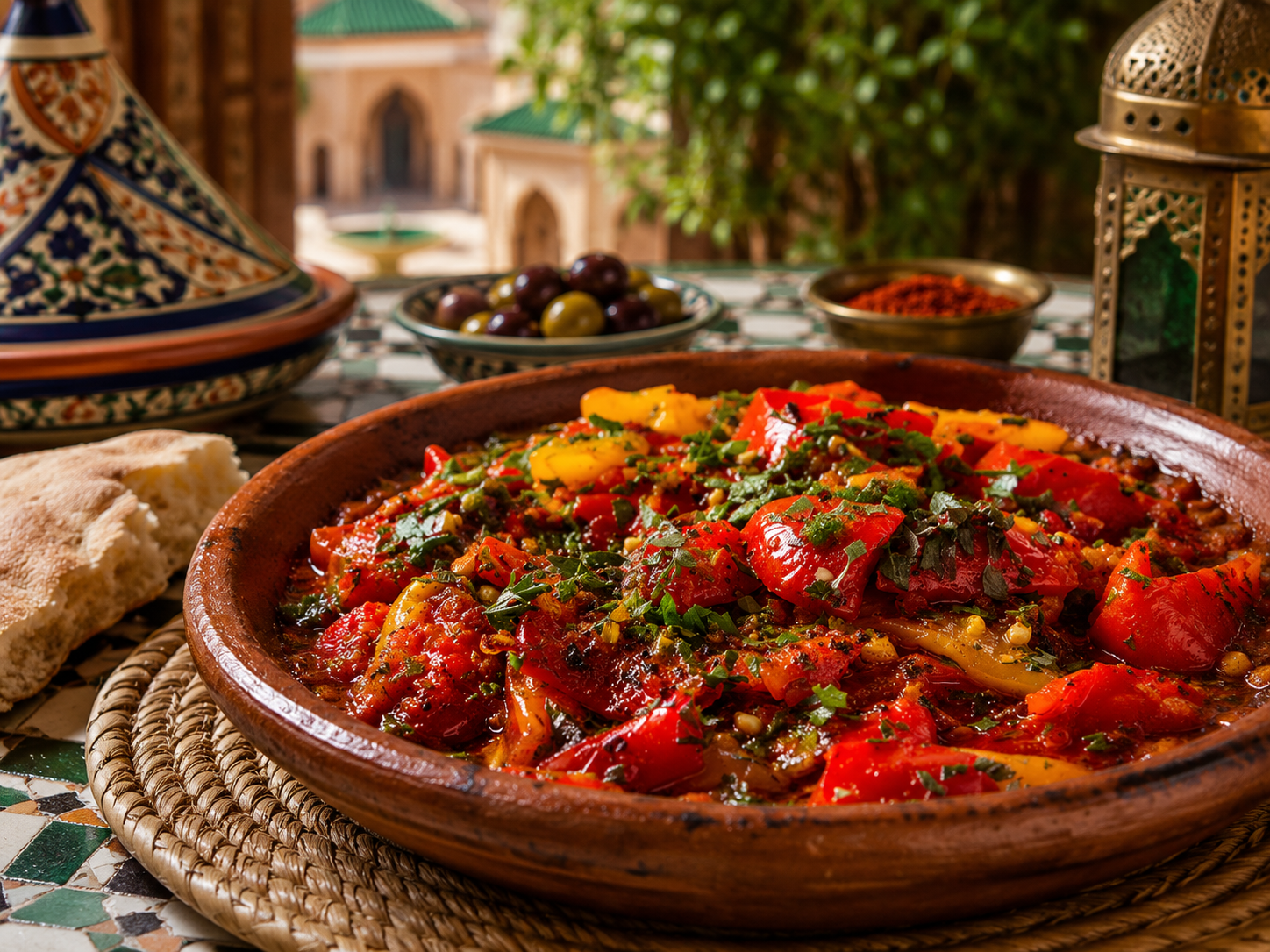
Taktouka is an emblematic preparation of Maghrebi cuisine, particularly popular in Morocco and Algeria, which holds an important place in the world of cooked salads and African and North African mezze. It is mainly composed of grilled or sautéed green and red bell peppers, ripe tomatoes, garlic, olive oil, paprika, cumin, and sometimes a little chili. The result is a warm or lukewarm, melting, fragrant, and slightly smoky salad, both simple and deeply flavorful. Its soft, almost candied texture makes it a very popular side dish with bread, grilled meats, fish, or other table dishes.
Prepare this speciality
Choose a detailed recipe, adjust the portions and prepare your ingredients before starting. Our cooking tips and food safety advice complement the steps described in the recipes.
Explore further: Cooking tips · Food hygiene and safety advice.
History and uses
Taktouka is a dish that perfectly illustrates the art of transforming modest vegetables into a preparation rich in character. It does not need meat to be generous, as it relies on the intensity of well-cooked vegetables and the depth of spices. In many homes, it is served as a starter, side dish, or a small sharing dish. It seduces as much by its aroma as by its vibrant color, between the red of tomatoes and peppers and the green of herbs or sweet chilies.
🌍 ITS PLACE IN AFRICAN CUISINE
In African cuisine, taktouka naturally finds its place in the large family of preparations based on grilled vegetables, warm salads, and side dishes that punctuate family meals and festive tables. North Africa, in particular, places great value on stewed vegetables, cooked salads, and dishes with olive oil. Taktouka fits into this tradition by highlighting very accessible products: tomatoes, bell peppers, garlic, and spices.
It represents a cuisine of season, market, and patience. Vegetables are chosen ripe, well-flavored, then cooked gently to develop their natural sweetness. In daily meals, taktouka accompanies fresh bread, eggs, sardines, skewers, or tagines. In more festive meals, it is part of a set of small starters served in the center of the table, as an invitation to share. This logic of conviviality is very present in African cuisines, where people like to arrange several dishes at the same time so that everyone can compose their plate according to their desires.
Taktouka also reflects an important dimension of African cuisine: the valorization of taste over complexity. With few ingredients, a very expressive result is obtained. It is a cuisine based on fire, oil, aromatics, and time. It shows that culinary refinement does not necessarily depend on the number of ingredients, but on how they are treated.
🔥 HISTORY AND CULTURAL CONTEXT
The history of taktouka is linked to the culinary traditions of the Maghreb, influenced by Amazigh, Arab, Mediterranean, and Andalusian cultures. Like many recipes from this region, it was built around a close relationship with seasonal vegetables, olive oil, and imported or locally grown spices. Bell peppers and tomatoes, once integrated into eating habits, gave rise to many preparations where slow cooking allows their flavors to concentrate.
Culturally, taktouka is often associated with the simplicity of everyday life as well as the generosity of guest meals. It is a dish that is readily prepared at home, without excessive solemnity, but with care. It belongs to those recipes found in cafes, traditional restaurants, and family tables. Some families serve it cold in summer, others lukewarm in winter, depending on habits and desires.
In some regions, taktouka accompanies moments of breaking the fast, communal meals, or large Friday gatherings. It then embodies a form of comfort food, easy to share and pleasant to enjoy with bread. Its smoky aroma, due to grilled bell peppers, also recalls ancient methods of cooking over fire or in an oven, very present in traditional African cuisines.
In my books

Continue exploring the continent’s cuisines with Africa at the Table — 54 countries, 54 iconic dishes, by Alioune FALL. This book is in English.
Explore further
🍅 FLAVORS, TEXTURE, AND TECHNIQUE
Taktouka is distinguished by its balance between sweetness, acidity, and the aroma of spices. Tomatoes provide a juicy and slightly acidic base. Grilled bell peppers give roundness, a smoky note, and a slight sweet taste. Garlic enhances the whole. Paprika and cumin add depth, warmth, and complexity. Olive oil binds the flavors and provides a silky texture.
The success of taktouka relies on slow cooking. The vegetables must become tender without turning into a liquid purée. The preparation must remain supple, with a texture similar to a rustic compote. The whole can be served hot, lukewarm, or cold, according to preference. In some households, the vegetables are mashed very finely; in others, they are left more textured. This freedom is one of the great strengths of the dish.
Another important aspect is the quality of the vegetables. A good taktouka depends on ripe tomatoes and flavorful bell peppers. When grilled before being mixed, they develop a highly appreciated aromatic intensity. It is this grilled touch that gives the dish its full personality.
🥗 NUTRITIONAL VALUE AND DIETARY INTEREST
Taktouka is generally considered a light and nutritionally interesting dish. It contains few calories when prepared with a reasonable amount of oil. Tomatoes provide antioxidants, especially lycopene, as well as vitamins. Bell peppers are rich in vitamin C and antioxidant compounds. Garlic is often associated with traditional health benefits in the diet. Olive oil provides good quality unsaturated fats.
This dish is well suited for a balanced diet, especially when combined with wholemeal bread, vegetables, or proteins such as eggs, fish, or legumes. It can also be integrated into vegetarian menus. Its main richness comes from the density of its flavors rather than its heaviness. It is a preparation that gently satisfies and accompanies a variety of meals well.
🍞 SIDE DISHES, DRINKS, AND USES
Taktouka pairs very well with:
Moroccan bread or traditional bread flatbreads fried or poached eggs grilled fish skewers tagines olives fresh cheese in some modern versions For drinks, it goes well with:
mint tea fresh lemon water orange juice a light herbal drink sweet black tea It can be served as a warm starter, as a table salad, as a filling for a sandwich, or as a side dish for a main course. This versatility explains its lasting popularity in homes and restaurants alike.
🔁 SYNONYMS AND SIMILAR NAMES
Taktouka can also be described, depending on the context, as:
pepper and tomato salad Maghrebi cooked salad vegetable compote warm pepper salad grilled pepper preparation These expressions are not entirely interchangeable, but they help to place the recipe within the family of cooked and seasoned vegetable dishes from the Maghreb.
✨ CONCLUSION
Taktouka holds an important place in African cuisine, especially in North Africa, where it embodies the generosity of vegetables, the taste of fire, and controlled simplicity. It is a dish that connects everyday meals to festive tables, family memories to the broader culinary traditions of the Maghreb. Its melting texture, grilled pepper aroma, and tomato freshness make it a preparation appreciated by all generations. It represents a cuisine of sharing, season, and just taste, deeply rooted in African eating habits.
KEYWORDS: taktouka, African cuisine, bell peppers, tomatoes, Maghreb
SYNONYMS: pepper and tomato salad, Maghrebi cooked salad, vegetable compote, warm pepper salad, grilled pepper preparation
In the kitchen : Taktouka
Recipes from the site to put your knowledge into practice:
Discover these cuisines at a restaurant
Explore our restaurant and caterer directories. Choose your destination and check the establishment’s menu to confirm which dishes are offered and available.
Continue exploring
Enjoy discovering ingredients and African cuisines? Join our newsletter. The illustrated PDF 10 sauces africaines incontournables is in French and is offered after confirming a subscription to the French or bilingual edition.