Salade méchouia
Tunisia
Understanding : Salade méchouia
🥗 SALADE MÉCHOUIA AND CULINARY IDENTITY
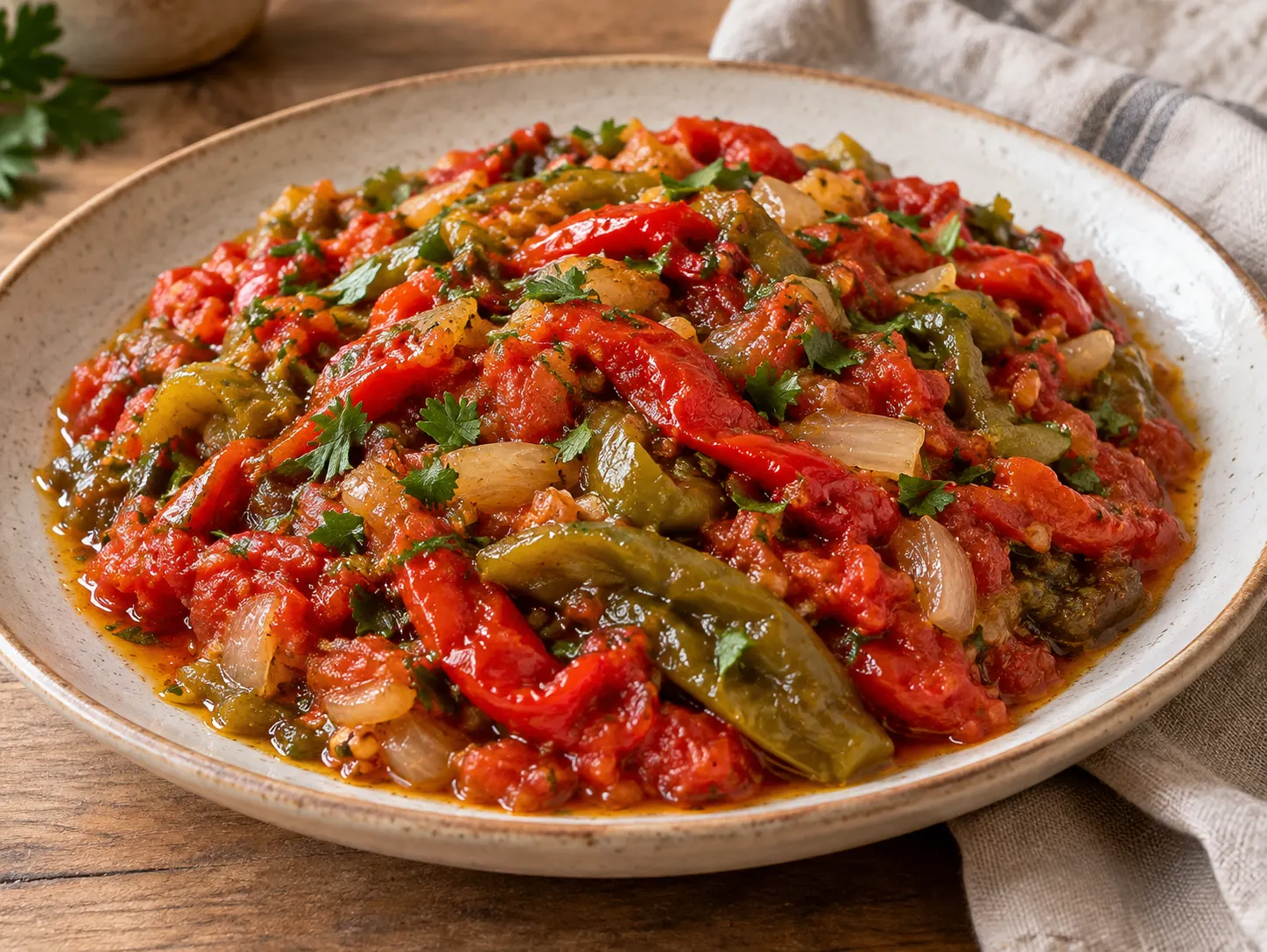
Salade méchouia is one of the most iconic preparations in Tunisia, and more broadly in North African and Maghrebi cuisine. It is mainly composed of tomatoes, bell peppers, garlic, sometimes onions, all grilled or roasted, then finely chopped and seasoned with olive oil, salt, pepper, cumin, and often a little chili. In some versions, tuna, hard-boiled eggs, capers, or olives are added, making it a simple yet colorful, nourishing, and generous salad. Its texture is melting, slightly smoky, sometimes spicy, and its taste immediately evokes the sun, ripe vegetables, and fire-cooked cuisine.
Prepare this speciality
Choose a detailed recipe, adjust the portions and prepare your ingredients before starting. Our cooking tips and food safety advice complement the steps described in the recipes.
Explore further: Cooking tips · Food hygiene and safety advice.
History and uses
The word "méchouia" comes from the idea of grilled or roasted. This fire cooking gives the salad its personality: the vegetables are not just cooked, they are transformed. Their natural sugars concentrate, their skin sometimes blackens slightly, and a smoky note appears in the tender flesh. It is precisely this combination that makes salade méchouia so appreciated. It is not a simple raw salad, but a cooked preparation, rich in flavors, which can accompany a main meal or become a starter in its own right.
🌍 PLACE IN AFRICAN CUISINE
In African cuisine, salade méchouia holds a very important place, especially in North Africa. It perfectly represents the art of cooking vegetables with few ingredients but a lot of know-how. North African cuisine has long valued garden produce, grilling, olive oil, fresh herbs, and spices. Salade méchouia fits into this tradition by focusing on simple, accessible, and abundant vegetables in Mediterranean regions.
It is particularly present in Tunisia, but it is also found in similar variants in Algeria, Morocco, and other cuisines of the African Mediterranean basin. In daily meals, it accompanies bread, fish, grilled meats, or stews. In festive meals, it is often part of an assortment of starters served before the main dish. It thus symbolizes conviviality, abundance, and hospitality, three very strong values in many African cultures.
Salade méchouia also shows how African cuisine makes the most of seasonal vegetables. When tomatoes and bell peppers are ripe, they are grilled and then transformed into a flavorful salad that retains the imprint of fire. This way of cooking is closely linked to Mediterranean and Saharan customs, where direct cooking over embers, on a griddle, or in an oven has long been mastered. Salade méchouia thus tells an ancient story of the relationship between territory, climate, fire, and food.
🔥 HISTORY AND CULTURAL CONTEXT
The history of salade méchouia is part of Maghrebi culinary traditions, influenced by Amazigh, Arab, Andalusian, and Mediterranean cultures. Grilled vegetables are part of a very ancient heritage, as fire has always been an essential means of cooking and preserving taste. Tomatoes and bell peppers, once well adapted to local cuisines, found in this recipe an ideal ground to express all their aromatic richness.
Culturally, salade méchouia is a dish for sharing and exchange. It is readily served in family meals, traditional restaurants, during festivities, or large gatherings. It is often offered as a starter with fresh bread, tuna, olives, or eggs. In some families, it is prepared in large quantities because everyone likes it and it can be kept cool for a while. It is a salad that bridges the gap between everyday simplicity and the sophistication of festive tables.
In Tunisian culinary culture, it is particularly appreciated during warm weather, as it can be served lukewarm or cold. Its freshness makes it a very pleasant dish in summer, while its grilled vegetable aromas give it a depth that remains interesting all year round. It therefore reflects a practical, elegant, and deeply taste-driven cuisine.
In my books

Continue exploring the continent’s cuisines with Africa at the Table — 54 countries, 54 iconic dishes, by Alioune FALL. This book is in English.
Explore further
🍅 FLAVORS, TEXTURE, AND TECHNIQUE
Salade méchouia relies on a remarkable balance between sweetness, smokiness, slight acidity, and spicy character. Tomatoes provide a melting texture and moisture. Bell peppers give a sweet and slightly sugary flavor. Garlic offers depth. Cumin brings a warm and earthy note. Chili, when used, adds dynamism. Olive oil binds everything together and gives a silky texture.
The success of the salad largely depends on the cooking of the vegetables. They must be well grilled, until the skin can be easily removed and the flesh is tender. Once peeled, they are finely chopped or crushed according to preference. Some versions are very smooth, almost like a rustic purée, while others retain small pieces for more texture. The result must remain consistent, flavorful, and well-seasoned.
It is a salad that lends itself to many variations. You can add eggs, tuna, capers, olives, lemon, or fresh herbs like parsley or cilantro. Each addition slightly changes the personality of the dish without betraying its original spirit. This is a strength of African cuisine: the ability to adapt a common base according to resources and desires.
🥗 NUTRITIONAL VALUE AND DIETARY INTEREST
Salade méchouia is often appreciated for its interesting nutritional profile. It is mainly composed of vegetables, which gives it a good density of vitamins, minerals, and antioxidants. Tomatoes notably provide lycopene, a well-known antioxidant. Bell peppers are rich in vitamin C. Garlic also has aromatic compounds often associated with a beneficial diet. Olive oil provides good quality lipids.
When the salad is served alone or with very little fat, it remains relatively light. If tuna, eggs, or more oil are added, it becomes more nourishing and complete. It can therefore be suitable for both a light starter and a more substantial dish. In any case, it retains the advantage of offering a strong intensity of taste for a moderate caloric value.
🍞 ACCOMPANIMENTS AND USES
Salade méchouia is often served with:
Tunisian bread or traditional bread hard-boiled eggs tuna olives capers grilled fish skewers grilled meat or chicken It can also accompany simpler dishes like rice, semolina, or potatoes, depending on family habits. As a starter, it opens the meal with freshness and character. As a side dish, it brings color and depth. It pairs very well with refreshing drinks, such as water, mint tea, lemon juice, or a light fruit juice.
🔁 SYNONYMS AND SIMILAR NAMES
Salade méchouia can also be called, depending on the region or context:
grilled vegetable salad grilled bell pepper and tomato salad Tunisian grilled salad compote of grilled vegetables Maghrebi cooked salad These expressions are not all perfectly equivalent, but they accurately describe the spirit of the dish. Above all, they remind us that it is a preparation of fire-cooked vegetables, seasoned and served as a salad.
✨ CONCLUSION
Salade méchouia holds an essential place in African cuisine, especially in North Africa, where it embodies the taste of fire, the generosity of vegetables, and the art of sharing. It connects ancient traditions to modern tables, family meals to festive meals, the simplicity of the market to the richness of taste. Its melting texture, grilled aroma, and beautiful color make it a preparation that is both humble and refined. It is one of those dishes that tell an entire culture through a few well-chosen and well-prepared vegetables.
KEYWORDS: salade méchouia, African cuisine, grilled vegetables, Tunisia, Maghreb
SYNONYMS: grilled vegetable salad, grilled bell pepper and tomato salad, Tunisian grilled salad, compote of grilled vegetables, Maghrebi cooked salad
In the kitchen : Salade méchouia
Recipes from the site to put your knowledge into practice:
Discover these cuisines at a restaurant
Explore our restaurant and caterer directories. Choose your destination and check the establishment’s menu to confirm which dishes are offered and available.
Continue exploring
Enjoy discovering ingredients and African cuisines? Join our newsletter. The illustrated PDF 10 sauces africaines incontournables is in French and is offered after confirming a subscription to the French or bilingual edition.