Bessara
Morocco
Understanding : Bessara
🥣 BESSARA AND CULINARY IDENTITY
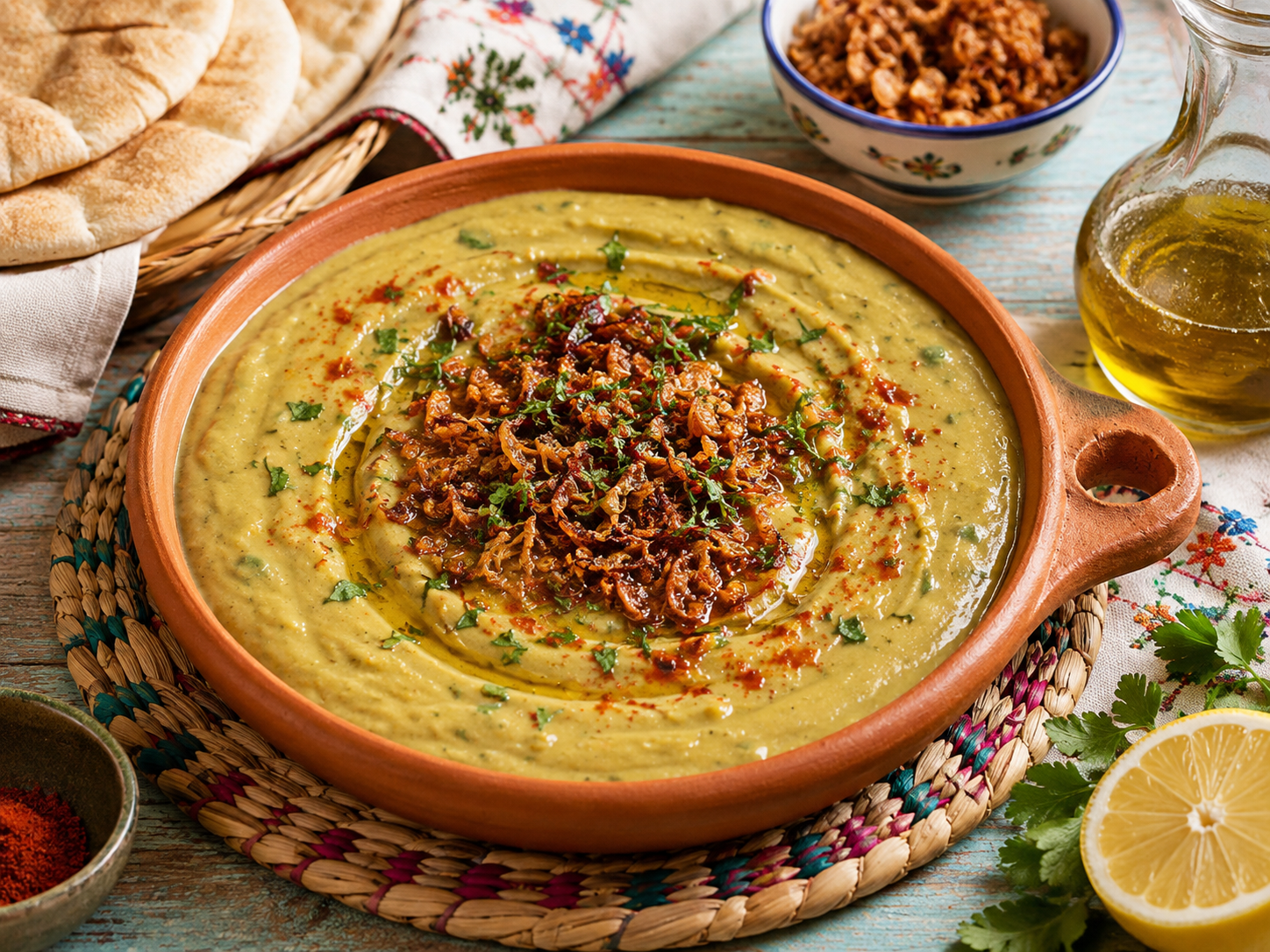
Bessara is a traditional preparation made from dried fava beans, sometimes combined with split peas or other legumes depending on the region and family customs. It is found mainly in Maghrebi cuisines, particularly in Morocco, Algeria, and some neighboring areas of North Africa. It is a thick, rustic, nourishing soup or purée, highly appreciated for its simplicity. Its velvety texture, the aroma of garlic, cumin, and olive oil, and its ability to keep you full for a long time, make it a dish deeply rooted in everyday popular life.
Bessara is not just an economical dish. It also represents a culture of simple, ingenious, and generous cooking. From a basic ingredient like fava beans, you get a complete, comforting, and very aromatic dish. It can be served hot in winter, lukewarm in spring, with a drizzle of olive oil and ground cumin, or accompanied by traditional bread. Its place in culinary memory is strong, as it evokes markets, modest homes, simple but substantial meals, and traditions passed down from generation to generation. 🌿
Prepare this speciality
Choose a detailed recipe, adjust the portions and prepare your ingredients before starting. Our cooking tips and food safety advice complement the steps described in the recipes.
Explore further: Cooking tips · Food hygiene and safety advice.
History and uses
🌍 PLACE IN AFRICAN CUISINE
In African cuisine, bessara holds an important place, particularly in North Africa, where legumes play an essential role in daily diet. Fava beans, chickpeas, lentils, and split peas are staple foods in many families because they are accessible, nutritious, and suited to Mediterranean and semi-arid climates. Bessara perfectly illustrates this food philosophy: making a lot with a little, while achieving a preparation rich in taste and energy.
It belongs to the family of thick soups, purées, and stews that hold a central place in African meals. In some regions, it is eaten for breakfast, especially in winter or on cool mornings. Elsewhere, it is served as a light main course, often with bread. This versatility allows it to transcend social contexts: family meals, street food, humble tables, or everyday cooking.
Bessara is also a symbol of popular cuisine. In Moroccan cities, for example, it is often sold in stalls, markets, and small eateries. This gives it an urban and convivial dimension. At the same time, it maintains a strong link with home cooking, the kind that brings family members together around a warm bowl. It is a dish that speaks of economy, human warmth, and know-how passed down through experience. 🫶
📜 HISTORY AND CULTURAL CONTEXT
The history of bessara is intimately linked to the ancient presence of legumes in the North African world. Fava beans were already consumed in antiquity around the Mediterranean basin, and they have retained their importance in local cuisines to this day. In societies where agriculture had to contend with limited resources and variable seasons, legumes represented a valuable source of protein and satiety.
Bessara has established itself as an everyday dish, particularly appreciated by the working classes, because it is simple to prepare and inexpensive. It is often associated with the idea of comfort food, served in large bowls, shared with family, or enjoyed in the street with warm bread. In some traditions, it marks the beginning of the day during cold periods, as it provides lasting energy.
Culturally, bessara is also a recipe of transmission. Everyone has their own way of seasoning it: more or less thick, more or less garlicky, more or less spiced with cumin or chili. Some families add lemon, others paprika, and still others fresh herbs. This diversity testifies to a living, adaptable, and deeply human cuisine. It also reflects a relationship of trust with simple and local ingredients. 🧄
🍵 FLAVORS, TEXTURE, AND TECHNIQUE
Bessara seduces with its smooth and enveloping texture. When well prepared, it becomes a thick, almost velvety cream that holds its shape on the plate or in the bowl without being dry. Its taste relies on several well-balanced notes: the earthy sweetness of fava beans, the aromatic power of garlic, the warmth of cumin, the roundness of olive oil, and sometimes a hint of chili or pepper.
In my books

Continue exploring the continent’s cuisines with Africa at the Table — 54 countries, 54 iconic dishes, by Alioune FALL. This book is in English.
Explore further
The cooking of the fava beans is essential. They must cook for a long time until very tender, so that they can then be blended or mashed into a homogeneous purée. Some recipes call for removing the skin of the fava beans to obtain a finer texture. Others accept a more rustic consistency. Olive oil is often added at the end to enhance everything, while ground cumin highlights the character of the dish. The result should be simple but profound, without excessive fat or spices.
Bessara is also distinguished by its ability to be served in several ways. It can be very thick and eaten with bread, or more fluid, almost like a soup. In all cases, it retains this identity as a nourishing, warm, and comforting dish. It is a recipe that requires patience more than complexity. ⏳
🥗 NUTRITIONAL INTEREST AND BENEFITS
Bessara is often considered a very interesting dish from a nutritional perspective. Fava beans are rich in plant proteins, fiber, and complex carbohydrates. They also provide iron, magnesium, potassium, and other minerals useful for the body. Thanks to this composition, bessara is a satisfying dish that helps you feel full for a long time without quick hunger pangs.
Olive oil provides good quality fats, while cumin and garlic enrich the preparation with aromas while contributing their traditional benefits to the diet. It is a dish that can be integrated into a balanced diet, especially if served with wholemeal bread or accompanied by vegetables. Its main richness comes from its combination of legumes and simple seasoning, making it both an economical and nourishing dish.
Bessara also has the advantage of being naturally meat-free, which makes it compatible with many diets. It can be suitable for vegetarians, people looking for a simpler diet, or those who want a light but substantial meal. 🍽️
🍞 ACCOMPANIMENTS, DRINKS, AND USES
Bessara is often enjoyed with:
traditional bread flatbreads lemon slices a drizzle of olive oil additional cumin a little chili powder sometimes olives or pickled vegetables As for drinks, it pairs well with:
mint tea fresh water light herbal tea lemon-flavored drink It can be served for breakfast, lunch, or as a simple evening meal. In markets, it is often offered in large steaming bowls, to be eaten quickly but with pleasure, especially when the weather is cool. It perfectly illustrates local cuisine, the kind that nourishes both the body and memory. ☕
🔁 SYNONYMS AND SIMILAR NAMES
Bessara can also be referred to as:
fava bean soup fava bean purée fava bean cream legume velouté rustic fava bean soup These names are not always strictly identical, as the texture can vary from one region to another. But they help to understand the spirit of the dish: a thick, simple, comforting preparation centered on fava beans.
✨ CONCLUSION
Bessara holds an important place in African cuisine, especially in North Africa, where it embodies simplicity, warmth, and culinary intelligence. It is an everyday dish that has stood the test of time thanks to its simplicity, moderate cost, and nutritional value. It shows how a humble legume can become a deeply appreciated dish, linked to family memory, markets, winter meals, and conviviality. Bessara is both modest and noble, rustic and refined, local and timeless. It powerfully represents the soul of a generous and vibrant African cuisine. 🌍
KEYWORDS: bessara, African cuisine, fava beans, Maghreb, traditional soup
SYNONYMS: fava bean soup, fava bean purée, fava bean cream, legume velouté, rustic fava bean soup
In the kitchen : Bessara
Recipes from the site to put your knowledge into practice:
Discover these cuisines at a restaurant
Explore our restaurant and caterer directories. Choose your destination and check the establishment’s menu to confirm which dishes are offered and available.
Continue exploring
Enjoy discovering ingredients and African cuisines? Join our newsletter. The illustrated PDF 10 sauces africaines incontournables is in French and is offered after confirming a subscription to the French or bilingual edition.