Fish Balls
Senegal, Ghana, Nigeria
Understanding : Fish Balls
🐟 FISH BALLS AND CULINARY IDENTITY
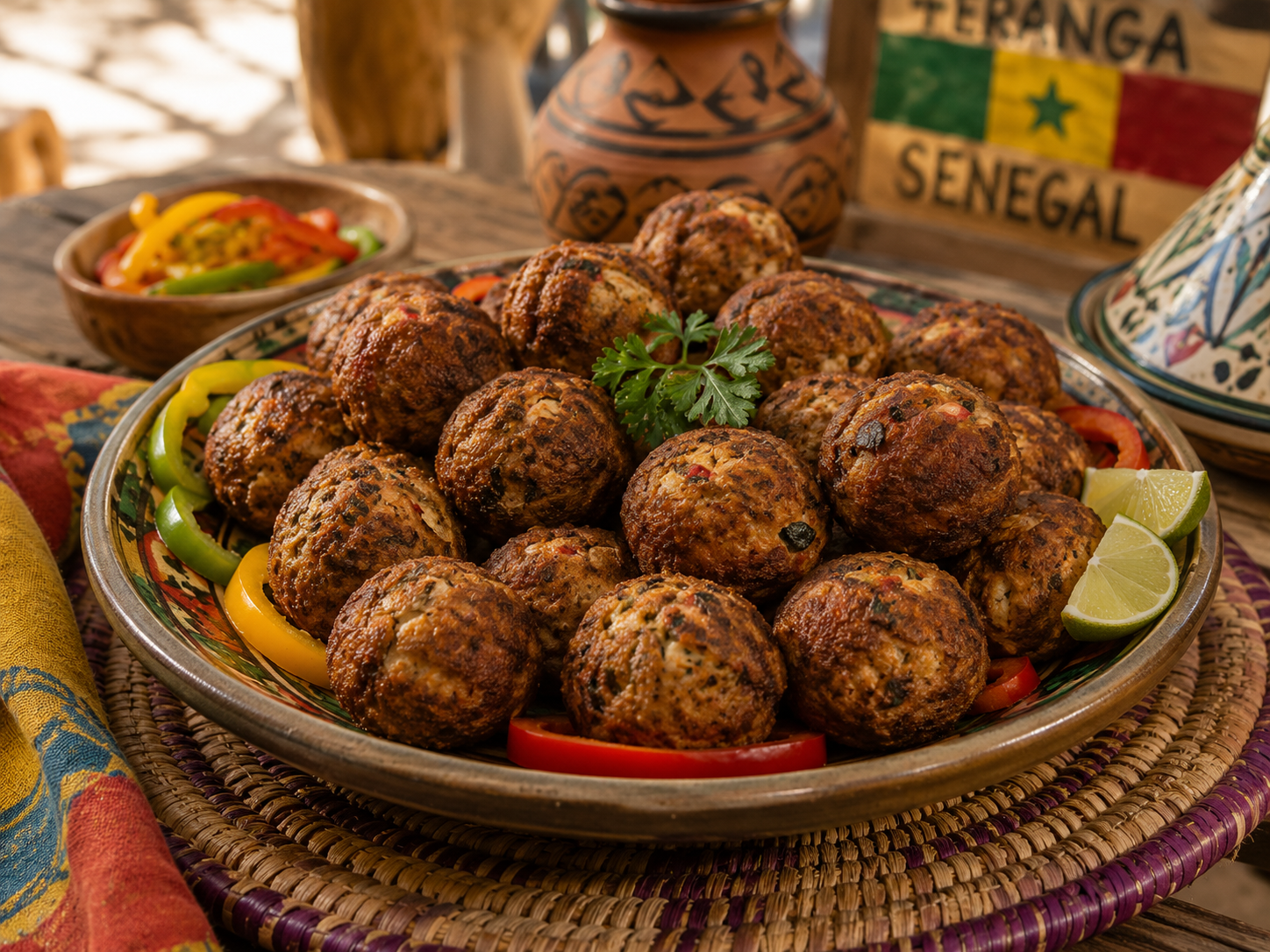
Fish balls hold a warm and delicious place in many African cuisines, especially in coastal regions where fish is abundant, accessible, and deeply integrated into dietary habits. They are prepared from flaked or minced fish meat, mixed with spices, herbs, onion, garlic, sometimes breadcrumbs, flour, potato, or egg, then shaped into small balls before being fried, pan-fried, simmered, or sometimes baked. Their appeal lies in their versatility: they can be served as a starter, main dish, or as a side dish with tomato sauce, rice, couscous, bread, or vegetables.
What makes fish balls charming is their ability to transform a simple seafood product into a convivial and refined preparation. They allow for the use of different types of fish, fresh or even sometimes pre-cooked, and to combine them with local flavors. In African homes, they often evoke family meals, fish markets, generous tables, and dishes prepared to please many people. They are both popular and elegant, modest and festive.
Prepare this speciality
Choose a detailed recipe, adjust the portions and prepare your ingredients before starting. Our cooking tips and food safety advice complement the steps described in the recipes.
Explore further: Cooking tips · Food hygiene and safety advice.
History and uses
🌍 PLACE IN AFRICAN CUISINE
In African cuisine, fish balls hold an important place in areas near coasts, rivers, and lakes, but also in large cities where seafood circulates easily. They are found in various forms in West Africa, North Africa, certain regions of Central Africa, and on African islands where fish is a major daily ingredient. They reflect a cuisine that knows how to adapt to local resources and enhance marine proteins with simple techniques.
In coastal countries, fish is often one of the main sources of animal protein. Fish balls then allow for meal variety and give a new form to a familiar ingredient. They are particularly appreciated because they can be prepared in advance, easily transported, and served in individual portions. This practicality makes them useful in family cooking as well as in street food or reception meals.
They also fit into a very African logic of shared cuisine. Fish balls can be arranged on a large plate with a sauce, fragrant rice, or a salad, then eaten communally. They express conviviality and hospitality, two values very present in African culinary traditions. They also show that seafood cuisine is not reserved for noble or complicated dishes: it can be simple, accessible, and deeply flavorful.
🔥 HISTORY AND CULTURAL CONTEXT
The history of fish balls is rooted in the long tradition of fish processing in African societies. For a long time, populations living near the sea or large waterways have developed techniques to preserve, cook, and reinvent fish. Dried, smoked, fried, simmered, or pounded fish is part of the culinary heritage of many African peoples. Fish balls extend this logic by giving a new form to fish meat.
In some cultures, they are associated with everyday family dishes. In others, they appear during celebrations, Friday meals, ceremonies, or important gatherings. Their round shape is not insignificant: it evokes abundance, completeness, and sometimes even the idea of a dish easy to share. Preparing fish balls requires care, but it also allows for creativity. Each family can modify the spices, texture, cooking method, or accompanying sauce according to their tastes.
The cultural dimension of fish balls is also seen in their adaptation to the various culinary influences present in Africa. The spices can recall Arab and Mediterranean heritage, the sauces can evoke West African traditions, and cooking methods can vary between frying and simmering depending on regional habits. It is therefore a hybrid dish, rich in circulations and encounters. 🌶️
🍅 FLAVORS, TEXTURE, AND TECHNIQUE
Fish balls entice with their tender texture and delicate taste. Fish brings a light marine flavor, which pairs very well with onion, garlic, parsley, cilantro, ginger, chili, pepper, or lemon. Depending on the recipe, white fish, firmer-fleshed fish, or even leftover cooked and deboned fish can be used. The important thing is to obtain a homogeneous but not dry paste, sufficiently bound to form balls that hold together during cooking.
In my books
Explore Senegalese cooking with Le Sénégal à table, my collection of 150 recipes, stories and traditions to share. This book is in French, by Alioune FALL.
Explore further
Frying gives a golden and crispy crust, which is highly appreciated. But fish balls can also be cooked in a spicy tomato sauce, which gives them a more tender texture and a deeper taste. In some homes, they are lightly browned before simmering. This double cooking helps maintain their shape while enriching their aroma. The technique depends on the desired result: more rustic, more tender, or crispier.
The secret to a good fish ball lies in the balance between the fish meat, the binding elements, and the seasonings. Too much flour or breadcrumbs can mask the taste of the fish. Not enough binder can make the balls fragile. A good recipe must retain the marine personality while offering a pleasant and flavorful bite.
🥗 NUTRITIONAL VALUE AND BENEFITS
Fish balls have real nutritional value, especially when prepared with little fat. Fish is an excellent source of good quality protein, generally lighter than some red meats. It also provides useful minerals like phosphorus, selenium, iodine, or potassium, as well as B vitamins.
When prepared with fresh herbs, garlic, onions, and sometimes grated vegetables, fish balls become even more beneficial. They can be accompanied by salads, steamed vegetables, or tomato-based sauces, making them a balanced meal. If fried, they become richer in calories, but remain perfectly suitable for occasional consumption as part of a varied diet.
Their advantage is also practical: they make it possible to get those who don't necessarily like whole fillets or very strong-tasting dishes to eat fish. Fish balls soften the experience while retaining the benefits of fish. They are therefore well suited for family meals, including for children. 🧡
🍚 SIDES, DRINKS, AND USES
Fish balls can be served with: white or fragrant rice, a spicy tomato sauce, couscous, traditional bread, sautéed vegetables, a fresh salad, fried plantains, potatoes.
They also pair very well with refreshing drinks like lemon water, bissap, ginger juice, or a light tea. In a complete meal, they can be placed in the center of the plate with a red sauce, a vegetable garnish, and a starchy food. They are also perfect for buffets, appetizers, and festive meals.
🔁 SYNONYMS AND SIMILAR NAMES
Fish balls can also be called, depending on the context: fish croquettes, fish bites, marine meatballs, fish patties, spicy fish balls.
These names are not always strictly identical, but they refer to the same family of preparations made from fish shaped into small portions. The nuance often depends on the shape, texture, or cooking method.
✨ CONCLUSION
Fish balls hold a prominent place in African cuisine thanks to their flexibility, taste, and ability to adapt to local realities. They reflect an intelligent cuisine that values seafood resources while transforming them into convivial and nourishing dishes. Whether fried, simmered, or served with a fragrant sauce, they tell a story of sharing, simplicity, and culinary creativity. They are both an everyday dish and a festive delicacy, capable of bringing people together around the table and celebrating the richness of African traditions.
KEYWORDS: fish balls, African cuisine, fish, frying, coastal cuisine
SYNONYMS: fish croquettes, fish bites, marine meatballs, fish patties, spicy fish balls Send message
In the kitchen : Fish Balls
Recipes from the site to put your knowledge into practice:
Discover these cuisines at a restaurant
Explore our restaurant and caterer directories. Choose your destination and check the establishment’s menu to confirm which dishes are offered and available.
Continue exploring
Enjoy discovering ingredients and African cuisines? Join our newsletter. The illustrated PDF 10 sauces africaines incontournables is in French and is offered after confirming a subscription to the French or bilingual edition.