Green Mango Salad
West Africa, Madagascar
Understanding : Green Mango Salad
🌿 GREEN MANGO SALAD AND CULINARY IDENTITY
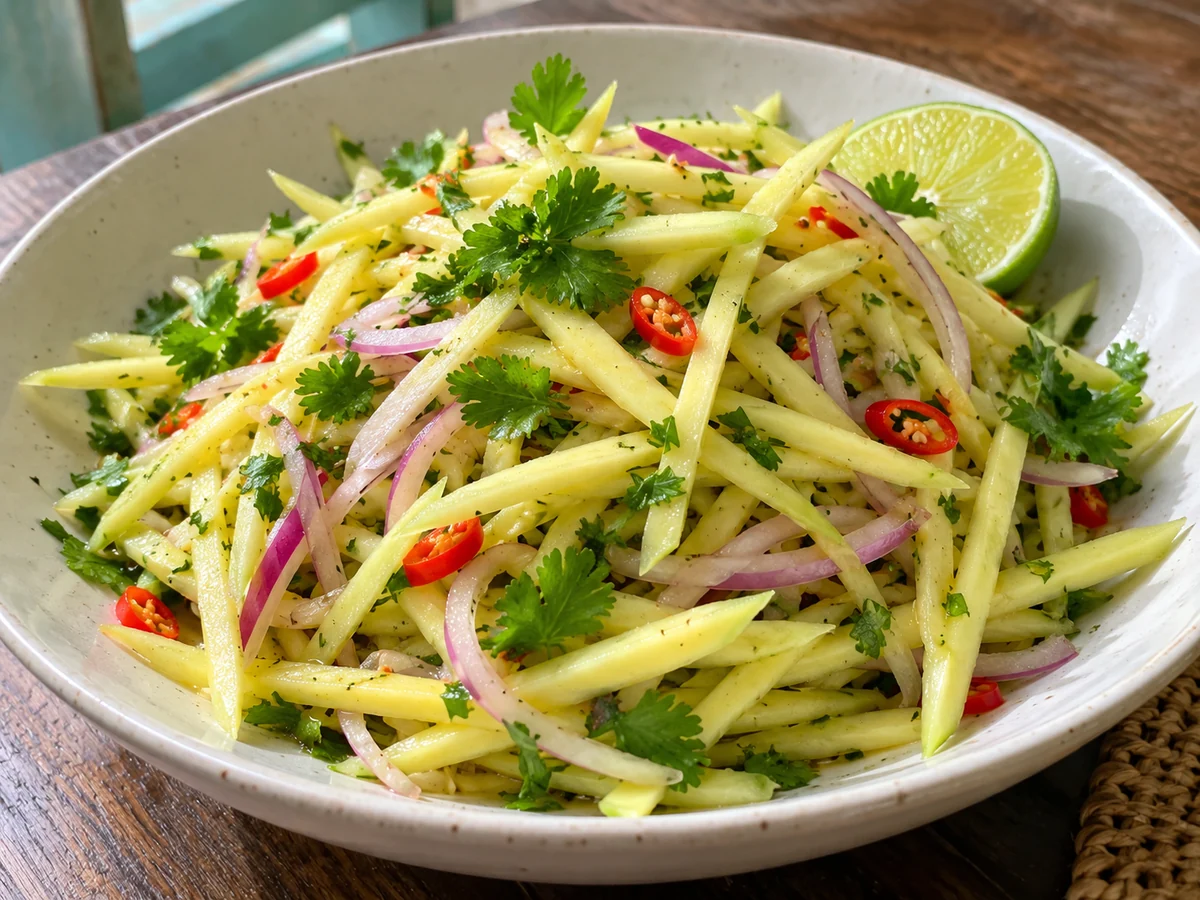
Green mango salad is a fresh, tangy, crunchy, and very fragrant preparation that holds a prominent place in many African cuisines. It is made from unripe green mangoes, grated or cut into thin strips, to which onion, chili, tomato, lemon, fresh herbs, crushed peanuts, dried fish, shrimp, salt, or even a drizzle of oil are added depending on the region. The result is a vibrant, energetic, and refreshing salad, whose balance of acidity, spiciness, and crunch immediately evokes the flavors of the market, the hot season, and simple yet generous meals.
Green mango has a firm texture and a distinctly tart, sometimes slightly astringent flavor, which makes it suitable for many preparations. When made into a salad, it becomes a central ingredient that adds depth to the entire dish. This salad is not only pleasant to eat, but it also tells a story about a cooking method very present in Africa: using available produce before its full maturity to extract a unique, vibrant, and refreshing flavor.
Prepare this speciality
Choose a detailed recipe, adjust the portions and prepare your ingredients before starting. Our cooking tips and food safety advice complement the steps described in the recipes.
Explore further: Cooking tips · Food hygiene and safety advice.
History and uses
🌍 PLACE IN AFRICAN CUISINE
Green mango salad holds an important place in several African culinary traditions, particularly in West Africa, Central Africa, East Africa, and tropical areas where mangoes grow abundantly. In these regions, mango is not just a dessert fruit; it is also consumed green, before maturity, as a fruit-vegetable or as the base for salads, side dishes, or condiments. This demonstrates the ingenuity of African cuisines, which know how to utilize plant resources at different stages of development.
In countries where mango trees are abundant, green mango salad is often prepared during the season when the fruits are still young and firm. It is served in homes, markets, street food stalls, or during family meals. It pairs very well with grilled fish, braised chicken, kebabs, rice, cassava, attiéké, or plantain. Its presence in African cuisine is therefore based on its versatility: it can be a light starter, a flavorful side dish, or a main element of a vegetarian meal.
This salad also illustrates a very important aspect of African cuisine: the close link between seasonality, terroir, and creativity. African cooks often use what nature offers at the right time, without waiting for product standardization. Green mango, with its natural acidity and crunch, then becomes a characterful ingredient that transforms a simple meal into a moment of freshness. It is often associated with street food, quick snacks, and outdoor meals. It is a dish that speaks of both everyday life and immediate pleasure.
🔥 HISTORY AND CULTURAL CONTEXT
The history of green mango salad is linked to the place of mango in tropical African regions. The tree is widely cultivated and appreciated for its ability to yield abundant fruit during the hot season. In many families, green mangoes are used even before they are fully ripe, as their tart taste pairs perfectly with salt, chili, and lemon. This way of consuming unripe fruits is very ancient and reflects a deep knowledge of natural cycles.
Culturally, green mango salad is often associated with spontaneity, freshness, and simple everyday meals. It can be prepared in minutes with basic ingredients, making it a popular and accessible recipe. In some regions, it is served as a snack, in others for lunch, and elsewhere as a side dish for a main course. It is sometimes sold in markets with a touch of salt, chili, or peanut powder, making it a highly appreciated street specialty.
Green mango salad also represents a form of balance between acidity and indulgence. It recalls the ability of African cuisines to play with contrasts: the raw and firm fruit, the hot chili, the pungent onion, the juicy tomato, the fresh leaf, the crunchy peanut. Each bite offers a mix of sensations that stimulates the palate. This type of preparation is part of a living culinary heritage, based on simple gestures, taste intuition, and family transmission.
In my books

Continue exploring the continent’s cuisines with Africa at the Table — 54 countries, 54 iconic dishes, by Alioune FALL. This book is in English.
Explore further
🥭 FLAVORS, TEXTURE, AND TECHNIQUE
The success of green mango salad lies in the contrast between its crunchy texture and its vibrant seasoning. Green mango first provides a firm and tart base. When grated, julienned, or thinly sliced, it maintains a good hold while absorbing other flavors. Onion adds bite, chili brings character, tomato gives juiciness, lemon enhances freshness, and herbs like cilantro or parsley offer a very pleasant aromatic note.
The technique is simple but requires attention. You need to choose a mango that is green enough to be crunchy, but not too hard. Then, it is peeled, cut, or grated depending on the desired result. It is seasoned just before serving to preserve its freshness. In some versions, crushed roasted peanuts, shredded smoked fish, dried shrimp, salt, sugar, ginger, or a little oil are added to round out the flavors. This flexibility allows the salad to adapt to the tastes of each region and family.
Green mango salad can be served very cold or simply at room temperature. In hot climates, it provides a much-desired sensation of freshness. It is a recipe that can be eaten with fingers, a fork, or even as a quick snack directly in a leaf or a street vendor's container. It remains light while being rich in taste.
🥗 NUTRITIONAL VALUE AND DIETARY INTEREST
Green mango salad offers several nutritional benefits. Green mango is naturally rich in vitamin C, fiber, and antioxidants. It also provides water and a feeling of freshness, making it an interesting food in hot climates. When combined with peanuts, dried fish, or fresh herbs, the salad becomes more complete and nourishing.
It is also a relatively light preparation if it is lightly oiled and moderately salted. It is well suited for balanced meals or menus where you want to add freshness without making the plate heavy. It can accompany rich foods like fried fish or grilled meats, while providing a tart and vegetal counterpoint. In some versions, it can even constitute a healthy and satisfying snack.
🍽️ PAIRINGS AND USES
Green mango salad pairs well with:
grilled fish braised chicken attiéké white or fragrant rice fried plantain boiled cassava kebabs traditional bread It also goes very well with fresh drinks such as lemon water, bissap juice, ginger juice, iced tea, or a light tropical drink. It can be served as a starter, a side dish, or a market snack. Its role is often to awaken the meal and bring a lively and refreshing note.
🔁 SYNONYMS AND SIMILAR NAMES
Green mango salad can also be called:
raw mango salad tropical green mango salad tart mango salad spicy green mango salad fresh green mango salad These expressions are not always strictly equivalent, but they refer to the same family of preparations: a vibrant, crunchy, and fragrant salad based on unripe mango.
✨ CONCLUSION
Green mango salad holds an important place in African cuisine because it embodies freshness, seasonality, and culinary intelligence. It shows how a still-young fruit can become the base of a preparation full of character, both simple, quick, and very expressive. Its acidity, crunchy texture, and ability to accompany many dishes make it a highly appreciated recipe in homes and markets. It is a salad that speaks of the creativity of African cuisines, their connection to nature, and their love of sharing.
Keywords: green mango, African salad, freshness, tropical cuisine, side dish
Synonyms: raw mango salad, tropical green mango salad, tart mango salad, spicy green mango salad, fresh green mango salad
In the kitchen : Green Mango Salad
Recipes from the site to put your knowledge into practice:
Discover these cuisines at a restaurant
Explore our restaurant and caterer directories. Choose your destination and check the establishment’s menu to confirm which dishes are offered and available.
Continue exploring
Enjoy discovering ingredients and African cuisines? Join our newsletter. The illustrated PDF 10 sauces africaines incontournables is in French and is offered after confirming a subscription to the French or bilingual edition.