Fried Plantains
West and Central Africa
Understanding : Fried Plantains
🍌 FRIED PLANTAINS AND CULINARY IDENTITY
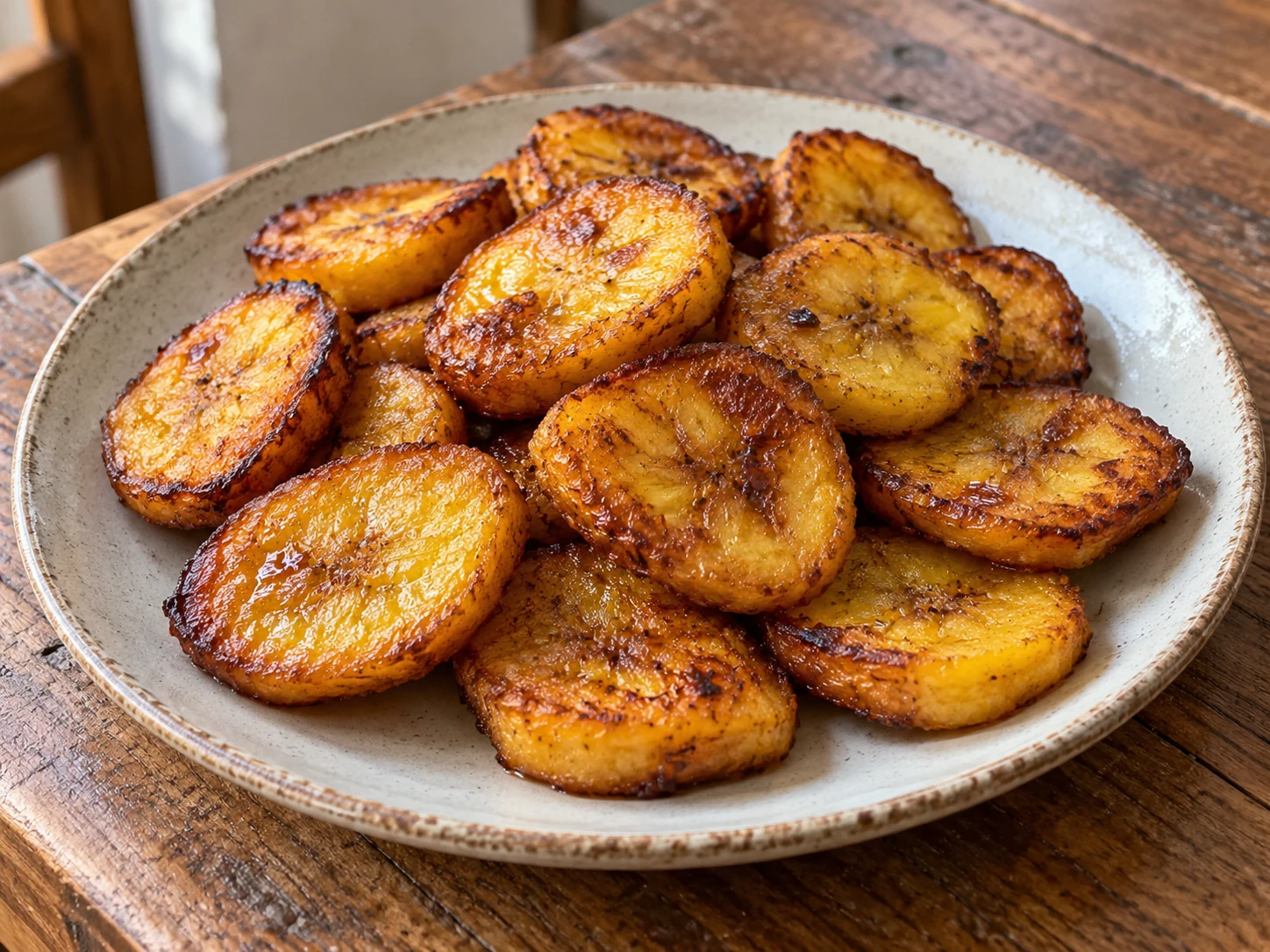
Fried plantains hold an essential place in African cuisine, serving as an everyday food, a generous side dish, and a convivial treat. Prepared from ripe or slightly ripe plantains, cut into rounds, diagonals, or long pieces, then fried in oil until golden brown, they offer a delicious contrast between a slightly crispy surface and a tender, melting, sweet interior. Their popularity is due to their simplicity, comforting taste, and ability to accompany a wide variety of dishes.
In many African homes, fried plantains are not just a side dish. They represent a symbol of warm meals, family tables, and generosity. Their cooking aroma often evokes weekend lunches, festive meals, or street vendors where they are served hot, with a slight caramelization that makes them irresistible. They can be enjoyed alone, with a sauce, with fish, meat, eggs, or integrated into a more complete meal. They are a versatile food, loved by children and adults alike.
Where to find it
Look for the exact food-grade form required by the recipe at markets and specialist shops. Check the product name, ingredients, condition and storage instructions.
Explore further: Cooking tips · Food hygiene and safety advice.
History and uses
🌍 PLACE IN AFRICAN CUISINE
Fried plantains hold a remarkable place in many African cuisines, particularly in West Africa, Central Africa, and several regions of East and Southern Africa where plantain is widely consumed. Plantain is a staple food in tropical areas because it is nutritious, easy to cook, and abundantly available seasonally. Frying is one of the most popular ways to prepare it, as it enhances its natural sweetness.
In West Africa, fried plantains are often served with rice, beans, grilled fish, tomato sauce, grilled chicken, or stews. In Central Africa, they readily accompany rich sauces, vegetables, meat in sauce, or fish dishes. In some regions, they are part of breakfast, a snack, or a quick street meal. This omnipresence shows their importance in the African culinary imagination: they are simple foods, but never ordinary.
Fried plantains also illustrate the strong relationship African cuisines have with local produce. Plantain, especially when ripe, develops a natural sweetness that is perfectly suited for frying. This transformation reveals a culinary ability very present in Africa: taking a raw product, working it with few ingredients, and turning it into a flavorful, nourishing, and comforting dish. It is a cuisine of precise gestures, well-controlled heat, and direct flavor.
🔥 HISTORY AND CULTURAL CONTEXT
Plantain has been deeply rooted in the diet of many African societies for centuries. Cultivated in tropical regions, it is an important food crop alongside cassava, yam, corn, and rice. Its spread across the continent is linked to ancient exchanges, trade routes, and agricultural adaptation in humid and warm areas. Frying, for its part, has always been a practical and appreciated way to cook fruits and tubers, making them more delicious and easier to integrate into different meals.
Culturally, fried plantains are associated with the warmth of home, family cooking, and hospitality. In many families, they are quickly prepared when guests arrive or when one wants to complement a meal with something simple and nourishing. They are also very present in street food, where they are sold with skewers, spicy sauces, or fried fish. Their success is based on their accessibility and a common taste memory shared by several generations.
In some contexts, fried plantains are linked to festive occasions, large gatherings, and weekend meals. They often signal a more relaxed moment, a more generous meal, where people enjoy eating together. This gives them a very strong emotional dimension in African culinary culture.
In my books

Continue exploring the continent’s cuisines with Africa at the Table — 54 countries, 54 iconic dishes, by Alioune FALL. This book is in English.
Explore further
🍯 FLAVORS, TEXTURE, AND TECHNIQUE
The taste of fried plantains mainly depends on the fruit's ripeness. A well-ripened plantain becomes naturally sweet, tender, and almost candied when cooked. A slightly ripe plantain remains firmer, with moderate sweetness and a more sustained texture. Depending on preference, they can be fried to achieve a golden and slightly crispy exterior, while the interior remains soft.
The technique is simple but requires a minimum of attention. Choose plantains that are just right, neither too green nor too black, peel them, then cut them diagonally, into rounds, or into long ribbons. Then, immerse them in hot oil until they turn a beautiful color. Some lightly salt them, others prefer them plain to better appreciate their sweetness. In some homes, they are sprinkled with a little sugar or served with a spicy sauce to create an interesting contrast.
The secret to good fried plantain lies in the balance between heat, cooking time, and ripeness. Too unripe, it will be less flavorful. Too ripe, it risks falling apart during frying. Well-prepared, it becomes a much-appreciated side dish, capable of supporting both savory dishes and spicier preparations.
🥗 NUTRITIONAL VALUE AND BENEFITS
Fried plantains primarily provide energy thanks to their carbohydrates. They are filling and very useful in meals that require a good caloric intake. Plantain also contains potassium, fiber, vitamin C, vitamin B6, and various minerals. When ripe, it offers a natural sweetness that can limit the need to add sugar.
However, frying increases the fat and calorie content. Fried plantains are therefore primarily appreciated as a delicious and nourishing food, to be consumed as part of a balanced meal. They benefit from being accompanied by vegetables, proteins, and low-fat sauces to make a complete plate. Despite this, they remain an interesting and traditional option in African cuisine, particularly for their satiety and versatility.
🍛 ACCOMPANIMENTS AND USES
Fried plantains pair well with many African dishes:
grilled fish braised chicken beans in sauce eggs spicy tomato sauces vegetable stews meat in sauce rice or attiéké They can also be served as a snack, afternoon treat, or street food. In this case, they are often accompanied by chili, ketchup, homemade tomato sauce, or pepper sauce. They are also delicious with light tea, bissap juice, ginger juice, or fresh water depending on the time of day.
🔁 SYNONYMS AND SIMILAR NAMES
Fried plantains can also be called:
fried plantain bananas golden plantain fried plantain slices plantain fritters plantain side dish These names vary according to regions, culinary habits, and the desired level of precision, but they refer to the same culinary idea: a plantain that has been fried to reveal all its deliciousness.
✨ CONCLUSION
Fried plantains hold a special place in African cuisine, embodying simplicity, conviviality, and comforting taste. Present in everyday meals as well as festive tables, they accompany meat, fish, and vegetarian preparations alike. Their natural sweetness, melting texture, and beautiful golden color make them a staple of tropical African cuisines. It is a dish deeply linked to family memory, markets, shared meals, and the African art of enhancing simple ingredients.
Keywords: fried plantains, African cuisine, plantain, side dish, frying
Synonyms: fried plantain bananas, golden plantain, fried plantain slices, plantain fritters, plantain side dish
In the kitchen : Fried Plantains
Recipes from the site to put your knowledge into practice:
Discover these cuisines at a restaurant
Explore our restaurant and caterer directories. Choose your destination and check the establishment’s menu to confirm which dishes are offered and available.
Continue exploring
Enjoy discovering ingredients and African cuisines? Join our newsletter. The illustrated PDF 10 sauces africaines incontournables is in French and is offered after confirming a subscription to the French or bilingual edition.