Usipa
Lake Malawi
Understanding : Usipa
🐟 USIPA: SMALL FISH FROM LAKE MALAWI
Usipa is a small freshwater fish emblematic of Lake Malawi, also known as Lake Nyasa depending on the region and language. It generally belongs to the species Engraulicypris sardella, a small fish reminiscent of a sardine due to its elongated shape, delicate flesh, and frequent use after drying. Despite its modest size, usipa holds an important place in the daily diet, local economy, and culinary culture of several Southern and Eastern African countries.
Lake Malawi extends mainly between Malawi, Tanzania, and Mozambique. For centuries, it has provided a wide variety of fish to the riparian populations. Among them, usipa is particularly appreciated because it is abundant, relatively accessible, and easy to preserve. It is often sold fresh in villages near the lake, but it also circulates in dried form in urban and rural markets, sometimes very far from fishing areas.
Where to find it
Look for the exact food-grade form required by the recipe at markets and specialist shops. Check the product name, ingredients, condition and storage instructions.
Explore further: Cooking tips · Food hygiene and safety advice.
History and uses
🌊 A FISH LINKED TO LAKE MALAWI
Usipa lives in schools in the waters of Lake Malawi. Its small size allows it to be caught in large quantities with suitable nets. Fishermen generally bring it back at dawn, after night or morning outings. The catches are then sorted, washed, and prepared quickly to preserve their quality. Like many small schooling fish, usipa plays an essential role in the aquatic ecosystem. It feeds on small organisms present in the water and, in turn, serves as food for larger fish. Its presence thus connects the different stages of the lake's food chain.
For riparian communities, usipa represents much more than a simple fishing product. It is a source of income for fishermen, processors, traders, and market vendors. Women often play an important role in drying, packaging, and selling the fish. This activity directly contributes to the livelihood of many families.
🍽️ A CENTRAL PLACE IN THE DIET
In Malawian cuisine, usipa is a popular, everyday food deeply associated with family habits. It is appreciated by modest households as well as by families looking to prepare a nutritious meal at a lower cost. Its availability in dried form allows it to be stored for several weeks, or even months, when properly protected from humidity.
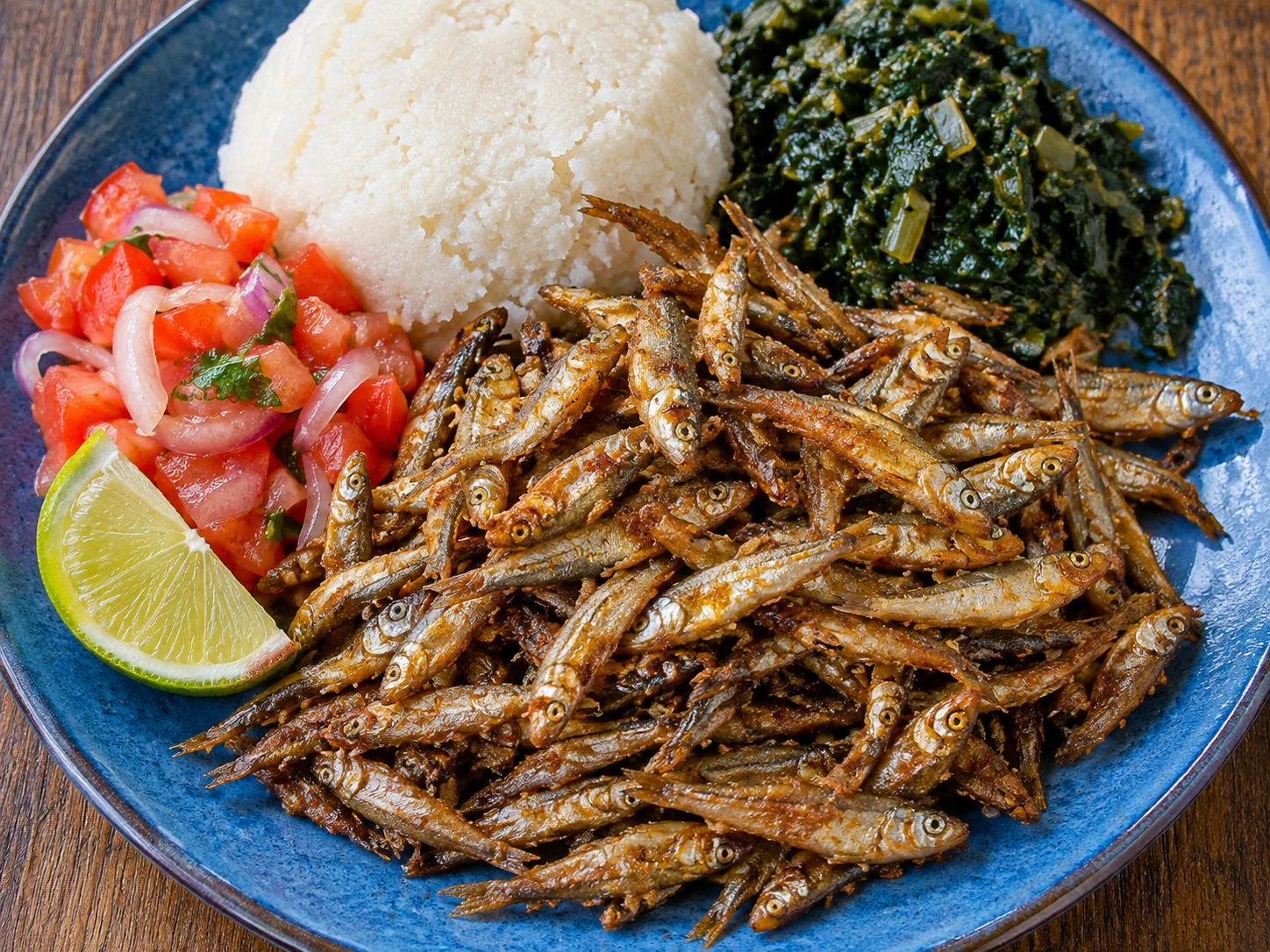
Usipa often accompanies nsima, a thick paste prepared from corn flour. Nsima forms the basis of many meals in Malawi. It is served with a sauce, vegetables, legumes, or a fish-based preparation. Usipa then brings a salty and intense flavor that complements the neutrality of the corn paste. It can also be served with leafy greens, tomatoes, onions, okra, beans, or sweet potatoes. In some families, it is added to a spicy sauce or stew to enhance the overall taste of the dish. Its small size sometimes allows it to be eaten whole, after removing the harder parts according to individual preferences.
🔥 DRIED USIPA: AN ESSENTIAL PRESERVATION TECHNIQUE
Drying is one of the most common methods for preserving usipa. After fishing, the fish are generally cleaned and then spread in the sun on racks, mats, nets, or designated surfaces. They are turned regularly to allow for uniform dehydration. This technique reduces the amount of water in the fish and slows the growth of microorganisms responsible for spoilage. It allows for the preservation of a highly perishable resource without relying on refrigeration or a cold chain. This characteristic is particularly important in rural areas where electricity and preservation equipment may be limited. Dried usipa develops a more concentrated flavor than fresh fish. Its aroma is more pronounced, and its texture becomes firm, sometimes slightly crispy when fried. Before cooking, some people rinse it or soak it briefly to remove excess dust, salt, or residues related to drying. It is then drained before being cooked.
🍳 FRIED, STEWED, OR GRILLED
Usipa can be prepared in several ways. Frying is one of the most common. Small dried fish are immersed in hot oil until they become golden and crispy. They can be eaten alone, served with a spicy sauce, or accompanied by vegetables and nsima. Stewing is also very popular. Usipa is then incorporated into a sauce made of onions, tomatoes, garlic, chili, and sometimes ginger. Slow cooking allows the fish to flavor the sauce and bind its aromas with the other ingredients. In some preparations, the fish are first fried to maintain their shape, then added to the sauce at the end of cooking. It can also be grilled or lightly roasted before being used in a preparation. This method enhances its smoky taste and texture. In some regions, usipa is reduced to small pieces or crushed to be mixed with vegetables, a paste, or a thick sauce.
In my books

Continue exploring the continent’s cuisines with Africa at the Table — 54 countries, 54 iconic dishes, by Alioune FALL. This book is in English.
Explore further
🌍 A REGIONAL AND CULTURAL DIMENSION
Although particularly associated with Malawi, usipa is known in the neighboring regions of Mozambique and Tanzania. The names used may vary according to languages, communities, and markets. Preparation techniques also change from one region to another, but the principle often remains the same: preserve the fish, concentrate its flavor, and associate it with a staple food. In local food culture, serving usipa can be a simple way to offer a complete meal to loved ones and guests. It is present in family meals, markets, small restaurants, and home kitchens. Its taste evokes the proximity of the lake and the work of the fishermen who feed the communities. Usipa also appears in discussions about food security. Small fish can provide animal protein to populations that do not always have access to large quantities of meat. Their small size facilitates their distribution and preservation. They can also be eaten with some of their bones, which increases their calcium intake when the preparation is adapted.
🥗 NUTRITIONAL INTEREST
Usipa provides protein, lipids, minerals, and several vitamins. As small fish are sometimes eaten whole, they can provide calcium through their fine bones. They also contain phosphorus and, depending on their diet and preparation method, fatty acids beneficial for the body. However, nutritional value depends heavily on the cooking method. A fish that is dried and then fried in a large amount of oil will be more caloric than a fish that is simply stewed. The amount of salt used during drying or preparation must also be considered. A quick rinse and the addition of vegetables can help balance the meal. Usipa should not be considered only as a supplementary food. In many families, it represents a true source of protein and forms the heart of the meal. Its strength lies in its accessibility, preservation, and ability to flavor a large quantity of sauce with a relatively small portion.
🧺 PURCHASE, PRESERVATION, AND PRECAUTIONS
When purchasing, it is preferable to choose dry, clean, well-dehydrated usipa free from abnormal odors. The fish should not show mold, excessive moisture, or insects. They should be stored in an airtight container, away from heat and humidity. Fresh fish should be consumed quickly or refrigerated. Dried fish should be rinsed if necessary, then thoroughly cooked. Sufficient cooking reduces the risks associated with potential contamination. It is also advisable to remove debris, overly hard parts, and bothersome bones before serving children.
💬 SYNONYMS AND ASSOCIATED NAMES
Synonyms or associated names for usipa include: Lake Malawi sardine, small Lake Malawi fish, Lake Malawi sardella, dried Lake Malawi fish, and Engraulicypris sardella. Depending on the region, some people also use different local names, as names can change between Malawi, Tanzania, and Mozambique.
Usipa thus remains a symbol of African lacustrine cuisine. Small in size, but great in importance, it connects fishing, traditional preservation, nutrition, commerce, and conviviality. It reminds us that the essential foods of a culture are not always the most imposing: sometimes, a small dried fish is enough to give identity and depth to an entire meal.
KEYWORDS: usipa, Lake Malawi, dried fish, Malawian cuisine, Engraulicypris sardella
In the kitchen : Usipa
Recipes from the site to put your knowledge into practice:
Discover these cuisines at a restaurant
Explore our restaurant and caterer directories. Choose your destination and check the establishment’s menu to confirm which dishes are offered and available.
Continue exploring
Enjoy discovering ingredients and African cuisines? Join our newsletter. The illustrated PDF 10 sauces africaines incontournables is in French and is offered after confirming a subscription to the French or bilingual edition.