Plasas
Creole/Portuguese (Gambia)
Understanding : Plasas
INTRODUCTION
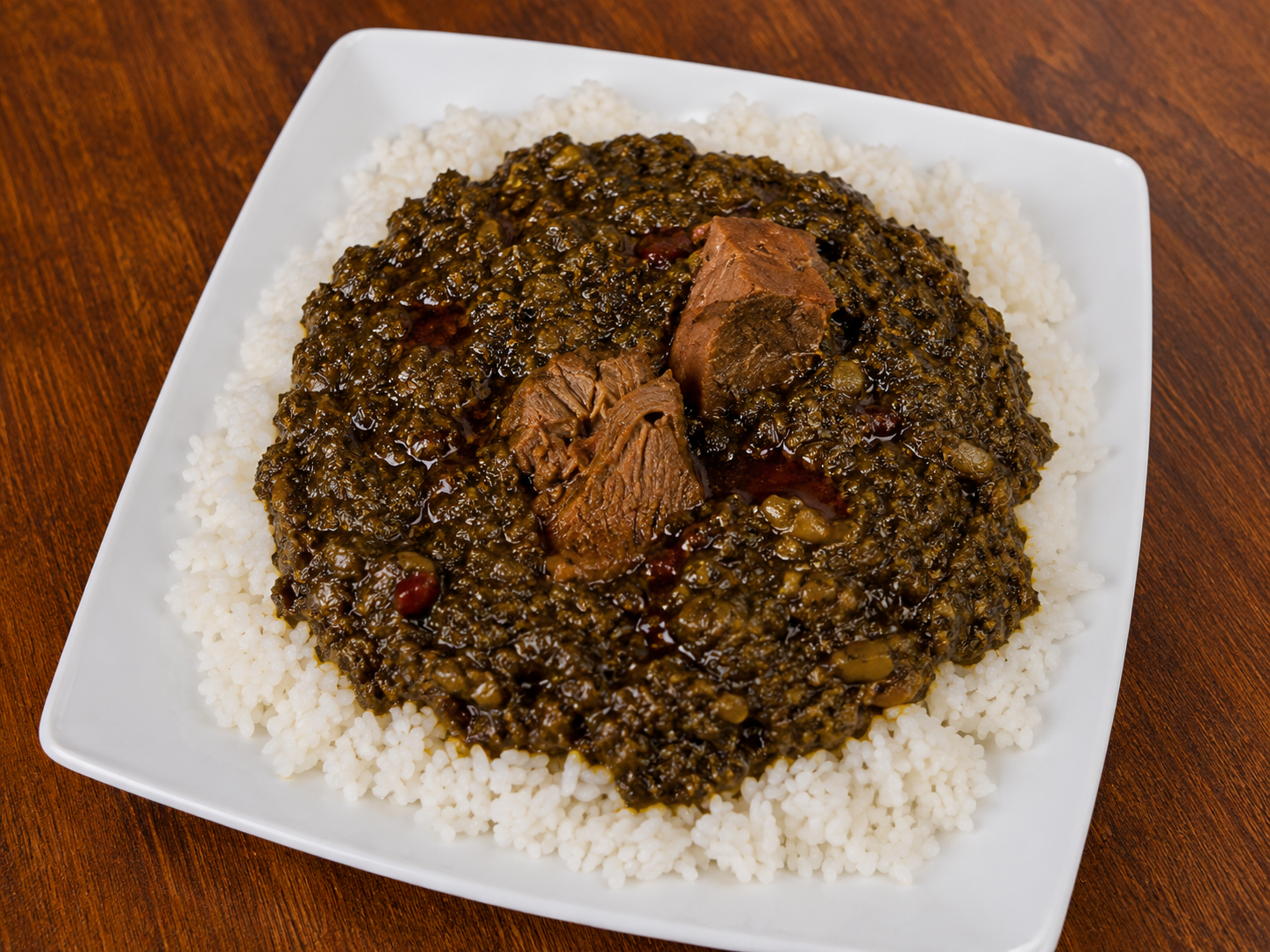
The term plasas (sometimes also “palava sauce”, “green sauce” or simply “leaves soup”) refers, in West Africa, to several stews or thick sauces simmered with green leaves, palm or peanut oil, sometimes seed paste, and various accompaniments (meats, fish, smoked products, seafood). Essential dishes in Sierra Leone, Liberia, but also Nigeria, Ghana, Guinea, these forest-sauces embody the gustatory power, nutritional density, and conviviality of “terroir” cuisine. Behind the word lies a galaxy of recipes: sweet potato, cassava, amaranth, baobab (lalo/mbouri), okra, crincrin (Corchorus olitorius, also known as jute mallow or Egyptian spinach) leaves or other wild plants, which, pounded, ground or chopped, marry with meat, dried fish, rich broth, then are served piping hot on a base of rice, fufu (a staple food of West and Central Africa, made from starchy root vegetables), yam or couscous. Preparing a plasas is much more than just feeding: it is extending the memory of women, the diversity of the local agrosystem, the health of the village, and the warmth of the family. It is also celebrating African resilience in the face of land and time. Here is a detailed description of the agricultural birth, traditional preparation, regional diversity, social and nutritional role, modernity, and symbolism of plasas, a mirror of the African table.
1. ORIGIN, BOTANY AND HISTORY
1.1. An ancestral plant heritage Rural African cuisine, and particularly West African, relies on a deep knowledge of edible leafy plants: for the anthropologist or botanist, each “plasas” synthesizes agricultural history, ecological diversity, human adaptation. When rice, millet or yam constitute the base of the dish, the leaf sauce is its nourishing heart and the cook's signature. Thus, the plasas family includes: • Cassava (cassava leaves) • Sweet potato (sweet potato leaves) • Amaranth (African spinach) • Baobab leaves, jute mallow (lalo, ewedu, krin krin) • Okra, taro leaves (cocoyam leaves) • Parsley, fine herbs, for urban variants 1.2. History and transmission These dishes are inherited from time immemorial: no scholarly cuisine, no colonist or transoceanic import, but the genius of recovery, short cycle, circular economy — leaves, once perceived as “poor man's food”, become monuments to today's stews. Transmission is primarily maternal, through observation, oral tradition, imitation, improvisation.
2. HARVESTING, PREPARATION AND COOKING
2.1. Harvesting Leaves are picked either young (tenderness, fineness) or well-developed (more body, taste). They come from the field, the vegetable garden, the bush, sometimes the urban market. This step is an art in itself: choosing, sorting, not mixing bitter leaves with overly fibrous ones. 2.2. Preparation • Abundant washing (soil, dust, stones) • Sorting and stemming: hard veins are removed. • Pounding or chopping: in a mortar, leaves are pounded with a little water (to release juices, refine texture), or finely chopped with a knife on a board. • Pre-cooking (optional): some leaves, like cassava, need to be boiled first to neutralize toxins (hydrocyanic acid). 2.3. Accompaniment ingredients • Onions, garlic, eggplant, tomato (for the base) • Fresh or dried chili (power and heat) • Smoked or dried fish, crabs, dried crayfish, meat (beef, goat, smoked or dried chicken), sometimes shrimp or snails • Red palm oil (in Liberia, Guinea, Sierra Leone)/peanut oil/melted • Bouillon cube or homemade broth, depending on means • Peanut paste, melon seeds (egusi) to boost texture and nutrition 2.4. Cooking Once prepared, the plasas sauce simmers slowly over low heat:
- Pot bottom (oil, onion, aromatic base)
- Seared meat or fish, then addition of pounded leaves
- Moistening with broth, prolonged cooking
- Progressive additions (pounded peanuts, okras, tender leaves, crustaceans…)
- Reduction and checking of the sauce, which should be dense, coating, neither lumpy nor too liquid
3. DIVERSITY OF PLASAS: MAJOR REGIONAL RECIPES
3.1. Sierra Leone, Liberia: The “Plasas” king • Cassava plasas (“cassava leaf plasas”): cassava leaves are the most common base. Their smoky, deep taste pairs well with fish or smoked meat, dried shrimp, red chili. • Amaranth, parsley, taro plasas (generally combined in wet periods), sweet potato. • Palava sauce (“palaver sauce” / Ghana): mixture of leaves, palm, fish, seeds. • Served on rice, fufu, garri (a granular flour from cassava), pounded yam. 3.2. Guinea, Ivory Coast, Mali, Senegal • “Leaf sauce” of sweet potato or cassava, thick, coating, usually on local rice or fonio (a type of millet). • In Ivory Coast: “djéguè” sauce (amaranth), often with peanuts, with or without fish. • Mali: “sorrel leaves”, “bean leaves” simmered with peanut paste (“tiguadèguè”). 3.3. Nigeria, Benin: Efo/Vegetable Soup • Efo riro (Nigeria, Yoruba): amaranth, spinach or jute mallow leaves, with tomatoes, peppers, various meats or fish, palm oil, chilies. • Afang, edikaikong (Efik/Ibibio): mixture of afang leaves (gnetum africanum), waterleaf, with meat, dried fish and palm oil. • Egusi leaf soup: addition of pounded melon seeds to the green sauce. 3.4. Congo, Gabon, Great Lakes (“Pondu”, “Saka Saka”) • Long-pounded cassava leaves, sometimes simmered with dried fish, peanuts, palm oil. • Often served with chikwangue (fermented cassava stick), rice, yam or plantain.
4. NUTRITIONAL AND HEALTH PLACE
4.1. Nutritional virtues • Vegetable proteins (supplemented by peanuts, fish, beans, melon) • Dietary fiber • Vitamins A, C, K, B9 (folates provided by green leaves) • Minerals: iron, calcium, magnesium, potassium • Digestive benefits: satiating effect, intestinal regularity, prevention of anemia, immune support 4.2. Adaptation to shortages During the dry season or lean season, when meat, fish, and cereals become scarce, the gathering and mastery of plasas allow for the survival, diversification, and food autonomy of rural families, limiting malnutrition.
5. SOCIAL, HERITAGE AND SYMBOLIC DIMENSION
5.1. Sharing dish Plasas is, like mafé (a West African peanut stew) or foutou (a starchy side dish, similar to fufu), a communal dish: it is eaten around a large bowl, offering conviviality, social mediation, learning, and shared sensory pleasure. During festivities, funerals, baptisms, it embodies the generosity of the hostess. 5.2. Identity and transmission Mastering the right pestle stroke, “your mother's” recipe, knowing how to manage cooking times: these are all sources of pride, rites of passage. The “plasas hand” signifies a lineage, a region, a social rank. 5.3. Ritual, ceremonial, hospitality The presentation of plasas when welcoming guests marks attachment to the land, trust. Rituals (coming-out of young girls, marriage, conflict resolution) often revolve around its sharing.
6. MODERNITY, URBAN CUISINE AND DIASPORA
6.1. Urbanization and adaptation In the city, fresh leaves are replaced by frozen or dried ones, cube sauces supplement the broth, smoked fish is replaced by meat or shrimp depending on the budget. Time is saved, industrialized peanut paste has become widespread. 6.2. Diaspora and afrofood Plasas travels in suitcases, settles in Afroshops, is cooked for big Sundays, is revisited by Afro-descendant chefs (with coconut milk, in a wrap, as street food, in a verrine). 6.3. Fusion and hybridization Vegan plasas, palava sauce fusion (burger topping, pizza base), use of European leafy vegetables when the originals are missing (chard, spinach, kale…).
7. CONTEMPORARY ISSUES, RESILIENCE AND INNOVATION
• Food sovereignty: restoring the place of local leafy vegetables, in the face of rice and wheat globalization, through promotion campaigns, seed sectors, short supply chains. • Mixing and transmission: fighting against standardization, valuing maternal culinary heritage, workshops, recipe books, competitions. • Organic, health, slow food: return to fresh, organic leaves, short supply chains, gentle cooking methods, reduction of cubes, nutritional education (rich and healthy dishes). • Urban food security: kitchen gardens, urban agriculture to maintain access to local leaves.
CONCLUSION Plasas is one of the most vibrant incarnations of African agricultural and culinary genius: resourceful, inventive, gourmet, supportive, it nourishes, heals, unites, and educates. Pounded, simmered, shared, it defends plant and social diversity against standardization, transmits the hands of women, the taste of the village, and the strength of the family. Plasas, even today, promises health, taste, and rootedness for Africa – and far beyond, on all tables where the leaf becomes memory, future, and celebration.
Prepare this speciality
Choose a detailed recipe, adjust the portions and prepare your ingredients before starting. Our cooking tips and food safety advice complement the steps described in the recipes.
Explore further: Cooking tips · Food hygiene and safety advice.
In my books

Continue exploring the continent’s cuisines with Africa at the Table — 54 countries, 54 iconic dishes, by Alioune FALL. This book is in English.
In the kitchen : Plasas
Recipes from the site to put your knowledge into practice:
Discover these cuisines at a restaurant
Explore our restaurant and caterer directories. Choose your destination and check the establishment’s menu to confirm which dishes are offered and available.
Continue exploring
Enjoy discovering ingredients and African cuisines? Join our newsletter. The illustrated PDF 10 sauces africaines incontournables is in French and is offered after confirming a subscription to the French or bilingual edition.