Scotch bonnet
Caribbean (but used in Africa)
Understanding : Scotch bonnet
INTRODUCTION
The Scotch Bonnet, sometimes called "Antillean pepper" or "Scottish bonnet," is one of the most iconic chili peppers in the culinary world, renowned for its unique shape, its liveliness on the palate, its fruity aroma, and its remarkable heat. Although also very popular in the Caribbean, the Scotch Bonnet holds a privileged and singular place in African cuisine, particularly in West and Central Africa, where it is also known by various local names depending on the country and language. This detailed description allows you to delve into the fascinating world of the Scotch Bonnet, to discover its botanical characteristics, its aromatic profiles, its uses in African cuisines, and its role in the cultural, social, and economic life of the continent, to understand why this small chili pepper holds such importance in African culinary traditions.
Where to find it
Look for the exact food-grade form required by the recipe at markets and specialist shops. Check the product name, ingredients, condition and storage instructions.
Explore further: Cooking tips · Food hygiene and safety advice.
Search Amazon.fr — affiliate link →
Check availability and delivery on Amazon.fr. Compare ingredients, packaging and sellers.
As an Amazon Associate I earn from qualifying purchases.
History and uses
1. BOTANICAL DESCRIPTION AND ORIGIN OF THE SCOTCH BONNET
The Scotch Bonnet (Capsicum chinense) belongs to the vast Solanaceae family — the same as tomatoes, eggplants, and of course, bell peppers. Unlike sweet bell peppers, the Scotch Bonnet is an extremely hot chili pepper, whose strength can vary between 100,000 and 350,000 units on the Scoville scale. Morphologically, the Scotch Bonnet is distinguished by its small size (approximately 3 to 6 cm in diameter), a smooth, thin but firm skin, and especially its particular shape that resembles a traditional Scottish bonnet turned upside down — hence its name in English. Its color varies depending on its ripeness: green, yellow, orange, red, and sometimes even chocolate for certain varieties. Each color corresponds to a slightly different but always intense flavor profile. Originally from Central America and the Caribbean, the Scotch Bonnet migrated through trade routes, notably to West Africa via the Atlantic slave trade and culinary exchanges between the New World and the African continent starting from the 16th century. Adopted and adapted to the African terroir, it is now cultivated everywhere from Senegal to Cameroon, from Ghana to Nigeria, and it holds an essential place in the daily diet of millions of Africans.
2. AROMATIC PROFILE AND NUTRITIONAL VALUE
The Scotch Bonnet is not just about its heat. It possesses a unique aromatic bouquet that distinguishes it: intense fruity notes, sometimes compared to apricot or mango, a heady fragrance blending vegetal warmth, subtle acidity, and sometimes a slight floral touch. It is this complexity that immediately established it in many traditional African cuisines, where it transcends and enhances the dish it flavors. Nutritionally, the Scotch Bonnet is not only rich in capsaicin (the molecule responsible for the heat), but also in vitamins: Vitamin C, in large quantities, strengthens the immune system. Vitamins A and E for their antioxidant qualities. Minerals like potassium and magnesium. Dietary fiber: although little consumed due to grinding or sifting, it is present. Its consumption, in reasonable quantities, offers benefits: cardiovascular protection, stimulation of digestion, antibacterial properties, and a positive effect on mood via the release of endorphins (the "high" sensation for chili lovers).
3. USES AND PLACE OF THE SCOTCH BONNET IN AFRICAN CUISINE
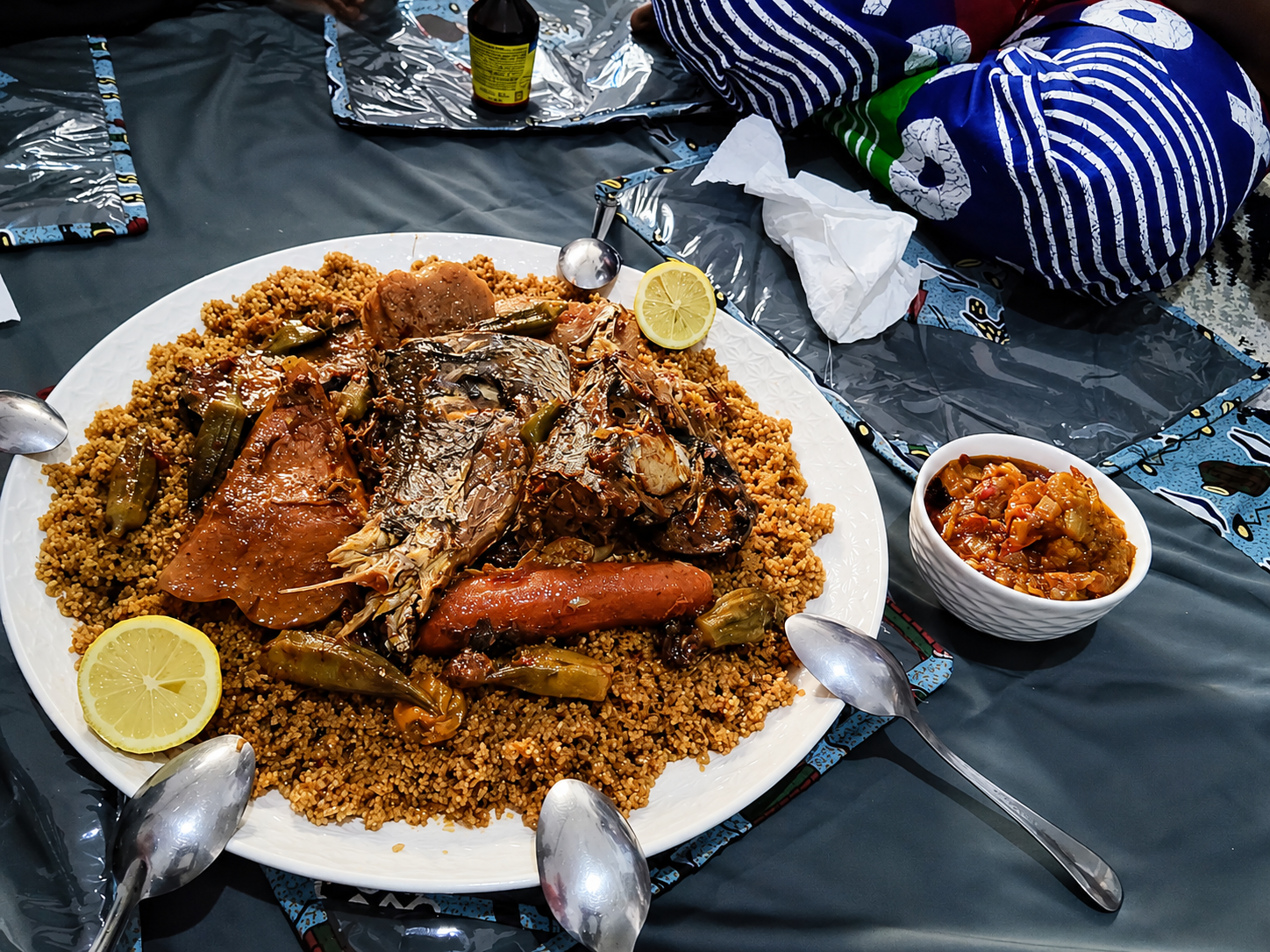
a. An aromatic pillar of West African cuisine The Scotch Bonnet is absolutely central to West African cuisine. In this region, it often goes by local names, such as "ata rodo" in Nigeria (Yoruba), "piment antillais" or simply "fresh chili" in Senegal, "kôkô donda" in certain areas of Ghana, or "pepé" in Côte d'Ivoire. There is almost no sauce, stew, soup, broth, or marinade that does not contain it. Among the emblematic dishes using Scotch Bonnet, one can cite: MAFE, a peanut sauce often spiced up with whole pieces of Scotch Bonnet that infuse their power into the stew. THIEBOUDIENNE (Senegalese fish and rice), whose tomato-chili sauce relies on crushed chilies including Scotch Bonnet. JOLLOF RICE, a popular dish in Nigeria, Ghana, and other countries, where Scotch Bonnet is pounded with tomatoes, onions, and ginger for a rich and spicy sauce. Vegetable, leaf, or seed sauces (gboma, palava, okra sauce), all spiced with Scotch Bonnet. b. A versatile ingredient Fresh, whole or cut: To gently infuse a dish, it is plunged whole (sometimes with a small incision) into soups, stews, or beans, then removed before serving to limit the spread of heat. Crushed or pounded: It is pounded with garlic, ginger, or other aromatics to form a base (the famous "chili paste") that serves as the starting point for almost all dishes or as an accompanying condiment. Fried or grilled: To reveal new grilled or caramelized notes, the Scotch Bonnet can first be fried in oil. It then accompanies meats, fish, or starches. In marinades: It enhances chicken, fish, or lamb marinades, thanks to its aroma and heat, often mixed with garlic, fresh herbs, and lime. Puree or hot sauce: Purees such as Ghanaian "shito," Nigerian "ata din din," or Ivorian "sauce piment" use fresh Scotch Bonnet, sometimes with sun-dried tomatoes, dried fish, or spices. c. In street food and condiments The Scotch Bonnet is omnipresent in African street food. It enhances: Skewers (suya, chichinga), where chili powder caramelizes on grilled meat. Fritters (akara or koeksister), dipped in a spicy sauce. Pancakes, fried vegetables, or "alloco" (fried plantain). It is also found transformed into condiments: dry powder, fermented chili, raw sauces, infused vinegars. Prepared artisanally, Scotch Bonnet is sold in all African markets.
In my books

Continue exploring the continent’s cuisines with Africa at the Table — 54 countries, 54 iconic dishes, by Alioune FALL. This book is in English.
Explore further
4. THE SYMBOLISM AND SOCIAL PLACE OF CHILI
In many African cultures, adding chili to the table is an affirmation of character, belonging to the community, or conviviality. The Scotch Bonnet embodies this culinary pride: knowing how to "handle" chili is sometimes a rite of passage into adulthood. Proverbs, jokes, and rituals refer to it: offering a very spicy sauce to a guest is a way to "test" them, but also to welcome them warmly. Among the Akan of Ghana or the Wolofs of Senegal, "hot chili" symbolizes strength, vitality, and joy of life.
5. VARIETIES, CULTIVATION, AND ECONOMIC IMPORTANCE
The Scotch Bonnet has been acclimatized throughout Africa under different names and in very varied climatic conditions. Several varieties are distinguished, from pale yellow to bright red. Its cultivation requires warmth, moderate humidity, and well-drained soils. It often grows in the same plots as corn, cassava, or leafy vegetables. Economically, chili is one of the most cultivated and traded fruit-vegetables in tropical Africa. It constitutes a major financial resource for small producers and, in some countries, is exported to diasporas (United States, Europe). The Scotch Bonnet is thus present in rural markets as well as in modern large-scale distribution.
6. HEALTH, PRECAUTIONS, AND MODERNITY
The Scotch Bonnet, consumed in moderation, is beneficial: It stimulates appetite, digestion, and its antioxidants fight against the formation of free radicals. It plays a traditional role in local medicine: decoctions against colds, poultices against pain. It is credited with anti-inflammatory and antimicrobial properties. But its potency requires caution: it can cause gastric burns, skin and mucous membrane irritations. It is advisable to use it moderately, especially for children, pregnant women, or fragile individuals. With globalization and the rise of fusion cuisine, the Scotch Bonnet is now invited into Michelin-starred kitchens, in African food courts in London or Paris, artisanal sauces, spicy chips, and even African molecular gastronomy.
7. THE SCOTCH BONNET, AN AFRICAN CULINARY IDENTITY
Nothing symbolizes the fire, warmth, and fervor of African cuisine better than the Scotch Bonnet. Far beyond a simple chili pepper, it is a marker of identity, a revealer of terroirs, gestures, and know-how passed down from generation to generation. The Scotch Bonnet crystallizes the diversity of the continent: from the "small sauce" of Malian women to the refined West African cuisine of contemporary Lagos, from South African braai to Douala barbecues, it adapts, transforms, and tells its story in a thousand recipes and traditions.
CONCLUSION In summary, the Scotch Bonnet is much more than an ingredient: it is the beating heart of African gastronomy. It symbolizes conviviality, generosity, sharing, the power and vitality of the peoples who cultivate, prepare, and savor it. Its strength and aroma continue to permeate the cuisines of Africa today, between tradition and innovation, and make it indispensable both in family pots and in contemporary African and diasporic haute cuisine. The Scotch Bonnet has not finished thrilling palates worldwide, in all the splendor and warmth of Africa.
In the kitchen : Scotch bonnet
Recipes from the site to put your knowledge into practice:
Discover these cuisines at a restaurant
Explore our restaurant and caterer directories. Choose your destination and check the establishment’s menu to confirm which dishes are offered and available.
Continue exploring
Enjoy discovering ingredients and African cuisines? Join our newsletter. The illustrated PDF 10 sauces africaines incontournables is in French and is offered after confirming a subscription to the French or bilingual edition.