Superkanja
Mandinka (Gambia), Senegal
Understanding : Superkanja
INTRODUCTION
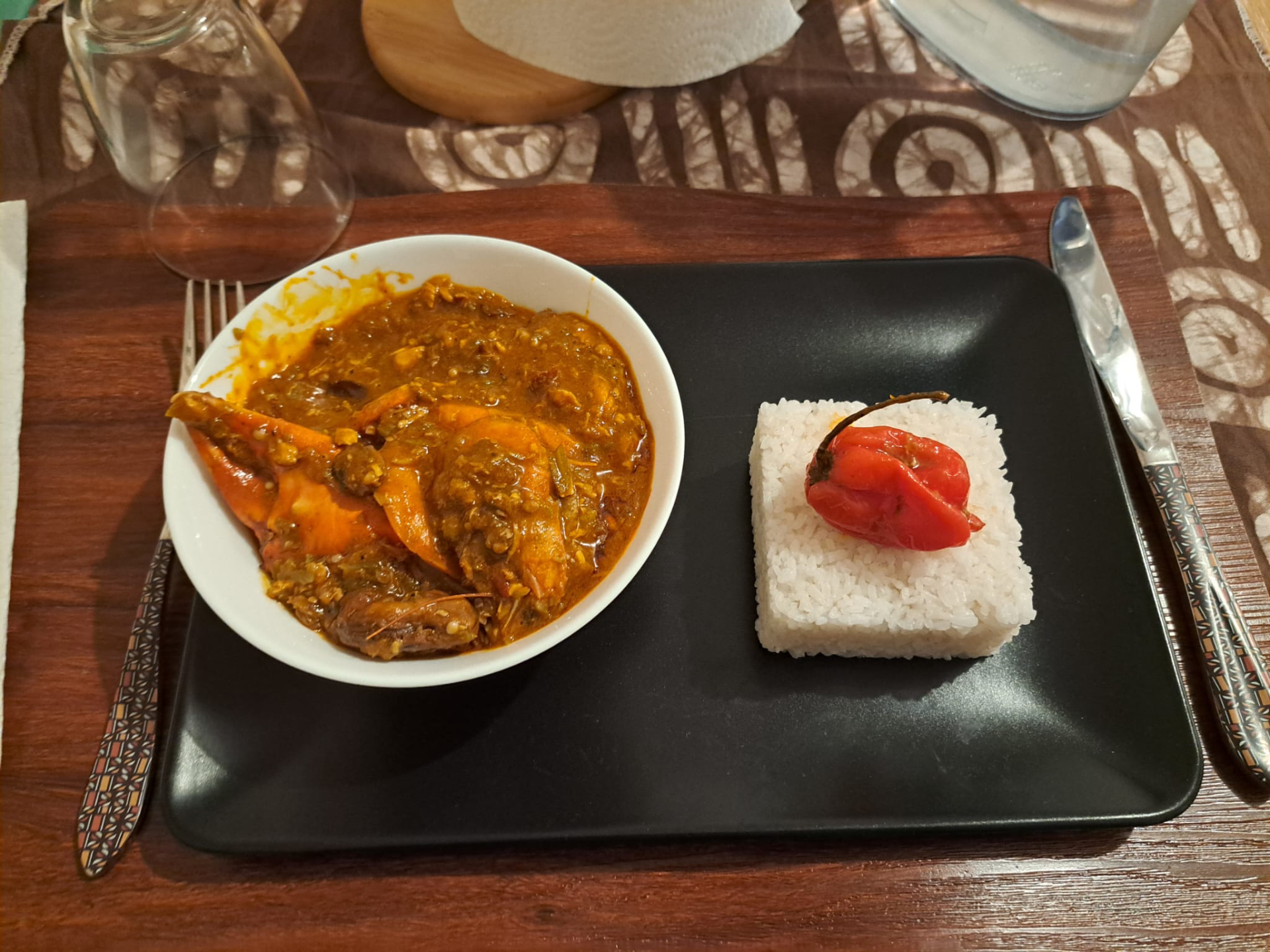
Superkanja, sometimes spelled “super canja” or “supekanja,” is a thick, vegetable-based soup, both humble and festive, extremely popular in Gambia and Senegal, but also appreciated in a large part of coastal West Africa. This dish, made with okra, green vegetables, meat, fish (smoked, dried, or fresh), and condiments, beautifully embodies the mixed, vibrant, and resilient cuisine of the communities along the Gambia River and in the Mandinka, Wolof, or Jola regions. The uniqueness of superkanja lies in its ability to bring together — in a single pot — products from the field, garden, river, and market. It offers an infinite number of variations, providing countless possibilities for adaptation to seasons, living standards, celebrations, or ordinary days. Whether it is a main dish, a daily stew, a collective celebration, or a recovery meal, it holds a central place in culinary transmission, sociability, and West African food heritage. This detailed text will outline the history, techniques, the richness of ingredients, and regional variations of superkanja, while also explaining its nutritional, social, and identity value, and its place in modern African life.
1. HISTORY, ORIGINS, AND SPREAD OF SUPERKANJA
1.1. Agricultural and Riverine Roots The history of superkanja is linked to that of okra. A plant native to Africa (Sudan, ancient Egypt, Sahel, Senegal), okra (Abelmoschus esculentus) has always played a fundamental role in African cuisines for its thickening qualities, nutritional contribution, productivity, and resilience. Disseminated by Mandinka, Dioula, Wolof, and Fulani migrations, then by trade and slave routes, it has become the base of several sauces, soups, and stews (tiguadèguè, sauce feuille, gumbo in the American diaspora, ebibon in the Caribbean). Superkanja is prominent on both banks of the Gambia River, in the greater Senegambian basin, where Fulani influences (thick beef or lamb soups), Mandinka influences (versatile use of okra, dried fish, and rice), and Creole influences (multilingual fusion) meet. Superkanja thus crosses ethnic and geographical boundaries. 1.2. Meaning of the Name • “Kanja” refers to okra in Wolof and Mandinka languages. “Super” signifies both the abundance of the mixture and the “improved soup” served on festive days, to honored guests, or on special occasions. • Pronunciation varies, but everywhere superkanja refers to a unifying, nourishing, “superfood” dish. 1.3. Modern Spread Today, superkanja is not only Senegambian: it is found in Guinea Bissau, Sierra Leone, in certain regions of Ghana and Nigeria (where “okra stew” resembles it), and is becoming a star of African brunches and Afro-fusion cuisine in Europe or America.
2. INGREDIENTS, TECHNIQUES, AND MAIN PREPARATION STEPS
2.1. Traditional Ingredients • Fresh okra (8 to 20 units for a family dish): the central ingredient, finely sliced to promote the mucilaginous texture. • Leafy greens (bitterleaf, sweet potato leaves, spinach, cassava leaves, chickweed, lalo, jute mallow) – variable according to season and region. • Dried fish, smoked fish (yaka, guedj, kong, bonga), dried shrimp — for umami flavor. • Meat (generally beef, lamb, bush chicken, sometimes offal for more flavor). • Crab or seafood (for special occasions or depending on proximity to the coast). • Pounded peanuts or peanut paste — in some village versions. • Fresh or concentrated tomatoes, onions, garlic, ginger. • Fresh chili (pili-pili or bird's eye chili type), bell pepper. • Palm oil (red), peanut oil: traditional, although oils can be mixed or replaced with vegetable oil for a “lighter” version. • Bouillon cube, salt, pepper, lime (to finish). 2.2. Preparation Techniques
- Preparing the Bases • Meats are cut into pieces, possibly blanched then cooked in water (flavored broth). • Dried/smoked fish is rinsed and deboned, rehydrated. • Vegetables are washed, stemmed, finely chopped.
- Creating the Base • An onion is sautéed in oil, then meat/fish is added to brown them well. • Garlic, ginger, tomato, and spices are crushed and incorporated. • The meat cooking broth, leafy greens, sliced okra, and then dried fish are added, and everything is left to simmer very gently.
3. Gradual Assembly
• The dish should reduce, coat the spoon, form “threads” of okra, ensuring the binding between each component. • Fresh chilies and tomato paste are added at the end so as not to overpower the okra flavor.
4. Finishing Touches
• Depending on the family, a squeeze of lime juice, roasted peanuts, crab, or poached fresh fish are added at the end of cooking. • Seasoning is adjusted with salt, cube, pepper, and scum is removed if necessary. • The finished dish is served piping hot, sometimes accompanied by a zest of bitter orange peel. 2.3. “Everyday” vs. “Special Occasion” Variant • Simple version: less meat or no meat at all (subsistence cooking, vegan version), only garden vegetables and dried fish. • Rich version: abundance of ingredients, varied textures (meat, fish, crab, multiple vegetables), served at baptisms, religious festivals, weddings, market returns, or family gatherings. 2.4. Accompaniments • Plain white rice (classic in Gambia/Senegal) • Fonio, pounded corn, fufu, or millet (rural versions or Sierra Leone, Guinea) • Sometimes bread or boiled yam.
-
SOCIAL, IDENTITY, AND HERITAGE PLACE 3.1. Sharing Soup • Superkanja is mostly consumed as a family, from a communal bowl. • Symbol of hospitality: a bowl of superkanja is not refused to a stranger, visitor, or friend. • It enlivens family gatherings, Christian and Muslim celebrations, birth festivities, pilgrimage returns, funerals (because it nourishes, warms, and comforts). 3.2. Transmission and Femininity • The perfect preparation of superkanja distinguishes the “good hand” in the family. It is evaluated on the fineness of the okra cut, the aromatic richness, and the ability to “bind” the ingredients. • Knowledge passed from mother to daughter, a source of pride, sometimes a test during weddings, welcomes, rites of passage. 3.3. Identity and Diaspora • A flagship dish for brunches, festive tables, “Afro” restaurants, an ambassador of Senegambian and Mandinka terroir in Europe, America, and the Middle East. • Recipes are shared on social networks, YouTube, and Afro culinary blogs, reaffirming the centrality of the dish for the memory of exiles.
-
NUTRITIONAL VALUE AND HEALTH BENEFITS 4.1. Biological Richness • Okra: rich in mucilage (soluble fiber beneficial for digestion), potassium, calcium, vitamins C, A, and K; low in calories, antioxidant. • Leafy greens: excellent source of folate, iron, magnesium, phytopigments. • The combination of meat/fish/vegetables offers a complete spectrum of amino acids, essential minerals, and quality proteins. • Peanuts and palm oil provide fatty acids, tocopherols (vitamin E), provitamin A. • Broth obtained by slow cooking: very digestible, remineralizing, highly recommended for children or the elderly. 4.2. Digestive and Immune Benefits • Superkanja “lubricates” the intestines (thanks to okra), soothes the stomach, and fights constipation. • Rich in essential micronutrients, it protects against many dietary deficiencies (especially during lean periods or illnesses). • Constitutes a complete, satisfying, light, and comforting food, recommended for convalescents, pregnant or breastfeeding women, and children.
5. MODERNITY, CREATIVITY, AND URBAN DIVERSITY
5.1. Afro-fusion and Veganism • Adapted to vegetarian diets (replacement of meats/fish with tofu, vegetable proteins, African mushrooms). • Available in creative versions: superkanja with coconut milk, superkanja with tartares, gratins, wraps, Afro-urban bowls. • Integration into street food: takeaway portions, artisanal preserves. 5.2. Gastronomy and Innovation • Star chefs in Africa or the diaspora revisit the dish, lighten it, emulsify it, play with textures, introduce new local or exotic vegetables (zucchini, celery, kale), present superkanja in verrines, gnocchi, espuma. • Organic ingredients, local products, innovative combination of seeds and oils, emphasis on “slow food” nutrition. 5.3. Diaspora and Export • In the diaspora, superkanja has become the king dish of communal tables, Afro brunches, and ethnic canteens. • Its “superfood” aspect now attracts nutritionists and food influencers, propelling it into international culinary magazines.
6. CHALLENGES AND PERSPECTIVES
• Industrial standardization: the “homemade” taste is threatened by cubes and ready-to-use sauce bases. • Urbanization: scarcity of traditional ingredients (fresh okra, certain leaves), necessity of urban adaptation. • Transmission / Modernization: preservation of know-how, oral transmission, documentation, valorization among younger generations. • Risk of overcooking micronutrients: encourage gentle cooking, late addition of certain vegetables to preserve their value.
CONCLUSION Superkanja carries the richness of the land, rivers, and people of West Africa: a hybrid, warm, creamy, festive, everyday dish, a mirror of Mandinka and Senegambian conviviality. It embodies the resilience, creativity, heritage, and innovation of African cuisines, while ensuring the health, flavor, solidarity, and future of a living and shared identity. To cook, share, and transmit superkanja is to defend an Africa proud of its roots, inventive in the face of its challenges, and more united than ever around a fragrant pot, a source of taste, well-being, and memory.
Prepare this speciality
Choose a detailed recipe, adjust the portions and prepare your ingredients before starting. Our cooking tips and food safety advice complement the steps described in the recipes.
Explore further: Cooking tips · Food hygiene and safety advice.
In my books
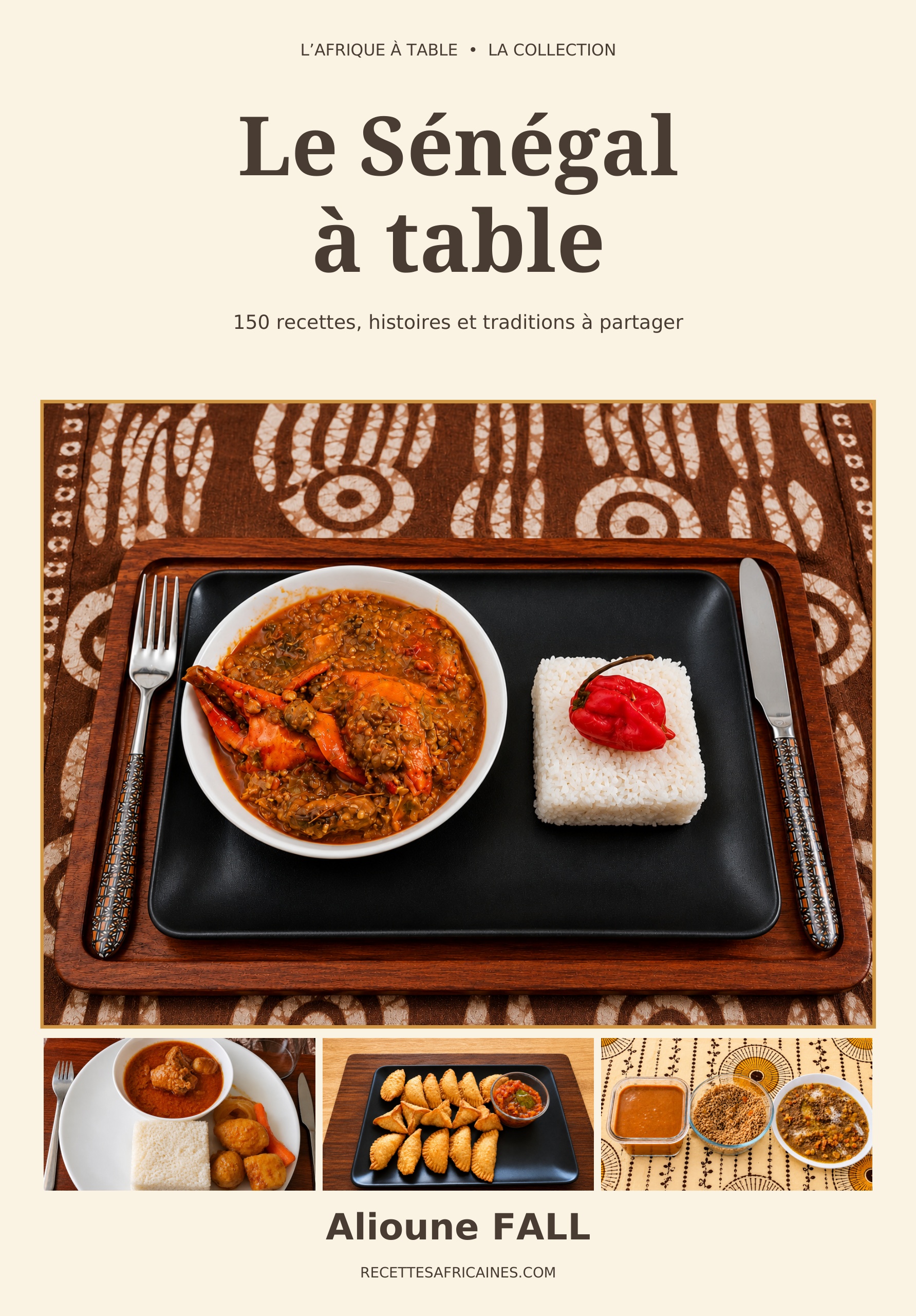
Explore Senegalese cooking with Le Sénégal à table, my collection of 150 recipes, stories and traditions to share. This book is in French, by Alioune FALL.
In the kitchen : Superkanja
Recipes from the site to put your knowledge into practice:
Discover these cuisines at a restaurant
Explore our restaurant and caterer directories. Choose your destination and check the establishment’s menu to confirm which dishes are offered and available.
Continue exploring
Enjoy discovering ingredients and African cuisines? Join our newsletter. The illustrated PDF 10 sauces africaines incontournables is in French and is offered after confirming a subscription to the French or bilingual edition.