Yassa
Diola (Casamance, Senegal)
Understanding : Yassa
INTRODUCTION
Yassa is one of the emblematic dishes of West Africa, particularly Senegal and Gambia. Recognized for its iconic onion and lemon-based sauce, spiced with chili and other seasonings, and often accompanied by chicken (Yassa Ginaar), fish (Yassa Poisson), or other meats, yassa embodies conviviality, the warmth of sharing, and culinary expertise passed down through generations. A dish that is both modest in its ingredients yet subtle and complex in its result, yassa demonstrates the innovative capacity of African cuisines. It has spread throughout the region, then within the diaspora, and today represents, like thieboudienne, a “signature dish” of Senegalese, Gambian, Malian, Guinean, and generally African tables. This essay aims to explore in detail the genesis, technical secrets, social, historical, and contemporary identity dimensions, as well as the universal scope of yassa in African cuisine.
Prepare this speciality
Choose a detailed recipe, adjust the portions and prepare your ingredients before starting. Our cooking tips and food safety advice complement the steps described in the recipes.
Explore further: Cooking tips · Food hygiene and safety advice.
History and uses
1. HISTORY AND ORIGIN OF YASSA
1.1. Casamance roots and Senegalese-Gambian evolution Yassa draws its roots from the southern region of Senegal, Casamance. This lush land, inhabited by Diola, Mandinka, Balanta, Fulani, Wolof, and Manjack populations, is renowned for the richness of its food production (onions, limes, peanut oil, rice, poultry, and river or ocean fish). Oral history and ancient testimonies link the creation of yassa to the strategy of preservation and flavor enhancement. Local products (bush chicken, fresh fish) were marinated in onions and lemons to “soak” them and preserve them from the heat, then cooked slowly to tenderize and flavor them, before being served on a bed of local rice. The name “yassa” became established as designating this particular way of preparing, and then, as the dish conquered Dakar, Gambia, and Mali, it became a staple for celebrations and family meals. 1.2. Regional spread and adoption Today, yassa is found everywhere in coastal and inland West Africa, both in rural homes and in restaurants in Abidjan, Banjul, and Conakry. It is adopted on African menus in the diaspora (Paris, London, New York, Montreal, Brussels…), and appears in African fast-food establishments as well as in fine dining, reflecting the ability of African cuisines to transmit, innovate, and engage with other culinary cultures.
2. INGREDIENTS, TECHNIQUES, AND PREPARATION SECRETS OF YASSA
2.1. Key ingredients • Chicken or fish (whole or cut: thigh, wing, breast, sea bream, captain fish, mullet, tilapia…) • Onions (a lot! – sometimes up to 1 kg for 1 kg of chicken). The sweet yellow onion from the Senegal River valley is renowned for authentic yassa. • Fresh limes (juice and slices), sometimes replaced or supplemented with vinegar to enhance acidity. • Garlic and fresh or dried chili (cayenne, pili-pili, depending on heat tolerance). • Dijon mustard or African mustards (sometimes, in urban/modern versions). • Bouillon cube, salt, black pepper, bay leaf, thyme, ginger (fresh or ground), sometimes a hint of olive or peanut oil. 2.2. Technical steps
- Marinade o Wash and dry meat or fish thoroughly. o Soak the main ingredient in a mixture of lemon juice, part of the sliced onions, crushed garlic, chopped chili, salt, pepper, mustard — for 1 to 12 hours so that the flesh absorbs the aromas and acidity.
- Searing/grilling o Remove the meat from the marinade, sear it over high heat (pan, grill, embers) to form a beautiful golden crust and enhance the flavor, then set aside. Fish can also be grilled over embers to accentuate the smoky flavor.
- Caramelized onion base o In a deep pot, sauté a very large quantity of onions (often more than half the weight of the dish) for a long time in a mixture of oil, aromatics, and the rest of the marinade, to obtain a sweet, candied but not burnt sauce.
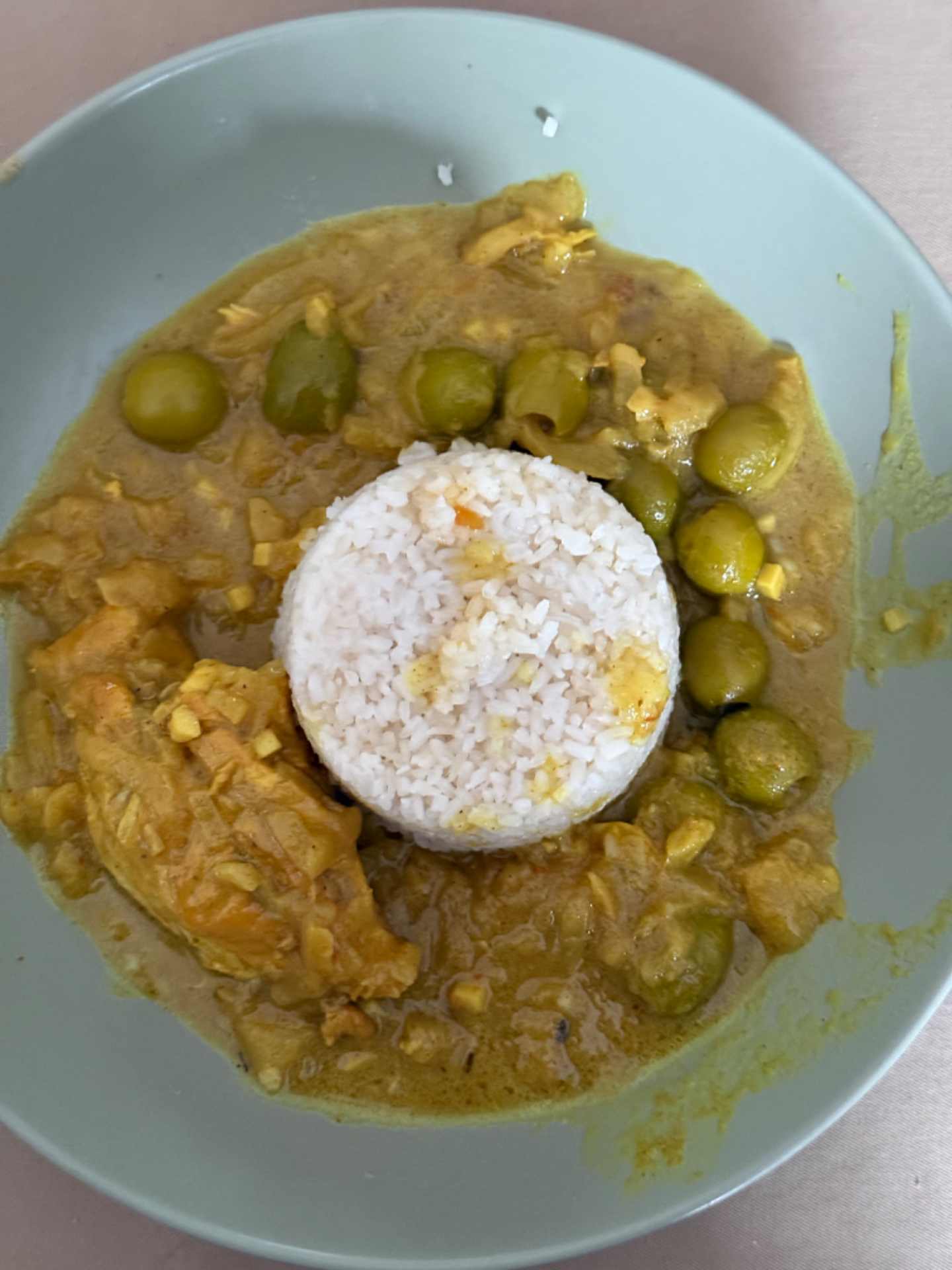
- Simmering and assembly o Combine the grilled meat/fish, the onion and marinade sauce, drizzle with remaining lemon juice or vinegar, add a little water, flavor with bay leaf, thyme — sometimes a few green olives. o Cooking continues slowly, covered, until the sauce reduces, coats the meat or fish, which becomes tender and flavorful.
- Finishing o Check seasoning, adjust with pepper or chili if needed. Some add olives, candied lemon quarters, carrots, or turnips to personalize.
- Serving o Yassa is served very hot on a bed of white rice, couscous, sometimes fonio, yam, or potatoes in certain variations.
3. REGIONAL VARIATIONS AND ADAPTATIONS
3.1. Chicken Yassa (Ginaar) The most widespread and exported version: chicken thighs or whole chicken, marinated, then grilled or fried, slowly simmered with the onion-lemon sauce. “Bicycle chicken” (local, free-range chicken) can be used for a firmer texture. 3.2. Fish Yassa River or sea fish, often whole, marinated, braised or fried, cooked in the sauce — a star in coastal regions (Dakar, Saint-Louis, Banjul), a Friday dish or for special occasions (return from fishing, baptism). 3.3. Mutton, beef, rabbit, vegetable Yassa In pastoral regions or for innovation, beef, lamb, rabbit, seafood, or even meatballs can replace chicken/fish. 3.4. Vegetarian, vegan, and Afro-fusion versions • Substitution with tofu, seitan, roasted vegetables (cauliflower, sweet potato), to meet contemporary, urban, or diasporic demand. • Addition of pineapple, mango, fresh ginger, coconut vinegar, “exotic” vegetables (bell pepper, zucchini, squash) in trendy “Afro-fusion” restaurants in Paris, Montreal, Berlin.
In my books
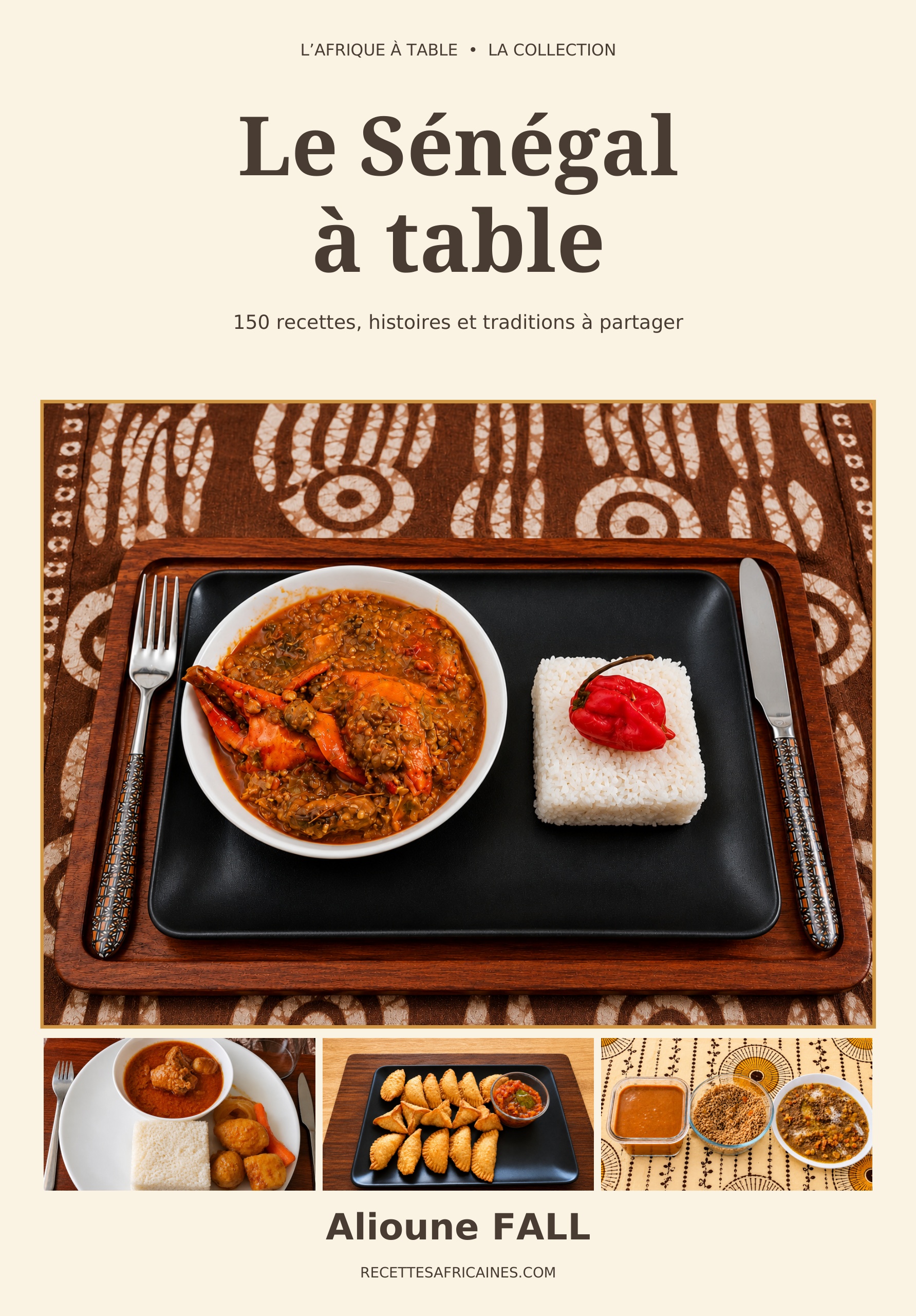
Explore Senegalese cooking with Le Sénégal à table, my collection of 150 recipes, stories and traditions to share. This book is in French, by Alioune FALL.
Explore further
4. SOCIAL, IDENTITY, AND RITUAL ROLE OF YASSA
4.1. Festive and sharing meal Yassa is a dish of sharing, hospitality, and generosity. It structures weekend meals, family celebrations, returns from exile or travel, and reunions between neighbors. In Senegal, in Casamance, it is associated with the Tabaski festival, baptisms, weddings, and the reception of an honored guest. Preparing a “good yassa” for a foreigner is opening one's heart and home to them. 4.2. Transmission, know-how, and memory Yassa is a marker of household competence. The preparation of a successful yassa, where the “crying” onions will coat a golden chicken well impregnated with lemon, is the pride of the mother or grandmother, who teaches her daughter or daughter-in-law the secret dosage of lemon, the duration of the marinade, the gentleness of the heat. 4.3. Symbolism of resistance • Yassa also symbolizes the adaptability of African cuisine in the face of poverty, the harsh dry season (where onion and lemon are often the only abundant aromatics), or overfishing (use of less valued fish, adaptation with other meats).
5. NUTRITIONAL CONTRIBUTIONS, HEALTH, AND VALUES
• Yassa is a complete dish: proteins (meat, fish), carbohydrates (rice, fonio), fiber, and micronutrients (onion, lemon, chili). • Onion, very present, is a source of antioxidants, anti-inflammatories, supports digestion, and cardiovascular health. • Lemon provides vitamin C, flavonoids, boosts flavor and meat digestibility. • Chili, in addition to enhancing taste, protects against various infections (antimicrobial properties). • Low in fat if grilled, dietary if served without excess oil.
6. FROM MODERNITY TO THE DIASPORA
6.1. African diaspora and adaptation Yassa has become the “test” dish for the expatriate African cook. It is cooked for major celebrations, during Ramadan, associative meals, in African school canteens in Europe, across the Atlantic, in Afro gastronomy festivals, or volunteer cooking workshops. 6.2. Innovation and Afro-fusion • Young chefs revisit it with organic free-range chicken, locally caught fish, new citrus fruits, world spices. • Afro food trucks offer yassa-burgers, wraps, pies, or yassa “bowls”. • Integration into the menus of Michelin-starred restaurants (especially in France, England, Canada) as an Afro “signature dish”. • Vegan, gluten-free, lactose-free versions, adapted to global dietary demand. 6.3. Contemporary issues • Safeguarding local African rice against subsidized imported rice. • Preservation of free-range chicken, artisanal fishing, protection of the African onion and citrus sectors (“Rosso onion” in Mauritania/Senegal, “Casamance lemon”).
7. LIMITATIONS, CHALLENGES, AND PERSPECTIVES
• Vulnerability of ingredients (lemon tree diseases, soaring onion prices). • Threat of recipe impoverishment (use of industrial spices, lack of long marination, “quick” recipes). • Challenge of transmission: fewer young people cook “authentic” yassa at home. • Need for documentation, “traditional yassa” labeling, culinary education during heritage days or African festivals.
CONCLUSION Yassa is much more than a dish: it is the memory, conviviality, resilience, and openness of African cuisine. Behind the citrus scent, the sweetness of the onion, the warmth of the chili, lies the richness of a people, a landscape, a history. It connects family, neighbors, hosts, perpetuates the art of sharing and refinement, symbolizes the capacity of a modern Africa to honor, reinvent, transmit, and showcase its gastronomic heritage. Preserving, celebrating, and introducing yassa means supporting a proud, flavorful, welcoming, innovative Africa: an Africa at the table, ready to charm the world.
Practical notes and Senegalese terminology
Ginaar or guinaar means chicken: this name should not label the fish version. Both yassas share a tangy onion sauce but require different handling. Delicate fish tolerates prolonged acidic marinating and repeated handling less well. Soften the onions without burning them, then adjust the lemon at the end.
In the kitchen : Yassa
Recipes from the site to put your knowledge into practice:
Discover these cuisines at a restaurant
Explore our restaurant and caterer directories. Choose your destination and check the establishment’s menu to confirm which dishes are offered and available.
Continue exploring
Enjoy discovering ingredients and African cuisines? Join our newsletter. The illustrated PDF 10 sauces africaines incontournables is in French and is offered after confirming a subscription to the French or bilingual edition.