Dawadawa
West Africa
Understanding : Dawadawa
INTRODUCTION
Dawadawa — sometimes spelled soumbala, iru, netetou, or ogiri depending on the region — is an ancestral fermented condiment pivotal to West African cuisine, celebrated for its powerful aroma, umami richness, and culinary versatility. Primarily made from the seeds of the néré tree (Parkia biglobosa), a magical tree of the savannas, it holds a prominent place in local markets, the peasant economy, and the culinary heritage of the Mandé, Fulani, Hausa, Gourmantché, Yoruba, Senufo ethnic groups, and beyond. Long marginalized in favor of industrial bouillon cubes, it is now experiencing a resurgence among enthusiasts of authentic, natural, and sustainable cuisine. Dawadawa is not limited to its aromatic power; it carries the history of the resistance of African know-how in the face of globalization, the transmission of traditional processing techniques, and testifies to an organic relationship between terroir, cuisine, and the sacred.
This detailed portrait explores the origin, artisanal knowledge, culinary uses, nutritional value, social and ritual dimensions, and the future of dawadawa, the brown gold of African cuisine.
Where to find it
Look for the exact food-grade form required by the recipe at markets and specialist shops. Check the product name, ingredients, condition and storage instructions.
Explore further: Cooking tips · Food hygiene and safety advice.
History and uses
1. ORIGIN AND HISTORY OF DAWADAWA
1.1. The dawadawa tree: the néré The néré (Parkia biglobosa), also known as African locust bean or sweet flour tree, grows in the Sudano-Sahelian savanna: from Senegal to Nigeria, Ghana to Cameroon, Mali to Burkina Faso, and the far north of Côte d'Ivoire. It is a majestic tree, reaching up to 20 meters, producing long pods containing hard seeds surrounded by a sweet pulp. The néré is one of West Africa's quintessential food trees. It provides: fodder, wood, medicine, natural fertilizer, sweet fruits, and precious protein in the form of seeds. 1.2. Fermentation, an ancestral technique The processing of seeds to produce dawadawa is part of a long tradition of controlled fermentation, an art passed down from generation to generation. Archaeobotanical traces of néré have been found in hearths over 1,000 years old. Dawadawa, or soumbala, has thus accompanied the history of West African gastronomy since the dawn of great kingdoms. 1.3. Regional and lexical variability Iru (Yoruba): Nigeria, Benin, Togo Soumbala (Manding, Bambara, Dioula): Mali, Burkina Faso, Côte d'Ivoire, Guinea, Ghana Dawadawa (Hausa, Twi): Ghana, Nigeria, Niger Netetou (Wolof, Serer, Senegal) Ogiri (Igbo, Nigeria): sometimes made with other plants (melon, pigeon pea, castor bean) Each people adapts the process, sometimes the raw material, but the spirit remains common: to produce a "natural broth" that enhances, nourishes, and symbolizes.
2. TRADITIONAL PRODUCTION OF DAWADAWA
The long and meticulous method is carried out by women, guardians of the secrets of fermentation, drying, and seasoning. 2.1. Harvesting and preparing the seeds Gathering ripe néré pods during the dry season Recovering the seeds ("African beans") extracted from the sweet pulp (the pulp is often consumed as a sweet treat or beverage ingredient) Separating, thoroughly washing, then sun-drying 2.2. Cooking Prolonged cooking in water (often several hours, until the seeds soften) Dehulling / pounding to remove the thin skin, using wooden or stone tools 2.3. Fermentation Burying: cooked seeds, peeled, piled in banana leaves, covered with leaves/fibers Natural fermentation (2 to 4 days, depending on ambient heat): the paste browns, emits a powerful odor, a sign of bacterial development (Bacillus spp.), synthesizing the famous "umami" flavor 2.4. Finishing Kneading: depending on the region, it is ground, shaped into balls, patties, cubes, or granules Drying: in the sun or on racks above the kitchen fire (to improve preservation) Storage: in dry pots, leaves, or containers; keeps for weeks to months. 2.5. Sensory aspect Dawadawa (soumbala) has a brown-black color, a fibrous, sometimes sticky texture, a strong odor (sometimes described as “cheesy,” “chocolatey,” or “fermented fish”), and an inimitable salty and umami flavor.
3. PLACE AND USES OF DAWADAWA IN AFRICAN CUISINE
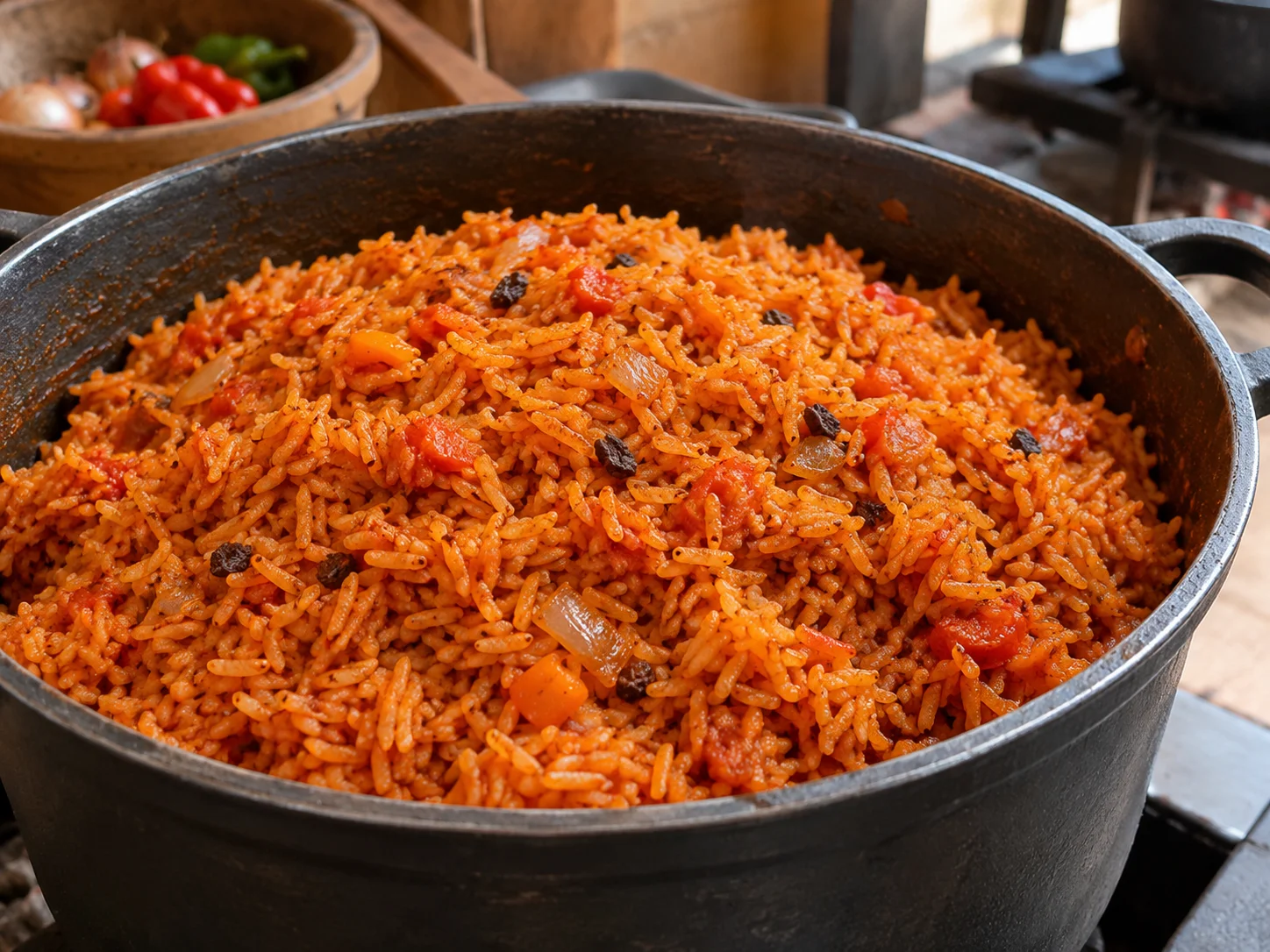
3.1. Broth and flavor enhancer Dawadawa is the "ancestor" of the African Maggi cube: a true natural umami concentrate used to add depth and flavor to all preparations: Soups and broths: peanut sauce (“mafé”), palm nut cream sauce (“sauce graine” Ivorian), leafy green sauce, vegetable broth, soupou kandja (okra) Grain dishes: jollof rice, fonio, couscous, tô, zamè Meat stews, fish stews, bean-based dishes Stews and tomato sauces: in Ghana and Nigeria, iru or dawadawa paste is incorporated into the base to add flavor. 3.2. Side dish, condiment, and marinade Marinade for fish, meat, where it acts as a “natural glutamate” while adding a fermented note. Topping on sautéed vegetables, mashed yams, or millet pancakes. 3.3. Street food, market, and hospitality In powder, grated, crumbled, or dissolved in a little water, it is present in all traditional markets: every mama sells or offers her own version, whether a ball or cracker, to accompany bread, grilled skewers, or cooked moringa leaves.
In my books
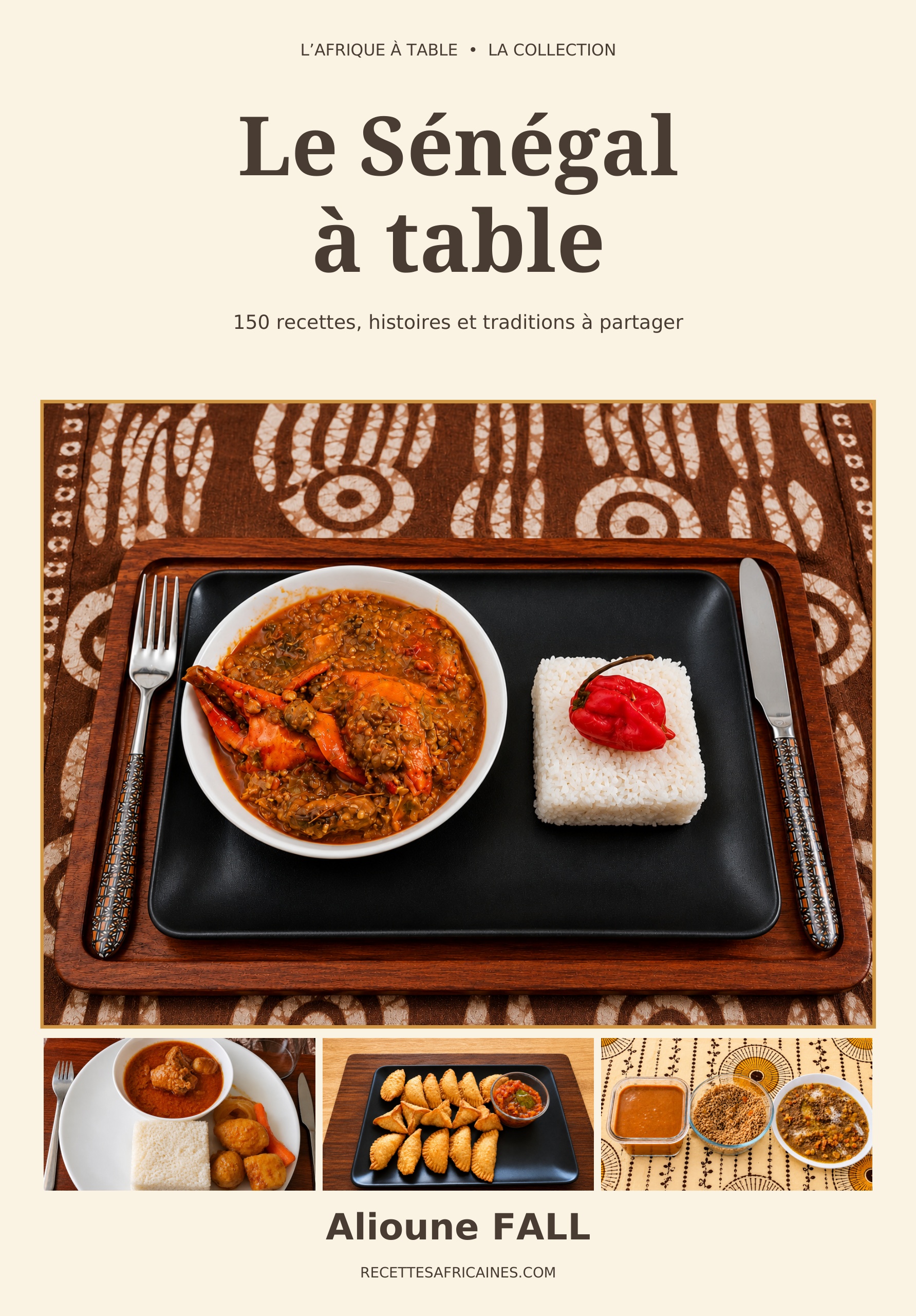
Explore Senegalese cooking with Le Sénégal à table, my collection of 150 recipes, stories and traditions to share. This book is in French, by Alioune FALL.
Explore further
4. NUTRITIONAL VALUE AND BENEFITS OF DAWADAWA
4.1. Rich source of protein and micronutrients Dawadawa contains: Up to 40% protein (after cooking and fermentation) All essential amino acids, abundant dietary fiber Minerals: calcium, potassium, iron, phosphorus, zinc B vitamins, moderate vitamin A The fermentation process increases the bioavailability of certain nutrients (iron, zinc, B vitamins), destroys anti-nutritional factors present in raw seeds (trypsin inhibitors, phytates), and enriches the preparation with beneficial enzymes and probiotics. 4.2. Recognized health effects Stimulates digestion, supports gut flora (mild probiotic effect) Good source of protein, an economical alternative to meat or fish for low-income families Role in combating malnutrition (used in recipes for breastfeeding mothers, growing children) Satiating effect, useful in rural areas or during lean seasons Antioxidants, protective role considered against certain diseases (diabetes, hypertension according to local studies)
5. SOCIOCULTURAL, ECONOMIC, AND RITUAL DIMENSION
5.1. Dawadawa, female heritage and local economy Its production is, in most societies, reserved for women. It plays an essential role in the rural micro-economy (small markets, processing sector). The sale of soumbala provides independence and social recognition to many African women. 5.2. Cultural and culinary identity The taste of dawadawa or soumbala is a “taste of childhood,” a reminder of the terroir, of the grandmother preparing the sauce, of harvest festivals or weddings. It is an identity marker: distinguishing between a “good” and a “bad” sauce means judging the quality of the soumbala. 5.3. Ritual and symbolism In Mali and Burkina Faso, soumbala accompanies birth rituals, the sharing of couscous at weddings, and offerings to ancestors during the dry season. Sometimes, it is sacralized, associated with fertility or prosperity.
6. VARIATIONS, INNOVATIONS, AND THE FUTURE OF DAWADAWA
6.1. Botanical alternatives Faced with the scarcity of néré in some regions, producers also offer: fermented sesame (benne), melon seeds (egusi/ogiri), pigeon peas, soybeans, or even local beans, while maintaining the traditional fermentation method. 6.2. Gastronomic renewal and valorization Young African chefs are reinterpreting dawadawa: they incorporate it into vinaigrettes, modern sauces, sprinkle it on carpaccio or crunchy vegetables, and associate it with vegetarian or fusion cuisine. Its health and sustainable development benefits are also being rediscovered in contrast to seasoning cubes and their additives. 6.3. Integration into urban and international markets Agri-food sectors are organizing to standardize, valorize, and package soumbala/dawadawa in powder, paste, or cube form, and to limit its odor (sometimes a barrier to its adoption outside its traditional regions). Agronomic projects aim to replant néré, improve yields, and preserve this extraordinary heritage.
CONCLUSION Dawadawa, in its gustatory power, modularity, and historical depth, is much more than a simple condiment: it is a key to West African heritage, a living memory, an ecological treasure, a pillar of taste and collective health. Made possible by the genius of rural women, a bearer of conviviality and resilience, it embodies the pride of a continent that knows how to make terroir and traditional know-how an asset for modernity and well-being. At a time when the world is rediscovering umami and fermentation, dawadawa is establishing itself – from village cooking pots to Michelin-starred menus – as one of the best-kept (and most delicious) secrets of African cuisine.
In the kitchen : Dawadawa
Recipes from the site to put your knowledge into practice:
Discover these cuisines at a restaurant
Explore our restaurant and caterer directories. Choose your destination and check the establishment’s menu to confirm which dishes are offered and available.
Continue exploring
Enjoy discovering ingredients and African cuisines? Join our newsletter. The illustrated PDF 10 sauces africaines incontournables is in French and is offered after confirming a subscription to the French or bilingual edition.