Berbere
Ethiopia/Eritrea
Understanding : Berbere
INTRODUCTION
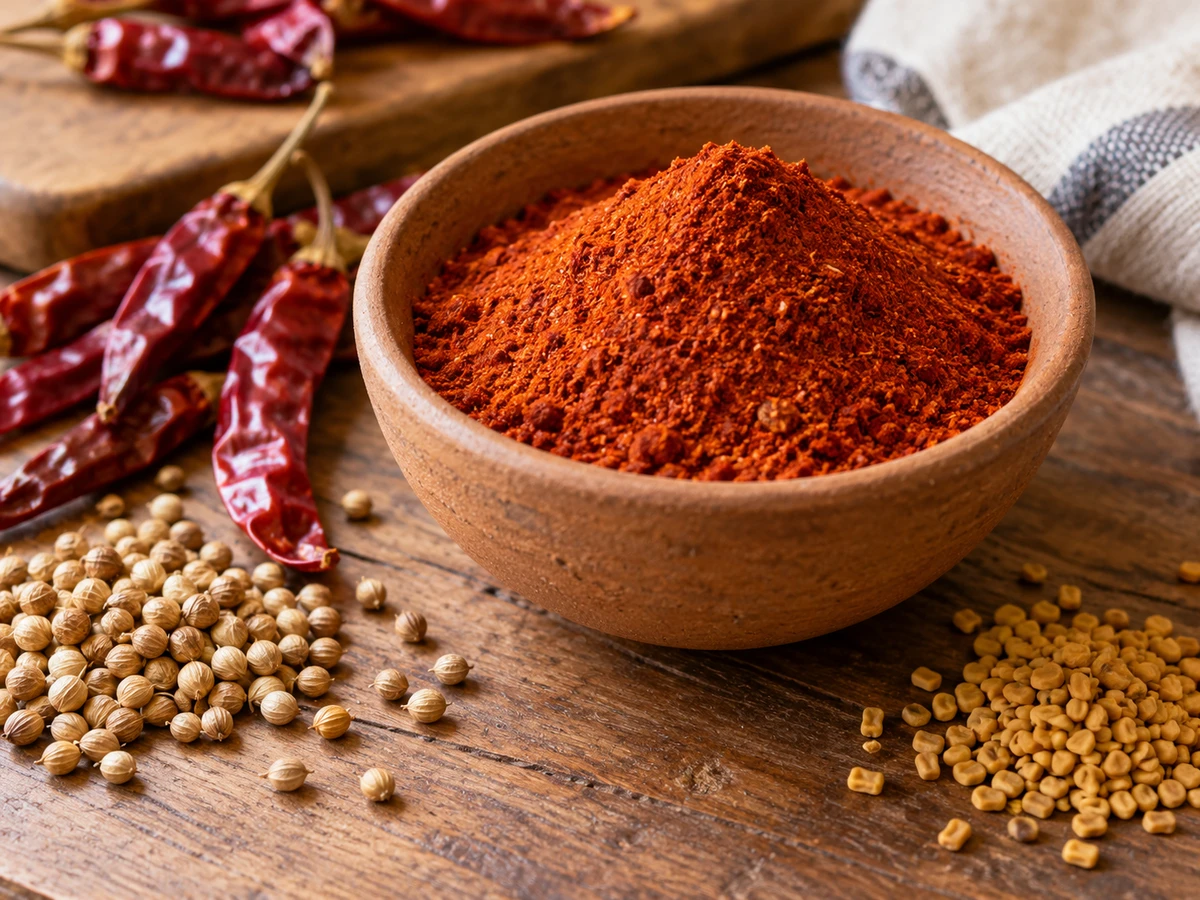
To evoke East African cuisine is to immediately encounter the intoxicating aroma and flamboyant color of berbere. This spice blend is the emblem of Ethiopian, Eritrean, and beyond traditions. It symbolizes warmth, conviviality, the fire of sharing, and the deep roots of ancient peoples. More than a condiment, berbere is a cultural signature and a vector of identity. This red powder, sometimes orange or dark brown, releases notes that are alternately warm, spicy, sweet, saline, and floral, revealing all the sensory and gastronomic magic of the African continent.
Where to find it
Look for the exact food-grade form required by the recipe at markets and specialist shops. Check the product name, ingredients, condition and storage instructions.
Explore further: Cooking tips · Food hygiene and safety advice.
Search Amazon.fr — affiliate link →
Check availability and delivery on Amazon.fr. Compare ingredients, packaging and sellers.
As an Amazon Associate I earn from qualifying purchases.
History and uses
HISTORY AND ORIGIN: HERITAGE OF THE HORN OF AFRICA
At the sources of African agriculture Berbere originates in the heart of the Great African Rift, one of the oldest agricultural areas on the planet. Since antiquity, the Abyssinian region (present-day Ethiopia) has had a developed culinary tradition: domestication of spices, cultivation of millet, wheat, and teff, ostracism and adaptation to volcanic soils. Berbere is believed to have emerged over the centuries as a local adaptation of aromatic blends, essential foundations of preservation and processing cuisine. Trade routes and Islamization In the Middle Ages, with Islamization, trade relations multiplied between the Horn of Africa, the Arabian Peninsula, India, and the Mediterranean. Spices from Asia (pepper, ginger, cinnamon, cardamom, cloves) then met red chilies recently imported from the Americas by the Portuguese. This encounter created modern berbere, rich and complex, with a unique taste. The history of berbere is twofold: it embodies the synthesis between ancestral African knowledge and influences from the wider world, absorbed in a singular adaptation to the terroir. This is why each village, each lineage, each family adds its own touches, jealously guarding its recipe.
COMPOSITION AND ORGANOLEPTIC CHARACTERISTICS
Berbere is not just a simple chili powder: it is a blend of ten, or even fifteen, dried ingredients, toasted and then ground, hence the richness of its taste, its rare intensity of aroma, and its strength on the palate.
TRADITIONAL INGREDIENTS
Dried red chili (mitmita or chili depending on the region): pungent base, colorful, long finish. Black pepper (or Ethiopian African pepper): warmth, moderate spiciness. Dried ginger: citrus notes, gentle warmth. Coriander seeds: slightly lemony freshness. Dried or roasted garlic: depth and character. Fenugreek: bitterness, roundness on the palate, slightly sweet aftertaste. Cinnamon: sweet softness, aromatic structure. Green or black cardamom: vegetal freshness, tension on the palate. Clove: medicinal notes, intensity. Nutmeg or mace: mellow warmth. Dried basil, Ethiopian rue (tenadam), ajwain (Ethiopian cumin), efod: depending on the family, for local identity. Salt and sometimes a hint of sugar or nigella seeds or cumin. The blend, once roasted, is very finely ground. The result is a dark red to orange powder, ultra-fragrant, warm, captivating, which can be stored for several months, provided it is protected from light and humidity.
FLAVOR
On the palate, berbere is simultaneously: spicy (chili), warm (ginger, pepper), aromatic (coriander, cinnamon, cardamom), slightly bitter and umami (fenugreek), with an herbaceous background depending on local additions. It leaves a lasting warmth in the mouth, without excessive acridity, and enhances meat, legumes, or sauces during long cooking times.
MANUFACTURING AND TRANSMISSION: BETWEEN SCIENCE AND RITUAL
The preparation of berbere is never trivial in Ethiopia: it involves ceremonial, sharing, family transmission, and sometimes, spiritual rites. Manufacturing steps Ingredient selection: each family or artisan has its own blends and proportions, jealously guarded. Roasting: each spice is roasted separately in a pan or on a hot plate to reveal its aroma, but without burning. Grinding: manual (mortar) or mechanical grinding, depending on the desired texture. Mixing: the powder is then mixed, sometimes refined with a little oil, finely crushed garlic, or salt, then stored in airtight jars. Production is typically annual, following harvests, bringing women and children together in the communal house.
In my books

Continue exploring the continent’s cuisines with Africa at the Table — 54 countries, 54 iconic dishes, by Alioune FALL. This book is in English.
Explore further
CULINARY USES: THE HEART OF ETHIOPIAN GASTRONOMY
Berbere is the pillar of Ethiopian and Eritrean cuisine, infusing every dish with its powerful colors and aromas. Its importance can be compared to Indian garam masala or North African ras el hanout: without berbere, there is no great Abyssinian cuisine.
MYTHICAL DISHES
DORO WAT: the famous red sauce stew/chicken, braised slowly with onions, garlic, berbere, hard-boiled eggs, served on injera. SIGA WAT: beef variant, with the same spicy base and slow cooking that reveals the full complexity of the blend. SHIRO: chickpea or lentil puree, sauce seasoned with berbere. TIBS: pan-fried meat with clarified butter (niter kibbeh), berbere, vegetables, bell peppers. KITFO: raw or semi-cooked minced beef, mixed with berbere and spiced butter, sometimes served as a tartare. BERBERE BUTTER: a blend of berbere, clarified butter, and garlic, used to enhance meats, bread, or vegetable dishes. It is also used as a “dry rub,” a condiment, or to sprinkle on injera flatbread, vegetables, or even… to flavor milk at breakfast.
ITS ROLE IN DAILY DIET
Berbere structures every phase of Ethiopian cuisine: it allows for preservation, the transformation of simple dishes into feasts, the expression of hospitality, and the adjustment of spiciness according to age or appetite. It exists in more or less spicy versions; some households use the mild version for children.
HEALTH VALUE AND BENEFITS
Nutrition and folk medicine Composed of spices with antioxidant, anti-inflammatory, digestive, and immunostimulant properties, berbere is reputed to protect against infections, support digestion, and give “strength and warmth” to the body, particularly in the mountainous or cool regions of the Horn of Africa. Families sometimes add other medicinal plants to their berbere, or use it to flavor therapeutic broths and protect against cold or epidemics.
ECONOMY AND SOCIETY
The artisanal production and sale of berbere (or its components) constitute a true pillar of domestic economy for many women in Ethiopia and Eritrea, particularly in rural markets, in the sale of condiments, or in urban food supply.
SYMBOLISM AND CULTURE: RITUAL AND IDENTITY
Berbere is not limited to a culinary function: it is at the heart of the values of sharing, family, and unity in Abyssinian society. Marriage ritual: offering berbere in the trousseau, a sign of abundance and fertility. Education: children learn from a young age to grind, to recognize smells, to adjust the heat of berbere. Religious feasts: during the Timkat, Easter, or Meskel celebrations, berbere is omnipresent in sacrificial dishes. Ethiopian and Eritrean diaspora: berbere travels in suitcases, bridges distances, restores the memory of the homeland… It is now found in shops worldwide (Paris, London, Dakar, New York…). Berbere beyond the Horn of Africa While berbere is primarily associated with Ethiopia, it has traveled in the wake of African exchanges; it is sometimes found in Sudanese, Ugandan, or Kenyan cuisine, integrated into couscous, grilled dishes, or pan-African stews, as a marinade, a final seasoning, or even as a partial replacement for pure chili in large market pots. In West Africa (Mali, Senegal, Nigeria), some popular cooks, fond of powerful aromas, sometimes incorporate a little berbere into peanut sauces, “fat rice” dishes, or grilled meats adapted to Ethiopian or Eritrean clientele.
CONCLUSION
Berbere, much more than a spice blend, is the soul of Ethiopian cuisine and a living heritage of African gastronomy. Behind its ember-like color and deep aroma, it crystallizes the memory of a continent open to the world, the intelligence of the terroir, the strength of social ties, and the power of tradition. Through berbere, every meal becomes a celebration, every dish a story, and every grain a promise of warmth, conviviality, and a culinary journey across Africa.
In the kitchen : Berbere
Recipes from the site to put your knowledge into practice:
Discover these cuisines at a restaurant
Explore our restaurant and caterer directories. Choose your destination and check the establishment’s menu to confirm which dishes are offered and available.
Continue exploring
Enjoy discovering ingredients and African cuisines? Join our newsletter. The illustrated PDF 10 sauces africaines incontournables is in French and is offered after confirming a subscription to the French or bilingual edition.