Benachin
Wolof (Gambia)
Understanding : Benachin
INTRODUCTION
Benachin is a jewel of West African cuisine, and more precisely, one of the national dishes of Gambia and Senegal. Its name, “benachin,” literally means “one pot” or “single dish” in Wolof and Mandinka, evoking communal cooking where all ingredients are cooked together in the same pot. This dish, more famously known as “Wolof rice” (Jollof Rice in English), embodies the essence of African sharing and conviviality, carried by a rich history, noble ingredients, and an infinite variety of regional variations. Behind its apparent simplicity, Benachin hides an aromatic and cultural depth: it crystallizes the regional history and evolution of West African societies, from pre-colonial times to the present day. This exhaustive description aims to trace the history, social place, classic recipe, chef's tips, variations, possible pairings, and nutritional values of this essential dish on the African continent.
Prepare this speciality
Choose a detailed recipe, adjust the portions and prepare your ingredients before starting. Our cooking tips and food safety advice complement the steps described in the recipes.
Explore further: Cooking tips · Food hygiene and safety advice.
History and uses
1. ORIGINS AND HISTORY OF BENACHIN
a) Ancestral history and cultural cross-pollination The origins of Benachin date back to the time when West African peoples cultivated African rice (Oryza glaberrima) in the floodplains of Saloum and Gambia. This rice-centric way of life was later enriched by Arab, Portuguese, and then European contributions, which introduced new foodstuffs (tomatoes, oil, vegetables from America). With colonization and commercial intermingling, the various Wolof, Mandinka, Serer, and Fula peoples spread the recipe, which adapted in each household. The assimilation of the dish as “Wolof rice” or “jollof rice” has, over time, generated a friendly “gastronomic rivalry” between Senegal, Gambia, Ghana, Nigeria, and other countries in the region, each claiming the most authentic recipe. b) Benachin and identity Benachin is not just a recipe: it is a ritual, a way of life, a shared history. It is served during major celebrations (baptisms, weddings, religious holidays), on Friday, the holy day, or for important guests. It is the quintessence of family cooking, often prepared by women around the fire, conveying knowledge passed down through several generations.
2. DETAILED DESCRIPTION OF THE DISH
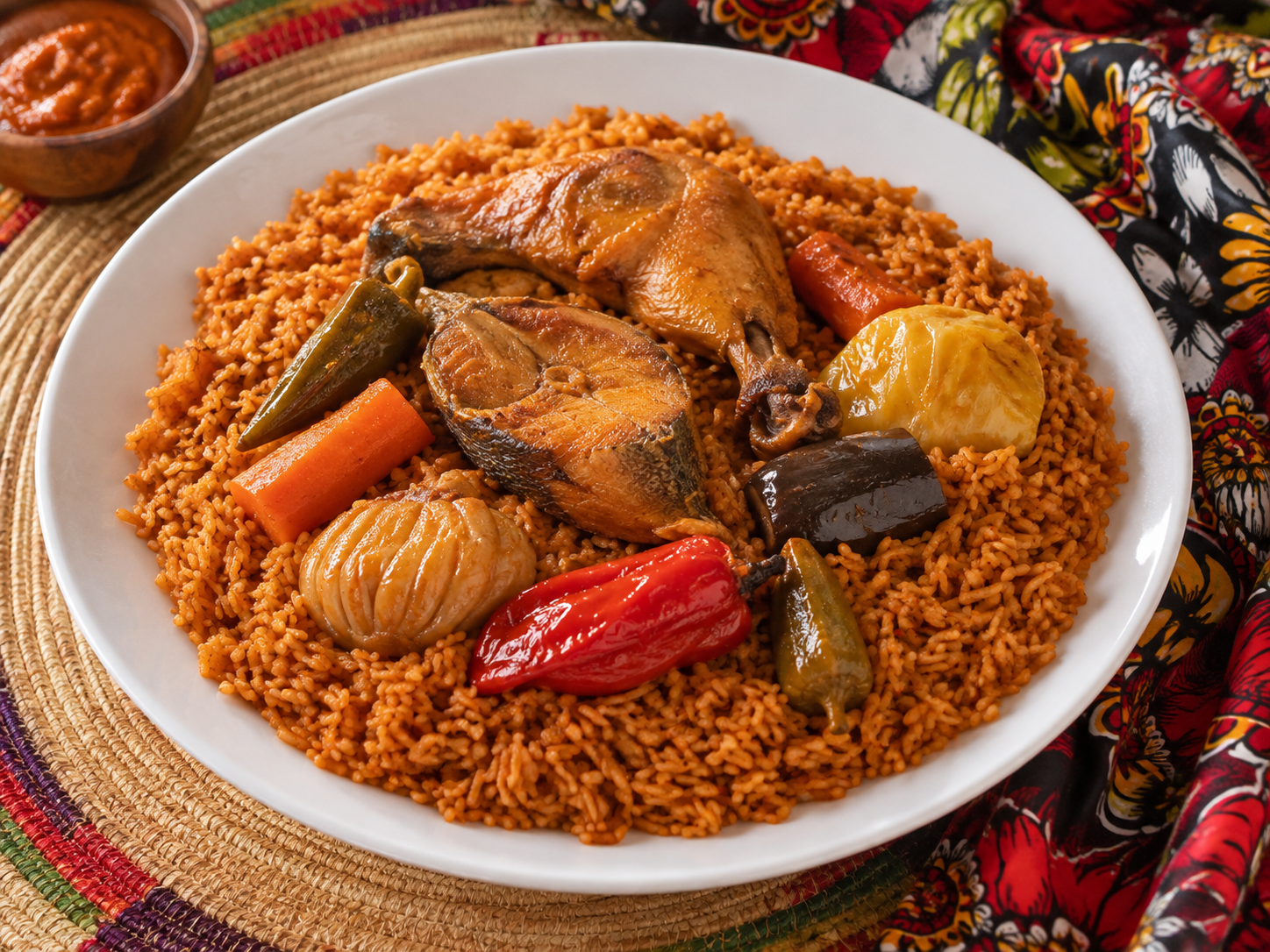
Benachin is a rice dish cooked in a very concentrated and fragrant sauce, enriched with vegetables, fish or meat (often chicken or lamb) and colored with a beautiful reddish hue thanks to tomatoes. It is distinguished by the simultaneous cooking of all elements, which intensely diffuses the flavors. a) Basic ingredients • Rice: local broken long-grain or parboiled rice, well washed to prevent stickiness. • Protein: chicken, fish (tilapia, capitaine or dried fish) or meat (lamb, beef). • Vegetables: carrot, cabbage, sweet potato, African eggplant, cassava, bell pepper, okra. • Tomato: concentrate or crushed fresh tomatoes. • Aromatics and spices: onions, garlic, fresh chili (scotch bonnet, pili-pili), bay leaf, black pepper, ginger, thyme (sometimes néré or soumbala to enhance local umami). • Oil: peanut oil or palm oil (more rarely neutral vegetable oil). • Broth: Maggi cube, homemade broth, water. b) Traditional preparation
- Ingredient preparation: o Cut the meat or clean the fish. o Peel, wash, then cut the vegetables into large pieces. o Rinse the rice until the water runs clear.
- Making the base: o In a large pot (or “canari”), brown meat or fish and onions in hot oil until colored. o Add tomato paste, garlic, spices (ginger, pepper, bay leaf). Then stir until the oil turns red and the mixture becomes creamy.
- Main cooking: o Add water or broth, all the vegetables, the whole chili, and broth cubes. o Simmer gently until meat/fish and vegetables are tender. o Remove vegetables and proteins, keep warm.
- Cooking the rice: o Bring the broth to a boil. Add the well-washed rice, cook over medium-high heat, stirring. o Cover and let the liquid absorb, reduce heat to finish cooking by steaming, or add a banana leaf to trap the steam (traditional technique). o Return the vegetable and protein pieces to the rice just before the end. c) Plating and serving Benachin is traditionally served directly in a large communal dish: rice at the base, in the center, adorned with all the vegetables and meats/fish. Everyone helps themselves from the common dish, a fundamental African hospitality ritual.
In my books
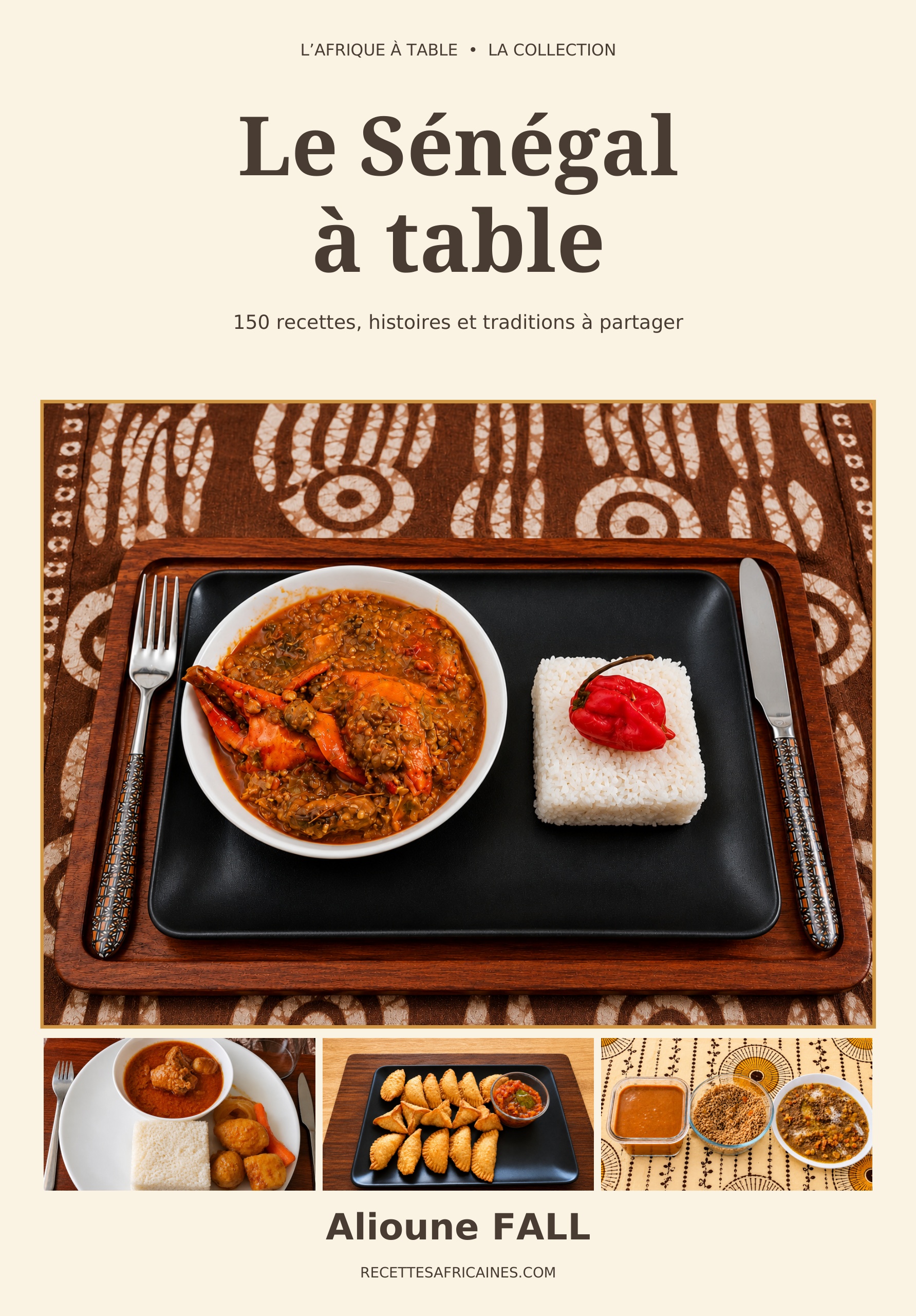
Explore Senegalese cooking with Le Sénégal à table, my collection of 150 recipes, stories and traditions to share. This book is in French, by Alioune FALL.
Explore further
3. CHEF'S TIPS FOR A SUCCESSFUL BENACHIN
• Coloration: Brown the tomato and onion well to extract maximum flavor and achieve a pronounced color. • Rice starch: Always wash the rice thoroughly before cooking; some even let it soak before adding it. • Control texture: Be sure to measure the water carefully so as not to drown the rice. It's better to adjust little by little. • African umami: Add a little soumbala (fermented néré) or some grated dried fish stock to enhance the depth of the dish. • Smoky flavor: In the countryside, some add aromatic wood (often lemon tree wood) under the pot to subtly perfume the benachin with a typical smoky aroma. • Banana leaf: Cover the rice during the last phase with a large rinsed banana leaf for a subtle fragrance and a tender texture.
4. REGIONAL VARIATIONS
• Red Benachin (tomato rice): the most common, typical of Senegal and Gambia. • White Benachin: without tomato, enhanced with onions and sometimes grated vegetables, lighter and easier to digest. • Fish Benachin: often with tilapia or river fish, sometimes garnished with shrimp or crabs depending on coastal regions (Casamance…). • Nigerian or Ghanaian Jollof rice: spicier, less rich in whole vegetables, sometimes cooked with curry or bay leaves, refined for urban events. • Jollof party: festive version from Lagos or Accra, prepared on a large scale in a pot for hundreds of guests, with green vegetables, hot dogs, or grilled beef ribs.
5. ACCOMPANIMENTS AND DRINKS
Benachin is accompanied by: • Fresh salad: lettuce, tomatoes, onions, light vinaigrette. • Chili sauce: fresh paste of pounded chili and spices, essential for enthusiasts. • Fried plantain (alloco/plantain): for a sweet and savory touch. • Bean fritters “Akara”, or “Pastels” (savory fritters with meat or fish depending on the celebration). • Drinks: bissap (hibiscus) juice, ginger juice, iced water, sometimes local beer for non-Muslims.
6. NUTRITIONAL VALUE AND BENEFITS OF BENACHIN
Benachin is a complete and balanced dish: • Animal or vegetable proteins via meat, fish, or beans. • Complex carbohydrates from rice, a source of sustained energy. • Fibers, vitamins, and minerals provided by the richness of vegetables: carrots (beta-carotene), eggplants (antioxidants), sweet potato (vit. A), cassava (starch), cabbage (vit. C, K). • Lipids: moderate presence thanks to peanut oil, often a source of unsaturated fatty acids. By selecting fresh and local products, and favoring steaming, Benachin limits excessive fat or sodium intake. It is suitable for a family diet, filling and appropriate for all ages. The dish lends itself to the integration of legumes (chickpeas, dried beans), which enhance nutritional density for vegetarians.
7. SOCIAL, SYMBOLIC, AND MODERN DIMENSION
Benachin, more than a dish, is synonymous with gathering, compromise, peace: cooking together, enjoying the same dish, is to build society, to remember, to celebrate life despite its uncertainties. In the city as in the countryside, it is present in street food or haute cuisine, on wedding buffets, in traditional ceremonies or culinary competitions. It symbolizes modern Africa, proud of its tradition and looking to the future: today, Benachin is found in food courts, trendy restaurants in Abidjan, Lagos, Dakar, Paris or London, revisited by creative chefs, enriched with seafood, quinoa, local herbs or fusion touches.
CONCLUSION Benachin, “unique rice,” concentrates in its grains and aromas the history and diversity of West Africa. It is a unifying, warm dish, carrying memory and innovation. It continues to inspire, delight, and bring people together, in Africa and in the diaspora. Through Benachin, Africa shares with the world its taste for sharing, life, hospitality, and celebration. To taste Benachin is to open oneself to an entire gourmet and vibrant continent.
In the kitchen : Benachin
Recipes from the site to put your knowledge into practice:
Discover these cuisines at a restaurant
Explore our restaurant and caterer directories. Choose your destination and check the establishment’s menu to confirm which dishes are offered and available.
Continue exploring
Enjoy discovering ingredients and African cuisines? Join our newsletter. The illustrated PDF 10 sauces africaines incontournables is in French and is offered after confirming a subscription to the French or bilingual edition.