Cumin
Middle East (adopted in North Africa)
Understanding : Cumin
INTRODUCTION
Cumin (Cuminum cyminum), a small, elongated seed with a warm, peppery, slightly bitter, and nutty flavor, has shaped the culinary history of three continents. Originating from the Fertile Crescent (Egypt, Levant), this emblematic spice of Mediterranean, Middle Eastern, Indian – and, of course, African – cuisine has established itself as one of the powerful markers of North African taste and, more subtly, sub-Saharan taste. Its presence in African kitchens illustrates the long history of exchanges, migrations, cultural blending, as well as the inventiveness and aromatic boldness of the continent's peoples. From Moroccan tagine to Egyptian charcuterie, from Tuareg grilled meats to couscous, cumin permeates memory, structures spices, crosses generations, and remains today one of the pillars of African culinary identity, balancing modernity and tradition. Here is a detailed exploration of cumin: its history, botany, sensory profiles, its place in African cuisines, its regional and contemporary variations, its gastronomic applications, chef's tips, nutritional benefits, and cultural dimension.
1. ORIGINS, HISTORY, AND BOTANY OF CUMIN
A. An Ancient and Well-Traveled Grain Cumin is undoubtedly one of the oldest domesticated spices. Archaeological traces attest to its consumption in Pharaonic Egypt as early as 2000 BC, where it served as a condiment, but also as a flavor enhancer in bread or charcuterie. It appears in Dioscorides' De Materia Medica, the Bible, the Quran, and numerous ancient pharmacopoeia treatises. Its cultivation spread from the Eastern Mediterranean to India, passing through North Africa and the Middle East. Arab-Muslim trade in the Middle Ages completed its establishment wherever caravans, merchants, Portuguese, or Spanish colonists set down their spice bags. B. Botany Cumin is an herbaceous plant of the Apiaceae family (umbellifers), a cousin of parsley, coriander, and dill. Growing 30 to 60 cm tall, it produces umbels of white or pinkish flowers which, once dried, yield the famous small beige to brown, slightly arched seeds. Cumin should be distinguished from black cumin (Nigella sativa or kalonji), caraway (Carum carvi), and Ethiopian cumin (Bunium persicum), which do not have the same taste or uses.
2. AROMATIC AND SENSORY PROFILE
Cumin offers a unique, warm, deep, and fully recognizable aroma: a lively attack of peppery, slightly camphoraceous notes, followed by earthy undertones and a gentle bitterness reminiscent of fennel. When roasted, it gains power: its essential oil (cuminaldehyde) is responsible for its complexity. Freshly ground, cumin releases an incomparable aromatic power: this is why Moroccan or Algerian chefs lightly toast it in a pan before crushing it, to bring out its full bouquet.
3. HISTORY AND INTRODUCTION OF CUMIN IN AFRICA
Cumin arrived on the African continent through several routes: Ancient Egypt: long used in funeral rites and food preservation. Maghreb and Sahara: introduced via the Mediterranean, mastered and propagated by Berbers and Arabs. East Africa: maritime and caravan routes led to its adoption in Swahili cuisine, especially via Zanzibar, but also towards the Sahel, the Horn of Africa, and Madagascar. Sub-Saharan Africa: its use remains more discreet but is found in various blended influences (emigrant Lebanese/Syrian cuisines, Indian Ocean cuisines, Jewish or Indo-Muslim communities).
4. PLACE AND USES OF CUMIN IN AFRICAN CUISINE
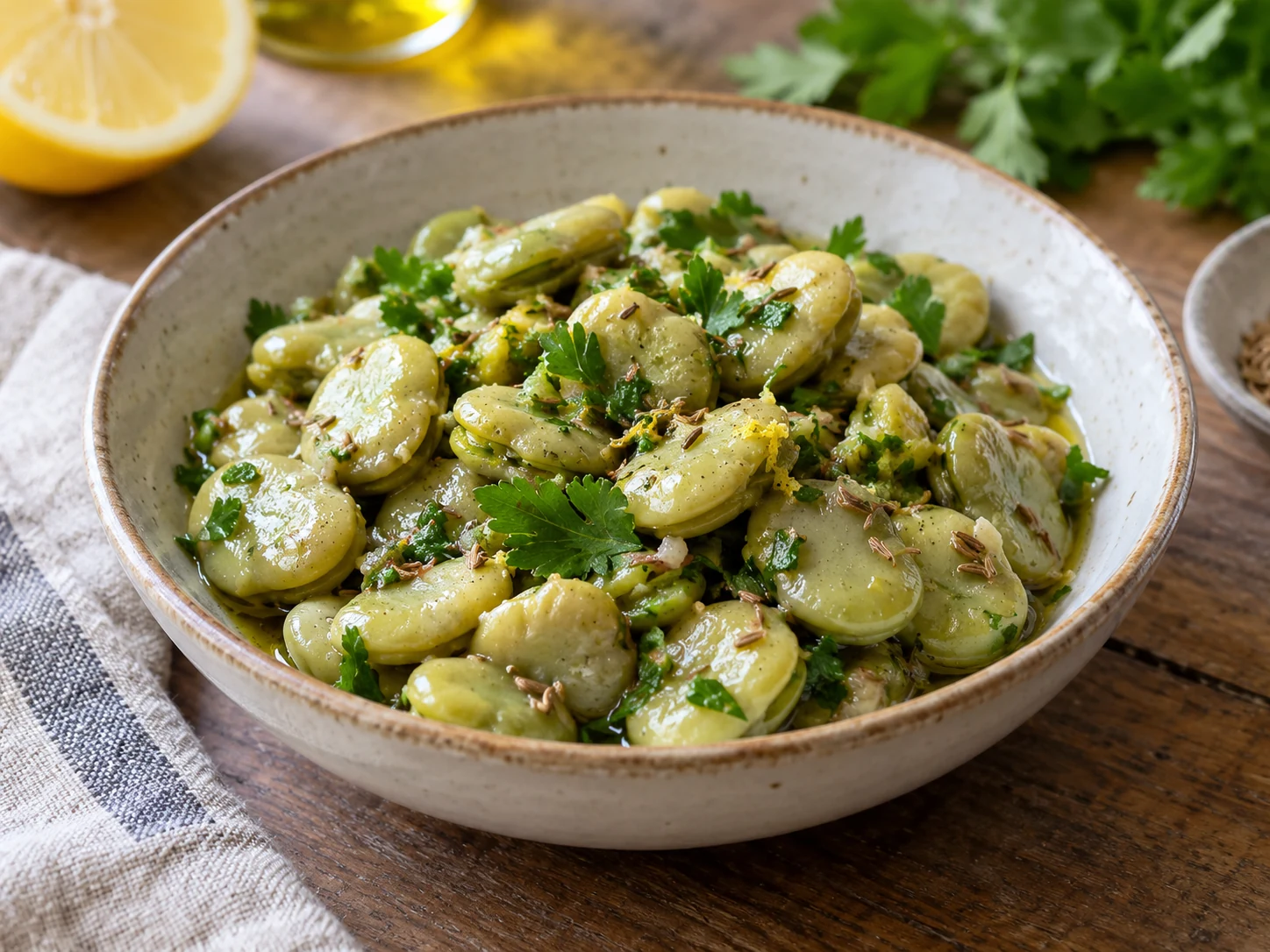
A. North Africa: The Kingdom of Cumin The Maghreb (Morocco, Algeria, Tunisia, Libya, Egypt) is THE land of African cumin. a. Tagines, couscous, harira, chorba Cumin is the spice of couscous and tagine. It structures ras-el-hanout (a highly codified Moroccan spice blend), perfumes red sauces, accompanies lamb, merguez, and grilled fish. In harira (Ramadan soup) or Algerian chorba, it is indispensable. b. Salads and vegetables Grated carrots, eggplant salads (zaalouk), chickpeas, white beans, fava beans in oil… all receive a pinch of cumin that enhances, adds depth, and mitigates the heaviness of legumes. c. Fish, grilled meats, and street food In Morocco and Tunisia, fried fish (especially sardines) or baked grouper are rubbed with cumin. For grilled meats, it is sprinkled on the embers or mixed with salt (cumin-salt) to glaze the hot meat. d. Ritual sprinkling In Egypt and Morocco, cumin is a condiment placed on the table, like salt: each guest sprinkles it on harira, bread, or vegetables – a warm gesture of hospitality. B. East Africa: Blended Flavors Swahili cuisine, on the coast of Kenya, Tanzania, Zanzibar, and Mozambique, is a place of exceptional aromatic blending. Pilau: a spiced rice dish, where cumin, along with cinnamon, pepper, and cardamom, provides a typical aromatic base. Curries and coconut sauces: cumin is found in fish, chicken, and legume curries. Spice blends (Swahili masala): it is omnipresent in all homemade blends. Accompaniment to chai: a hint of cumin can, as in some Indian teas, strengthen a spiced black tea. C. West and Central Africa Cumin is less indigenous here, but it is increasingly popular: In tomato-mafé sauces, Gambian domoda, jollof rice – recipes of European or Maghrebi inspiration. In diaspora cuisine (Lebanese, Indian, Syrian), in Dakar, Abidjan, Accra, Douala, it colors skewers, hot pastries, and vegetable stuffings. It sometimes accompanies grilled fish, dried meat, or ground smoked fish to give a “taste of the North.” D. Southern Africa and the Indian Ocean In dishes with Malagasy, Indian, and Réunionnais influences: cumin flavors curries, lentils, candied tomatoes, and soups. In South African cuisine: it is found in some potjiekos (slow-cooked stews), in boerewors sausage sauces, or in the famous bobotie (a blended baked dish).
5. CULINARY TIPS: HOW TO USE CUMIN
A. Roasting and Grinding Lightly toast (dry, without burning): multiplies the power and persistence of the aroma. Always grind just before use to avoid oxidation (avoid pre-ground cumin that has been stored too long). B. Marinades and Pre-cooking In marinades: combined with garlic, ginger, lemon, olive oil. Dish base: sautéing cumin with garlic and onion gives a deep flavor to your dishes. Infusion: whole seeds are infused in broth for tagines and couscous. C. Creative Pairings With root vegetables: carrot, sweet potato, squash, beetroot. With legumes: chickpeas, lentils (Moroccan bissara soup!), beans. With poultry, lamb, fish. For vinaigrettes, grilled marinades. In street food: in stuffings, on fries, grilled shrimp, sandwiches, shakshuka (eggs in tomato sauce). D. Doses and Precautions Cumin can quickly dominate a dish: 1/2 to 1 teaspoon is enough for a dish for 4 to 6 people. Rather than adding at the end, integrate it from the beginning to blend the flavor into the sauce.
6. MEDICINAL AND NUTRITIONAL BENEFITS
Cumin, widely used in ancient and popular African pharmacopoeia, possesses recognized benefits: Helps digestion: combats bloating, spasms, heaviness. Antioxidant effect: fights free radicals (presence of polyphenols and vitamin E). Source of iron and magnesium: supports immunity and vitality. Stimulates appetite and gastric juice secretion. Antimicrobial effect, sometimes used as a poultice or decoction against certain infections. Some attribute aphrodisiac or galactogenic (promoting milk production) properties to it. Suitable for all ages (except very young children), appreciated for enhancing low-salt cuisine.
7. SYMBOLISM AND CULTURAL DIMENSION
A. Everyday Utensil and Condiment In Morocco, Algeria, and rural Maghreb, owning a pot of fresh cumin, presenting it to guests, or offering it at the table is an act of hospitality. Pouring a pinch on the hand or into soup is a mark of attention and shared cultural identity. B. Celebration, Health, Custom Cumin, in some villages, protects against the evil eye, ensures prosperity when added to wedding couscous or sprinkled on grains at the market. C. Transmission and Heritage The knack for roasting, grinding, and sprinkling cumin is passed down from generation to generation, especially among women, who are the custodians of African culinary memory.
8. CUMIN AND MODERN CUISINE
Cumin, far from being confined to tradition, is a cherished spice by contemporary African and Afro-fusion chefs: It appears in vegan cuisine (on falafels, vegetable stir-fries, patties). It flavors oils, pickles, new sauces. It is used in sweet and savory desserts or even in cocktails.
CONCLUSION Cumin is much more than a simple aroma in African cuisine: it is a living trace of the history of spice routes, the adaptation of terroirs, and popular genius. It symbolizes the warmth, social connection, balance, and depth of North African dishes and, through blending, of the entire continent. Enhancing meats, vegetables, grains, and broths, humble yet refined, it continues to inspire African gastronomy, balancing tradition and invention. With each grain of cumin, a memory, a hospitality, a taste of Africa is announced.
Where to find it
Look for the exact food-grade form required by the recipe at markets and specialist shops. Check the product name, ingredients, condition and storage instructions.
Explore further: Cooking tips · Food hygiene and safety advice.
Search Amazon.fr — affiliate link →
Check availability and delivery on Amazon.fr. Compare ingredients, packaging and sellers.
As an Amazon Associate I earn from qualifying purchases.
In my books

Continue exploring the continent’s cuisines with Africa at the Table — 54 countries, 54 iconic dishes, by Alioune FALL. This book is in English.
In the kitchen : Cumin
Recipes from the site to put your knowledge into practice:
Discover these cuisines at a restaurant
Explore our restaurant and caterer directories. Choose your destination and check the establishment’s menu to confirm which dishes are offered and available.
Continue exploring
Enjoy discovering ingredients and African cuisines? Join our newsletter. The illustrated PDF 10 sauces africaines incontournables is in French and is offered after confirming a subscription to the French or bilingual edition.