Braising
West Africa
Understanding : Braising
INTRODUCTION
Braising is an ancient culinary technique, at the crossroads of roasting and grilling, widely used in many cultures around the world. In Africa, braising is not limited to a cooking method; it embodies values of sharing, conviviality, and represents a form of culinary art highlighted in family kitchens as well as on the street, during celebrations, or in popular charming restaurants. It is a method that spans many countries on the continent, from the Maghreb to sub-Saharan Africa, but it is especially in West and Central Africa that it acquires an identity dimension. This description offers a detailed dive into the concept of braising, its techniques, its African variations, its social contexts, its gastronomic specificities, and its importance in African culinary heritage and modernity.
Putting the technique into practice
Follow a detailed recipe when applying this technique. Quantities, equipment and cooking instructions depend on the preparation you choose.
Explore further: Cooking tips · Food hygiene and safety advice.
History and uses
1. DEFINITION AND PRINCIPLES OF BRAISING
The term “braising” refers to a moist cooking technique that involves slowly cooking a food, usually meat (but also fish and sometimes vegetables), first over high heat to sear it, then over low heat in a covered atmosphere, generally with a small amount of liquid (water, broth, wine, cooking juices), all seasoned with aromatics. Although the classic definition of braising comes from European gastronomy (especially French), where it is an intermediate cooking between roasting and stewing, the term has taken on a freer meaning in Africa, often referred to by the expression “braised meat.” In the African context, it is mainly a slow cooking over charcoal embers, in the open air, which allows for caramelization of the flesh and a deep impregnation of flavors. The use of wood fire, charcoal, and sometimes traditional ovens (canaris or open hearths) is central to this process.
2. HISTORY AND TRANSMISSION OF BRAISING IN AFRICA
Origins The mastery of fire, humanity's first great culinary revolution, is at the origin of braising. Africa, the original cradle of humanity, has a long tradition of cooking over embers — whether in nomadic lifestyles (where communal fire is essential), or in agricultural and urban societies, where this technique has been perfected. Colonization introduced new tools (grills, metal dishes) and popularized cuts (chops, steaks, skewers). But African braising retains its own characteristics: spicy marinades, use of whole pieces, communal cooking, a wide variety of local accompaniments, and a festive dimension.
3. TECHNIQUES AND GESTURES OF AFRICAN BRAISING
A. Marinades and preparations The success of good African braising lies in the marinade, which can last from a few hours to an entire night. Ingredients vary by region, but almost always include: Onions, garlic, ginger freshly pounded or blended Chilies (Scotch Bonnet, pili-pili, green chili, in puree or powder) Herbs (parsley, African basil, local leaves like kèpè, djansang, or néré powder) Lemons, vinegar, or sometimes tamarind for the tangy note Oil (peanut, palm, cotton, or shea depending on the terroir) Salt, bouillon cube, local spices (pepper, cinnamon, nutmeg, etc.) The meat (chicken, fish, beef, mutton, pork, lamb, guinea fowl…) is incised to promote marinade penetration. It is left to rest so that it absorbs the flavors, then cooked directly over the embers. B. Cooking Over charcoal embers (or dry wood), cooking begins over high heat to sear and caramelize the flesh, then continues over lower heat or by covering the pieces for slow, tender cooking. Used are: Metal or traditional grills installed above the embers Metal or wooden skewers Banana or cassava leaves to protect the fish, make it moist, and prevent it from burning The meat can be regularly basted with the remaining marinade, oil, or cooking juices, to prevent drying out and intensify the flavor. Some braisers drizzle spicy sauce (“braised sauce”) at the end of cooking. C. Gestures and know-how Mastering the embers is an art: one must regulate the airflow, manage heat distribution, turn the meat at the right time, and adjust the grill height. True braising masters are able to recognize perfect cooking by color, smell, and touch.
In my books
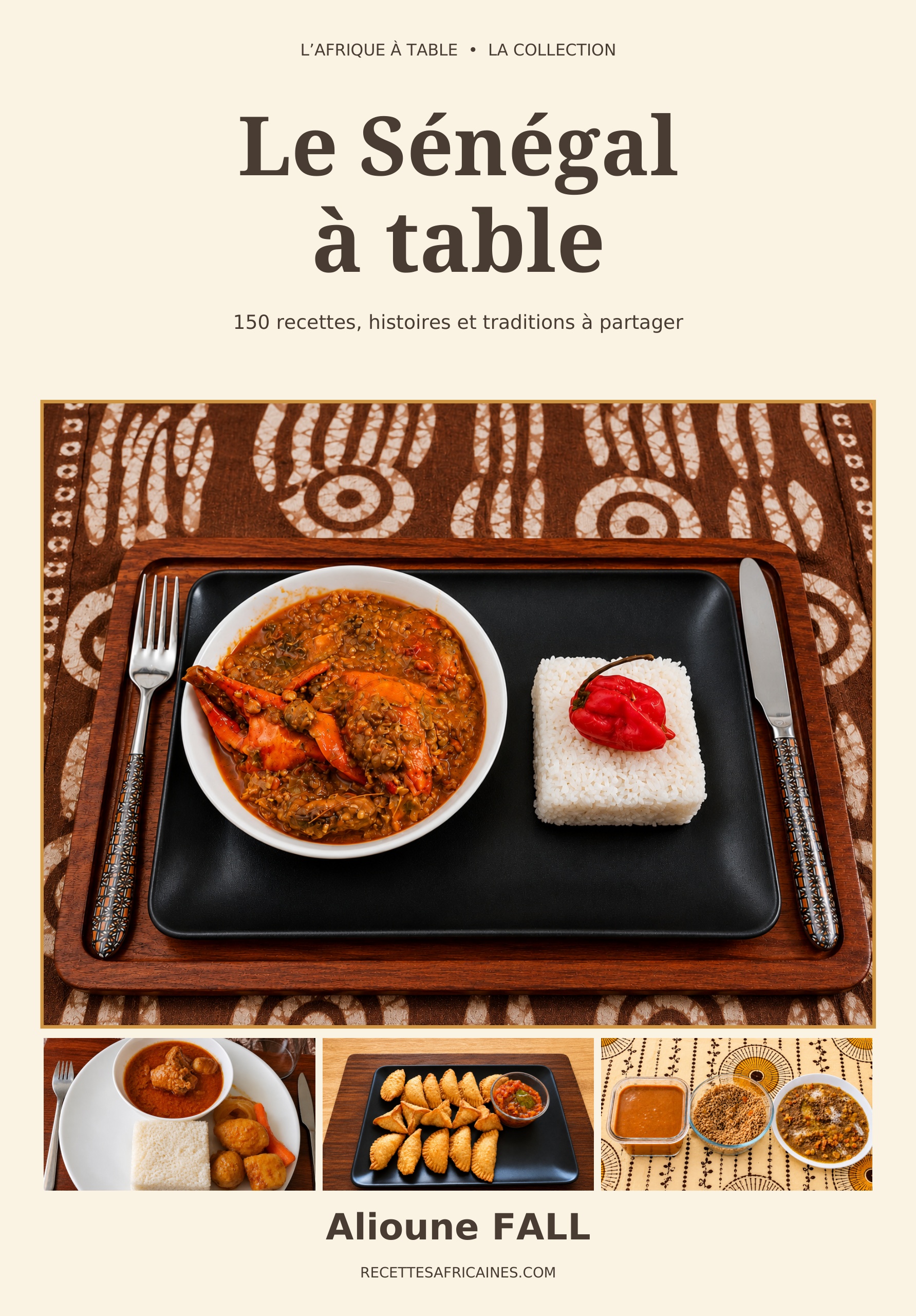
Explore Senegalese cooking with Le Sénégal à table, my collection of 150 recipes, stories and traditions to share. This book is in French, by Alioune FALL.
Explore further
4. EMBLEMATIC DISHES AND DIVERSITY OF BRAISED RECIPES
A. Braised chicken A flagship dish in Côte d'Ivoire, Cameroon, Nigeria, Benin, Senegal, and many others: chicken marinated in a spicy sauce, then slowly cooked over embers. It is served whole or cut, accompanied by “plantain fries” (alloco), attiéké (cassava semolina), rice, or sautéed vegetables. B. Braised fish On the coastlines, in markets or popular neighborhoods, captain fish, tilapia, or sea bream are prepared over embers, often wrapped in leaves, then served with a spicy sauce, raw vegetables, cassava, or couscous. C. Skewers (suya, tchintchinga…) Grilled beef skewers, often coated with a mixture of pounded peanuts, chili, and spices, are very popular in Nigeria, Niger, Togo, and Burkina Faso. They are sometimes called suya, tchintchinga, or chichinga. They are eaten as a snack or during large gatherings. D. Other variations Braised pork or lamb during festivities Ribs and chops (often in the urban diaspora) Braised game during traditional hunts Vegetables and tubers (yam, sweet potato, corn, plantain, etc.) cooked over embers as an accompaniment.
5. SOCIAL AND CULTURAL DIMENSION OF BRAISING
Braising is never a solitary experience in Africa. It is the quintessence of conviviality: a shared meal, a celebration, a staging of generosity. Urban grilling scenes, street stalls, small restaurants (maquis, cabarets, buvettes) make braising a social ritual. A. Role in the city and on the street In urban Africa, braising stands become evening gathering places: friends, families, colleagues come there to relax, chat, listen to music, watch football, or discuss the world over a steaming dish accompanied by cold drinks. The “braisers” even have a special status, enriching local nightlife. B. Rituals and celebrations Weddings, baptisms, funerals, village festivals, religious ceremonies are all occasions to bring the community together around a braised buffet. In some cultures (such as among the Yorubas, Baoulés, or Bamilékés), sharing braised meat is an act of hospitality, reconciliation, or alliance. C. Transmission of knowledge Braising is passed down from generation to generation, with each family, region, and ethnic group having its secrets of marinade or technical gestures (addition of pounded peanuts in Nigeria, fresh ginger in Cameroon, etc.). The names of renowned braiser families are passed down, especially in large cities.
6. ASSETS, NUTRITIONAL VALUES AND INNOVATIONS
A. Health aspect Braising allows for cooking without (or with very little) additional fat, making it a healthier preparation method than frying. The marinade, rich in spices and herbs, provides natural antioxidants, vitamin C (lemon, chili), and stimulates digestion. Slow cooking helps maintain moisture and prevents charring of the flesh if well controlled, which reduces the intake of potentially harmful substances (PAHs). B. Innovation and modern influences Nowadays, African braising is opening up to new products (seafood, heritage poultry, tofu or plant-based proteins, new vegetables). African chefs are revisiting braising by combining ancestral techniques with contemporary plating, creating refined dishes that highlight the aromatic richness of the terroir. Braising is integrated into the African gastronomic offer internationally, from food trucks to gourmet restaurants.
7. ECONOMIC DIMENSION
Braising has become an economic sector in its own right. In cities, many young men and women set up as braisers, creating their own employment. It generates an entire chain: breeders, charcoal and spice suppliers, manufacturers of artisanal grills or ovens, beverage merchants, etc. Some meat or fish brands capitalize on the “braised” label. There are even, in some countries, braiser competitions and real braising festivals (Côte d'Ivoire, Cameroon).
CONCLUSION Braising in Africa is much more than a simple cooking technique. It is the living memory of nourishing fire, the universal symbol of sharing and generosity, the theater of flavors and smells that unite families and communities. It is a tradition that adapts, diversifies, renews itself, while maintaining its authenticity and popular character. In African cuisine, braising will always remain that moment of celebration, conviviality, and gourmet excellence that brings together and celebrates the continent's diversity.
Discover these cuisines at a restaurant
Explore our restaurant and caterer directories. Choose your destination and check the establishment’s menu to confirm which dishes are offered and available.
Continue exploring
Enjoy discovering ingredients and African cuisines? Join our newsletter. The illustrated PDF 10 sauces africaines incontournables is in French and is offered after confirming a subscription to the French or bilingual edition.