Tajine
Berber (Maghreb)
Understanding : Tajine
INTRODUCTION
The tajine is one of the emblematic dishes of North African cuisine, particularly from Morocco, Algeria, and Tunisia, but its influence extends far beyond: to Libya, Mauritania, the southern Sahara, and within the African and Mediterranean diaspora. This word refers to both a traditional utensil (the “tagine” or “tajine”, an earthenware dish with a characteristic conical lid) and an infinite variety of simmered dishes where vegetables, spices, meats or fish, fresh and dried fruits blend into a symphony of flavors, colors, and textures. Much more than a simple stew, the tajine symbolizes conviviality, generosity, refinement, and the diversity of African cuisine. It embodies the art of slow cooking, sharing, and improvisation based on local resources. At the crossroads of Berber, Arab, and Andalusian traditions, it permeates the culinary culture of the Maghreb, weaves social and heritage ties, and today inspires both global haute cuisine and everyday cooking. In this ambitious description, we invite you to delve into the history, technique, regional diversity, social symbolism, nutritional place, and modernity of the tajine: a living monument of African cuisine.
1. ORIGIN, HISTORY AND SYMBOLISM OF THE TAJINE
1.1. An ancestral dish-utensil The word “tajine” comes from the Arabic “ṭaǧīn” (طاجين), itself derived from the Berber “tajin”, which refers to both the vessel and the dish prepared within it. Archaeological excavations prove the presence of this type of pottery since antiquity in the Mediterranean (Greek, Roman, Berber pottery...). The tajine, made of local terracotta, topped with a conical lid, has accompanied rural, nomadic, and urban kitchens for centuries. It was (and remains) ideal for slowly cooking herd meats and garden vegetables, with very little water, respecting the scarcity of resources. 1.2. Transmission and dissemination Initially a family and household dish, reserved for cooking over charcoal or wood fire, the tajine became popular throughout North Africa, and, in similar forms (marqa, marga, maraq), as far as the Sahara oases and in countries further south with the migration of peoples, caravans, exchanges, and the mixing of trans-Saharan trade. Today, it has risen to the rank of a national icon (particularly in Morocco) and a symbol of Mediterranean world heritage. 1.3. Symbol of conviviality and celebration The tajine always holds a prominent place in ceremonies (wedding, religious festival, return from a trip, birth, baptism), in offering hospitality, but it also structures the daily family meal, the celebration of seasonal products, and the transmission of memory between generations.
2. THE ART OF TAJINE: TECHNIQUES AND UTENSIL
2.1. The tajine dish The traditional vessel is made of unglazed or glazed terracotta, consisting of two parts: • The low, circular, thick dish, which retains heat • The conical lid that concentrates steam and redistributes it in drops, allowing for gentle cooking, an exchange of flavors, and exceptional moisture retention. The dish is placed over embers, a stove, or a hob; today, contemporary versions are adapted for all heat sources. 2.2. Slow simmering: the essence of the technique The principle of the tajine is based on long, low-heat cooking in a humid and aromatic atmosphere. Ingredients are layered in the dish in a precise order (meats and onions first for caramelization, vegetables on top, fruits possibly at the very top), each component soaking up and flavoring without dissolving. The lid is rarely opened, to preserve steam and concentrate flavors. In many families, a “tajine” is not supervised: it cooks “by ear”, by scent, by memories, by an expert hand. 2.3. Spices and aromatics: the Maghrebi scent Each tajine has its “spice basket”: • Ras el hanout (“head of the shop” blend, see other entry) • Cumin, coriander, ginger, cinnamon, black pepper, paprika, turmeric • Saffron pistils, fresh herbs (coriander, parsley, mint) • Preserved lemons, olives, garlic, onions, tomatoes, honey • Dried fruits (apricots, figs, dates, prunes, raisins), almonds, walnuts
3. THE DIVERSITY OF TAJINES: RECIPES, REGIONS, INVENTIVENESS
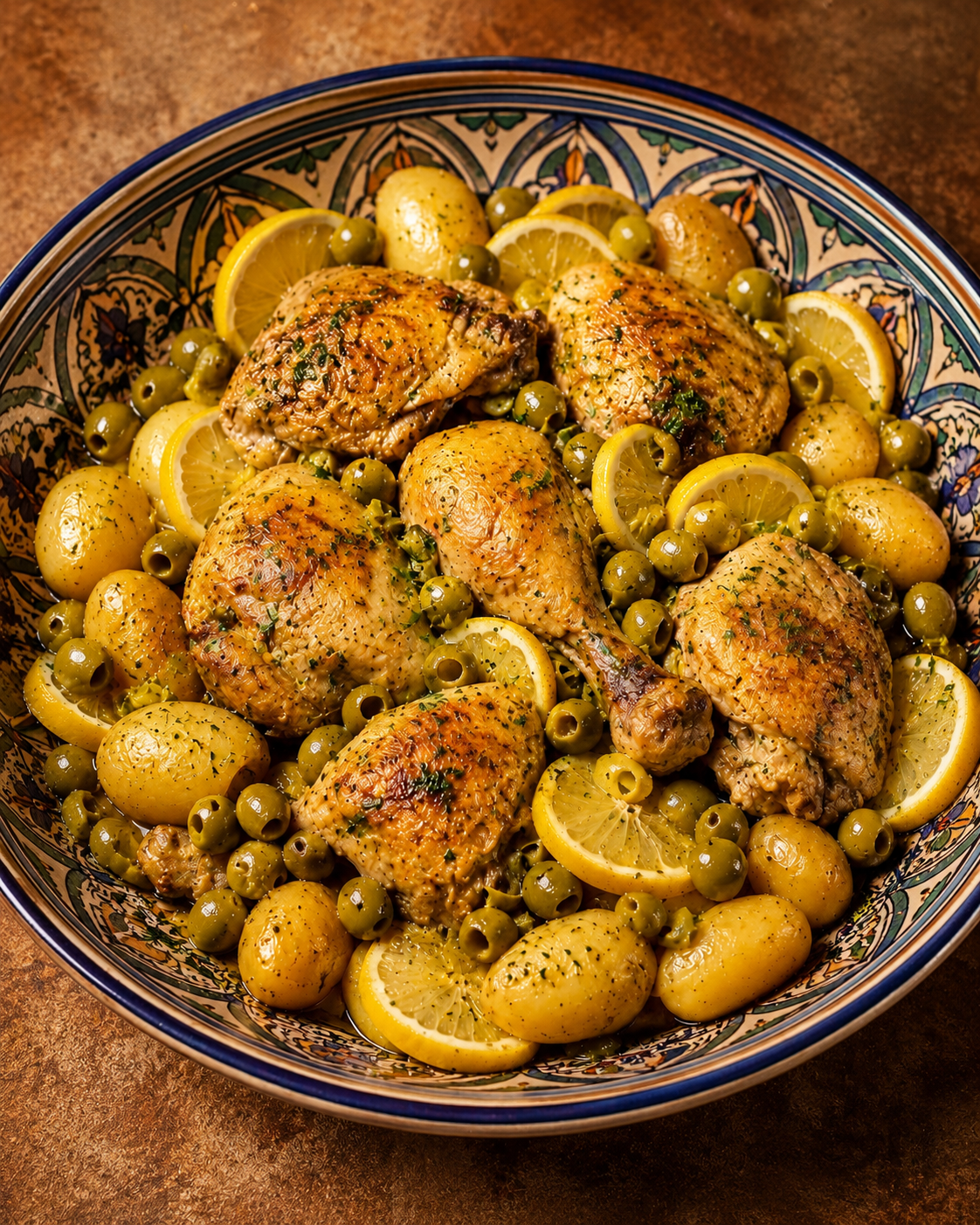
3.1. Meat tajines • Lamb tajine with prunes and almonds: a festive dish where the meat melts, married to the sweetness of fruits, flavored with cinnamon. • Chicken tajine with preserved lemon and green olives: emblematic of Morocco, a subtle balance of acidity, bitterness, sweet and salty spices. • Kefta tajine (minced meat balls in tomato sauce, cracked eggs): a family-friendly, convivial dish, popular with children. • Beef tajine with eggplant or carrots, fennel, turnips, pumpkin according to seasons and regions (Tadla, Souss, Atlas mountains…). 3.2. Fish and seafood tajines • Fish tajine, tomatoes, peppers (“chermoula”): off the coast of Safi or Essaouira, the catch is cooked with its marinade of herbs, spices, and olive/argan oil. • Sardine tajine: spicy sardine balls, potatoes, tomatoes. 3.3. Vegetarian tajines • Vegetable tajine: potatoes, carrots, zucchini, chickpeas, tomatoes, turnips, onions, peas, sometimes squash or artichokes depending on the region. • Sweet and savory tajine: pumpkin, dates and raisins; or carrots and orange, cinnamon, honey. • Fava bean, artichoke, and pea tajine (late spring in Morocco). 3.4. Regional and Berber tajines • Berber tajine: rural preparation, with dried meat (“khlii”), legumes, wild herbs. • Mrouzia: festive lamb tajine with honey, almonds, spices, prepared for Eid al-Adha. • “Soussi” tajine from the Souss region, highlighting local products (almonds, argan, prickly pears).
4. PLACE IN SOCIAL STRUCTURE, SYMBOLISM AND HERITAGE
4.1. Sharing meal The tajine punctuates group life: family, guests, neighbors. People often eat together, in a circle, by hand, each taking from their portion of the dish. This shared meal structures the domestic space, fosters exchanges, and creates a unique conviviality. 4.2. Transmission and innovation • Female savoir-faire (although men and young people are now embracing the tajine): learning to layer, spice, and cook “just enough” is to receive the memory of the mother, of the grandmother. • The “tajine” notebook accompanies every young bride, every expatriate Maghrebi student. • Tradition invites innovation: each family, each host “innovates” according to their region, their provisions, the time of year, or the honored guest. 4.3. Place in rituals and celebrations • Marriage, birth, circumcision, henna, return from pilgrimage: all these major events are accompanied by a tajine, often lamb, or beef with dried fruits. • Ramadan tajine, Friday tajine, Eid meal, homage to the dead. The tajine travels and connects, from the village to the capital.
5. NUTRITIONAL VALUE AND HEALTH
5.1. A balanced dish • Slow cooking: preservation of flavors, reduction of fats through slow evaporation. • Vegetable/meat combination: sources of fiber, protein, complex carbohydrates, and essential micronutrients (magnesium, iron, vitamins, antioxidants). • Low salt: spices, herbs, preserved lemon, and olives advantageously replace the salty taste. • Dried fruits and nuts: energy intake, minerals, good fatty acids. 5.2. Satiety and pleasure • The aromatic richness of the tajine satisfies, satiates, prevents snacking, and facilitates digestion thanks to carminative plants (cumin, coriander, cinnamon).
6. MODERNITY, DIASPORA, INNOVATION
6.1. Maghrebi diaspora and global success • The tajine is today an ambassador of Maghrebi culture worldwide. It graces the menus of restaurants around the globe, in African, Mediterranean, and Eastern homes in capitals. • It is invited to food trucks, urban brunches, “healthy” tables, and cooking workshops in Europe, North America, and the Gulf. 6.2. Fusion and contemporary trends • “Tajine fusion” cuisine: integration of “exotic” root vegetables, organic vegetables, tofu, seasonal fish, vegan or street food reinterpretations (tajine burger, tajine bun, hot Moroccan-inspired sandwiches, etc.) • Adaptation for electric hobs, induction, ovens, pressure cookers. • Minute-tajine for busy urban households, “gourmet” and upscale tajines (langoustine, wagyu beef…). 6.3. Agri-food, tourism and short supply chains • Tajine in jars, prepared dishes, spice kits, recipe tours for tourists. • Culinary trips, homestays, workshops around local product markets.
7. LIMITS AND CHALLENGES
• Vulnerability to globalization: loss of local terroirs, standardization of assemblages (industrial spice blends). • Ecological challenges: disappearance of certain artisanal terracotta, overconsumption of meat. • Erosion of family transmission, need for revaluation among youth.
CONCLUSION
The tajine is more than a recipe: it is the aromatic, familial, heritage, and innovative heart of North African cuisine. Through its slow cooking, the richness of its aromas, the diversity of its variations, and its ability to bring people together, it offers a living synthesis of African, Mediterranean, Berber, and Arab genius: an invitation to generosity, memory, and creativity. Preserving, transmitting, and reinventing the tajine means defending a culture of gentle flavor, hospitality, artisanal know-how, but also African pride and modernity, always in dialogue with the world.
Prepare this speciality
Choose a detailed recipe, adjust the portions and prepare your ingredients before starting. Our cooking tips and food safety advice complement the steps described in the recipes.
Explore further: Cooking tips · Food hygiene and safety advice.
In my books

Continue exploring the continent’s cuisines with Africa at the Table — 54 countries, 54 iconic dishes, by Alioune FALL. This book is in English.
In the kitchen : Tajine
Recipes from the site to put your knowledge into practice:
Discover these cuisines at a restaurant
Explore our restaurant and caterer directories. Choose your destination and check the establishment’s menu to confirm which dishes are offered and available.
Continue exploring
Enjoy discovering ingredients and African cuisines? Join our newsletter. The illustrated PDF 10 sauces africaines incontournables is in French and is offered after confirming a subscription to the French or bilingual edition.