Chorba
Arabic (Maghreb)
Understanding : Chorba
INTRODUCTION
Chorba is much more than a simple soup; it is a culinary and cultural emblem across North Africa and in some regions of the Mediterranean Sahel. It is associated with the sweet aromas of Ramadan, family gatherings, the spirit of sharing, and human warmth. Its typical version, chorba frik, or the vermicelli one, fills the childhood memories of millions of North Africans – Algerians, Tunisians, Moroccans, Libyans – and is radically inscribed in the gastronomic identity of the Maghreb. In Saharan Africa, around the great caravan cities, it also takes on a dimension of collective conviviality. Behind chorba lies the entire history of migrations, the blending of East and Africa, the crossing of empires, and Arab, Ottoman, Turkish, Berber, and Andalusian influences. Its simplicity is only apparent: rich in flavors, nutrients, and meaning, chorba is a popular and festive dish that spans generations, seasons, and social strata, bringing together scholars, peasants, merchants, and nomads. Let's discover a detailed portrait of chorba, from the family pot to high Maghrebi gastronomy.
Prepare this speciality
Choose a detailed recipe, adjust the portions and prepare your ingredients before starting. Our cooking tips and food safety advice complement the steps described in the recipes.
Explore further: Cooking tips · Food hygiene and safety advice.
History and uses
ORIGINS AND HISTORY OF CHORBA
The word "chorba" comes from the Arabic word "شوربة" (shurba), which simply means "soup" or "broth." The term also exists in Turkish (çorba): proof, if any were needed, of the vast geographical area in which chorba has established itself – from the Balkans to Central Asia, from the Arabian Peninsula to the Mediterranean. In North Africa, its spread is linked to the successive presence of Arab and Ottoman civilizations, but also to its adaptation to the rural and nomadic Berber tradition, where broth already held an essential place. From the Middle Ages, chorba became the main dish for breaking the fast during Ramadan. It became a symbol of sharing and hospitality: it is the dish that, served first, must "prepare the stomach" to receive other dishes and invigorate the faithful. But chorba is also eaten on winter evenings, to accompany long vigils or family reunions. Its evolution has always followed that of available ingredients: lamb, mutton, chicken, or beef for the wealthier, but also chickpeas, vegetables, tomatoes, herbs, and sometimes fish or seafood on the coast.
THE PLACE OF CHORBA IN AFRICAN HERITAGE
Chorba embodies the genius of an economical cuisine: one makes do with what one has, but with the certainty of delivering warmth, comfort, and energy. In all Maghrebi kitchens, from the urban upper bourgeoisie to the deep countryside, there is no celebration or major occasion that does not begin with a steaming tureen of chorba. More than just a dish, it is the indispensable preamble to any collective Ramadan meal, it tricks hunger during periods of scarcity, and allows one to welcome even strangers to one's table. The ritual of its preparation, the creativity in blending spices, the transmission of know-how from mother to daughter make chorba a jewel of Maghrebi culinary heritage. In Tunisian Cap Bon, as in Algiers or the medinas of Morocco, chorba brings people together: generous, colorful, fragrant, it creates social bonds around a pot placed in the center of the table.
VARIETIES AND RICHNESS OF REGIONAL RECIPES
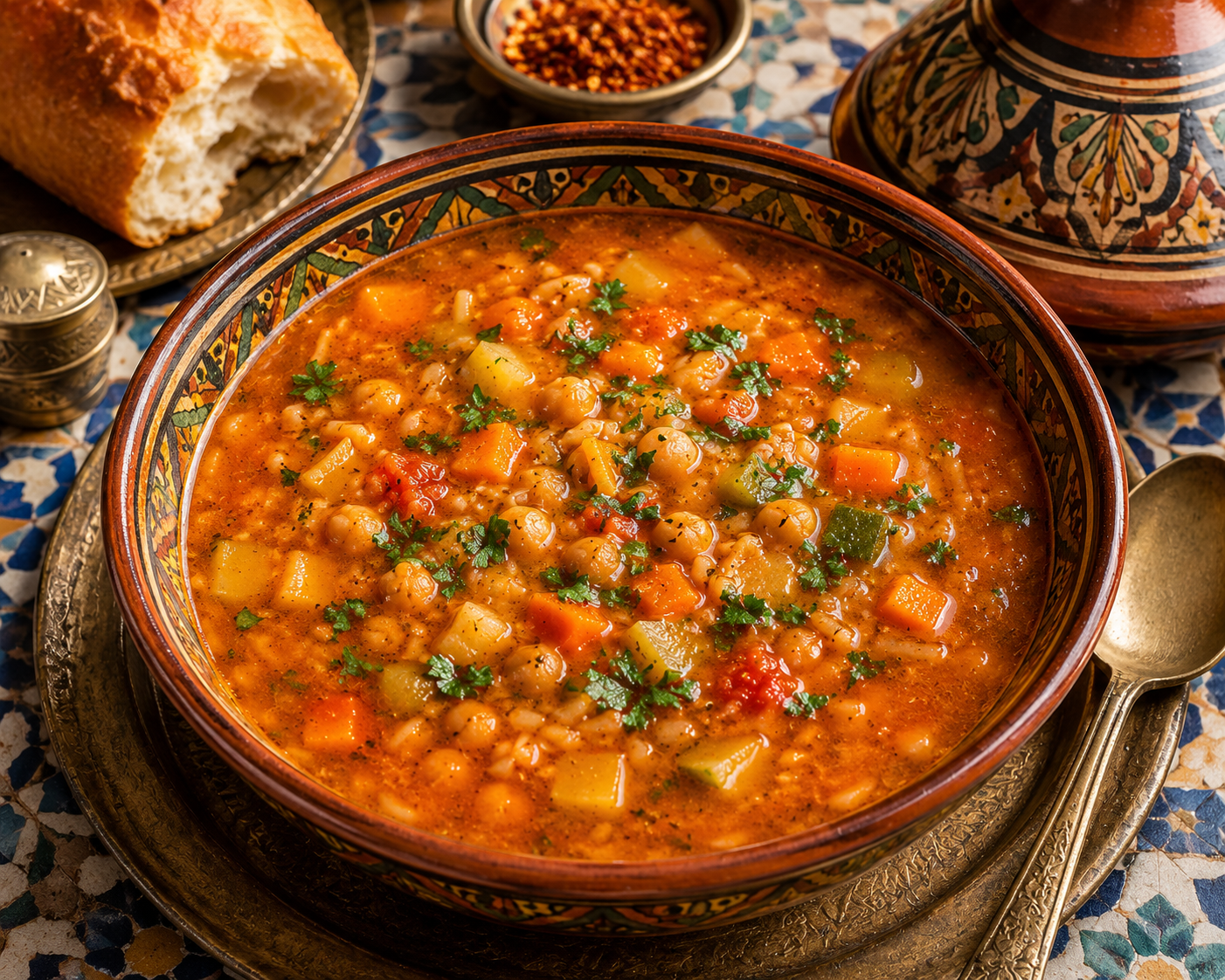
Chorba frik (Algeria, Tunisia) The most famous version in Algeria, especially in Algiers, Constantine, or Oran, is "chorba frik." "Frik" is young green wheat, roasted and crushed: it gives chorba its particular texture, its slight smoky note, and its high nutritional qualities. Typical ingredients: • Lamb pieces (or chicken, turkey) • Onions, garlic • Fresh tomatoes or concentrate • Celery stalks, fresh cilantro, fresh mint • Carrot, zucchini, soaked chickpeas (optional) • Spices: ras-el-hanout, cinnamon, pepper, paprika, turmeric • Frik (100-150g for 6 people) • Neutral oil or olive oil • Salt, pepper Traditionally, frik must simmer in the meat and vegetable juices so as not to disintegrate, and must remain neither too thick nor too liquid. Chorba vermicelli (Morocco, Tunisia, Algeria) Here, frik is replaced by fine vermicelli or angel hair pasta. The broth takes on a less thick texture, and the recipe is very popular for its quick preparation. It readily welcomes chicken, and carrots, potatoes, and peas are added depending on the season. Chorba beïda (White) Especially in Algeria, "chorba beïda" (white soup) is a refined version, without tomatoes: chicken, lemon, beaten egg at the end of cooking, chickpeas, fine julienne of celery and carrots, parsley. Chorba with fish / seafood On the Tunisian, Libyan coasts, or in the Sahel, chorba welcomes sea bream, mullet, squid, and even shrimp. The base remains tomato, but the seasoning gives pride of place to bay leaf, dill, and ras-el-hanout. Chorba with mutton or legumes, Saharan Africa In southern Algeria, Niger, and the Sahel, more rustic chorbas are made from dried meat and legumes (lentils, chickpeas).
In my books

Continue exploring the continent’s cuisines with Africa at the Table — 54 countries, 54 iconic dishes, by Alioune FALL. This book is in English.
Explore further
TRADITIONAL CHORBA FRIK RECIPE (6 PEOPLE)
Ingredients: • 400g lamb (shoulder, neck) or chicken • 1 large onion • 1 bunch fresh cilantro • 1 carrot, 1 celery stalk • 2 large grated tomatoes • 1 tablespoon tomato paste • 150g frik • 1 glass soaked chickpeas • 2 to 3 crushed garlic cloves • Olive or sunflower oil • Salt • 1 teaspoon cinnamon, black pepper, ras-el-hanout, turmeric, paprika • 1 bunch fresh mint • Juice of 1 lemon • Water (2 liters) Preparation:
- Inspection and preparation: Cut the meat into pieces, finely chop onion, celery, carrots. Chop cilantro and mint.
- Chorba base: In a large Dutch oven, brown the meat in a little oil with onion and garlic. Add tomatoes, concentrate, celery, carrot, chickpeas, cilantro. Add spices, mix.
- Cooking: Pour in boiling water. Cook covered over medium heat for 45 minutes.
- Adding frik: Add rinsed frik, adjust seasoning. Continue cooking over low heat for 20/30 minutes until the wheat is tender and the chorba is slightly thickened.
- Finishing: Add chopped mint and cilantro, lemon juice off the heat. Let infuse for 5 minutes.
- Serving: Serve hot, in bowls, with lemon wedges, homemade bread (khobz dar) or flatbreads, fresh dates for Ramadan.
Chef's Tips and Transmission Advice • Homemade frik wheat: Choose green wheat if possible, lightly toasted in a pan then crushed in a mortar. • Soup texture: For a lighter chorba, add more water. If thicker or for a rustic version, reduce the liquid and add more frik. • For Ramadan: Prepare in advance, the frik will continue to absorb the broth and develop its flavors. • Vegetables: Leftover seasonal vegetables are welcome, diced small. • Halal meat, or vegetarian dishes: A 100% vegetable chorba can be prepared (frik, chickpeas, vegetables, spices). • Herbs: Only add mint off the heat; if overcooked, it loses its freshness.
MODERN VARIATIONS AND INNOVATIONS
• Veggie and gluten-free: Replace frik with quinoa or small gluten-free pasta, keep the spice and herb mix. • Sub-Saharan influences: Add sweet potato, yam, African spinach for an Afro-fusion version. • Street food and refinement: For fast food, mini chorba bowls with cilantro, mint, and a drizzle of olive oil topping. • Cold chorba: In hot weather, a very lemony chorba served lukewarm is refreshing.
NUTRITIONAL VALUE AND BENEFITS
• Hydration and quick energy: Rich broth, cereals, vegetables, and proteins: perfect for breaking the fast healthily. • Complex carbohydrates: Frik or pasta allow for slow, sustained release. • Adjustable proteins: Meat or chickpeas depending on means. • Vitamins and minerals: Contribution from vegetables, fresh herbs, iron, and antioxidants. • Lightness and satiety: In small quantities, chorba is digestible, filling, and limits overeating.
ACCOMPANIMENT, PAIRINGS, AND PLACE IN THE MEAL
Chorba pairs with: • Homemade bread, semolina/tandoor flatbreads, savory fritters (bourek, brik during Ramadan) • Fresh dates and curdled milk (leben) • Fresh salads like mechouia, zaalouk, tomato and pepper salad • No wine: prefer orange blossom flavored waters, mint tea, or lemonade.
CONCLUSION
Chorba, a living memory of the Maghreb and Mediterranean Africa, embodies the generosity, inventiveness, conviviality, and dietary wisdom of African cuisine. A welcoming, festive, and memorable dish, it spans eras, links generations, and remains one of the major expressions of continental culinary heritage, both humble and refined, local and universal. Thanks to it, a simple bowl of soup revives the magic of the African home, solidarity, and the beauty of sharing.
In the kitchen : Chorba
Recipes from the site to put your knowledge into practice:
Discover these cuisines at a restaurant
Explore our restaurant and caterer directories. Choose your destination and check the establishment’s menu to confirm which dishes are offered and available.
Continue exploring
Enjoy discovering ingredients and African cuisines? Join our newsletter. The illustrated PDF 10 sauces africaines incontournables is in French and is offered after confirming a subscription to the French or bilingual edition.