Aloko
Côte d'Ivoire
Understanding : Aloko
INTRODUCTION
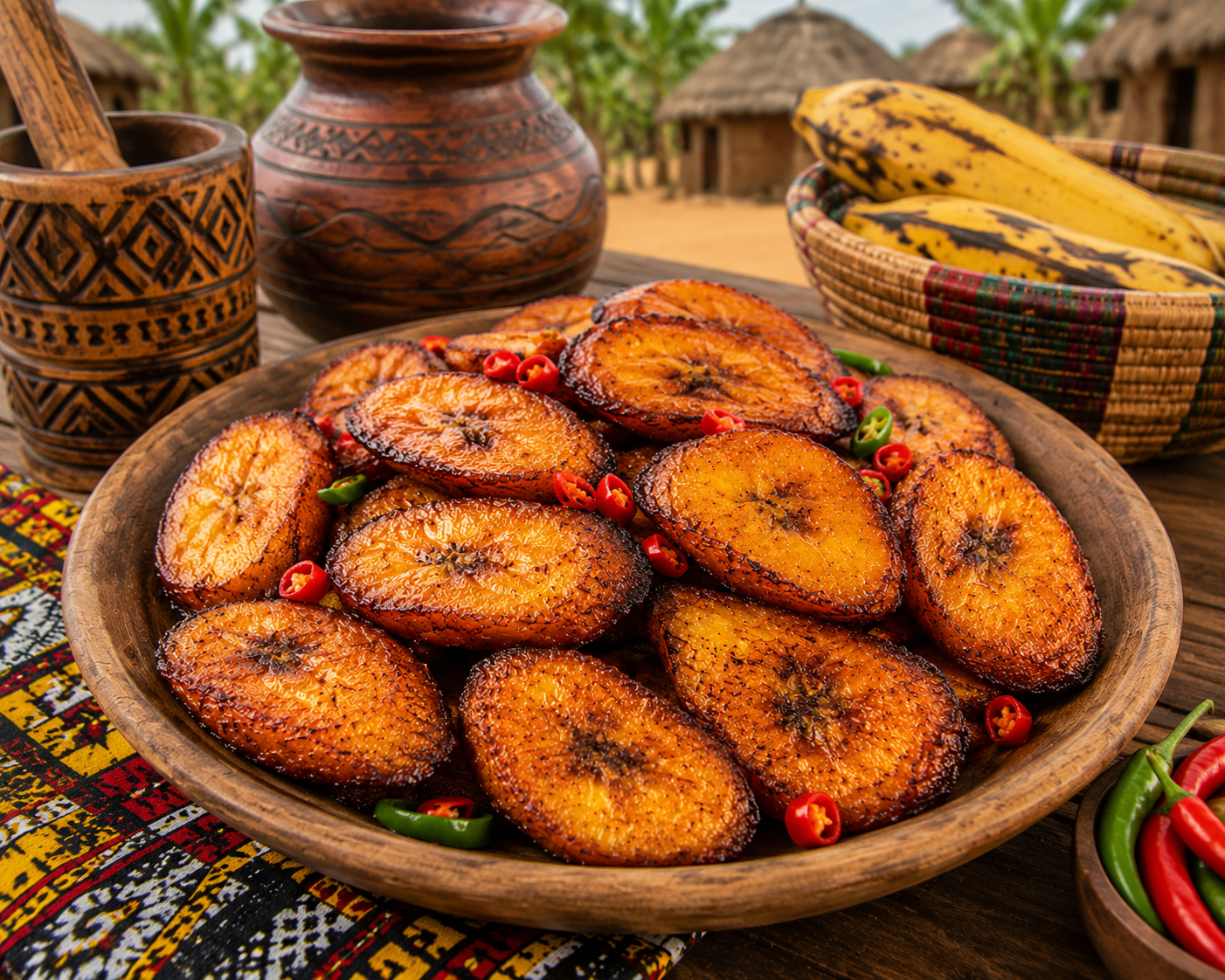
Aloko, also called alloco, aloco, or àlôkô depending on the region, is an essential dish in West Africa, primarily composed of ripe plantains fried in oil. This seemingly simple dish is, in reality, a gastronomic, economic, festive, and identity pillar for millions of people from Côte d'Ivoire to Ghana, including Benin, Togo, Nigeria, and beyond. Savory, crispy on the outside, meltingly soft on the inside, and perfectly sweet-and-sour, aloko alone embodies the generosity and warmth of African markets, the conviviality of roadsides, and popular creativity. More than just a side dish or a snack, it represents a living, unifying tradition and, beneath its modest appearance, an African way of life.
Prepare this speciality
Choose a detailed recipe, adjust the portions and prepare your ingredients before starting. Our cooking tips and food safety advice complement the steps described in the recipes.
Explore further: Cooking tips · Food hygiene and safety advice.
History and uses
ORIGIN AND HISTORY
Connection to Plantain The dish Aloko owes its entire existence to the plantain, a fruit originating from Southeast Asia, but introduced very early to the African continent, notably through maritime and trade routes that connected African coasts to India and Asia from the first millennium. The lands of Central and West Africa have since offered ideal conditions for plantain cultivation, which has become one of the main sources of carbohydrates for the populations. Both robust, nutritious, and adaptable, plantain is consumed at all stages of ripeness, from green salted plantain cooked into a puree (foufou, fufu) to buttered slices that will become… aloko.
EVOLUTION OF A POPULAR DISH
Aloko was born from the desire to accommodate ripened plantain — too sweet for some traditional dishes, but perfect once fried. Its name is said to come from the Baoulé (Côte d'Ivoire) “alokodja,” meaning “fried ripe banana.” First sold within the family sphere, then in markets, popular neighborhoods, road junctions, and bars, aloko established itself as the most iconic street food of Côte d'Ivoire, subsequently adopted by all its West African neighbors. This dish symbolizes the resourcefulness, creativity, and energy of African women, omnipresent behind their sparkling stalls by the roadside.
PREPARATION AND TRADITIONAL RECIPE
Basic Ingredients Well-ripened plantains (yellow skin speckled with black). Vegetable oil (red palm oil, peanut oil, or neutral vegetable oil depending on tradition and region). Salt (and sometimes a hint of sugar to enhance caramelization). Preparation Steps Choosing the Plantain To succeed with aloko, the choice of fruit is crucial. A well-ripened plantain guarantees a melting, golden, and sweet result. Plantains that are too young will yield dry and floury aloko; too ripe, they will melt in the oil and lose all crispness. Cutting Carefully peel the plantain; cut it into thick slices (1 to 1.5 cm), diagonally (oval shape), or into sticks according to taste and family traditions. Some lightly score it for a perfect fried texture. Frying Heat the oil in a large cast-iron pan or basin, without ever bringing it to a boil. Immerse the plantain pieces without overcrowding the pan, to ensure even cooking and prevent them from sticking together. Turn the slices halfway through cooking, until they achieve a beautiful golden to dark caramel color. Draining and Seasoning Carefully drain on absorbent paper or in a colander, salt while hot, serve immediately, plain or with a spicy or hot sauce.
CHEF'S TIPS
Briefly soak the slices in a little salted water for a very crispy texture. Some add a pinch of baking soda to the oil for a vibrant crust. To caramelize further, sprinkle with a veil of sugar just before the end of cooking. Red palm oil offers a rustic, fruity taste, highly sought after in Côte d'Ivoire.
REGIONAL VARIATIONS
CÔTE D'IVOIRE Aloko is often served in a banana leaf, sprinkled with a little ground chili or accompanied by sautéed onions. It is enjoyed plain or, during festive events, as a side dish with grilled fish (aloko-poisson), grilled chicken, or omelet. GHANA AND NIGERIA Under the name “kelewele” in Ghana, aloko is spicier: the plantain is marinated before frying in a mixture of ginger, chili, garlic, nutmeg, salt, and sometimes anise. This version is sold in the evenings on roadsides, as an accompaniment to akple or banku (corn dough). In Nigeria, it is called “dodo,” an essential dish at celebrations, buffets, or in “bukas” (popular eateries). CENTRAL AFRICA AND DIASPORAS In Cameroon, Gabon, Congo, aloko — under various names — is present in restaurants, fairs, and ceremonies. It is also prepared in a sweet version with honey, or savory with smoked spices. Many African diasporas worldwide offer aloko as street food at markets, festivals, or food trucks.
In my books

Continue exploring the continent’s cuisines with Africa at the Table — 54 countries, 54 iconic dishes, by Alioune FALL. This book is in English.
Explore further
PLACE AND SYMBOLISM IN AFRICAN LIFE
An Economic and Social Landmark Aloko, often prepared by women, is for many a primary source of income, accessible even without significant initial capital. All it takes is a pan, a mat, a small batch of ripe plantains, and oil to start a flourishing business. Selling aloko means providing for the family, sending children to school, or saving for big projects. A Dish of Sharing and Conviviality Aloko is rarely consumed alone. On the go at the market, on a mat after work, as an appetizer shared with family, it always accompanies social connection and laughter. At year-end celebrations, weddings, baptisms, funerals, aloko is omnipresent: it weaves ties between generations and communities. Integration into All Meals Aloko is not just a snack. It is also served for breakfast (with millet porridge, coffee, or ginger tea), brunch, or as an evening meal accompanied by fish, meat, or beans in sauce. It graces chic gourmet buffets as well as Sunday picnics, transcending social classes.
NUTRITIONAL VALUE AND BENEFITS
Nutritional Profile Ripe plantain contains approximately: 120 kcal/100 g (before cooking) 31 g of natural carbohydrates, mainly in the form of starch and simple sugars 2 g of fiber Vitamin A, B6, C, potassium, and magnesium Frying adds a significant amount of lipids, about 8 to 10 g/100 g depending on the method and type of oil used. Contributions and Benefits Aloko offers a good source of quick energy, ideal for active children, workers, and athletes. Its richness in potassium and fiber promotes muscle recovery, digestive health, and proper nervous function. The presence of vitamin A supports vision and immunity. Its very sweet taste encourages moderate consumption, especially for diabetics or people monitoring their cholesterol, but its caloric density makes it an effective meal against hunger and exhaustion.
DIVERSITY OF ACCOMPANIMENTS AND MODERN USES
In addition to classic accompaniments (chicken, fish, tomato-chili sauces), aloko attracts new audiences: Aloko burger: plantain bun stuffed with meat or vegetables Vegan aloko: coconut oil, mild spices, fresh herbs Aloko skewers: on sticks with shrimp or pieces of meat Healthy bowls: aloko on a bed of roasted vegetables or red beans Abroad, aloko symbolizes Africa in all diaspora celebrations, taking center stage in African markets in London, Paris, New York, or Montreal.
CONCLUSION
Aloko is much more than a fried plantain: it is an art of mastered simplicity, a daily celebration, an economic lifeline, and a culinary landmark for an entire generation of Africans and lovers of world flavors. Behind each golden slice, there is the mother's hand, the entrepreneur's cunning, the village's memory, the youth's creativity. Aloko grows, innovates, crosses borders, and unites around the same pleasure: that of sharing, smiling, and vibrant Africa.
In the kitchen : Aloko
Recipes from the site to put your knowledge into practice:
Discover these cuisines at a restaurant
Explore our restaurant and caterer directories. Choose your destination and check the establishment’s menu to confirm which dishes are offered and available.
Continue exploring
Enjoy discovering ingredients and African cuisines? Join our newsletter. The illustrated PDF 10 sauces africaines incontournables is in French and is offered after confirming a subscription to the French or bilingual edition.