Muamba de Galinha
Kimbundu (Angola)
Understanding : Muamba de Galinha
INTRODUCTION
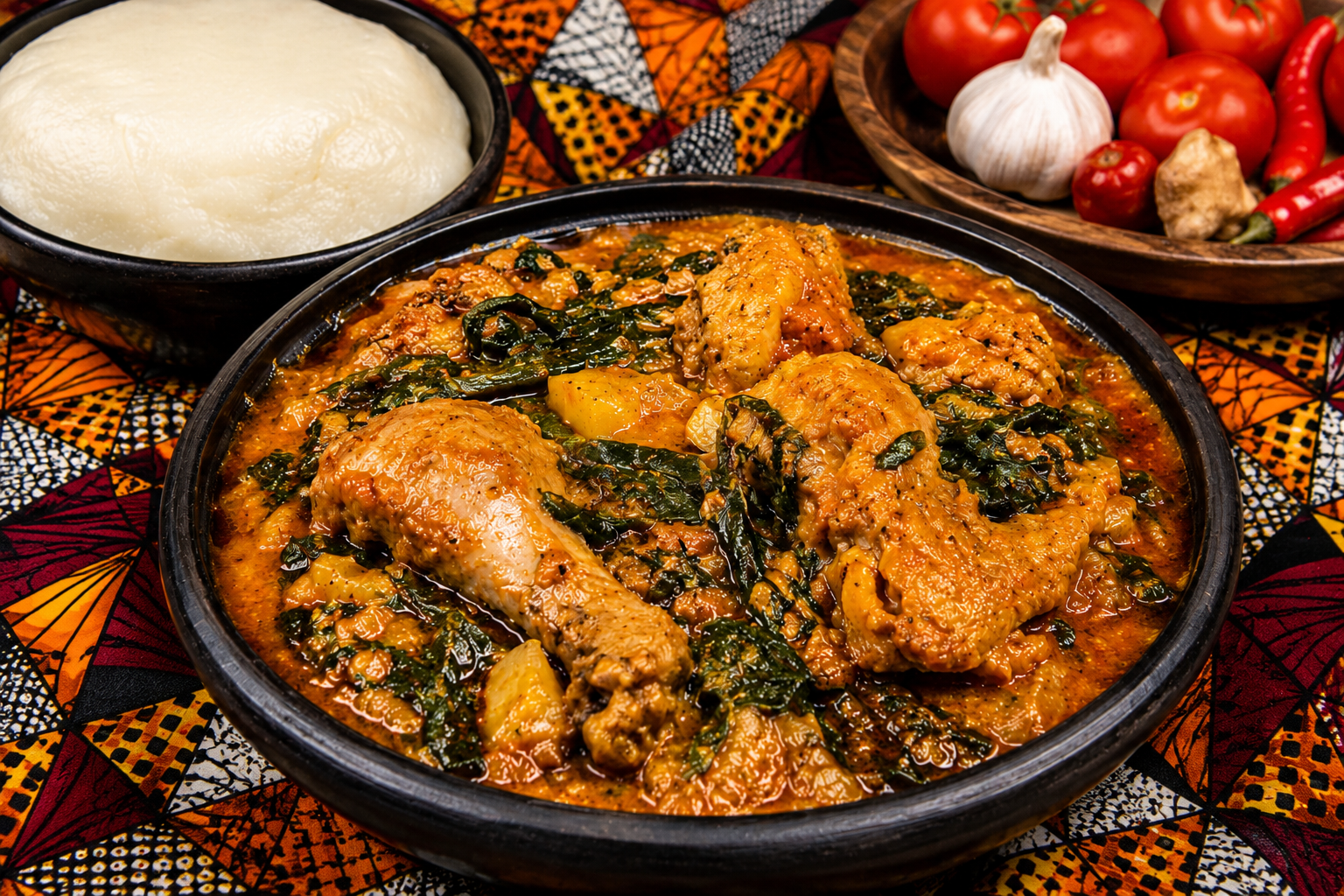
Muamba de Galinha, sometimes spelled "Moamba de Galinha," is one of Angola's most famous national dishes. It is a culinary symbol that embodies the blend of African, Lusophone, and Bantu influences, a story of colonial memory and African innovation. A classic and emblematic dish, it is now found throughout Central Africa (Congo, Gabon, Sao Tome...), in the Angolan diaspora, and beyond. Around this poultry stewed in a sauce made with dendê paste (red palm oil) and vegetables, one can read a whole history of land, markets, celebrations, and family sharing. This detailed description delves into its origin, variations, recipe, identity markers, daily or ritual uses, its place in modern African gastronomy, its nutritional values, and its cultural dimension.
Prepare this speciality
Choose a detailed recipe, adjust the portions and prepare your ingredients before starting. Our cooking tips and food safety advice complement the steps described in the recipes.
Explore further: Cooking tips · Food hygiene and safety advice.
History and uses
1. ORIGINS AND HISTORY
1.1. Etymology, the construction of a myth "Muamba" or "moamba" is said to be a word of Kimbundu origin (a language of Angola) meaning "fat sauce" or "fried squash." "Galinha" simply means "chicken" in Portuguese. The full name therefore represents "chicken in fat sauce," i.e., chicken cooked in a rich palm oil sauce. The dish accompanies the history of the arrival of the oil palm and the establishment of peanuts, cassava, and okra in the Bantu region. The marriage of indigenous techniques with Mediterranean or American ingredients (American squash, tomato, chili, Portuguese domesticated chicken) shapes this art of the "African stew." 1.2. Colonial and Afro-Brazilian influence Under Portuguese colonization, chicken farming developed, and African culinary methods intersected with Lusophone stews, creating Muamba as a symbol of an African Creole identity. At the same time, the Angolan diaspora took the recipe to Portugal, Brazil, and the West Indies. Influences intertwined, while maintaining the "African touch" on the dish. 1.3. Regional spread While Angola has made it its national flagship dish (to the point of being served at major diplomatic occasions), Muamba radiates: its cousins are found in Congo (Moaba), Gabon, Sao Tome, under the name Moamba, Poulet à la moambé, sometimes in a chicken-free version or associated with fish.
2. INGREDIENTS AND THEIR SYMBOLISM
2.1. Palm oil (dendê) This is the aromatic and colorful base of the dish. Made from the fruit of the palm tree, red palm oil (unrefined) gives Muamba its unique flavor, shine, and richness. For many, the scent of warm palm oil is the "Proust's madeleine" of Central Africa. 2.2. Chicken Traditionally, it is a free-range chicken, often cut into pieces, sometimes pre-marinated in lemon, salt, and garlic. The quality of the chicken is crucial: it must be firm to withstand long cooking and absorb the sauce. 2.3. Vegetables: okra, squash, tomato, onion Okra thickens and texturizes the sauce, providing a natural binder. Depending on the region/herbs, squash, pumpkin, sweet potatoes, African eggplant ("ndumbu"), sometimes cassava leaves or stem, are also added. Tomato (necessarily fresh or concentrated) provides acidity and creaminess. Onion, garlic, chili, bay leaf, and other spices add a personal and family touch. 2.4. Side dishes Cassava funge: a typical elastic white paste, a Bantu heritage, used to "scoop" the sauce White rice, more common in cities or on special occasions Plantains, sweet potato, yam
3. CLASSIC RECIPE, TECHNIQUES, AND TIPS
3.1. Ingredients 1 chicken cut into 8 pieces (or thighs, drumsticks) 2 large onions, thinly sliced 4 large fresh tomatoes or 1 can of crushed tomatoes 2 cloves of garlic 500 g of okra, sliced 1 piece of squash or pumpkin (optional) 1 small fresh chili (optional) 2 bay leaves, thyme, or parsley 2 to 3 tablespoons of peanut paste (sometimes) 10 cl of red palm oil Lemon juice or vinegar Salt, pepper Rice, funge, or cassava stick for accompaniment 3.2. Preparation Chicken preparation: Rinse, rub with lemon. Marinate for 30 minutes with salt, pepper, crushed garlic, bay leaf, lemon juice. Searing: Heat the palm oil in a large pot. Brown the poultry over medium heat. Remove the meat and set aside. Aromatic base: In the same pot, sauté the onions, then the tomato, garlic, spices, and season. Let it stew. Sauce: Add the seared chicken, then cover with water/broth, bring to a gentle simmer. Optionally add the peanut paste, squash. Incorporating vegetables: After 20-25 minutes of cooking, add the sliced okra, continue until the meat is tender and the sauce is thick. Optional: Add the chili and cook without splitting it, to flavor without making it too spicy. Adjustment: Adjust salt, chili, parsley. Serving: In a large family dish, place the funge or rice in a "mountain," cover with sauce, and arrange the chicken pieces and okra in a crown. 3.3. Chef's tips For a lighter dish, mix palm oil with a drizzle of neutral vegetable oil To bring out the aromas, lightly caramelize the tomato before adding the chicken Some add dried or smoked shrimp for an "umami" taste The authentic dish is shared by hand, with funge rolled into a ball to capture the sauce.
In my books

Continue exploring the continent’s cuisines with Africa at the Table — 54 countries, 54 iconic dishes, by Alioune FALL. This book is in English.
Explore further
4. VARIATIONS, RELATED DISHES, AND MODERNITY
4.1. Mega-blending "Muamba" comes in variations: "Moamba de peixe": fish (tilapia, capitaine, catfish) stewed in dendê "Muamba de calulu": with cassava leaves, African eggplant, smoked meat... In Congo and Gabon, Moambe refers to both the dish and a sauce or a culinary "spirit" (a kind of mother "base" that is adapted). 4.2. Urban modernization In cities, industrial chicken replaces farm poultry; okra can be replaced by milder vegetables, some revisit the recipe in a tagine, pressure cooker, or even for brunch. Chefs and the diaspora value Muamba: Variations into ravioli, sandwiches, moamba burgers, muamba sauce as tapas Associations with Afro-fusion sauces (moamba-peanut, moamba-curry, moamba-lemongrass...)
5. NUTRITIONAL VALUE AND HEALTH BENEFITS
Proteins: lean white chicken meat (if free-range), easily digestible, low in fat Vitamins, fiber, minerals: thanks to okra (A, C, K), tomato, cassava Unsaturated fatty acids: red palm oil, rich in carotene, vitamin E (unless refined or overconsumed) Complex carbohydrates via funge, plantain A naturally gluten-free dish, nourishing and suitable for both rural and urban African diets.
6. SOCIAL, SYMBOLIC, AND CULTURAL DIMENSION
6.1. Symbol of hospitality and celebrations Muamba de Galinha is the honored dish at family gatherings, national holidays, and formal dinners. Presenting a Muamba is to announce prosperity, success, and collective happiness. During major events (engagements, funerals, expatriate returns, independence days), this dish is essential. 6.2. Everyday dish Muamba is also a Sunday dish, a "feeling better" dish after illness, a return to the village dish, a lunch shared among neighbors or colleagues. 6.3. Transmission and identity The recipe is transmitted orally, from mother to daughter, but also among chefs, communities, at fairs or festival committees. It carries colonial memory and the pride of a local taste, resisting erasure by globalized cuisines. 6.4. Links with spirituality Like any ceremonial dish, Muamba has a sacred dimension: it sometimes accompanies rituals of thanksgiving, requests for fertility, and connections between ancestors and the living.
7. MUAMBA AND THE AFRICAN DIASPORA
7.1. Exile and memory In the Angolan diaspora (France, Portugal, South America), cooking Muamba means restoring the memory of the country, reliving the taste of childhood, transmitting a language of the heart. 7.2. Contemporary gastronomy Today, revisited Muamba can be found on the menus of Michelin-starred restaurants, on YouTube, in Afro-fusion cuisine in Paris, Lisbon, Rio, or New York. It even inspires non-African chefs, fascinated by the balance of its flavors and its generosity.
CONCLUSION Muamba de Galinha concentrates in its color, aroma, and texture all the genius of African cuisine: vegetable richness, migratory history, cooking pot know-how, conviviality, transmission. In every bite, it is the deep and mixed Central Africa that sings, an Africa oriented towards sharing, family sweetness, and the permanent reinvention of its table rituals. In Angola, Congo, Libreville, or Paris, Muamba unites, honors, and nourishes, and will undoubtedly continue to shine as a living icon of African gastronomy.
In the kitchen : Muamba de Galinha
Recipes from the site to put your knowledge into practice:
Discover these cuisines at a restaurant
Explore our restaurant and caterer directories. Choose your destination and check the establishment’s menu to confirm which dishes are offered and available.
Continue exploring
Enjoy discovering ingredients and African cuisines? Join our newsletter. The illustrated PDF 10 sauces africaines incontournables is in French and is offered after confirming a subscription to the French or bilingual edition.