Biltong
Afrikaans (South Africa)
Understanding : Biltong
INTRODUCTION
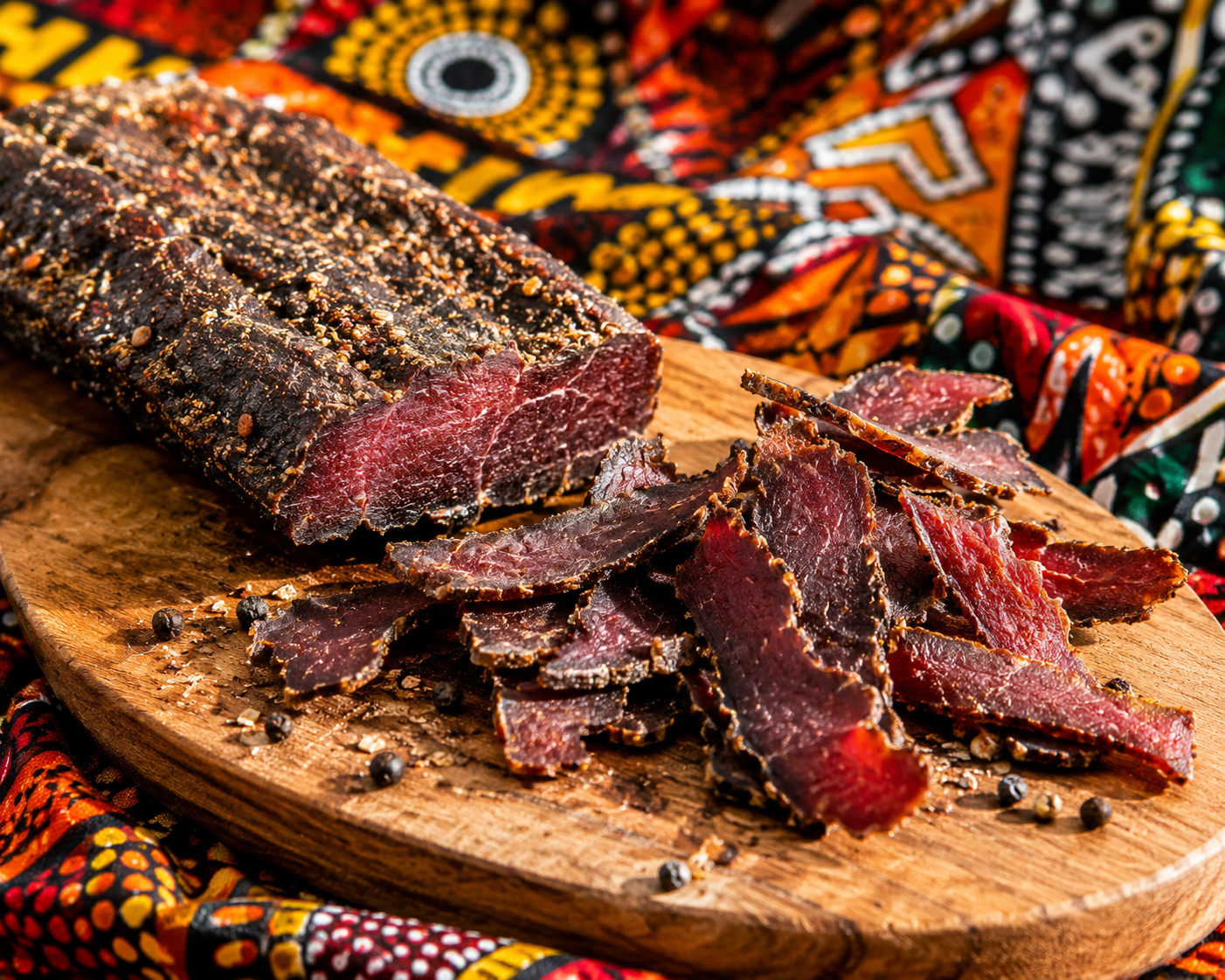
Biltong, one of Southern Africa's gastronomic icons, is much more than just dried meat: it's a culinary tradition, an ancestral savoir-faire, and an expression of the resilience and ingenuity of the South African and Namibian peoples. A flagship product at markets, festivals, expeditions, and childhood memories, biltong is found throughout South Africa, Namibia, Zimbabwe, Botswana, and has won the hearts of diasporas worldwide. Its tender texture, spicy-salty taste, infinite variations, and deep cultural roots distinguish biltong from all other dried cured meats globally. To grasp biltong's place in African cuisine and its social importance, it's essential to trace its history, understand its meticulous preparation, explore its regional versions, and highlight its uses and symbolism.
Where to find it
Look for the exact food-grade form required by the recipe at markets and specialist shops. Check the product name, ingredients, condition and storage instructions.
Explore further: Cooking tips · Food hygiene and safety advice.
Search Amazon.fr — affiliate link →
Check availability and delivery on Amazon.fr. Compare ingredients, packaging and sellers.
As an Amazon Associate I earn from qualifying purchases.
History and uses
HISTORY AND ORIGINS
At the roots of pastoral and agricultural societies Biltong finds its origins in the necessity of preserving meat in environments lacking refrigeration, especially before European colonization. Already, the San (Bushmen), Khoikhoi, and Bantu peoples practiced drying or smoking game meat, salting, and using local herbs like wild coriander, African sage, or aloe to protect food from flies and heat. The contribution of Dutch settlers In the 17th century, the first Dutch settlers brought with them European preservation traditions (curing, vinegars, spices) and merged these techniques with those of the indigenous populations. The word "biltong" comes from Dutch: "bil" (buttock or thigh) and "tong" (tongue or strip), literally meaning "buttock strip." The Voortrekkers (Boer pioneers) venturing into the interior during the Great Trek dried entire quarters of "biltong" to accompany their journey. The absence of ice or modern preservation, combined with massive hunts (antelope, springbok, kudu, zebra, beef), made biltong the ideal solution to preserve excess meat from large hunts and feed families for several months.
BILTONG, MORE THAN SURVIVALISM: a way of life Over time, biltong became a delicacy, an appetizer, a fortifier for children, and a "Proustian madeleine" for an entire nation. Today, it symbolizes South Africa as much as rugby, the bush, or braais (barbecues).
TRADITIONAL PREPARATION
Making biltong is an art that combines rigor, patience, and creativity, mobilizing savoir-faire passed down through generations.
- Choice of meat Lean, long-fibered red meat is traditionally used. Preferred cuts include fillet, thigh, and rump of beef, but also ostrich or game: springbok, eland, kudu, oryx, or even impala. Ostrich can even be used for a lean and original version.
- Cutting The meat is cut into long, thick strips (2 to 4 cm thick, 20 to 40 cm long, 2 to 5 cm wide). The cut often follows the grain of the meat to achieve a more tender texture.
- Marinade and seasoning The marinade is the secret to biltong's unique taste. It includes: Salt (for dehydration), Vinegar (cider or wine), sometimes Worcestershire sauce, Freshly ground black pepper, Toasted and lightly crushed coriander seeds, Brown sugar or honey (optional, to balance acidity and round out the flavor), Chili or local herbs depending on the region. Some add garlic, nutmeg, cloves, or other spices from the family garden. The meat generally marinates for 2 to 12 hours: the vinegar begins to lightly "cook" it, while the salt penetrates the fibers.
- Curing and drying After marinating, the strips are drained and wiped, then hung in a dry, ventilated place, ideally exposed to a light breeze but protected from insects. In the past, verandas, cages, or makeshift drying racks were used. Today, electric "biltong boxes" exist for urban production. Drying takes 3 days to 2 weeks, depending on the desired thickness and ambient humidity. The result: meat that is supple at the core, sometimes a little dry on the periphery, intensely flavorful and tender.
REGIONAL VARIATIONS
Meats used South Africa and Namibia: beef, eland, springbok, kudu, oryx, ostrich. Zimbabwe, Botswana, Mozambique: beef, zebra, local game. Fish biltong ("bokkoms"): in coastal areas, drying of flatfish or mullet. Spices according to households Every family, every butcher, every artisan has "their" biltong! Some prefer a strong coriander flavor, others pepper, others a mix of fresh herbs or garlic. Biltong vs. Jerky Note that biltong differs from American "jerky": jerky is often thinly sliced, sweet, cooked before being oven-dried or dehydrated, while biltong marinates, air-dries, and remains thicker and meatier, with a deeper vinegary and spicy taste.
In my books

Continue exploring the continent’s cuisines with Africa at the Table — 54 countries, 54 iconic dishes, by Alioune FALL. This book is in English.
Explore further
TASTING AND CULINARY USES
Simple snacking and appetizer Biltong is enjoyed plain, cut into thin slices or cubes, alone or with bread, peanuts, cheese, or a local beer. At home, in rugby stadiums, at parties, on the road, or hiking, biltong is a practical and nutritious companion for all ages.
INGREDIENT IN RECIPES
It is sometimes used in salads (biltong salad, strong cheese), sandwiches, pies, or "biltong potjies" (stew simmered over a wood fire). Some use it crumbled in scrambled eggs, stuffings, savory muffins, or even on pizza! Biltong soup A Namibian specialty involves infusing biltong into a creamy soup to enhance the umami flavor.
NUTRITIONAL VALUE
Biltong is extremely rich: Proteins: nearly 50g per 100g of dried meat. Low in carbohydrates: less than 5%. Variable lipids: depending on the cut (fillet vs. ribeye). Trace elements: iron, zinc, phosphorus, B vitamins. Few artificial preservatives: unlike many industrial cured meats. It offers high energy density, ideal for exertion, hiking, bush trips, and excellent preservation for several weeks.
SYMBOLISM AND PLACE IN SOUTH AFRICAN SOCIETY
National pride Biltong is a ritual, an olfactory and gustatory madeleine for all children of Southern Africa. It evokes childhood, the bush, warmth, family reunions, outings, rugby matches. Offering biltong is a sign of hospitality. Markets are full of biltong stalls, and butchers build their reputation on the quality and subtlety of their homemade recipe. Events and celebrations It is omnipresent at braais (South African barbecues), festivals, fairs, and as "travel rations" for long journeys. In times of food scarcity or during great treks or safaris, it has been a survival resource. Economic engine Biltong represents an entire segment of the rural and artisanal economy in South Africa and Namibia. Many entrepreneurs, often family-run, perpetuate the secrets of production and find outlets in local and international markets (specialty shops in Europe, USA, Australia, etc.).
DIASPORA AND EXPORT
In expatriate South African communities, biltong connects families to their roots and homeland, spreading local culinary culture worldwide.
INNOVATIONS AND MODERN ADAPTATIONS
With globalization and the search for healthy and natural foods, biltong has reinvented itself: Lean biltong: beef fillet or ostrich for athletes Halal or kosher biltong: respecting the dietary restrictions of each community Chili, garlic, or Herbes de Provence biltong: gastronomic experiments to appeal to all palates Healthy snacking: sugar-free, preservative-free, premium products for an international clientele Biltong, culture, and identity Biltong embodies the adaptability and creativity of the South African people throughout history. It is an integral part of culinary, but also social, identity, sharing the spotlight with "boerewors" (sausage), "droëwors" (dried sausage), and all braai products. It transcends all social strata, from modest tables to bourgeois parties, from the bush to the city center.
CONCLUSION
Biltong is not just a delicious way to preserve meat: it is the heart and soul of a South African and African tradition, carrying memories, conviviality, and transmission. Both a snack, a festive dish, a survival reserve, and a globally appreciated gastronomic curiosity, it tells the story of peoples, the genius of the African climate, and perpetuates the magic of a cuisine that transforms the simplicity of drying into an explosion of taste, warmth, and character. To try it is to definitively join the large family of lovers of a festive, spicy, inventive, and resolutely sharing Africa.
ENJOY YOUR MEAL! © Photo credit: recettesafricaines.com. All rights reserved.
In the kitchen : Biltong
Recipes from the site to put your knowledge into practice:
Discover these cuisines at a restaurant
Explore our restaurant and caterer directories. Choose your destination and check the establishment’s menu to confirm which dishes are offered and available.
Continue exploring
Enjoy discovering ingredients and African cuisines? Join our newsletter. The illustrated PDF 10 sauces africaines incontournables is in French and is offered after confirming a subscription to the French or bilingual edition.