Couscoussier
Berber (Maghreb)
Understanding : Couscoussier
INTRODUCTION
The couscoussier is undoubtedly one of the most emblematic culinary utensils of the Maghreb and, by extension, of the African continent. More than a simple cooking tool, it embodies the art of living, conviviality, and the living memory of North African societies and, progressively, of many communities south of the Sahara that have adopted its principle. Through its form, its function, and the symbolism attached to it, the couscoussier synthesizes rural tradition, artisanal innovation, and sharing that structures social life. Through its uses, regional variations, history, and its place in rituals, the couscoussier tells the story of Africa, its cultural mix, its evolutions, and its culinary refinement. Let's discover in this detailed description the history, technique, manufacturing, use, variations, chef's tips, and the place of the couscoussier in the tangible and intangible heritage of African cuisine.
Where to find it
When choosing a couscous steamer, compare usable capacity, stability, hob compatibility and the size of the perforations. A steaming basket may suit some recipes if it retains the grains.
Explore further: Cooking tips · Food hygiene and safety advice.
Search Amazon.fr — affiliate link →
Check availability and delivery on Amazon.fr. Compare ingredients, packaging and sellers.
As an Amazon Associate I earn from qualifying purchases.
History and uses
1. HISTORY AND ORIGIN OF THE COUSCOUSSIER
1.1. Birth of a utensil: at the heart of the Mediterranean The couscoussier, as we know it, appeared within the Amazigh (Berber) cultures of the Maghreb, probably around the Middle Ages. It is a double instrument primarily intended for the preparation of couscous, a flagship dish whose history is intertwined with that of the North African peoples, from Mauritania, Morocco, Algeria, Tunisia, Libya, and even in certain areas of the Sahel (Niger, Mali, Senegal). The first couscoussiers were probably made of fired clay: the lower part (the pot) contained the broth and meats, the upper part (the colander, "keskes" in Berber) held the wheat or millet semolina, pierced with holes to allow steam to rise and swell the couscous. 1.2. Diffusion and blending Over time, the utensil evolved: metals (copper, aluminum), tin, and then enameled steel replaced clay to improve longevity and conductivity. Wherever cereal societies cooked with steam, the couscoussier adapted: thus, in Mali, Niger, Senegal (among the Moors or Wolofs), steam cooking spread for fonio, bil-bil (fermented millet), or even rice today.
2. DESCRIPTION AND FUNCTIONING
2.1. Structure of the couscoussier The couscoussier is composed of two main elements: The lower part (the pot or "gdra") Used to cook broth, meats, vegetables, herbs, and spices in water. Materials: traditionally copper, now anodized aluminum, stainless steel, sometimes clay. Sometimes equipped with handles and a lid. The upper part (the steamer basket or "keskes" / "couscoussière" / "colander") Fitted onto the pot, pierced with holes. Holds semolina, grains, or other foods to be steamed. The lid Can be simple or domed, helps to retain heat. The couscoussier exists in different sizes, from small (3/4 people) to monumental (festivities, ceremonies). 2.2. Functioning and technical point The principle is based on gentle cooking with live steam: the aromas of the broth rise, infusing into the semolina. This prevents the semolina from becoming mushy; it remains light, airy, and richly flavored, the secret to successful Maghrebi couscous.
3. MANUFACTURING AND CRAFTSMANSHIP
3.1. The work of clay, copper, metal In traditional regions, manufacturing was entrusted to potters or coppersmiths. Clay and copper were the materials of choice. Each artisan (often women for clay, men for metal) signed their work with incised, hammered, sometimes enameled or colored decorations. Today, industrial production has popularized the lightweight stainless steel couscoussier, more accessible but considered less "authentic" by purists. 3.2. Couscoussier sets In many Maghrebi families, a wedding "trousseau" includes a couscoussier. The utensil quickly takes on a heritage dimension, carrying transmission between generations.
4. CULINARY USES AND RITUALS
4.1. The preparation of couscous The couscoussier is primarily used for preparing couscous. A codified, almost sacred ritual is followed: The semolina is moistened, rolled by hand, then placed in the couscoussier for a 1st steaming. It is removed, fluffed, salted, re-moistened, then steamed a 2nd (or even 3rd) time, so that it swells perfectly without sticking. In the pot, the broth (marqa) simmers: meats (lamb, chicken, beef, merguez, sometimes fish), vegetables (turnip, carrot, zucchini, chickpeas, squash, fresh chili, etc.), spices (ras-el-hanout, turmeric, cinnamon), oil or rancid butter (smen) are cooked in it. The smell released during cooking evokes home, childhood, festive days. The couscous thus steamed is soft, digestible, incomparable to simple semolina boiled in water. 4.2. Plurality of uses The couscoussier is not limited to wheat couscous: In Senegal/Niger/Mali: used to cook millet, fonio (an ancestral cereal), steamed rice. In Tunisia, for mesfouf couscous (sweet and savory, with peas or dates). Also used to cook vegetables, fish, meatballs, or even desserts (semolina cakes, puddings, etc.). 4.3. Social and ritual dimension The couscoussier symbolizes more than just the utensil: it is highlighted during major Muslim holidays (Eids), weddings, baptisms, funerals, harvests, and every sacred Friday, where ritual couscous is offered to neighbors, the poor, and travelers. It is around the couscoussier that women and children fluff the grains, discuss, transmit gestures, tips, and family secrets.
In my books

Continue exploring the continent’s cuisines with Africa at the Table — 54 countries, 54 iconic dishes, by Alioune FALL. This book is in English.
Explore further
5. CHEF'S TIPS AND TECHNIQUES
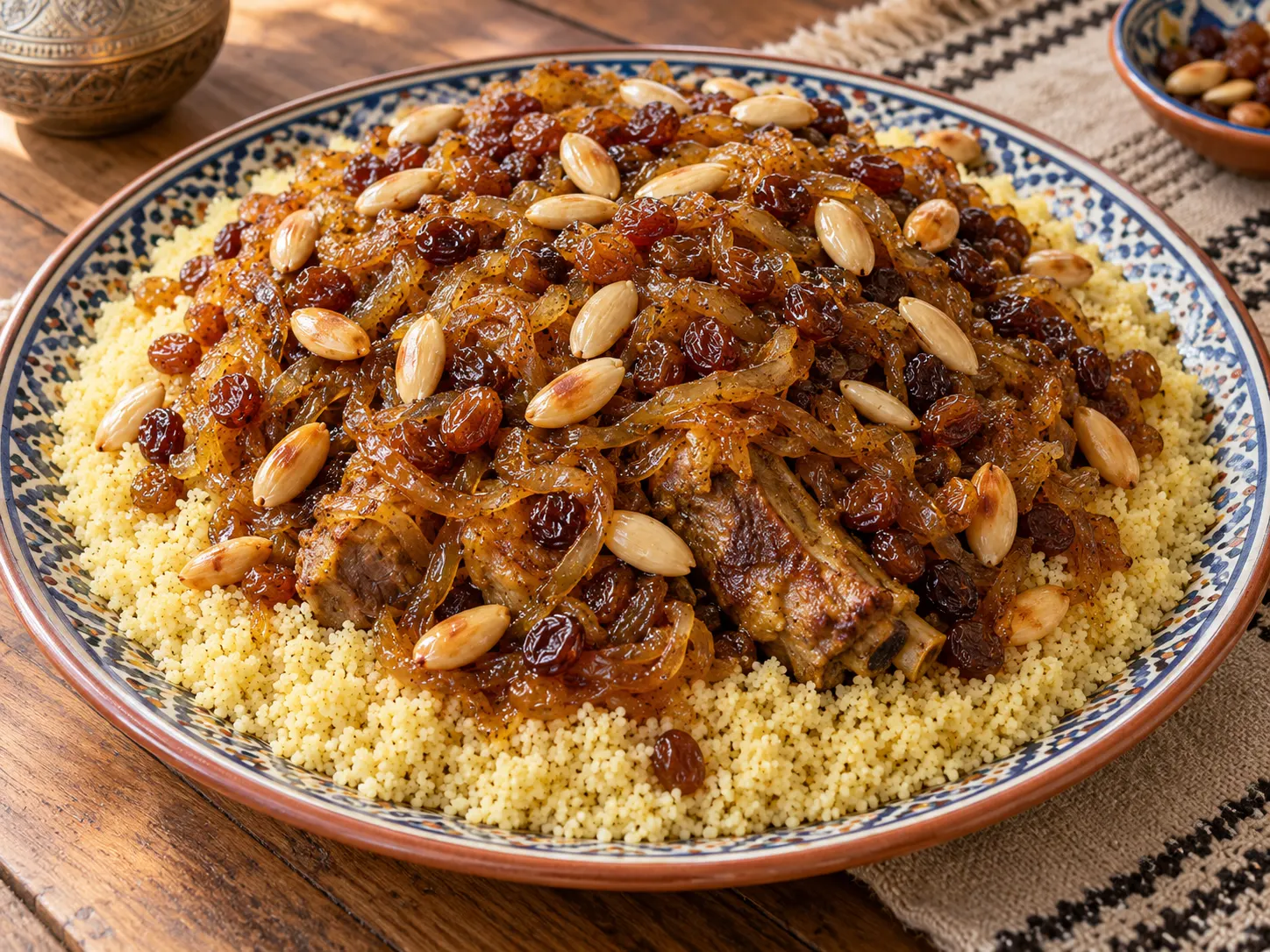
5.1. For successful traditional couscous Quality semolina: prefer fine or medium semolina, well rolled by hand. Three steamings: allow the semolina to swell without sticking. Lightly oil between each pass to prevent clumping. Add raisins, almonds, chickpeas to the upper part during the last cooking for a festive touch. Let rest fluffed under a clean cloth before serving. 5.2. Cleaning and maintenance Always wash with hot water and dry thoroughly to prevent oxidation on copper or the appearance of odors on clay. Avoid aggressive products if the couscoussier is decorated.
6. REGIONAL VARIATIONS OF THE COUSCOUSSIER AND ITS USE
6.1. Amazigh and rural couscoussier In Kabylia (Algeria), in Souss (Morocco), the couscoussier can be exclusively made of clay, wider, cooked over a wood fire, developing a slightly smoky taste. 6.2. Urban and modern couscoussier In large cities, stainless steel models, with triple diffuser bottoms, adapted to induction hobs, are multiplying. Couscous or steamed vegetables, fish are cooked in them... far from the wood fire, but always with a hint of nostalgia. 6.3. West African couscoussier In the Senegal River basin, among the Wolofs, Moors, Soninkes, Fulas, the couscoussier is used to cook thiakry (millet semolina), fonio (for "white fonio"), and accompanies fish, meats, peanuts.
7. SOCIAL, CULTURAL AND SYMBOLIC PLACE
The couscoussier is inseparable from African conviviality: Intergenerational link: the transmission of gestures, of rolling the semolina, of steaming, of flavors, takes place around the couscoussier. Symbol of celebration and sharing: it reminds us that the table, in African society, is always collective. The dish is shared, everyone takes, discusses, laughs, negotiates. Vector of identity and memory: old, engraved models accompany families, are part of the trousseau offered to the young wife. They contribute to the culinary identity of the Maghreb, inscribed since 2020 on UNESCO's intangible cultural heritage list (Maghrebi couscous).
8. NUTRITIONAL BENEFITS AND CURRENT DYNAMICS
The couscoussier encourages healthy cooking: Steam cooking: preserves vitamins, minerals, food texture. Reduction of fats: steam = light, digestible cooking. Inventive cuisine: allows combining cereals and seasonal vegetables, legumes, dried fruits for nutritious vegetarian or vegan dishes. Suitable for all ages. Furthermore, contemporary African and Mediterranean chefs are reinventing couscoussier cooking (ancient vegetables, quinoa, Moroccan-style steamed pasta, steamed desserts...).
In the kitchen : Couscoussier
Three recipes from the site to put your knowledge into practice:
Discover these cuisines at a restaurant
Explore our restaurant and caterer directories. Choose your destination and check the establishment’s menu to confirm which dishes are offered and available.
Continue exploring
Enjoy discovering ingredients and African cuisines? Join our newsletter. The illustrated PDF 10 sauces africaines incontournables is in French and is offered after confirming a subscription to the French or bilingual edition.