Domoda
Mandingo (Gambia)
Understanding : Domoda
INTRODUCTION
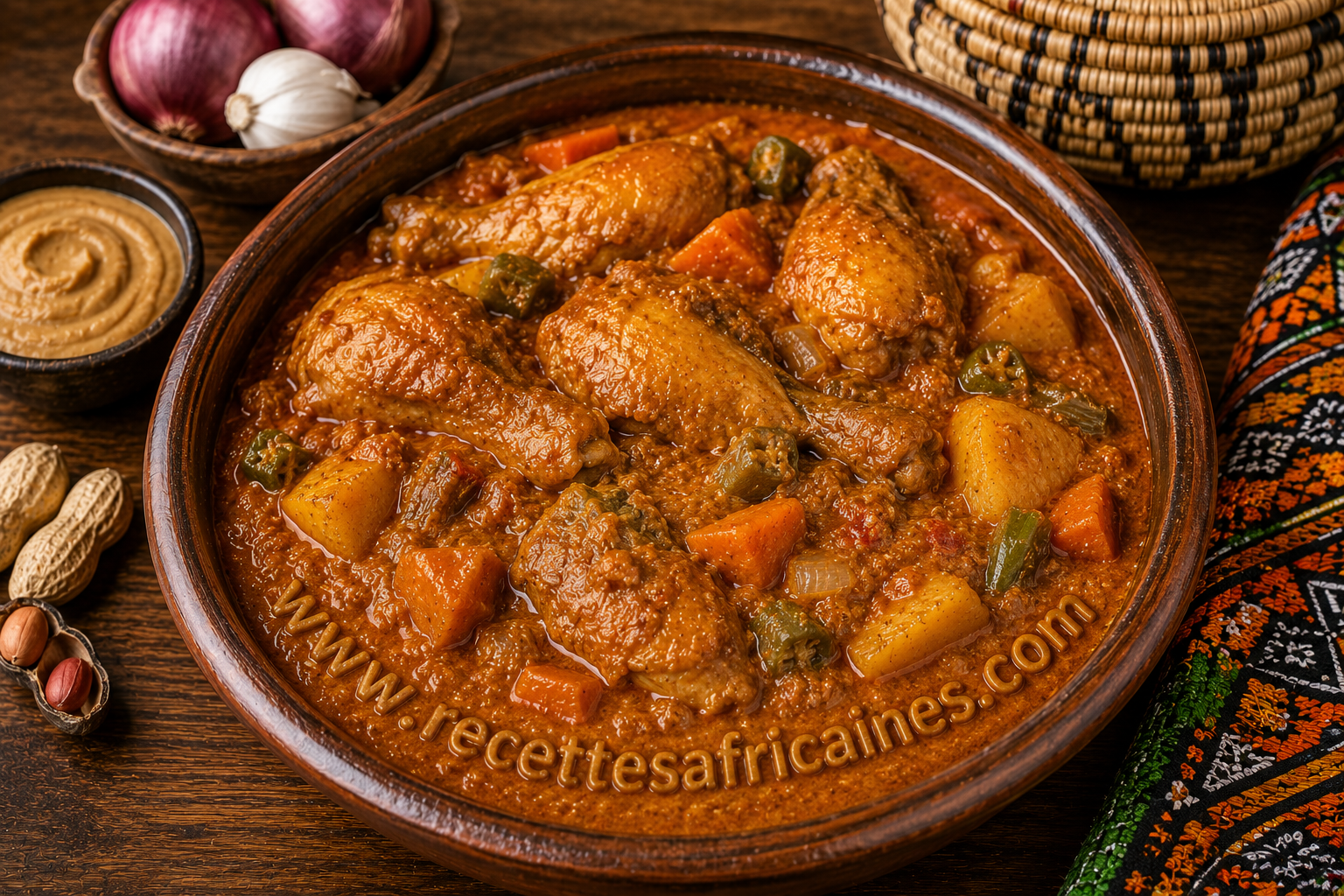
Domada (or maafe, depending on the region) is one of the most emblematic dishes of Senegalese and Gambian gastronomy. This creamy stew made from peanut paste, vegetables, and meat or fish is the perfect illustration of the creative genius of West Africa, its mixed history, and its ability to sublimate local products. Much more than a simple sauce, domada embodies the conviviality, hospitality, cultural diversity, and sharing that characterize the African table. Both a daily and festive dish, it crosses borders and centuries, from Senegal to Mali, from Gambia to Guinea-Bissau, adapting to all family, rural, or urban variations, while remaining faithful to its heart: peanut paste, an agricultural heritage, a symbol of union between land and man, a nutritional pillar, and a symbol of food resistance.
Let's delve into the history, recipe, secrets, symbolism, and modernity of domada to understand why this dish is today one of the most popular and respected in African culinary heritage.
Prepare this speciality
Choose a detailed recipe, adjust the portions and prepare your ingredients before starting. Our cooking tips and food safety advice complement the steps described in the recipes.
Explore further: Cooking tips · Food hygiene and safety advice.
History and uses
1. ORIGIN AND HISTORY OF DOMADA
1.1. Mandingo and West African Cradle The word “domoda” comes from Mandingo, the main language of Gambia, and literally means “paste-based sauce” or “food in sauce”. The dish is also known as “maafe” in other regions of West Africa (mainly Mali, Guinea, Senegal, Burkina Faso, Ivory Coast). It is believed to have appeared in the Mandingo kingdom region, around the Senegal and Gambia rivers, then spread with migrations, exchanges, peanut trade, and the emergence of large cities. 1.2. Peanuts, an agricultural revolution The central ingredient of domada, peanut paste, is not originally from Africa but from South and Central America. Imported by the Portuguese and French from the 16th century, peanuts (groundnut, earth pea) quickly adapted to West Africa: their drought resistance and nutritional value made them indispensable. In the 19th and 20th centuries, peanuts became a cash crop, supported by colonization and then the post-colonial economy. They shaped the cuisine, economy, culture, and even urban planning of Senegambian societies. 1.3. Cross-breeding, identities and variations Domada spread over vast territories: each ethnic group, each family left its mark: choice of meats or fish, vegetables, spices, cooking techniques, accompaniments (rice, millet, fonio (a type of grain)). The result: there are almost as many domadas as there are African households! It symbolizes both the diversity and social cohesion of the continent, the ability to build connections around a dish.
2. CLASSIC DOMADA RECIPE
2.1. Basic Ingredients (for 6 people) 1 kg of meat (beef, lamb, chicken) or fish (whole or pieces) 200 to 250 g unsweetened peanut paste 1 large can of peeled tomatoes (or 4 fresh tomatoes) 2 onions 3 carrots 2 potatoes 1 sweet potato or cassava (optional) ½ white or green cabbage 2 or 3 okras (optional, depending on the region) 2 fresh chili peppers (scotch bonnet, pili-pili), to taste 2 to 3 crushed garlic cloves 1 bouillon cube (Maggi or Kébou, optional) Salt, pepper, bay leaf, a little ginger or lemon depending on the variation Peanut oil (or other) White or fragrant rice, to accompany 2.2. Preparation Brown the meat or fish in a pot with a little oil until colored. Remove and set aside. Add the sliced onions, garlic, and sauté gently. Add the crushed or peeled tomatoes, bay leaf, a little ginger. Let it simmer for a few minutes. Dissolve the peanut paste with a little warm water in a bowl (or pound to liquefy), then incorporate into the pot. Mix well. Return the meat/fish, add the whole or large pieces of vegetables, cover with water to height. Salt, pepper, add chili and bouillon cube. Simmer over medium heat for 45 minutes to 1 hour: the sauce should thicken, and the peanut oil should rise to the surface ("the sauce should pearl"). Towards the end: adjust seasoning, mash some vegetables to bind the sauce, remove chilies if necessary. Serve hot, poured over a bed of white rice, each guest helping themselves according to traditional custom, or on a plate. 2.3. Chef's tips More roundness: dry roast (lightly grill) the peanut paste before dilution. Shiny sauce: let the sauce “confit” over low heat, without ever burning, until the oil surfaces. Add lemon, tamarind or vinegar to bring a much-appreciated tangy note in Gambia. Broken rice or fonio (a type of grain) as an alternative depending on the region or to lighten the dish.
In my books
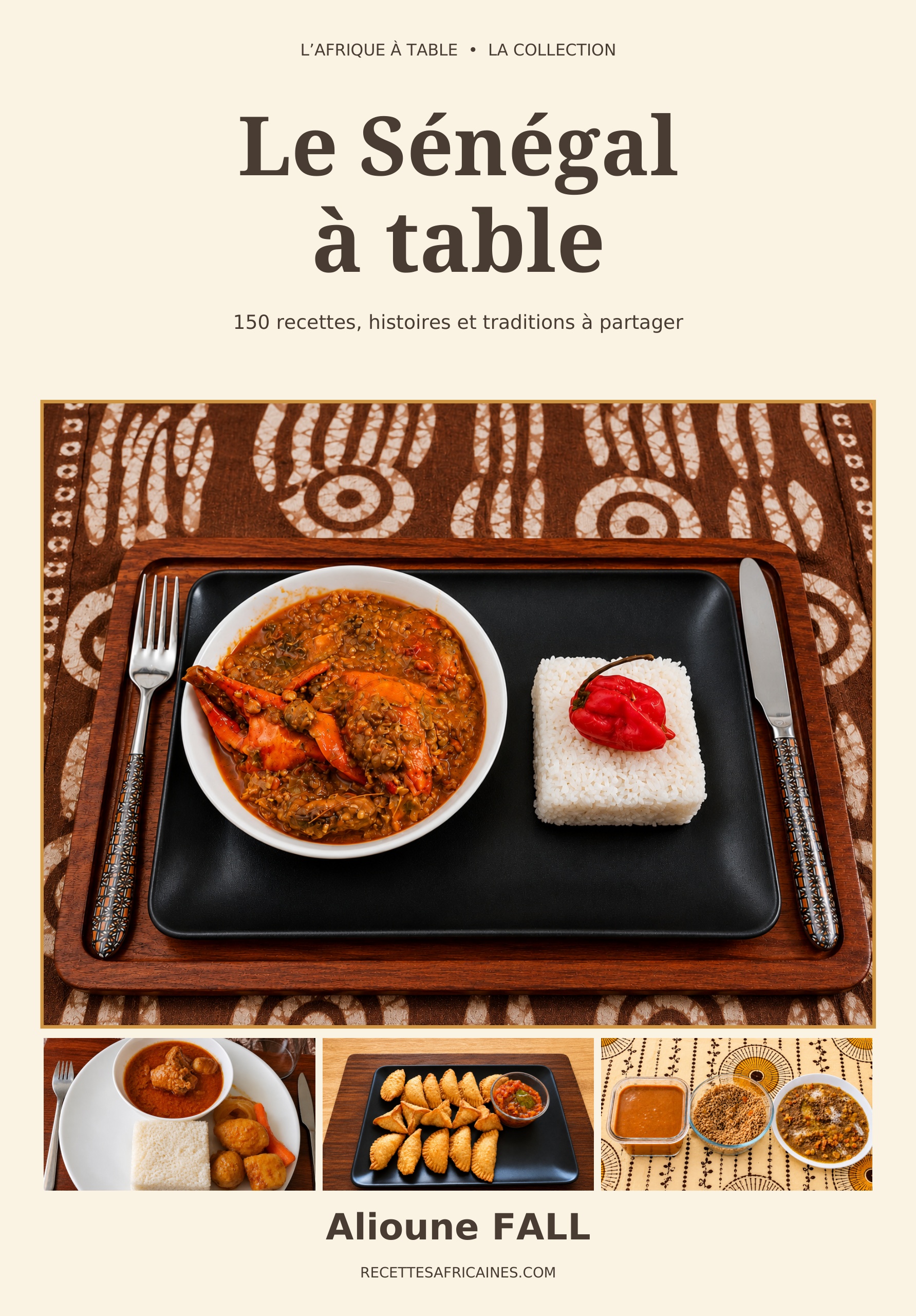
Explore Senegalese cooking with Le Sénégal à table, my collection of 150 recipes, stories and traditions to share. This book is in French, by Alioune FALL.
Explore further
3. REGIONAL VARIATIONS AND DOMADA PLATTERS
3.1. Fish Domada (“Domada Guinaar”) Coastal version, very popular in Senegal and Gambia. Uses tilapia, catfish, sea bream… Often flavored with lemon, fresh chili, and herbs. Fish pieces can be fried then simmered in the peanut sauce. 3.2. Chicken Domada or “Chicken with Peanut Sauce” Ideal recipe for large gatherings. You can stuff the pieces with seasoned peanut paste before cooking. 3.3. Malian and Guinean Maafe The “maafe” of Mali (or “peanut sauce”) shares the same base; it is enriched with pieces of lamb or beef, root vegetables, sometimes plantain or green leaves depending on the season. 3.4. Vegetarian Domada A modern or Lenten variation, domada is prepared without meat: various vegetables (sweet potato, squash, turnip, eggplant, okra), with a fragrant broth and whole roasted peanuts.
4. PLACE OF DOMADA IN AFRICAN CULTURE AND SOCIETY
4.1. Festive dish, of sharing and hospitality Domada is often the center of the Sunday family meal, religious holidays (Tabaski, Korité), wedding ceremonies, baptisms, funerals. It is a symbol of generosity: a plate of domada is the certainty that no guest will lack anything. It is common to invite neighbors, friends, sometimes passing strangers. 4.2. Domestic ritual and transmission The preparation of domada mobilizes the entire household: women and girls peel, cut, pound; men bring the meat or fish, watch the fire. It is an opportunity to transmit recipes, gestures, and values of mutual aid. The domada bowl is also the scene of “thiéb”: everyone around the same dish, sharing the sauce, rice, pieces, according to rules of etiquette (placing the best part for elders, dosing the chili…). 4.3. Street food and diaspora In cities like Dakar, Banjul, Conakry, or Bamako, domada is the star of popular restaurants, food trucks, African fast-food, sold in trays for lunch breaks or in the evening. In Paris, London, New York, the African diaspora reproduces and reinvents this dish: vegan domada, domada burger, fusion domada…
5. NUTRITIONAL BENEFITS AND HEALTH
5.1. Complete dish Domada combines animal proteins (meat or fish), vegetable proteins (peanut), carbohydrates (rice, yam, sweet potato), fiber (vegetables), vitamins and minerals (iron, magnesium, potassium…). 5.2. Richness in good fats Peanut paste provides unsaturated fatty acids beneficial to the cardiovascular system, a source of satiety, and sustained energy. 5.3. Antioxidants and micronutrients Root vegetables, tomatoes, spices, and chili provide vitamins C, A, K, lycopene, natural antioxidants, strengthening the body's defenses. 5.4. Very adaptable dish It can be enriched or lightened according to the seasons: “light” domada (more vegetables/fonio (a type of grain)), “festive” domada (more meat, hard-boiled eggs, noble cuts).
6. SYMBOLISM, IMAGINATION AND IDENTITY
Domada crystallizes Senegalese, Gambian, and more broadly, West African identity: it is the dish of reconciliation, discussion, returning to the village, for presidents as well as for neighborhood residents. Around the pot, rank or status doesn't matter: people share, exchange, confide. It also fulfills a social dimension: in many neighborhoods, women (especially the “Mbérés”, street domada vendors) emancipate themselves through the preparation and sale of domada. The recipe is transmitted orally, by gesture; it evolves, but remains the common thread of family memory, of “eating better” for all.
7. MODERNITY AND REINVENTIONS OF DOMADA
Domada today inspires West African and world chefs: Veggie or vegan version (peanut paste and root vegetables, seeds, grilled tofu) Seafood domada (shrimp, fish, crab with spicy sauce) “Fusion” domada, Asian-peanut wok, revisited street food Allergen-free versions, cashew paste, coconut for those intolerant to peanuts It is also presented as tapas, in sauce, as a main dish, in a bento, testifying to the modernity and universality of this African stew.
CONCLUSION Domada, more than just a West African sauce, embodies the strength of a living memory, the generosity of the land, ancestral know-how, and the creative innovation of contemporary Africa. From the banks of the Gambia River to the restaurants of Dakar, it celebrates difference, sharing, hospitality, and family. Tasting a domada is opening the door to deep Africa, its markets, its kitchens, its celebrations, its human warmth, and its ability to reconcile flavors, peoples, and destinies around a simple bowl of rice topped with peanut sauce. Domada is, and will remain, a hymn to life, to the land, and to African friendship.
In the kitchen : Domoda
Recipes from the site to put your knowledge into practice:
Discover these cuisines at a restaurant
Explore our restaurant and caterer directories. Choose your destination and check the establishment’s menu to confirm which dishes are offered and available.
Continue exploring
Enjoy discovering ingredients and African cuisines? Join our newsletter. The illustrated PDF 10 sauces africaines incontournables is in French and is offered after confirming a subscription to the French or bilingual edition.