Fonio
Peul/Bambara (West Africa)
History meets tasting
Historical and cultural context
White fonio is a West African cereal; FAO documents cultivation in Mali and Guinea.
Sensory guide
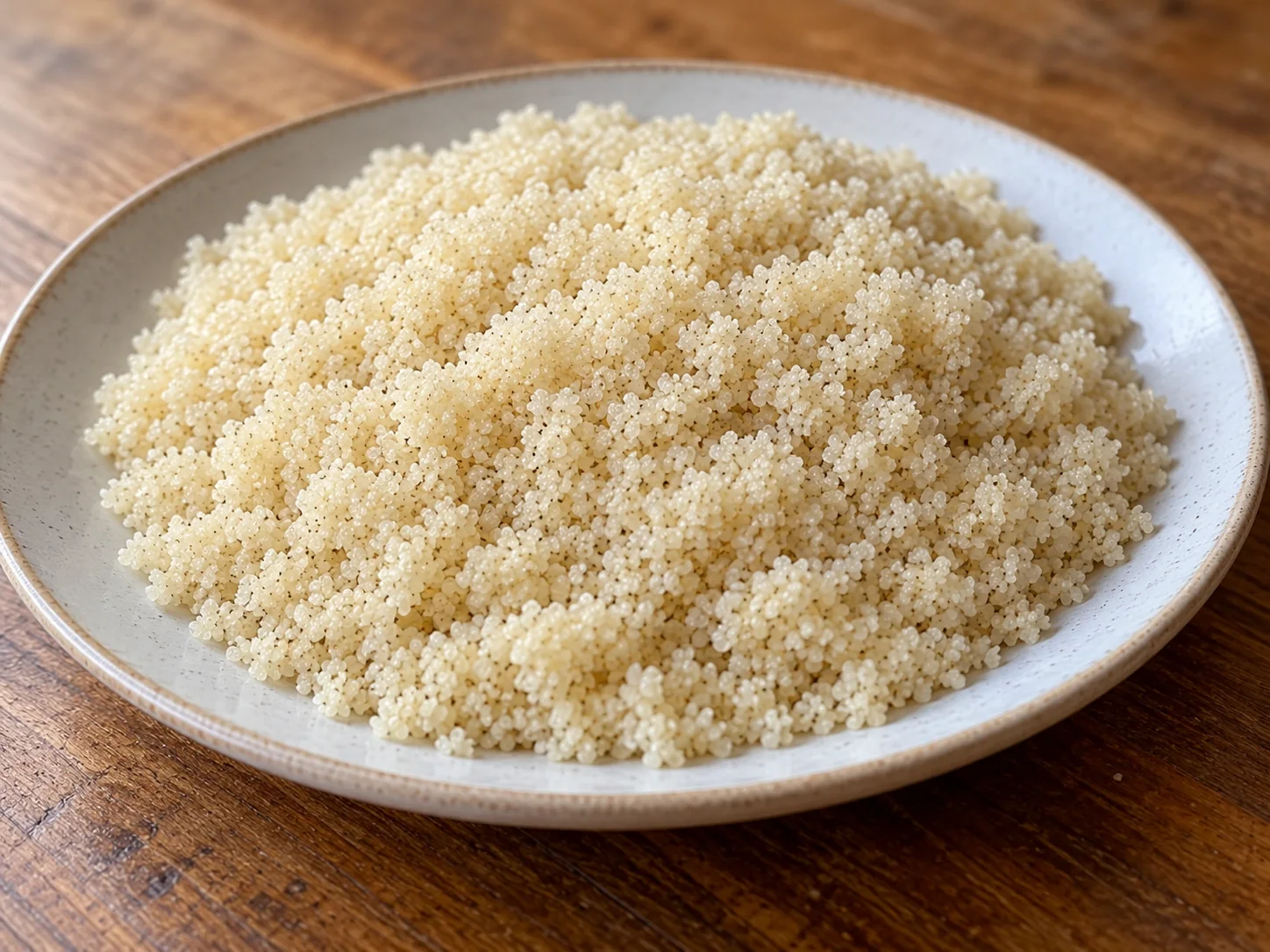
Tiny grains, mild nutty flavour; separate or creamier texture depending on water.
Skill to observe
Distinguish hulled from unprocessed grain; adjust hydration to the product.
Indicative sensory descriptions: variety, fermentation, cooking and accompaniments change the result. Catalogue illustrations, not a shared botanical scale.
FAO · Types of millet FAO · Fonio, Seeds to FoodsUnderstanding : Fonio
INTRODUCTION
Fonio is an ancient African cereal, sometimes called “grain of resilience,” “pearl of the Sahel,” or “African caviar.” Behind this small off-white or golden grain lies a multi-millennial history, deeply rooted in West African societies, from Senegal to Nigeria, Mali to Benin, including Guinea, Burkina Faso, and Togo. Cultivated, cooked, celebrated, sacralized, marginalized, then rediscovered, fonio embodies the capacity for adaptation, culinary invention, and the ecology of the African table. Today, it is returning to the forefront—thanks to contemporary nutritional, ecological, and heritage concerns—as a superfood, living memory, identity marker, and source of gastronomic innovation.
In this detailed description, let's discover the history, life cycle, processing, nutritional benefits, emblematic dishes, cultural place, rituals, modernity, and challenges of fonio in Africa.
Where to find it
African grocery shops and international food aisles are good starting points. Check which form the recipe needs: whole grain, flour, semolina or a precooked product. Cooking times vary.
Explore further: Cooking tips · Food hygiene and safety advice.
Search Amazon.fr — affiliate link →
Check availability and delivery on Amazon.fr. Compare ingredients, packaging and sellers.
As an Amazon Associate I earn from qualifying purchases.
History and uses
1. HISTORY, ORIGINS, AND SPREAD
1.1. Origin of fonio, an ancestral African cereal Fonio (Digitaria exilis and Digitaria iburua) is the oldest cultivated cereal in West Africa, domesticated over 5000 years ago on the Fouta-Djallon plateau (present-day Guinea) and in the savanna region of Mali and Burkina Faso. Long considered a “wild grass,” it was quickly adopted as a staple cereal by early farmers because it could grow rapidly on poor, stony, acidic soils and in unpredictable climates. 1.2. Spread and geography Fonio is concentrated today in: Guinea, Mali, Senegal, Burkina Faso, Ivory Coast, Togo, and Benin It is also found in Nigeria (especially in the north for black fonio, Digitaria iburua), Ghana, and in certain mountainous areas of Central Africa. Its area reflects the history of migrations, ethnic alliances (Peuls, Soninké, Dogons, Bambaras, Bassaris, Sénoufos…), and caravan trade.
2. BOTANY, CULTIVATION CYCLE, AND HARVEST
2.1. Botanical description Fonio is an annual grass plant, 30 to 80 cm tall. Digitaria exilis (white fonio): the most widespread and valued, ivory grain, very fine. Digitaria iburua (black fonio, Nigeria, Benin, Ghana): taller, darker grain. Its short cycle (60-90 days), drought resistance, and adaptation to poor soils make it the number one ally for resilient agriculture. 2.2. Farming practices Cultivation is manual, family-based, usually on collective fields. Sowing after the first rain Little to no fertilizer or pesticides Weeding, monitoring predatory birds Harvest with a sickle or uprooting, sun-drying (terrace or threshing floor) 2.3. Hulling and processing The tiny, fragile grain requires transmitted know-how: Threshing, winnowing, pounding, sifting Hulling (removal of hard glumes): the great challenge, traditionally manual (mortar, pestle), now facilitated by mechanical hullers Successive washings, drying, storage in fiber bags or clay pots Fonio is sold raw, pre-cooked, as semolina, as whole grain, or ground into flour.
3. NUTRITIONAL VALUE AND HEALTH BENEFITS
Fonio is a natural “superfood” for several reasons: Low glycemic index (very digestible, beneficial for diabetics) Gluten-free (suitable for intolerant people) Rich in essential amino acids (methionine, cysteine, which few African cereals concentrate as much) Good quality protein (7 to 9%) Rich in fiber, magnesium, zinc, calcium, iron, B vitamins Low in lipids, light on the stomach Natural antioxidant profile It promotes satiety, children's vitality, balance in pregnant women, convalescence, and growth. It is recommended in infant nutrition, senior menus, and periods of food shortage.
4. TRADITIONAL DISHES, RECIPES, AND CULINARY INNOVATIONS
4.1. Steamed fonio or fonio couscous The basis of all cuisines in Fouta Djallon, Mali, northern Nigeria. Fonio is steamed in a couscoussier, grain by grain, often oiled or buttered, then served with rich sauces: Peanut sauce, leaf sauce, tomato sauce Mafé (peanut stew), djabé sauce (vegetables and pounded leaves), guinea fowl yassa (chicken or fish marinated in lemon and onions, then grilled or pan-fried and served with a rich onion sauce) Served at festivals and weddings, sometimes as a simple porridge (fonio with milk, sweet fonio) 4.2. To/Wonjoy, fonio balls Fonio cooked in water, beaten into a thick paste, forms a ball (“to”) served with a clear or slimy sauce (okra, sorrel, baobab leaves…). A typical peasant meal but king of initiation ceremonies. 4.3. Fonio porridge Children's lunch or evening meal, Ramadan custom, fortifying for convalescents. Creamy porridge, sometimes enriched with milk, honey, sugar, seed powder (peanut, sesame, baobab, néré (African locust bean) depending on the region). 4.4. Akasa, dégué, thiakry Afro desserts or snacks: fonio mixed with yogurt, curdled milk, mashed banana, dried fruits, coconut, local flavors. 4.5. Crepes, galettes, breads, and innovations In cities or the diaspora, fonio is experiencing modernity: Gluten-free crepes, pancakes, cakes, madeleines Fonio tabbouleh, fonio pilaf, fonio risotto Fonio popcorn, puffed fonio, granola Healthy porridges, energy bars (fitness, sport, seniors…) 4.6. Fermented fonio In some regions (Benin, Mali, Togo), fonio is fermented before cooking (to produce wakye (a dish of rice and beans), ablo (a steamed corn bread), or to enhance digestibility).
In my books
Explore Senegalese cooking with Le Sénégal à table, my collection of 150 recipes, stories and traditions to share. This book is in French, by Alioune FALL.
Explore further
5. SOCIAL, RITUAL, AND SYMBOLIC PLACE
5.1. Sacred cereal Among the Peuls, Bambaras, Dogons… fonio is the cereal of the world's foundation, fertility, marriage, and purification. It is the first dish served to a child for the “start of life” and often the last to accompany funerals. 5.2. Currency of exchange and alliance Fonio served as a dowry, offering, and medium of exchange in rites of passage, conflict resolution, and village alliances. It remains the “first cereal,” offered to distinguished guests. 5.3. Role in festivals and rituals Ramadan meals, weddings, major Christian or animist festivals. Fonio is offered, shared, celebrated, prepared collectively during vigils, pounded by groups of women singing. 5.4. Symbol of adaptation, resistance, and biodiversity Beyond symbolism, fonio embodies survival against famine cycles (very rapid growth to ensure harvest), peasant resistance against the hegemony of industrial rice, corn, and wheat.
6. ECONOMIC, ECOLOGICAL, SOCIAL, AND GASTRONOMIC INNOVATIONS
6.1. Contemporary rediscovery and short supply chains Facing malnutrition, climate change, and food globalization, fonio attracts NGOs, nutritionists, and chefs. It marks a return to food biodiversity. Small producers organize into cooperatives (Guinea, Mali, Burkina) Semi-industrial processing (mechanical hullers, vacuum packaging, fonio flour) Organic certification, export to Europe, America, upscale positioning in urban African supermarkets 6.2. Chefs and urban modernity From Dakar to Paris, Afro-fusion chefs and mixed-heritage gourmets explore fonio in all its forms: in fish risotto, tabbouleh, vegetarian couscous, ice creams, vinaigrette, vegan burgers… It inspires healthy post-COVID cuisine. 6.3. Challenges and perspectives Difficulties of manual hulling (long, arduous, limiting production) Need to valorize waste (straw, husks) as fodder or compost Public policy for support and labeling (“PGI” (Protected Geographical Indication) protection for Fouta fonio) Risk of “global stardom” (price that excludes rural families, loss of community dimension)
7. RESILIENCE, BIODIVERSITY, AND HIDDEN RICHES
7.1. Climate-friendly cereal Fonio resists droughts, ripens quickly (2 months), grows without inputs, covers soils, and limits erosion: it is a plant of the future for Sahelian Africa facing droughts and food insecurity. 7.2. Varietal diversity There are hundreds of local varieties, adapted to microclimates, terroir, and culinary tradition—a precious richness in the face of the standardization of globalized seeds.
CONCLUSION Fonio is neither a “poor substitute” nor a simple tradition: it is a pillar of food security, identity, conviviality, culinary innovation, and African ecological wisdom. Valued by family farming, celebrated during rituals and meals, elevated by today's chefs, it connects past, present, and future. Rediscovering, cooking, and transmitting fonio means resisting standardization, promoting health, preserving biodiversity, and honoring the African table in all its genius and diversity. The small grain of the Sahel can carry, tomorrow as yesterday, the promise of an Africa rooted and inventive, united and proud.
In the kitchen : Fonio
Three recipes from the site to put your knowledge into practice:
Discover these cuisines at a restaurant
Explore our restaurant and caterer directories. Choose your destination and check the establishment’s menu to confirm which dishes are offered and available.
Continue exploring
Enjoy discovering ingredients and African cuisines? Join our newsletter. The illustrated PDF 10 sauces africaines incontournables is in French and is offered after confirming a subscription to the French or bilingual edition.