Fufu
Akan (Ghana)
Understanding : Fufu
INTRODUCTION
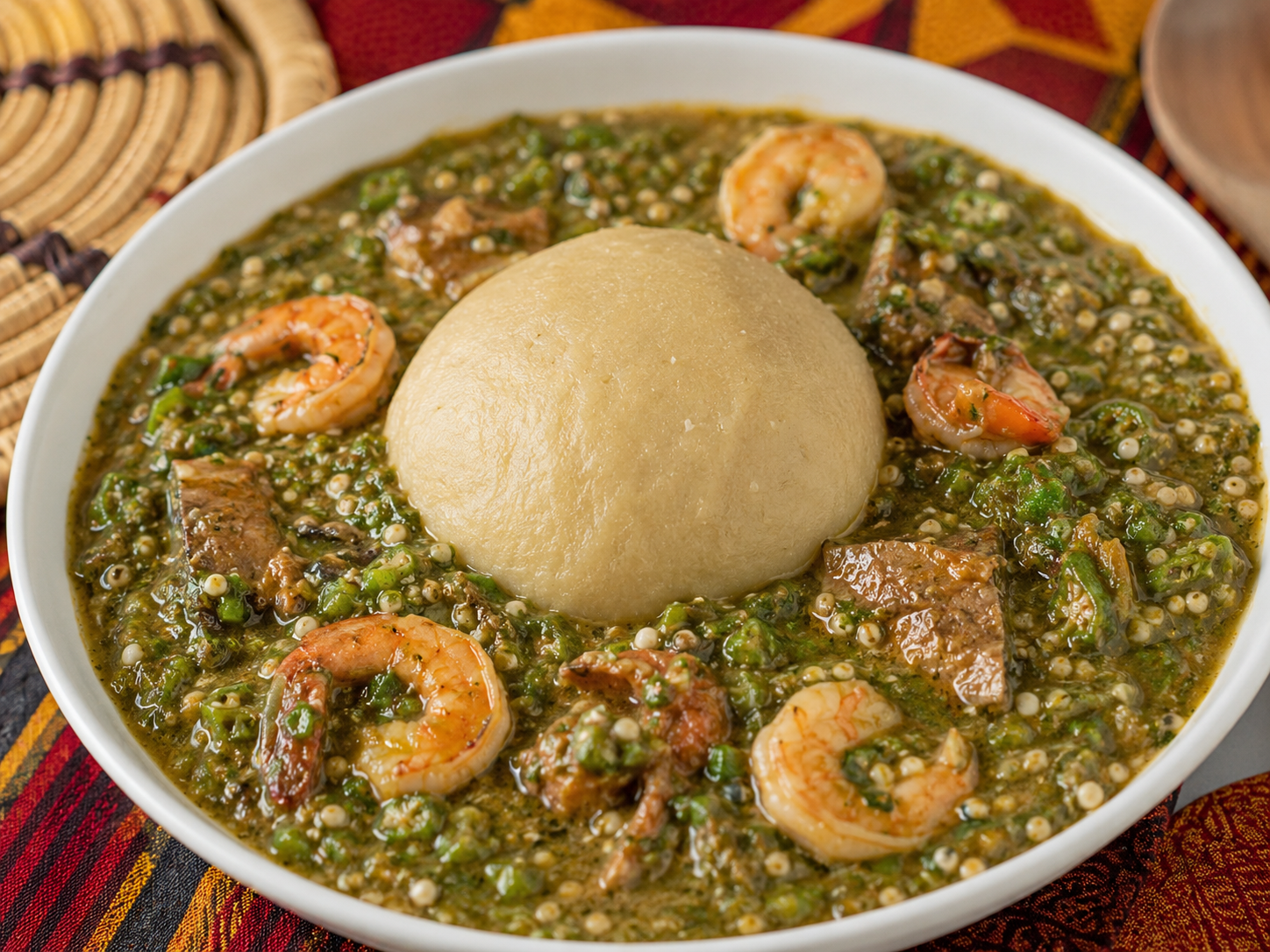
Fufu (also spelled foufou, foofoo, or foutou depending on the region) is one of the undisputed pillars of West and Central African culinary heritage. More than just a dish, it is a living symbol of rural and urban Africa, of conviviality, history, and the adaptation of people to their environment. Present from Ivory Coast to Nigeria, Ghana to Cameroon, Togo to Congo and beyond, fufu is an almost sacred food around which daily routines, major celebrations, and social rituals revolve. Seemingly simple – a smooth, pliable, white or yellow paste, hand-molded – fufu conceals a wealth of varieties, traditions, and manufacturing techniques, while occupying an essential place on the family table as well as in contemporary African “haute cuisine.” Far from being limited to its nutritional dimension, it carries the history of the domestication and cross-breeding of rural plants, migrations, the links between agriculture and solidarity, and today it inspires movements to promote African cuisine internationally.
Prepare this speciality
Choose a detailed recipe, adjust the portions and prepare your ingredients before starting. Our cooking tips and food safety advice complement the steps described in the recipes.
Explore further: Cooking tips · Food hygiene and safety advice.
History and uses
This text offers a detailed description of fufu: its history, ingredients, regional variations, manufacturing techniques, its social, symbolic, gastronomic, and nutritional role, and its place in contemporary Africa.
1. HISTORY AND ORIGIN OF FUFU
1.1. West African Cradle and Pan-African Adaptation The word “fufu” has Akan roots (an ethnic group in West Africa), originally meaning “to pound/mix.” Preparations similar to fufu can already be found in 16th-century Portuguese colonial texts, describing the daily dishes of the peoples of the Slave Coast and the Ashanti kingdom. Its spread was facilitated by the adoption of cassava and yam, plants originating from South America, imported into Africa in the 16th century via the slave trade, which would complement the use of taro, plantain, or millet already acclimatized. 1.2. Geographical and Cultural Diversity Each West and Central African people has its own version of fufu, the name then referring to any paste obtained by cooking and pounding tubers or cereals: Ghana (fufu, banku), Ivory Coast (foutou, placali), Nigeria (fufu, amala, eba), Cameroon (water fufu, cassava couscous, bobolo), Congo (chikwangue, cassava fufu), Togo and Benin (akume, agbelima). Variants also exist in the Antillean and South American diaspora (fufú de plátano, in Haiti, Cuba, Brazil).
2. MAIN INGREDIENTS
2.1. Plant Bases Today, fufu primarily refers to a paste obtained from: Cassava (or yuca): the most common, for its yield, sticky texture, and fairly neutral taste. Yam: gives a more compact and flavorful fufu. Plantain: slightly sweet taste, soft texture, pale yellow color. Maize (corn), millet, or sorghum: in Sahelian regions, for couscous, tuwo, to, banku, kenkey. Taro (cocoyam): soft, white paste, very popular in Central Africa. Sweet potato, variously combined with other plants. Some fufus are prepared from mixtures (plantain-cassava, yam-plantain, etc.) according to family tradition and seasonal availability. 2.2. Water, an Essential Complement The success of fufu also depends on the purity of the water used and the mastery of the moisture content during pounding and shaping.
3. MANUFACTURING TECHNIQUES
3.1. Pounding, a Living Art Authentic fufu is earned: it requires strength, patience, and a sense of rhythm. The key steps are: Initial Preparation Peel (cassava, yam, taro, plantain), wash, and cut into rounds or cubes. For some fufus (placali, gari), cassava is fermented for several days in water before processing. Cooking Boil until a soft, but not watery, texture is obtained. Drain carefully to avoid excess water. Traditional Pounding Use a large wooden mortar and a long pestle ("oudjo"), often with two people (one pounds, the other turns the paste with wet bare hands). Pound until a smooth, homogeneous, non-sticky, elastic mass is obtained. Shaping Take balls from the mortar, hand-mold into “bolas” or “sticks,” sometimes served as a large central ball (the ritual dish). 3.2. Modern Methods To meet the demands of urban life: Use of pre-cooked flours or fufu powder, to rehydrate over low heat (constant stirring) in boiling water. Blenders, electric mixers, freezers to store the base paste. While these methods democratize fufu, many aficionados maintain that hand-pounded fufu retains an unparalleled creaminess.
4. REGIONAL VARIATIONS AND LEXICON
4.1. Ghana Fufu: yam and plantain mixture, white/yellow paste, served with soup (light soup, palm nut soup, groundnut soup). Banku: fermented corn+cassava mixture paste, rolled into a ball. Kokonte: dried cassava ball. 4.2. Nigeria Fufu / Akpu: fermented cassava, sometimes with a strong odor (a sought-after “cheesy” aroma). Amala: dried yam, dark brown color. Eba: gari (heated cassava) semolina, more granular. Tuwon shinkafa: pounded rice porridge, a specialty of the Muslim North. 4.3. Ivory Coast Foutou: yam, plantain, or mixture, thick paste served with palm nut sauce, djoumgblé, or peanut sauce. Placali: long-fermented cassava, very pliable texture. Attiéké: fermented cassava couscous, similar to semolina. 4.4. Cameroon and Congo Water fufu: very moist fermented cassava paste, often served with eru or ndolè. Bobolo, chikwangue: fermented cassava sticks wrapped in banana leaves. Foufou (DRC): cassava paste or mixed flours, the base of any ceremony, often with pondu (cassava leaves), fish, or meat. 4.5. Togo, Benin Akume: corn, cassava, or mixed paste, often with tomato-chili sauce.
In my books

Continue exploring the continent’s cuisines with Africa at the Table — 54 countries, 54 iconic dishes, by Alioune FALL. This book is in English.
Explore further
5. FUFU'S PLACE IN THE AFRICAN TABLE: CULTURE, SYMBOLISM, AND CONVIVIALITY
5.1. Dish of Solidarity and Ritual Fufu, in tradition, is not eaten alone. It is placed at the center of the table around which family, friends, sometimes an entire village, gather (often eating with the right hand, with wet fingers). More than just sharing, eating fufu together maintains social bonds, hierarchy, and the value of respect (the most beautiful ball is served to the elder or guest). In Ghana/Nigeria, it marks major occasions: birth ceremonies, weddings, funerals, family gatherings. Among the Akan, it is said “fufu is never a dish of misfortune.” 5.2. Rites of Passage and Symbols Some societies view fufu pounding as an initiation rite for young girls, a guarantee of integration, strength, and skill. Funeral fufu is often prepared over several days, offered to all, a sign of the end of mourning and renewal. 5.3. Family Transmission It is the mother, aunt, grandmother who teaches “the hand of fufu,” the right grain, the firmness of the pestle, the secret of the texture. Women ensure the preservation of the “authentic” taste, its reproduction, and its defense against modernity.
6. FUFU AND MODERNITY: HEALTH FOOD, DIASPORA, AND GASTRONOMY
6.1. Urbanization and Transformation With rural exodus, fufu adapts: instant flours, frozen or powdered fufu flood the shelves of Lagos, Accra, Paris, London, and Johannesburg. Women work, have less time for pounding: they buy, they cook, but they keep the custom of “sharing by hand” alive. 6.2. Towards Contemporary Cuisine African chefs revisit fufu: Ballotines, gnocchi, ravioli, croquettes made from fufu Vegan “burgers,” gluten-free dishes with fufu flour or puree Used in revisited desserts (sweet, spicy) In Europe and the Americas, it enters Afro-fusion cuisine, appearing on social media as an icon of “returning to roots.” 6.3. Diaspora and Identity Fufu crystallizes nostalgia, pride, the narrative of exile and success. “Fufu parties” are strong markers of the African community outside the continent, places for meeting, mutual aid, and transmission.
7. NUTRITIONAL VALUES AND HEALTH
Rich in complex carbohydrates: sustained energy, satiating, low allergen Gluten-free: solution for celiac intolerances Fiber, potassium, calcium, vitamins (depending on the base used) Variable glycemic index: yam, cassava (higher GI), plantain or grains (lower GI) Low in lipids: low-fat dish, to be supplemented with sauces Protein intake: low alone, it makes full sense when accompanied by sauces rich in meat, fish, peanuts, leaves.
8. LIMITATIONS AND SUSTAINABLE EVOLUTION
Some cassava fufus require long fermentation: risk of cyanogenic poisoning if poorly prepared Artisanal production subject to the pressure of urbanization, mechanization Quality issue: some industrial products have a bland or inconsistent texture Promotion of “slow food”: local initiatives to protect ancient varieties of yam or cassava
CONCLUSION Fufu, simple on the plate, immense in the traditions it embodies, is a monument of African cuisine. At the crossroads of gesture, memory, social connection, and celebration, it perpetuates a way of life and eating together that modernity only enriches and transforms. Pestles, mortars, markets, skilled hands: an entire continent finds itself in this pliable and nourishing “bread,” a symbol of rootedness, mobility, and resilience. Fufu is not just food; it is the living memory and the guiding thread of a diverse, generous, vibrant Africa, constantly shaping and transmitting its identity through hands and taste.
In the kitchen : Fufu
Recipes from the site to put your knowledge into practice:
Discover these cuisines at a restaurant
Explore our restaurant and caterer directories. Choose your destination and check the establishment’s menu to confirm which dishes are offered and available.
Continue exploring
Enjoy discovering ingredients and African cuisines? Join our newsletter. The illustrated PDF 10 sauces africaines incontournables is in French and is offered after confirming a subscription to the French or bilingual edition.