Chechebsa
Ethiopia
Editorial collection: RecettesAfricaines.com · Publication director: Alioune FALL.
A dish built from bread
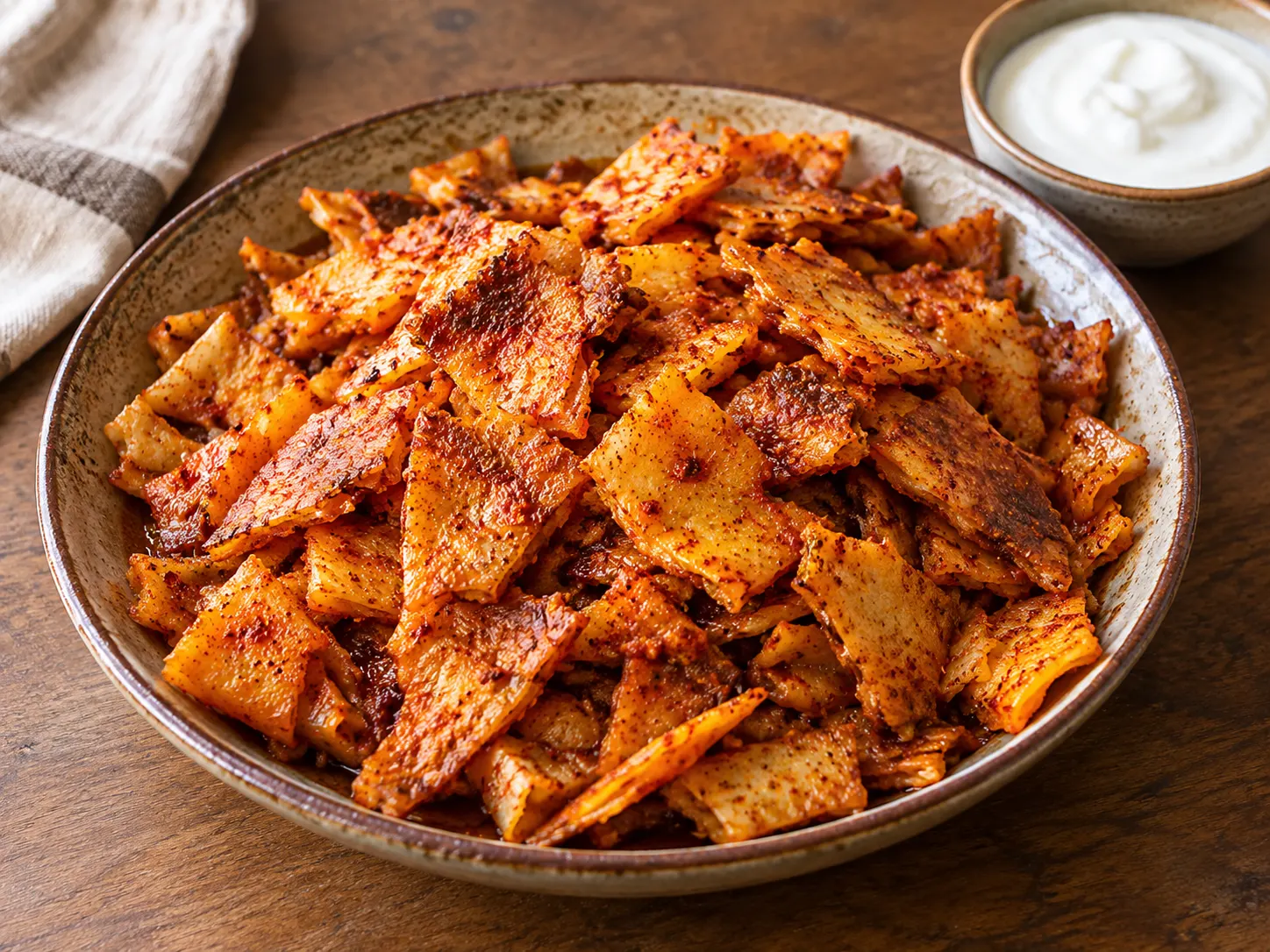
Chechebsa is an Ethiopian preparation of kita bread cut or torn into pieces, then combined with seasoned fat and spices, frequently berbere. Bread is no longer merely a support: its pieces form the main material of the dish. The definition rests on successive transformations, first making the bread and then working it with seasoning. A plate of chechebsa is therefore not simply sauce accompanied by an intact flatbread. The material has already been divided, exposing surfaces that receive fat and aromas. The relationship between piece size, coating and texture is more precise than identifying the preparation by its red or brown colour alone. It explains how the dish is constructed.
Evidence among Ethiopian cereal foods
The review published through the NuME maize programme in Ethiopia describes chechebsa as cut kita mixed with spiced butter and berbere. It places the preparation among several cereal-food uses. This establishes a technical principle without prescribing a single flour or exclusive village of origin. Household accounts may provide more specific regional or family practices, and the dictionary leaves room for them. It does not date the dish from the study's publication or infer a certain historical route simply from the presence of a spice. Documented facts and unanswered questions should remain distinguishable. A research account can identify a preparation without becoming a complete history of all its versions.
Kita as an already-cooked ingredient
Kita is an unleavened bread whose flour varies with practice. Its initial texture directly affects chechebsa. A tender flatbread tears and takes seasoning differently from a drier or thicker one. Cooking the bread also develops aromas that remain after spices are added. Replacing kita with fermented injera therefore changes an important component, even when the preparations share colour or seasoning. The entry does not dismiss every household substitution as an error, but asks that it be named. Understanding the base reveals what is retained and what changes in an adaptation. The bread's own properties continue to matter after it has been divided and mixed with other ingredients.
Why piece size matters
Dividing bread increases the surface available to seasoning. Thin fragments can take up fat quickly, whereas larger pieces retain more of the original bread character at their centre. Irregularity is not necessarily a defect; it can produce different sensations within the same plate. Recognisable pieces should nevertheless be distinguished from a completely mashed mixture. Grinding everything down is not always the intended action. A precise account records relative size, flexibility and how the fragments separate under a spoon. These observations say more than a vague phrase such as spiced bread, which would hide the construction of the dish and the role of dividing an already-cooked ingredient.
Coating without erasing structure
Fat binds aromatic particles to bread and helps distribute them. It influences gloss, flexibility and mouthfeel. Working the ingredients with heat brings them together, but a very heavy coating is not automatically more faithful to the preparation. The balance depends on the bread and the intended texture. Some versions may look drier and others more thoroughly coated. The dictionary should describe the observed result rather than make a preference into a universal rule. The particular fat and spice mixture must come from reliable information or the linked recipe, not a guess based on an image. Neither colour nor sheen alone reveals all of the ingredients involved.
Berbere and aromatic complexity
Berbere is a blend whose ingredients and strength vary. In chechebsa it contributes colour and aromatic depth, but the dish should not be described solely through chilli heat. Warm, toasted or more complex notes can emerge according to the blend and the bread. Fat carries these aromas and softens some sensations without necessarily removing heat. Apparently similar amounts of powder can produce very different results with different mixtures. Sensory descriptions consequently need nuance. Readers learn to recognise related sensations rather than expect identical fieriness in every plate bearing the name. Naming the blend is useful; pretending that its intensity and composition never change would be misleading.
Breakfast, snacks and accompaniments
Food documents place chechebsa particularly at breakfast or among snacks. These contexts do not confine eating it to a compulsory hour. A portion may stand alone or have an accompaniment, including dairy in some versions. That accompaniment must be distinguished from the dish's base. A spoonful of yoghurt alongside changes the acidity and temperature of a bite, but does not retrospectively define every chechebsa as containing yoghurt. Serving habits contribute to culinary identity while remaining diverse. The entry supplies the best-supported references and allows attributed testimony to add household, urban or diaspora practices. Those details may not be evident from an ingredient list or a single photograph.
Distinctions from kategna and firfir
Kategna here describes toasting and seasoning injera, whereas chechebsa generally starts with kita. Firfir may also involve bread pieces, often injera, but these relationships do not make the terms interchangeable. Different fermentation changes bread flavour; cutting and the quantity of sauce alter how it holds together. Comparisons should therefore follow material and gesture rather than rely solely on translated names. The dictionary does not impose one terminology on all local practices. It explains the distinctions used here so that readers can recognise relationships, declared adaptations and the limits of a description. Similar ingredients can illuminate one another while still belonging to preparations with their own names and histories.
References for an attentive first encounter
Sensory description can begin with the bread, then note how fat and spices change it. Evenness of coating, tender pieces and any firmer areas provide useful information. The linked recipe specifies one realisation and its ingredients; this entry supplies vocabulary for interpreting it. Dietary questions depend on actual composition: wheat can introduce gluten, and butter or a dairy accompaniment can introduce milk. The name alone cannot answer them. Keeping sources, variations and sensory observations distinct from historical hypotheses transmits a concrete skill without copying a recipe's steps or inventing an immutable tradition. It gives the reader practical ways to compare examples while respecting the knowledge of those who make them.
Explore further
Sources and review
Consulted and reviewed on 19 November 2026.