Dabo kolo
Ethiopia
Editorial collection: RecettesAfricaines.com · Publication director: Alioune FALL.
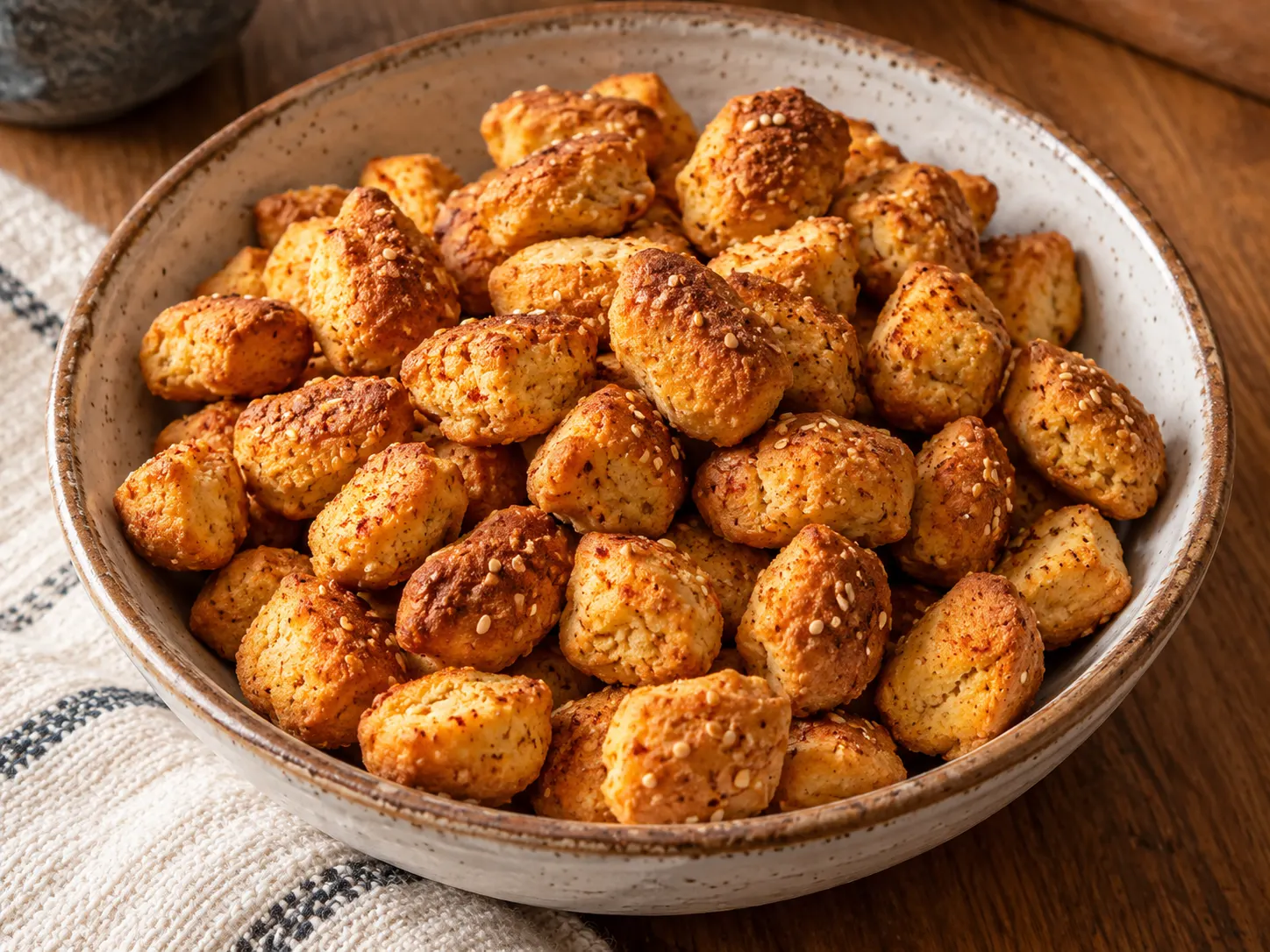
Dough bites rather than whole grains
Dabo kolo names small Ethiopian bites of seasoned dough, shaped into fragments and cooked to achieve a crunchy texture. This immediately distinguishes them from kolo made from roasted or popped grains. Similar names invite comparison without making the processes identical. In one, the cereal largely retains its grain form; in the other, flour becomes dough that is divided. Both can be snacks without being interchangeable. Dabo kolo should therefore be understood through the transformation of flour, the size of the pieces and the drying achieved during cooking. These relationships explain more than a general label such as cereal snack, which conceals how differently the grain has been handled.
A preparation recorded in cereal-food studies
Accounts of Ethiopian cereal foods include dabo kolo among crunchy snacks, recording fried versions and different flour mixtures. The NuME review mentions combinations of wheat and maize. That records technical flexibility rather than a compulsory formula. Other university research also describes shaping dough before cooking. Such sources attest food practices without making their publication year the snack's date of birth. The entry identifies neither an inventor nor an exclusive area of origin. More specific regional testimony can add information, provided its attribution remains clear and one version is not generalised to every household. What is known should be retained without filling the gaps through an attractive but unsupported invention story.
Turning flour into material that can be shaped
Milling makes possible a construction that whole grain does not offer. Water brings particles together, while working the dough distributes ingredients and gives enough strength to cut small pieces. Flour affects cohesion: wheat dough and a mixture containing more maize do not necessarily behave identically. Spices, salt and fat also influence the final sensation. These relationships explain differences without prescribing a measured recipe. The dictionary describes the shaping principle and leaves the linked recipe to specify proportions for one achievable example. It recognises that the material must be workable before becoming a snack, rather than treating the final pieces as merely miniature whole grains.
Small size and even cooking
The bites' small dimensions are not simply decoration. They place a substantial part of the dough near a heated surface, helping a dry, crunchy texture develop. Pieces of very different sizes do not reach that point simultaneously. Shaping can consequently aim at some regularity while retaining a handmade appearance. Exact outlines vary and do not identify the food by themselves. Cubes, elongated fragments or irregular pieces all need to be related to the stated method. A photograph of brown bites cannot establish whether they were fried, toasted or cooked through another adaptation. Size, texture and process provide more useful information when considered together than shape in isolation.
Cooking, colouring and drying
Cooking changes both surface and centre. Golden colour can appear before the inside is dry enough for the intended serving. Conversely, very dark pieces may bring bitterness rather than the expected toasted-cereal notes. Skill lies in coordinating these changes with the chosen cooking method. Frying brings pieces into contact with hot fat; an oven adaptation acts differently on the surface and moisture loss. These differences deserve to be named. They neither establish one universal method for every dabo kolo nor make each different household technique unrelated to the family. A clear description specifies the example being discussed while preserving the broader preparation rather than enforcing an unsupported rule.
Crunch, crumbliness and aromas
Crunchy encompasses several sensations. A piece may snap clearly, crumble into fine particles or retain a firmer centre. For dabo kolo, these qualities should be related to milling and drying. Browned cereal supplies a base flavour; spices add fragrance and possible heat, while salt or sweetness change the balance. There is no universal intensity: restrained and more strongly seasoned versions can belong to the same family. Fat may be perceptible by touch without its type or absorbed quantity being visible in a photograph. Useful descriptions distinguish texture, taste and what remains unknown instead of turning one appearance into a complete account of composition.
A food eaten in small bites
Small pieces lend themselves to sharing and taking a few at a time. A drink may accompany the snack without becoming part of its definition. A hot drink can change the perception of dryness or fat, but does not turn dabo kolo into porridge. Eating contexts vary among households, shops and gatherings. An attentive entry describes possibilities without inventing an obligatory ritual. Sharing such food also reveals another kind of culinary transmission: relatively modest dough-working gestures become recognisable through size, texture and seasoning, rather than spectacular plating or a festival name. The apparent simplicity of a snack does not mean that judgement and experience are absent from its preparation.
Comparisons with other dough snacks
Fried biscuits and small flour-based snacks occur in several African cuisines. Comparing them may explain texture without proving their names refer to the same food. Dabo kolo should not automatically be renamed chin-chin or atwemo because pieces look alike. Local uses, formulation and documented process remain necessary. Within Ethiopian cooking, the distinction from kolo is especially important. Translating everything simply as snack would lose the contrast between shaped dough and whole grain. The dictionary makes those differences visible while recognising shared technical principles across preparation families. Resemblance can provide a useful question for comparison, but does not by itself establish identity or a historical route of diffusion.
Choosing useful descriptive criteria
A complete account records the specified flour, approximate shape, cooking method and finished texture. It can then describe aromas, serving and variation without assuming identical recipes everywhere. Gluten depends particularly on the use of wheat or other relevant cereals; dairy and eggs require confirmation in the actual composition. A traditional name does not guarantee their absence. The linked recipe offers a specific example, while references provide broader food descriptions. Separating observation, testimony and hypothesis preserves dabo kolo's identity without copying instructions or turning visual resemblance into a demonstrated diffusion history. It also leaves scope for new, attributed accounts of how particular cooks prepare and serve the snack.
Explore further
Sources and review
Consulted and reviewed on 19 November 2026.