Kategna
Ethiopia
Editorial collection: RecettesAfricaines.com · Publication director: Alioune FALL.
Defining a preparation rather than a shape
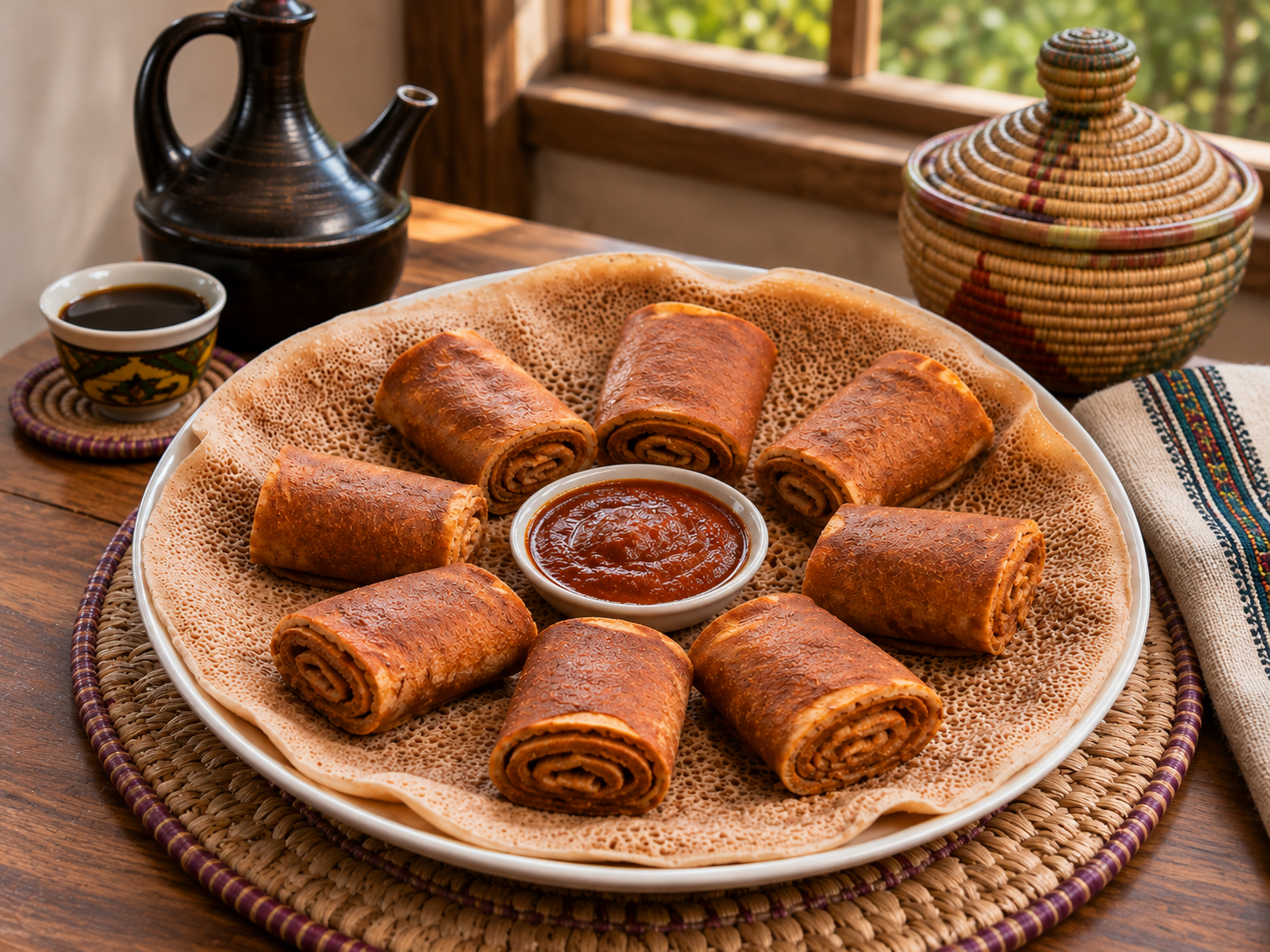
Kategna is an Ethiopian preparation of toasted, seasoned injera, frequently with spiced butter and berbere. Here injera no longer serves merely as the base for a sauce: it becomes the main material of a starter or small plate. The bread retains its fermented character, while heat and coating alter its texture. Rolled presentations occur in some versions but should not be made an absolute condition of the name. The central reference is the treatment of already-prepared injera together with aromatic seasoning. It is a useful example of how bread can be transformed beyond its first use, without losing the characteristics that make the original bread recognisable.
Contemporary evidence and the limits of historical claims
The Ethiopian restaurant Kategna documents a starter combining toasted injera, berbere and Ethiopian butter. This professional testimony identifies the preparation family, but does not by itself establish its age or all household variations. A restaurant name is not evidence of an invention site. The Atlas therefore separates evidence of present use from the wider history of Ethiopian breads and seasonings. Dating kategna from the arrival of a particular ingredient would require additional proof. Changes in presentation and diaspora adaptations deserve to be recorded as such, without claiming to represent a completely uniform national cuisine. The source establishes something useful while leaving other questions legitimately open.
Injera as the starting material
Injera provides a supple, porous structure and acidity associated with fermentation. Its flour and production conditions affect flavour and strength. Thin injera does not behave exactly like a thicker piece; a surface that has already dried absorbs seasoning and browns differently from very moist bread. Such differences matter in describing kategna. The seasoning does not erase the base but interacts with its texture. The entry therefore does not infer one compulsory cereal composition from the name. Where a recipe combines flours, that detail should be retained rather than declaring every kategna made from a single grain. Understanding the bread helps explain how the finished preparation behaves.
What toasting changes
Toasting reduces some surface moisture and develops firmer, coloured areas. The treatment can remain light to preserve flexibility or produce more pronounced crispness. Toasted and burnt must still be distinguished: very dark colour does not necessarily indicate an intended flavour. Direct contact with a hot surface and more surrounding heat mark bread differently. The cook adjusts to thickness and the intended result. These references explain the preparation without becoming a set of cooking instructions. They also clarify why injera on this plate may seem less spongy than bread accompanying a stew. The difference arises from treatment, not necessarily from an entirely different original bread.
Spiced butter, oil and variations
In butter-based versions, fat carries aromas and makes the seasoning more enveloping. It also changes the feel: warm bread appears supple and glossy when fat spreads across its surface. Berbere contributes complexity beyond a simple measure of chilli heat because spice blends differ in ingredients and proportions. An attested oil-based version should be identified without silently replacing the description of a butter version. The same principle applies to salt and additional aromatics. The name identifies a family; actual composition remains necessary to understand a particular plate and its potential allergens. Neither appearance nor traditional naming supplies a reliable substitute for that ingredient information.
Sensory character and contrasting elements
Kategna brings together three registers: fermented bread acidity, rounded fat and the aromatic warmth of spices. Their balance changes with each component's strength. A tangy injera may remain clearly perceptible beneath its coating, while stronger seasoning may dominate the initial impression. Toasted areas contribute roasted notes and a different resistance under the teeth. A useful description says what is actually perceived rather than declaring every kategna intensely hot. Serving temperature also affects the fat's texture and the bread's flexibility. The same preparation can consequently feel appreciably different after cooling, even with unchanged ingredients. Texture and flavour should be related to the food as it is served.
Presentation and place at the table
Small rolls facilitate sharing and reveal layers of seasoned bread, but other cuts can retain the same underlying preparation. Portion size affects the sensation of crispness and the proportion of coating in a bite. Within a composed meal, kategna may act as an appetiser or accompany other foods; its classification as a starter on one menu does not govern every household. Presentation also reflects the organisation of a table or restaurant. An atlas should describe that context rather than turning a particular arrangement into a cultural obligation or evidence of antiquity. Understanding serving choices adds to the technical definition without replacing it with a single decorative format.
Distinctions from chechebsa and firfir
Chechebsa is generally described through pieces of kita, an unleavened bread, combined with fat and spices. Firfir refers to other preparations involving bread, often injera, mixed with seasoning or sauce. These relationships illuminate how breads are transformed but do not make the names interchangeable. Toasting and seasoning injera are the references used here for kategna. Final shape and quantity of sauce should be observed separately. Translating all these terms simply as spiced bread would lose useful distinctions and erase the names used by cooks themselves. Comparison should preserve differences in the base, the treatment and the resulting serving rather than treating resemblance as identity.
Recognising a well-documented version
A precise entry identifies the bread, the stated heat treatment and the seasoning. It then distinguishes visible characteristics from ingredients that cannot be recognised in a photograph. Browned injera can be pictured without revealing its flour, butter or every spice. A faithful description does not pretend to infer what a source has not supplied. Dietary questions therefore depend on verified composition: replacing fat or changing a spice blend can alter the preparation's profile. The linked recipe offers one concrete example; this entry explains relationships between base, heat and aromas. It leaves room for further documented variations without turning uncertainty into an invented historical certainty.
Explore further
Sources and review
Consulted and reviewed on 19 November 2026.