Cassava Leaves
Central Africa
Understanding : Cassava Leaves
INTRODUCTION
Cassava leaves are among the most emblematic, nourishing, and culturally significant ingredients in African cuisine, primarily sub-Saharan. Behind their deep green color and fibrous texture lie millennia of culinary uses, social rituals, agricultural, and therapeutic traditions. Consumed from Cameroon to the Democratic Republic of Congo, from Benin to Madagascar, including Gabon and Côte d'Ivoire, they embody the creativity, resilience, and sense of community found in African cuisines. Too often unknown outside the continent, cassava leaves are the distinctive flavor of many sauces and side dishes, true symbols of both rural and urban life. Through their presence in markets, their role in family nutrition, and their multiple ways of being prepared and shared, they tell a story of terroirs, adaptations, and exchanges.
This text offers an in-depth description of cassava leaves: history, botany, harvesting and processing techniques, nutritional contributions, emblematic dishes, social role, ritual dimension, and culinary innovations, to paint a complete and vivid portrait of this leafy vegetable, a pillar of the African table.
Where to find it
Look for prepared food-grade cassava leaves from a specialist grocery shop. Ask for the supplier’s cooking instructions and do not confuse them with a ready-to-eat product.
Explore further: Cooking tips · Food hygiene and safety advice.
History and uses
1. HISTORY AND SPREAD OF CASSAVA IN AFRICA
1.1. Origin of Cassava Cassava (Manihot esculenta) is a tuberous plant native to South America, introduced to the African continent by the Portuguese in the 16th century via the coast of Angola and then Mozambique. It quickly spread throughout tropical regions due to its drought resistance, high yield, and ability to feed large populations. 1.2. Acclimatization and Adoption In the soils of Central and West Africa, cassava thrives, gradually becoming a major food staple, replacing millet, yam, or sorghum in some regions. Its leaves, probably consumed since its introduction, found their place in various dishes adapted to the tastes of the people and micronutrient needs.
2. BOTANY AND PROPERTIES OF CASSAVA LEAVES
2.1. Description Cassava leaves grow in clusters at the top of long stems. They are palmate, divided into fine lobes, with an intense green color, sometimes tinged with purple depending on the variety. They are harvested from plants aged two to six months, preferably young and tender. 2.2. Nutritional Composition Raw leaves are a remarkable source of: Plant proteins (up to 8% of fresh weight) Micronutrients: vitamins A, C, B9, E Minerals: calcium, potassium, magnesium, iron Dietary fiber Antioxidant compounds (carotenoids, polyphenols) However, they also contain cyanogenic glucosides, substances that release cyanide during chewing/digestion, which requires precise preparation techniques to detoxify them.
3. HARVESTING, PREPARATION, AND DETOXIFICATION
3.1. Harvesting This is done by hand, as needed, often early in the morning to maximize tenderness. In rural areas, all women, and sometimes children, know the precise picking gestures (cutting without damaging the plant, keeping young shoots). 3.2. Detoxification: Essential Steps To make cassava leaves safe for consumption, several steps are followed: Sorting, washing, and stripping (removing hard stems) Grinding/pounding: using a mortar, mill, electric grinder, or flat stone, until a homogeneous paste is obtained. Sometimes, this grinding is ritualistic (songs, collective work). Long cooking (at least 30 to 60 minutes): prolonged heating destroys most volatile (H2O) and toxic cyanogenic compounds. Draining, rinsing (sometimes repeated) if the variety is rich in toxins, then final cooking in a sauce or simply in water. This ancestral protocol protects family health and demonstrates the adaptability of African societies.
4. EMBLEMATIC DISHES BASED ON CASSAVA LEAVES
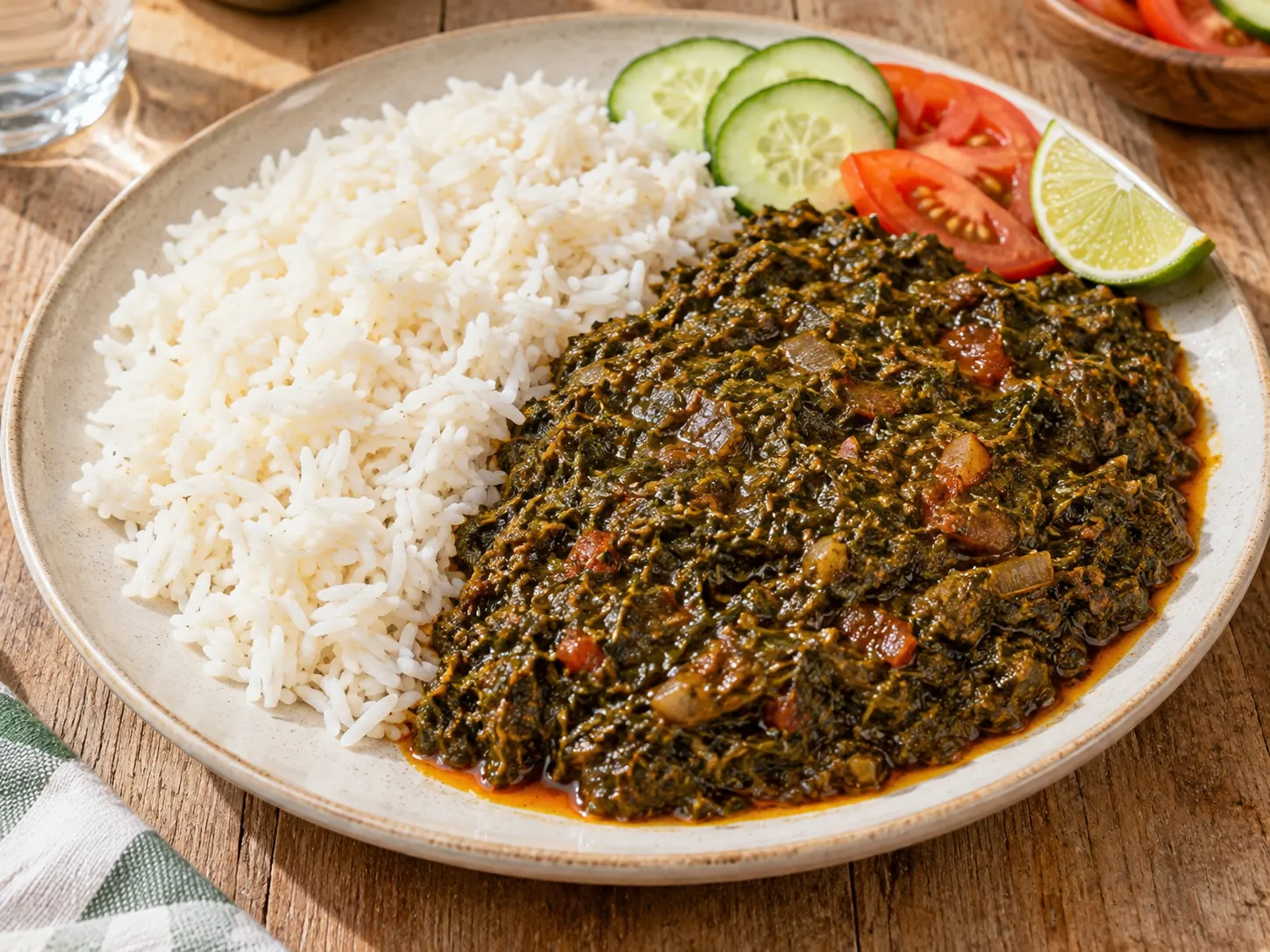
4.1. Central Africa (DRC, Congo, Gabon, Angola…) Saka-saka/pondu (DRC / Congo-Brazzaville): a long-cooked leaf paste, seasoned with palm oil, garlic, onions, chili, smoked or dried fish, sometimes shrimp, bushmeat, or pounded peanuts. Served with cassava, rice, plantain, or chikwangue. Gabonese cassava leaves: enriched with okra, peanuts, yellow chili, sometimes cane sugar or pumpkin seeds depending on the region. Mpondu/Mpundu/Mfundi in Angola: often prepared with palm oil with smoked fish or meat. 4.2. West Africa Sauce feuille (Côte d'Ivoire, Benin, Togo): refined, smooth, sometimes enriched with palm oil, with fish, lamb, or poultry. Accompanies attiéké, pounded yam, fufu. Sauce djabè: Togo/Benin, mixes cassava leaves with other local leafy vegetables, aromatics, dried fish. 4.3. Madagascar and Indian Ocean Islands Ravitoto: legendary Malagasy stew of pounded leaves, often with pork or zebu, slow-cooked, flavored with garlic, sometimes coconut, ginger, or kaffir lime. Comorian "feuilles cassées": a variation with coconut milk or dried shrimp. 4.4. Regional Diversity and Creativity Each people, each market, each family adds its touch: peanut powder, coconut milk, African eggplants, Gnetum leaves, smoked shrimp or fish, bushmeat or poultry, chili, lemon, herbs, curry… This expresses the stratification of African taste and the adaptability of traditions.
In my books

Continue exploring the continent’s cuisines with Africa at the Table — 54 countries, 54 iconic dishes, by Alioune FALL. This book is in English.
Explore further
5. NUTRITIONAL ROLE AND HEALTH BENEFITS
5.1. Dietary Contributions Cassava leaves are an ideal complement to a root and tuber-based diet (low in protein): they provide protein, iron, calcium, vitamins A and C, helping to reduce deficiencies in rural areas. 5.2. Health Values Rich in antioxidants: fights oxidative stress Source of fiber: promotes digestion Preventive effects on anemia, malnutrition, thanks to iron and provitamin A Promotes satiety, ideal for communal meals, limiting waste Chewing and pounding: physical activity, social/family bond 5.3. Beware of Toxins If poorly prepared or too young, cassava leaves release dangerous cyanogenic compounds. Fortunately, local practices are effective, but they must be respected and taught.
6. SOCIAL SYMBOLISM, CULTURAL DIMENSION, AND TRANSMISSION
6.1. Family Rituals and Celebrations Festive dish: pondu/Ravitoto/cassava leaves sometimes surpass fish or meat, prized at celebrations, weddings, funerals, returns to the village, sacred days. Collective work: pounding evenings, “leaf vigils,” occasions for transmission, anecdotes, songs, cohesion. Ritual offering: some groups prepare cassava leaves as offerings to ancestors or to bless a gathering. 6.2. Intergenerational Transmission The right gesture, the ideal variety, the pounding or cooking technique are transmitted “from hand to hand,” from mothers to daughters or among initiates. Each family has its “secret,” its touch, its memory of aromas. 6.3. Identity, Pride, Territorial Marker For many, the taste and texture of cassava leaves are the ultimate criteria for distinguishing “true country cuisine” from standardized urban cuisine, or for recalling childhood, the countryside, the extended family.
7. CONTEMPORARY INNOVATIONS, TRENDS, AND FUTURE
7.1. Urbanization and Diaspora In large African cities and in the diaspora, cassava leaves “travel”: frozen products, canned goods, ready-to-use pastes. Afro-globalized restaurants offer them in curries, lasagnas, savory cakes, vegetarian patties. 7.2. Health, Organic, and Superfood Rich in iron, calcium, protein, cassava leaves are promoted for infant nutrition, in humanitarian programs, in the fight against deficiencies or malnutrition. They are also integrated into vegan or urban healthy food dishes. 7.3. Scientific Popularization and Challenges African and international researchers are studying nutrient bioavailability, protocols to reduce cyanide, and low-toxin varieties. 7.4. Modern Gastronomy Young African chefs are revisiting pondu or ravitoto: leaf jellies, mille-feuille, fritters, dehydrated leaf chips… Cassava leaves are becoming stars of culinary competitions, icons of a living heritage capable of renewal.
CONCLUSION More than just food, cassava leaves are a universe: a link between the earth, family, health, identity, and celebration. Through their symbolic density, their ability to nourish, comfort, gather, and innovate, they remain a cornerstone of African cuisine, from rural heritage to the international urban scene. From every mortar to every table, in the steam of markets as in Michelin-starred dinners, they carry the voice of an entire continent proudly rooted and open to the future.
In the kitchen : Cassava Leaves
Three recipes from the site to put your knowledge into practice:
Discover these cuisines at a restaurant
Explore our restaurant and caterer directories. Choose your destination and check the establishment’s menu to confirm which dishes are offered and available.
Continue exploring
Enjoy discovering ingredients and African cuisines? Join our newsletter. The illustrated PDF 10 sauces africaines incontournables is in French and is offered after confirming a subscription to the French or bilingual edition.