Canari
Senegal, Mali, Niger, Burkina Faso, Benin ...
Understanding : Canari
INTRODUCTION
Among the emblematic objects of African cuisine, the canari stands at the crossroads of domestic, artisanal, culinary, and spiritual uses. In sub-Saharan Africa, this terracotta pot – called canari in Senegal, Mali, Niger, Burkina Faso, Benin, and many other regions – seems humble, often utilitarian. Yet, behind its simple silhouette, it has played a central role in the daily and symbolic life of African peoples for centuries. The canari is not only used for cooking but also for preservation, fermentation, transport, purification, and cooling water, as well as for ritual purposes. It is a testament to refined popular engineering, adapted to the ecological realities of Africa and its rural and urban societies. Understanding the canari means tracing the thread of techniques and history, exploring its place in culinary and social heritage, its variations according to regions, tips for use, its ecological dimensions, and its potential in contemporary African cuisine. Here is a detailed dive into the world of the canari, an essential in traditional and modern kitchens across the African continent.
1. A BIT OF HISTORY: ORIGIN AND SPREAD OF THE CANARI
1.1. Ancient origins of pottery in Africa The use of the canari in Africa is part of a millennial tradition of pottery. The first traces of pottery date back more than 10,000 years in the Sahara region, long before the great empires. Making fired clay vessels, initially for cooking or storage, marked a major step in the African Neolithic, revolutionizing food storage and preparation. The mastery of ceramics significantly improved diet: food – grains, roots, leaves, meats – could be cooked, tenderized, mixed, and fermented. This pottery tradition was enriched over time through migrations, exchanges, and the expansion of Sahelian or forest kingdoms. 1.2. From traditional canari to everyday accessory The word 'canari' itself is believed to come from Maghrebi Arabic "kânar" or Spanish "canario" (small container), entering West Africa via trans-Saharan trade routes. Since then, it has been adopted and adapted in multiple regions to meet local needs: • In West Africa: indispensable in village and urban kitchens, it is used for everything: cooking cereals and sauces, fermenting millet or cassava, keeping water cool. • In Central Africa: the canari (or "mbila" among the Fang of Gabon) is found in both cooking and rituals. • In East Africa: variations for fermenting traditional beer or storing flour. • In Sahelian countries: it compensates for the absence of refrigerated wells, playing a vital role for drinking water.
2. DESCRIPTION AND MANUFACTURING
2.1. The canari, an artisanal and functional object The canari is a spherical vase, sometimes ovoid or slightly flared, with a more or less wide opening, sometimes with a neck. It is shaped by hand, generally without a potter's wheel, by craftswomen (or sometimes craftsmen), from local clays harvested, cleaned, and mixed with sand, pottery shards, or straw to prevent cracking during firing. • Size: from small jars (1 to 2 liters) to large canaris (20 to 40 liters). • Color: varies from light beige to reddish, blackish depending on the origin of the clay and firing time, sometimes decorated with incised or painted slip motifs. • Texture: porous; it is this porosity that makes the canari interesting. 2.2. Firing Traditionally, firing is done in an open hearth or in a rudimentary oven dug directly into the ground, fueled by wood. The canari is cleaned, sometimes polished with a pebble, then fired between 700 and 900 °C. After cooling, it is ready for use or sale in markets. 2.3. Craftsmanship and female heritage In most African societies, pottery, and therefore the canari, is the domain of women: ancestral knowledge passed down from mother to daughter, carrying symbols, connections, and culinary secrets. Each village or ethnic group develops its own decorations, shapes, and firing recipes.
3. USES OF THE CANARI IN AFRICAN CUISINE
3.1. Cooking and culinary preparation The primary use of the canari remains cooking. Terracotta slowly diffuses heat, providing gentle and even cooking: • Cereals (millet, sorghum, rice): fonio, millet pastes, and breakfast porridges are cooked over low heat, achieving a soft texture. • Sauce dishes: mafés, peanut sauces, beef stews, simmered vegetables and fish. • Cooking dried or smoked meat: the canari retains heat, allowing fibers to tenderize. Large canaris are used for celebrations, ceremonies, and dinners for extended families. 3.2. Water preservation and cooling The porosity of terracotta allows for slow evaporation of water on the surface of the vessel: as it evaporates, it "pumps" heat, which naturally cools the water inside. In hot regions, the canari provides cool water even without electricity, resisting scorching heat. In the village, the water canari always stands prominently, with a calabash or dipper available for passersby and guests. 3.3. Lacto-fermentation and transformation Many African recipes use fermented products: millet or corn porridges, peanut paste, cassava paste (for chikwangue/kwanga), millet beer, palm wine. The canari, by maintaining a stable temperature and its natural antibacterial properties (clay ionization), allows for healthy and homogeneous fermentation. 3.4. Rituals and cultural uses The canari is also used in ceremonies: as an urn for offerings, the preservation of sacred condiments, or even ritual ashes. In some regions, a new canari is used during weddings or baptisms to signify prosperity.
4. CHEF'S TIPS AND USAGE SECRETS
4.1. Advantages of the canari • Healthy cooking: terracotta is neutral, does not alter food, and diffuses heat to prevent burning. • Natural pantry: the canari keeps milk, porridge, honey, and beer at a pleasant temperature, protected from dust and insects. • Unique smell and taste: cooking in a canari gives food a slightly smoky and "round" taste, impossible to reproduce in stainless steel or aluminum. 4.2. Preparing a new canari Before first use, it is advisable to soak the canari in cold water for several hours, then boil it with clear water (with a little ash or lemongrass leaves) to remove clay residues. 4.3. Maintaining your canari • Never wash with strong soap: prefer lukewarm water, a bottle brush, and a little ash. • Allow to air dry, avoid excessive humidity to prevent mold. 4.4. Successful cooking in a canari • Do not heat empty, nor place a truly cold canari on high heat (risk of breakage). • Always start on low heat and gradually increase. • Stir with wooden spoons to avoid hitting the sides.
5. REGIONAL VARIATIONS AND MODERN CREATIVITY
5.1. Variety of models Canaris are found: • With or without a neck • Carved, painted, decorated with ethnic symbols • For carrying on the head (canaris with thick lips), for keeping on the ground (pot-bellied canaris), or for cooking over a fire (flat canaris with a wide base) 5.2. Contemporary innovations Some modern African restaurateurs and chefs are bringing the canari back into fashion by using it to confit meats, prepare signature sauces, or even to serve cocktails or desserts at chic events. The aesthetic of the canari, its ecological dimension (100% natural, biodegradable, local), appeals to young creators, eager to promote local heritage.
6. NUTRITIONAL VALUES AND BENEFITS
Using a canari for cooking or preservation promotes: • Less fat (gentle cooking, no need for superfluous oil) • Retention of vitamins and minerals (low-temperature cooking) • Preservation of probiotics during artisanal fermentations (e.g., fermented porridge, yogurt) • Healthy water: natural cooling limits bacterial proliferation, water stored in the canari retains a neutral taste (through reaction with alkaline clay) The canari promotes local, sustainable, resilient food: it contributes to food security, reduces the use of plastic or aluminum, and allows for the processing of indigenous products (millet, cassava, fonio, sorghum…).
7. SOCIAL AND SYMBOLIC PLACE
The canari is much more than a utensil. It symbolizes: • Maternity and fertility: pot-bellied pots are sometimes compared to the welcoming womb of a mother. • Solidarity: everyone drinks from the same pitcher in the village or shares the porridge from the canari. • Memory: the same pottery, bequeathed, accompanies families and generations. • Spirituality: canari for ablutions, purification, blessing during great rituals.
CONCLUSION The canari, seemingly modest, traverses all dimensions of African life: it simmers, preserves, connects, heals, celebrates. Its versatility makes it a pillar of cuisine, but also a link, a symbol of continuity and adaptation. In an era of ecology, heritage valorization, and a return to nature, the canari still has a bright future ahead, and at the table as in society, it remains a vibrant testament to African ingenuity and human warmth. If a dish tastes of Africa, it is truly one that comes from the canari.
ENJOY YOUR MEAL! © Photo credit: recettesafricaines.com. All rights reserved.
Choosing your equipment
Compare usable capacity, materials, stability and suitability for your needs. Follow the manufacturer’s instructions for care and use.
Explore further: Cooking tips · Food hygiene and safety advice.
In my books
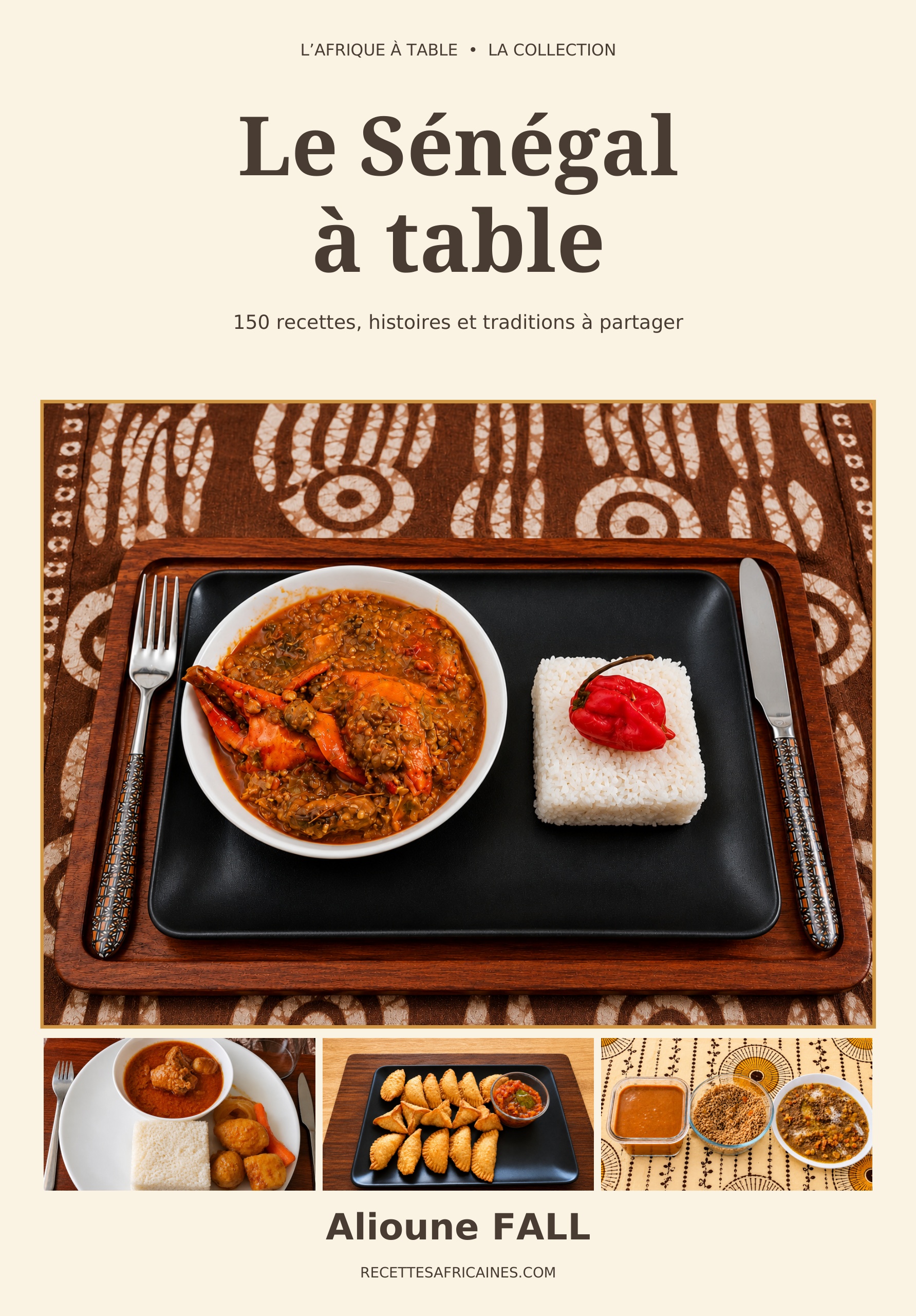
Explore Senegalese cooking with Le Sénégal à table, my collection of 150 recipes, stories and traditions to share. This book is in French, by Alioune FALL.
Discover these cuisines at a restaurant
Explore our restaurant and caterer directories. Choose your destination and check the establishment’s menu to confirm which dishes are offered and available.
Continue exploring
Enjoy discovering ingredients and African cuisines? Join our newsletter. The illustrated PDF 10 sauces africaines incontournables is in French and is offered after confirming a subscription to the French or bilingual edition.