Cardamom
India, Sri Lanka
Understanding : Cardamom
INTRODUCTION
Cardamom is nicknamed the "queen of spices," embodying finesse, elegance, and aromatic power in the culinary world since antiquity. Behind its small green or brown pods, it conceals an incomparable fragrance, blending citrus freshness, woody notes, and a gentle spicy warmth. Appreciated from East to West, it flavors rice as well as Nordic buns, coffee as well as curry, deploys a thousand medicinal virtues, and graces the tables of kings and common people alike. Let's discover this precious spice in all its dimensions.
ORIGIN AND BOTANY
Cardamom is the dried fruit of several perennial herbaceous plants of the genus Elettaria (green cardamom) or Amomum (brown/yellow cardamom), belonging to the Zingiberaceae family, the same as ginger and turmeric. Originally from the tropical forests of southern India and Sri Lanka, it is now also grown in Guatemala, the world's leading exporter, but remains rooted in the culinary and medicinal traditions of India, the Middle East, Southeast Asia, and East Africa.
Where to find it
Look for the exact food-grade form required by the recipe at markets and specialist shops. Check the product name, ingredients, condition and storage instructions.
Explore further: Cooking tips · Food hygiene and safety advice.
Search Amazon.fr — affiliate link →
Check availability and delivery on Amazon.fr. Compare ingredients, packaging and sellers.
As an Amazon Associate I earn from qualifying purchases.
History and uses
SPECIES AND MORPHOLOGY
Green cardamom (Elettaria cardamomum): the most prized, slender light green pods, very fragrant brown seeds. Brown/black cardamom (Amomum subulatum): larger, dark brown pods, with a smokier, earthier flavor, used in Indian and Tibetan cuisine. White cardamom: obtained by bleaching green cardamom, with a milder taste. The pods contain 15 to 20 small black seeds, rich in essential oils (cineole, terpineol, eucalyptol), responsible for its powerful and complex aroma.
HISTORY, TRADE, AND SYMBOLISM
A Millenary Spice Cardamom is mentioned in ancient Indian Vedic texts (over 3500 years old), where it already appears as a spice and a remedy. Cited by ancient Greek physicians (Dioscorides, Hippocrates), it quickly conquered Rome and the Persian Empire. It was offered to the gods, burned as incense, and traded along the routes connecting the Malabar Coast to the Mediterranean worlds. In the Middle Ages, cardamom, along with pepper, cinnamon, and nutmeg, was worth its weight in gold, destined for European royal tables and Arab markets. Its trade attracted the covetousness of the Portuguese, Dutch, and English, who monitored it on the famous Spice Coast.
CULTURAL AND RELIGIOUS DIMENSIONS
For India, cardamom is more than just a spice: it is used in sacred rituals, offered at altars, a symbol of luck and prosperity. In Ayurvedic medicine, as in Unani (Arab-Persian medicine), it is a panacea. Islam values the offering of cardamom in tea or coffee on special occasions, as a sign of hospitality.
CULINARY USES
India, the birthplace of cardamom: In India, cardamom, or ilaichi (or elachi), is ubiquitous: In masala chai, the famous spiced tea. To flavor desserts (halwa, kheer/rice pudding, kulfi/ice cream, laddu). In biryanis, curries, or refined dals. In Bangladesh and Pakistan, it shines in festive dishes, stuffed breads, and marinated kebabs. Middle East and North Africa: It is the signature spice of Arabic (qahwa) and Turkish coffee, where a few crushed pods are added to the ground beans: the floral and citrusy taste tempers the bitterness of caffeine. It is an ingredient in the baharat or ras el hanout spice blends, enhancing Eid cakes and Yemeni sweet bread. Scandinavia and Northern Europe: Traditionally, Scandinavians incorporate it into Christmas pastries: Swedish kanelbullar, Finnish pulla, Danish cookies, Norwegian gingerbread. It flavors brioches, ice creams, and some cheeses. Vietnam, China, Southeast Asia: Black cardamom, Amomum, is a key ingredient in the famous Vietnamese pho and pho broths in China. Much more powerful, it withstands long cooking times better.
In my books

Continue exploring the continent’s cuisines with Africa at the Table — 54 countries, 54 iconic dishes, by Alioune FALL. This book is in English.
Explore further
CULINARY TECHNIQUES AND USAGE TIPS
Cardamom can be used whole, lightly crushed (pod + seeds), or simply with the seeds ground in a mortar. It releases the most aroma when dry-roasted for a few seconds or infused in a fat (butter, milk, oil). For rice, add 2–3 pods during cooking. For infusion: crushed then steeped in milk/tea/hot chocolate. In coffee, one crushed pod is enough. In baking, grind the seeds at the last moment to preserve the fragrance. Caution: ready-made cardamom powder loses much of its strength; it's better to buy it whole.
MEDICINAL VIRTUES
Ancient Tradition For millennia, it has been credited with a thousand properties: Digestive and carminative: excellent for transit, relieves bloating, nausea, digestive colic, fresh breath. General stimulant: energizes the nervous system, fights fatigue. Respiratory decongestant: ideal for colds, bronchitis, coughs, asthma. Antibacterial, antiviral: recommended against certain ENT affections, and even as a general antioxidant. Aphrodisiac: tradition – more than science – extols its stimulating virtues.
CONTEMPORARY STUDIES
Modern studies confirm the antioxidant activity of its essential oils, some regulation of blood sugar, and a modest but real effect on digestion. It is also being studied for its possible anti-inflammatory and antibacterial effects (especially against Helicobacter pylori, a cause of gastric ulcers).
NUTRITIONAL VALUE
Cardamom is consumed in small quantities. It provides: Fiber, protein (15% and 10% dry weight) Vitamins B1, B2, B6 Minerals: calcium, potassium, iron, manganese, zinc 100g of cardamom provides approximately 300 kcal, but in common use, one or two pods are sufficient per dish.
SYMBOLISM AND SOCIAL ROLE
In India, offering cardamom is a pledge of friendship, peace, and prosperity. In the Arabian Peninsula, sharing cardamom coffee is almost a diplomatic gesture of peace. In the Middle Ages, cardamom was an ingredient in love potions. Storage and Purchase For optimal quality: Choose firm, light green, uncracked, shiny pods. Store away from air, light, and humidity. For cooking, open the pod at the last moment or grind the seeds in a mortar. Drink as an infusion or chew alone as a remedy for bad breath.
CONCLUSION
Cardamom, discreet in size but immense in fragrance, has conquered peoples and ages. From ancient India to Bedouin coffees, passing through Nordic tables and millenary medicine, it embodies natural sophistication, health, and a journey of the senses. Revive its heritage in your dishes and drinks, and you will invite a sparkle of the East and tradition into every bite or sip.
In the kitchen : Cardamom
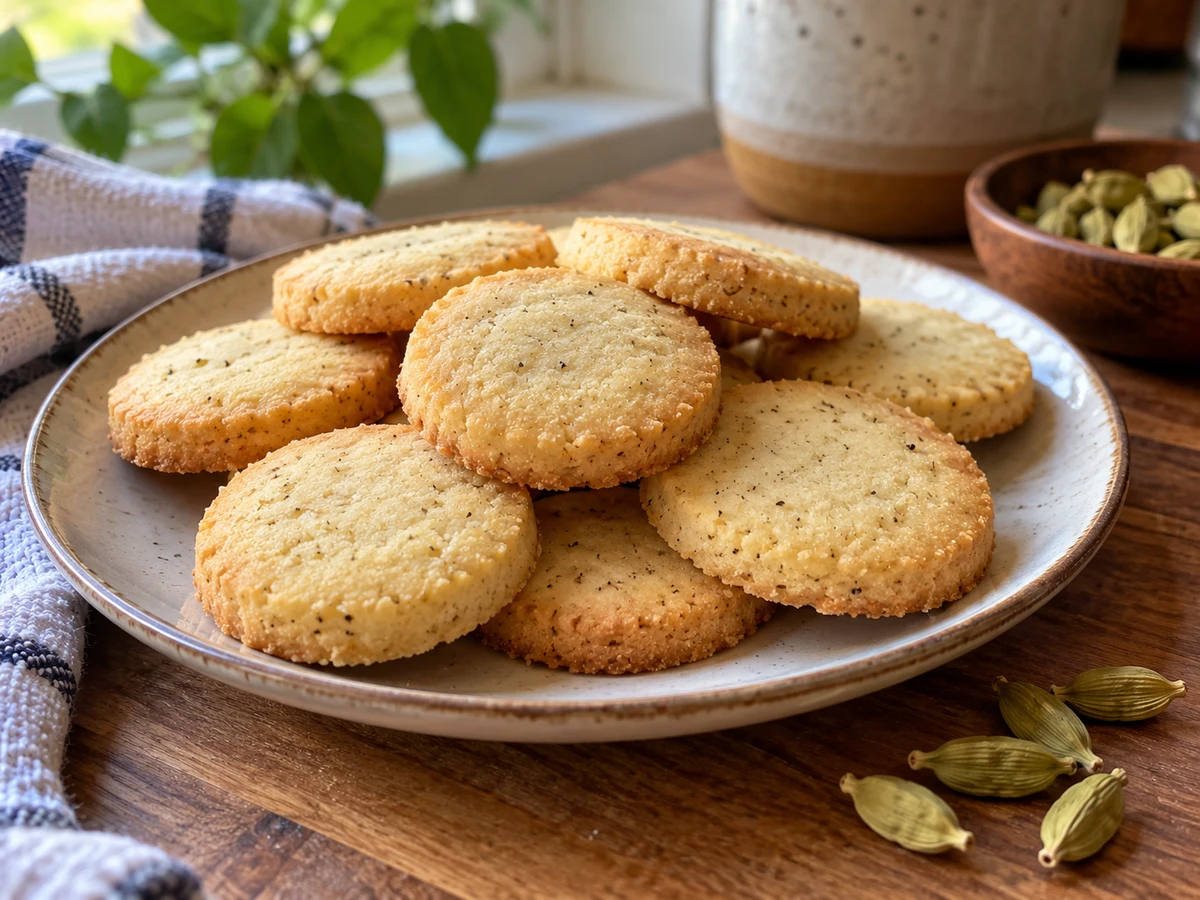
Recipes from the site to put your knowledge into practice:
Discover these cuisines at a restaurant
Explore our restaurant and caterer directories. Choose your destination and check the establishment’s menu to confirm which dishes are offered and available.
Continue exploring
Enjoy discovering ingredients and African cuisines? Join our newsletter. The illustrated PDF 10 sauces africaines incontournables is in French and is offered after confirming a subscription to the French or bilingual edition.