Djansan
West and Central Africa
Understanding : Djansan
INTRODUCTION
Little known to the general Western public but essential in many homes in the Gulf of Guinea and the forest regions of Central Africa, djansan (or akpi, njansang, essessang, wama depending on the people and countries) is one of the most precious, aromatic, and versatile seeds in African gastronomy. Derived from the Ricinodendron heudelotii tree, djansan is at once a condiment, thickener, flavor enhancer, and a source of protein and lipids. Present in a myriad of recipes, its role is much deeper than its simple culinary utility: it carries a long history of community forestry, acts as a player in food security, and is a marker of cultural identity, representing the link between tradition and modernity, between nature and society.
This text details the journey of djansan, from harvesting to the cooking pot, analyzing its regional uses, properties, economic stakes, nutritional benefits, ritual variants, ecological role, and its place in Africa today and tomorrow.
Where to find it
Look for the exact food-grade form required by the recipe at markets and specialist shops. Check the product name, ingredients, condition and storage instructions.
Explore further: Cooking tips · Food hygiene and safety advice.
Search Amazon.fr — affiliate link →
Check availability and delivery on Amazon.fr. Compare ingredients, packaging and sellers.
As an Amazon Associate I earn from qualifying purchases.
History and uses
1. BOTANICAL ORIGIN AND GEOGRAPHICAL DISTRIBUTION
1.1. The Djansan Tree Ricinodendron heudelotii is a large tree with dense foliage, belonging to the Euphorbiaceae family. It grows in the humid forests of West and Central Africa: Cameroon, Nigeria, Gabon, DRC, Equatorial Guinea, Ivory Coast, Ghana, Liberia, Sierra Leone, and as far as Angola. It can reach up to 40 meters in height and produces, during the dry season or early rainy season, large green capsule fruits, each containing 2 to 3 very hard seeds covered with a fibrous and bitter pulp. 1.2. Terminology Djansan/djansang (Bassa, Ewondo in Cameroon) Akpi (Bété, Akan in Ivory Coast) Essessang (Fang, Gabon) Wama (Nigeria) Okhuen (Bini, Nigeria) Bofeko (DRC) The diversity of names testifies to the antiquity and spread of the fruit in the African forest region, as well as the ethnic richness of its users.
2. HARVESTING, PROCESSING, AND MARKETING
2.1. Harvesting Harvesting is done by hand in the bush, usually by women and children. The fruits are picked when ripe, either fallen to the ground or gathered with a pole. It is often a community activity, linked to traditional agricultural cycles. 2.2. Processing The process is delicate and requires several steps: Decorticating: the green capsule is opened, and the seeds are extracted. The seed, enveloped in a bitter pulp, must be recovered. Pulp removal: the seeds are boiled for a few minutes, then the mucilage is removed by hand, sometimes by rubbing them on a stone or with ash to remove residues. Drying: the cleaned seeds are spread in the sun for several days to prevent mold. Secondary decorticating: the very hard shell must be cracked (sometimes with a small hammer or nutcracker), revealing the light kernel. Sale: dried and shelled djansan is sold in markets, usually in piles or small sachets. In some villages, part of the seeds is also pressed to produce oil, used in cooking or cosmetics.
3. CHARACTERISTICS AND PROPERTIES OF THE DJANSAN SEED
Size: ovoid kernel, 1 to 1.5 cm long. Color: pale beige to golden brown. Texture: oily, crunchy raw, but often crushed or ground. Aroma: very characteristic, both nutty, slightly musky, with a touch of umami, a taste sometimes reminiscent of cashew or sesame. Nutritional composition: 40 to 52% lipids (mainly unsaturated), 20 to 30% protein, 10 to 20% carbohydrates, fiber, vitamins A, E, B, and minerals (calcium, potassium, phosphorus).
4. PLACE OF DJANSAN IN AFRICAN CUISINE
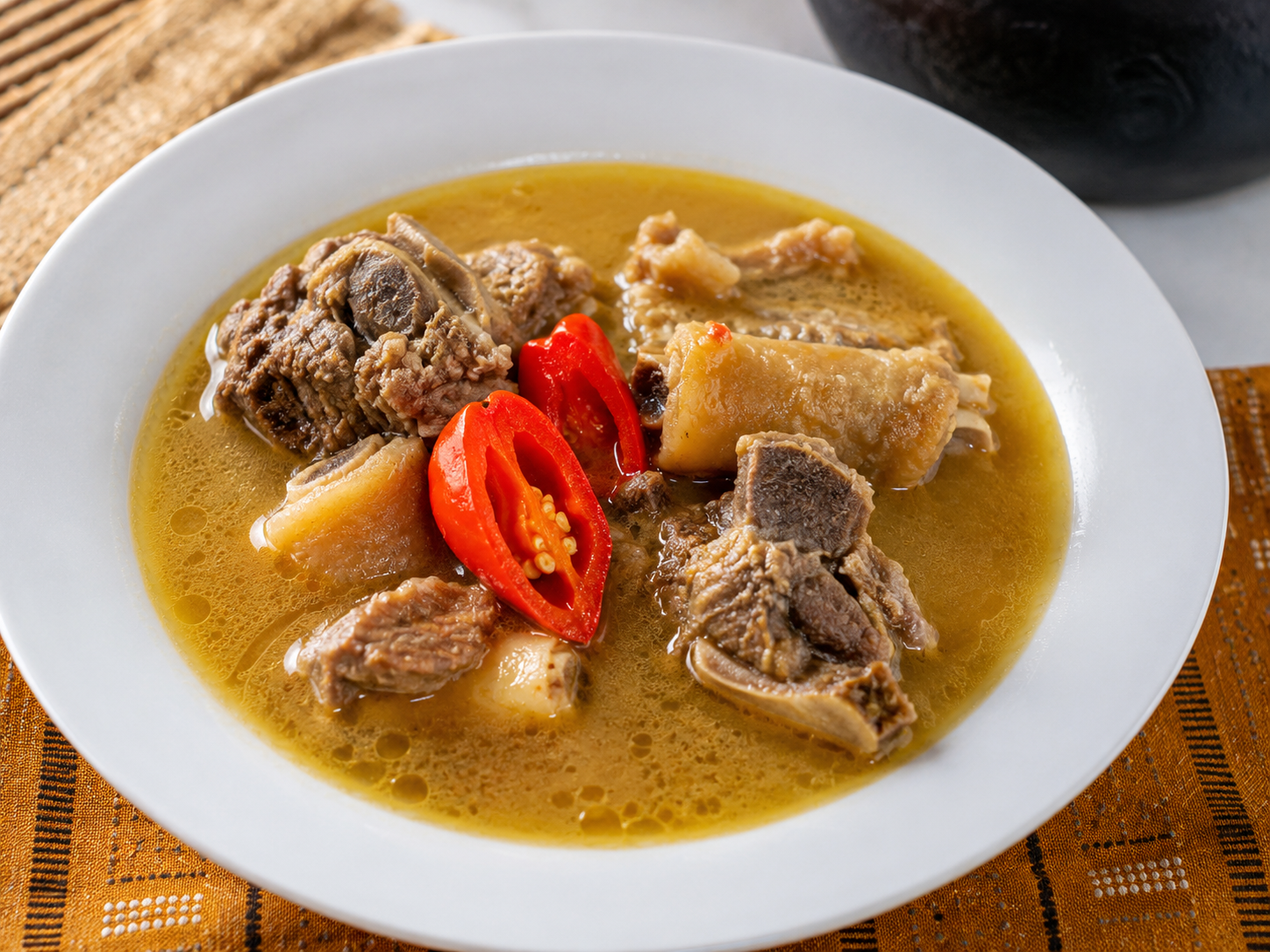
4.1. An Ancestral Flavor Enhancer and Binder Djansan is primarily used as an aromatic and thickening agent. It is lightly dry-roasted, then pounded or ground into a coarse paste/molecule in a mortar. Its richness in oils helps bind sauces, and its proteins add body. 4.2. Emblematic Dishes Cameroonian yellow sauce: essential, the “yellow sauce” (a festive equatorial soup based on chicken, djansan, onions, spices, often chili!) owes its texture and typical nutty taste only to ground djansan. Odika or Ogbono soup: in Gabon, Cameroon, DRC, a thick dish made from djansan seed paste, meat or fish, leafy vegetables, and condiments; similar to ogbono soup among the Yoruba. Ndolé (Cameroonian national dish): bitter leaves are simmered with peanuts and sometimes enhanced with djansan. Eru/Okok (Gabon, Cameroon): gnetum leaves, melon seeds, djansan. Fish or meat dishes in sauce: djansan gives sweetness and binding to red, yellow, white sauces, depending on ethnic uses. Kwem (Ivory Coast): akpi soup with fish, snails, tomato sauce. Snacking: roasted plain, djansan can be consumed as an appetizer. 4.3. Method of Incorporation It is ground fresh or dry, incorporated into the sauce at the beginning or end of cooking, depending on the desired texture. It can also be combined with other spices: garlic, ginger, Penja pepper, cubeb, local herbs, or peanut paste (for rounder notes). The dosage varies greatly but it is always a marker of the dish's identity.
In my books

Continue exploring the continent’s cuisines with Africa at the Table — 54 countries, 54 iconic dishes, by Alioune FALL. This book is in English.
Explore further
5. NUTRITIONAL AND HEALTH DIMENSIONS
Unsaturated lipids: provides essential fatty acids, good for cardiovascular health. Vegetable proteins: essential in starch-based diets (cassava, yam, plantain...). Fiber: promotes digestion and satiety. Minerals and vitamins: provides essential micronutrients. Natural antioxidants: helps fight oxidative stress. Low glycemic index: good for people with diabetes. Traditionally, djansan oil is used to massage children, as a mild healing agent, and even in cosmetics for its nourishing properties.
6. SYMBOLISM, TRADITIONS, AND LOCAL ECONOMY
6.1. Rituals and Community Identity In some groups (Bassa, Fang, Bamiléké...), yellow sauce with djansan is a ritual dish: present at family gatherings, funerals, weddings, initiation rites. It symbolizes abundance, fertility, and the wisdom of elders. 6.2. Role in Food Security and Rural Entrepreneurship Harvesting, processing, and selling djansan are vital sources of income for rural women; a “non-timber forest product” sector valued by the FAO. Djansan compensates for the scarcity of meat or fish, enriching sauces even during periods of shortage. 6.3. Transmission and Heritage The preparation of djansan (sorting, roasting, grinding in a mortar) is an educational gesture passed down from generation to generation, emblematic of the central role of African women in transmitting taste and culinary knowledge.
7. CONTEMPORARY VARIATIONS AND INNOVATIONS
7.1. New Forms and Uses Young African chefs and the diaspora are reinterpreting djansan: Integration into veloutés, sauces for grilled meats, desserts (ice creams or biscuits), seed-based energy bars, African hummus or pestos. Aromatic oils, djansan chips, fusion “umami” sauces. 7.2. Export and Valorization Initiatives are emerging to package, label, and export djansan in ground, roasted, oil, or powder form for seasoning and cosmetics, respecting fair trade chains and women's empowerment. 7.3. Conservation and Sustainability Challenges Massively harvested, the Ricinodendron tree is now protected in some countries. Campaigns highlight the importance of sustainable harvesting and reforestation to preserve this living heritage.
8. REGIONAL COMPARISON AND RELATIVES
Djansan vs Egusi/Melon: Egusi (melon seed) is also widely used, sometimes as a complement; it thickens but does not have the characteristic aroma of djansan. Versus néré/dawadawa: Their fermentation belongs to other traditions (savanna vs. forest) but their aromatic role is similar. Versus cola nut or kola: Djansan is food, while kola is mainly stimulating/social.
CONCLUSION For centuries, djansan has accompanied the tables, rituals, culinary innovations, and community successes of the forests of Central and West Africa. Emblem of a plant heritage and an inherited art of living, it connects the cooking pot and the forest, the family and society. Its aroma, deep taste, multiple uses, and health benefits make it a treasure of gourmet Africa, a strategic resource for food security and social cohesion. Promoting, preserving, and valuing djansan means defending an identity, biodiversity, a dynamic rural economy, and a sustainable future for African cuisine, proud of its roots and inventive for its tomorrows.
In the kitchen : Djansan
Recipes from the site to put your knowledge into practice:
Discover these cuisines at a restaurant
Explore our restaurant and caterer directories. Choose your destination and check the establishment’s menu to confirm which dishes are offered and available.
Continue exploring
Enjoy discovering ingredients and African cuisines? Join our newsletter. The illustrated PDF 10 sauces africaines incontournables is in French and is offered after confirming a subscription to the French or bilingual edition.