Niter Kibbeh
Ethiopia, Eritrea
Understanding : Niter Kibbeh
INTRODUCTION
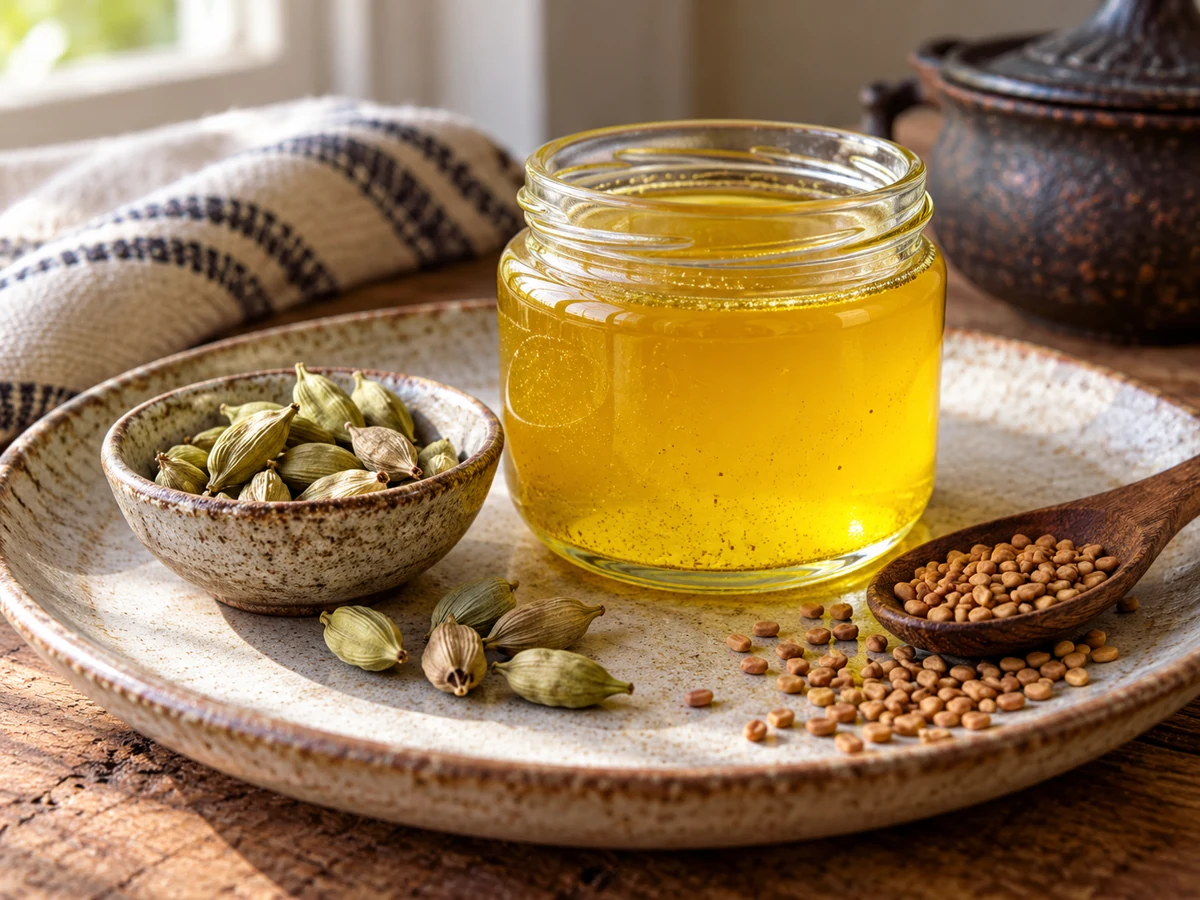
In the essential aromatic repertoire of African cuisine, Ethiopian and Eritrean gastronomy holds a unique place due to the subtlety of its flavors, the richness of its fats, the complexity of its sauces, and the refinement of its aromas. Niter Kibbeh (or Nit’ir Qibe, literally "seasoned butter" in Amharic and Tigrinya) is one of its treasures: a clarified butter infused with spices, slowly simmered, serving as a condiment, binder, flavor enhancer, and essential culinary base. Technically reminiscent of Indian ghee, but unique in its spices and sensory profile, niter kibbeh is at the heart of Abyssinian cuisine: its aroma permeates stews (wat), sauces, ritual recipes, and festive dishes, participating, in an immemorial gesture, in shaping the culinary identity of a large part of the Horn of Africa. While African cuisine is often viewed through the prism of vegetable oils, niter kibbeh synthesizes the butter of the highlands, the aromatic plants of the Rift Valley, and the Abyssinian and Sahelian heritage. A true heritage passed down from generation to generation, it is now becoming a symbol of Afro-diasporic gastronomy, reinterpreted by chefs worldwide. Delving into niter kibbeh means exploring the history of flavors, folk medicine, ritual, rural economy, and culinary innovation in East Africa.
1. ORIGIN, HISTORY, AND CULTURAL CONTEXT
1.1. Ethiopian and Eritrean Roots Niter kibbeh originates from the dairy farming of the highlands: the cow (zebu, locally adapted) provides whole milk, yogurt, sweet butter, and then clarified butter, which keeps for a long time and serves as a fat base for cooking during dry or religious seasons. The tradition of clarified butter is found throughout the Afro-Asian world, but it is the long spice infusion technique that makes niter kibbeh an exception: a bouquet of herbs (besobela/Ethiopian basil, korarima/Guinea pepper, fenugreek, turmeric, cumin, ginger, garlic…), patient cooking, and the mastery of low heat. Passed down between mothers and daughters, used in every home, a star of traditional restaurants and now of ethnic grocery stores worldwide, niter kibbeh crystallizes Abyssinian and, more broadly, Ethiopian/Eritrean identity, where injera and berbere already shape the universal taste of the continent. 1.2. Place in Religion and Calendar In Christian societies (EOTC/Ethiopian Orthodox Tewahedo Church and its frequent fasts, animal fasts), niter kibbeh is absent from vegan dishes (fasting dishes), but remains the “noble fat” during festive days (fàsika/Easter, Gena/Christmas, Meskel/Exaltation of the Cross). In the Muslim world (Eid, celebrations, welcoming honored guests), it plays the same role of excellence.
2. INGREDIENTS, TECHNIQUES, AND VARIATIONS
2.1. Butter It starts with “kibe”: fresh, traditionally churned, unsalted butter, already flavored or neutral. Failing that, good unsalted farm butter or industrial butter (more common in cities) is used, sometimes mixed with a little vegetable oil (to thin it or reduce cost). 2.2. Emblematic Spices The “secret” of niter kibbeh lies in the composition of the aromatic bouquet, which includes: • Beso bela (Ocimum basilicum, Ethiopian holy basil) • Korarima or Guinea pepper/large-seeded Guinea pepper • Fenugreek (abish) • Turmeric • Cumin • Fresh or dried ginger • Garlic • Green or black cardamom • Cloves • Cinnamon (rare, depending on the region) • Onion • Sometimes rue, nutmeg, sweet pepper The proportion and combination vary from family to family, with each cook (or chef) jealously guarding their blend. 2.3. Manufacturing Technique
- Melt the butter over very low heat, never boil.
- Skim off the whey/foam regularly, clarify to retain only the fat.
- Add all roughly chopped aromatics (or lightly grind hard spices).
- Infuse for a long time (30 to 90 minutes, until the butter is translucent, the spices release their fragrance, and the water evaporates completely).
- Strain through a fine muslin cloth or sieve.
- Store away from light in sealed jars – keeps for many weeks, even without refrigeration if the butter is well clarified.
3. TRADITIONAL AND MODERN CULINARY USES
3.1. Wot, Tibs, Alicha: The Soul of the Stewed Dish Niter kibbeh is at the heart of most Ethiopian and Eritrean dishes: • Doro wot: chicken and egg stew, a star of festive days, based on onions slowly melted in niter kibbeh and copious berbere. • Key wot (beef or offal stew, “key”=red, “tibs”=sautéed): meat confited in niter, spiced. • Alicha (mild dishes, often vegan or for children): vegetables (carrots, potatoes, cabbage) slowly simmered. • Atayef, kitfo (Ethiopian meat tartare): a true “steak tartare” mixed with melted niter kibbeh, mitmita (spices), eaten raw, semi-cooked, or sautéed. 3.2. In Street Food and Daily Meals From breakfast (injera rolled with niter and sugar, porridge with niter) to sauces for legumes (misir wot/lentils, shiro wot/chickpeas, kik alicha/split peas), it colors, flavors, nourishes, and provides a rich, enveloping, very satisfying sweetness. 3.3. Use in the Afro-Modern Diaspora Today, niter kibbeh is entering the inventory of fusion cuisine: pasta sauces, marinades, emulsions for meat or fish, flavored spreadable butters, risottos, Afro mayonnaise and vinaigrettes, revisited desserts (shortbread, niter cakes, popcorn or roasted vegetables).
4. SOCIAL SYMBOLISM, TRANSMISSION, AND IDENTITY
4.1. Female Heritage and Matrilineal Transmission The making of niter kibbeh — from milking to churning, from washing to flavoring, from clarifying to storing — symbolizes female savoir-faire, the love of home, maternal competence, and respect for ancestral gestures. Young girls learn this knowledge during vigils, celebrations, and large Sunday gatherings. 4.2. Symbol of Hospitality and Celebration Offering a dish cooked with niter kibbeh is to honor a guest, celebrate a birth, a baptism, an achievement. The best festive meals are “drowned” in niter kibbeh, because it is expensive, requires time, good ingredients, and reflects prosperity. 4.3. Place in Ritual, Religion In Orthodox religiosity, “breaking the fast” with a kitfo made with niter kibbeh is to sanctify the celebration, connecting the home to blessing.
5. NUTRITIONAL VALUE AND MEDICINAL PROPERTIES
5.1. Nutrients • Richness in saturated fatty acids (mostly): source of energy, key role in the absorption of fat-soluble vitamins (A, D, E, K). • Spice micronutrients: antioxidants, anti-inflammatories (ginger, turmeric), activated digestion (basil, fenugreek, cumin). • Fat-soluble vitamins and trace elements: provided by both butter and spices. 5.2. Popular Medicinal Virtues • Protects from cold, strengthens children, promotes lactation in young mothers, stimulates appetite in convalescents, facilitates digestion. • Many components are recognized as probiotics, digestive, analgesic, or soothing. • The medicinal properties of spices help prevent certain digestive or respiratory infections.
6. MODERNITY, EXPORT, AFRO-FUSION, AND CHALLENGES
6.1. Diaspora, Global Wings of Niter Kibbeh Ethiopian and Eritrean communities in North America, Europe, and Australia have carried this expertise, developing markets, exports, and semi-industrial products (niter kibbeh in jars, portioned, organic, sometimes vegan based on vegetable oils). 6.2. Gastronomic Innovations Transcontinental chefs and influencers are reinventing its use: flavored butters for baking, Afro-fusion sauces for seasoning, pairing with local cheeses, popcorn, new vegetables, mayonnaise and dips, ice creams, crumbly cakes... 6.3. Issues and Challenges • Evolution of fats: rise of veganism (substitutes based on coconut oil, olive oil, vegetable margarine). • Cost and rural accessibility: raises the question of food sovereignty and the preservation of know-how, in the face of urbanization and the import of vegetable oils. • Preservation of local herbs and spices (threatened Ethiopian basil, diversity of korarima, land pressure). • Risk of industrial standardization (loss of “handmade” quality, sensory impoverishment).
7. SOCIAL AND IDENTITY ROLE
• Niter kibbeh unites women, families, gourmets, diaspora, and young chefs around memory, evolution, and creativity. • It weaves the link between village traditions, urban modernity, and the internationalization of African cuisine. • It marks the boundary between the everyday and the exceptional (Sunday flavor, celebration, sacred day).
CONCLUSION Niter kibbeh is much more than just butter: it is the fragrance of hospitality, the imprint of childhood, the social heart, the test of skill, and the promise of taste for the cuisine of the Horn of Africa. Wrapped around injera, melted in the wat pot, allied with the coffee dance, it transmits, comforts, exalts, innovates. To perpetuate, transmit, and reinvent niter kibbeh is to keep alive the memory, sovereignty, joy, and audacity of African taste identity – in Ethiopia, in Eritrea, and now on the great table of the world.
Where to find it
Look for the exact food-grade form required by the recipe at markets and specialist shops. Check the product name, ingredients, condition and storage instructions.
Explore further: Cooking tips · Food hygiene and safety advice.
In my books

Continue exploring the continent’s cuisines with Africa at the Table — 54 countries, 54 iconic dishes, by Alioune FALL. This book is in English.
In the kitchen : Niter Kibbeh
Recipes from the site to put your knowledge into practice:
Discover these cuisines at a restaurant
Explore our restaurant and caterer directories. Choose your destination and check the establishment’s menu to confirm which dishes are offered and available.
Continue exploring
Enjoy discovering ingredients and African cuisines? Join our newsletter. The illustrated PDF 10 sauces africaines incontournables is in French and is offered after confirming a subscription to the French or bilingual edition.