Fenugreek
Eastern Mediterranean, Middle East, India
Understanding : Fenugreek
INTRODUCTION
Fenugreek, also known as trigonella, hilba (in Arabic), abesh (in Ethiopia), methi (in Asia), and “koulou” in Senegal, is one of those discreet spices and plants that transcend borders and time. Used since antiquity for its nutritional and medicinal benefits and subtle aromas, fenugreek has carved out a unique place in African cuisine – the Maghreb, the Horn of Africa, the Sahel, and more discreetly in other sub-Saharan regions. This golden grain, with a flavor between maple and walnut and an intoxicating scent, is much more than just an aroma: it embodies memory, body care, family transmission, peasant resistance, and multiple identities. This text offers a detailed description of fenugreek (botany, history, cultivation), an overview of its traditional and modern uses, and a reflection on its place in African culinary and therapeutic heritage.
Where to find it
Look for the exact food-grade form required by the recipe at markets and specialist shops. Check the product name, ingredients, condition and storage instructions.
Explore further: Cooking tips · Food hygiene and safety advice.
Search Amazon.fr — affiliate link →
Check availability and delivery on Amazon.fr. Compare ingredients, packaging and sellers.
As an Amazon Associate I earn from qualifying purchases.
History and uses
1. ORIGINS, BOTANY, AND SPREAD
1.1. Botanical Description Fenugreek (Trigonella foenum-graecum) is an annual herbaceous plant belonging to the Fabaceae family (legumes). It grows 20 to 60 cm tall, has trifoliate leaves, and pale white or yellow flowers; it produces pods containing 10 to 20 hard, oblong, caramel-golden to dark blonde seeds. Its Latin name means “Greek hay” because its smell resembles cut hay. Originating from the Eastern Mediterranean, the Middle East, and India, it quickly acclimatized around the Mediterranean, in North and East Africa thanks to ancient trade routes. 1.2. History and Spread Fenugreek has been known for over 4000 years. Traces of it are found in Egyptian papyri and pharaonic tombs (used for embalming), the Bible, Greco-Roman, Arab, and Persian pharmacopoeias. It arrived early in Africa: Egypt: sown since antiquity along the banks of the Nile, up to the present day. Maghreb/Sahel: spread by Arab caravans and Saharan trade. Horn of Africa (Ethiopia, Eritrea, Sudan): central to diet, ritual, and pharmacopoeia. Sub-Saharan Africa: more confidential, associated with Islamization and exchanges with the Arab and Indian worlds.
2. CULTIVATION METHODS, PROCESSING, AND ECONOMY
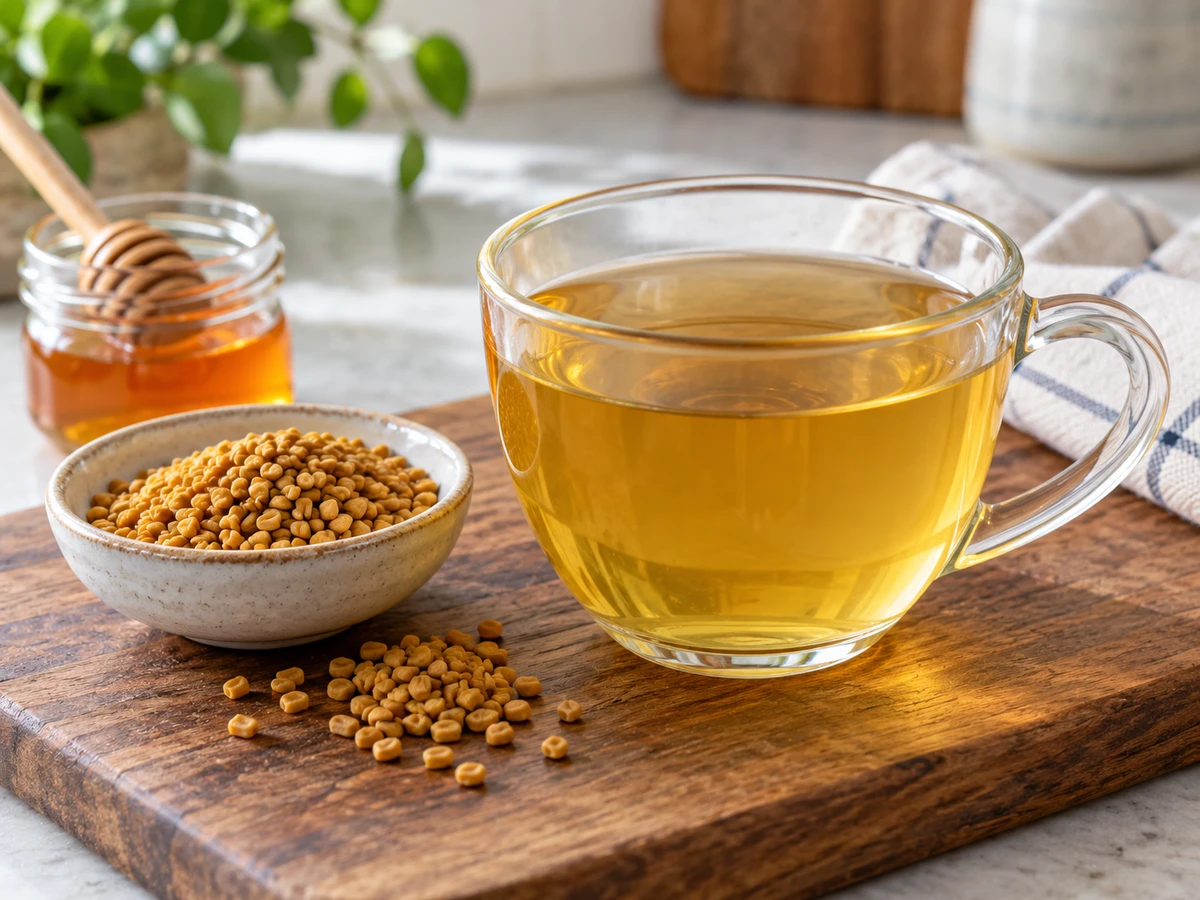
2.1. Cultivation Fenugreek is robust and undemanding: it adapts to poor soils, dry climates, and a short season (60 to 120 days). It grows: sown directly in the ground, in home gardens, fallow lands. sometimes in rotations after cereals or other legumes. Harvest: pick pods when ripe, shell, dry in the shade. The extremely hard seeds can be stored for years. 2.2. Sales and Processing In African markets, it is sold: Pure, as whole grains, powdered, sometimes sprouted (for soups or salads). Prepared as a “herbal tea/infusion,” or integrated into spice blends (ras-el-hanout, berbere…).
3. NUTRITIONAL PROFILE AND HEALTH BENEFITS
3.1. Composition Fenugreek seeds are exceptionally nutritious: Proteins: 25-30% Complex carbohydrates (including fiber/mucilaginous gum): 50% Polyunsaturated lipids: 5 to 7% Minerals: Iron, magnesium, phosphorus, potassium, calcium, zinc Vitamins: B1, B2, B6, folates, A, D Saponins, flavonoids, alkaloids, mucilages 4-hydroxyisoleucine: an amino acid with known effects on blood sugar. 3.2. Therapeutic Virtues and Traditional Uses Fenugreek is renowned in Africa for: Appetite stimulation, weight gain (young mothers, convalescents). Galactagogue: promotes lactation. Antidiabetic effects, blood sugar regulation (especially in infusion). Emollient, mucilaginous effect: against coughs, throat irritation, stomach problems. Powerful digestive tonic, anti-fermentative. In tablets, against menstrual and menopausal pain. “General fortifying” effect, recommended in “spiced bissap,” spiced infusion, etc. Caution: it has a distinctive odor/marker on sweat and breath (persistence of a “maple-caramel” aroma).
4. USES AND RECIPES IN AFRICAN CUISINE
4.1. In the Maghreb and Egypt "Helba" or “hilba”: seed infusion, sometimes boiled in milk, to stimulate lactation or appetite, relieve stomach aches. Ras-el-hanout, harira, couscous: always present (in very small doses) in traditional spice blends, to thicken, bind, and enhance flavor. Flatbreads, breads, semolina: mixed into the dough, either powdered or as crushed sprouts. In Moroccan and Tunisian Jewish cuisine: fenugreek is used in the preparation of “hilba” (a paste or jelly of sprouted seeds with garlic, lemon). 4.2. Sahel, West Africa In Sudan-Sahelian Africa (Chad, Niger, Mali, Senegal), it is consumed boiled for breakfast or in porridges for babies, mothers, and the elderly. In areas with a large Muslim population, it is common in infusions during Ramadan, to strengthen after breaking the fast, soothe the stomach, and hydrate. Sometimes integrated into spice blends for grilling (meats, “dibi” chicken in Senegal or Mali). 4.3. Horn of Africa (Ethiopia, Eritrea…) Fenugreek, under the name abesh, is a star in the cuisines of the Horn of Africa: Niter kibbeh (spiced clarified butter): always a pinch of fenugreek to flavor cooking butter. Berbere (Creole blend of chili and 7-12 spices): fenugreek adds a smoky bitterness and nutty flavor. Doro wat (stewed chicken), misir wat (lentil stew), shiro: every sauce, stew, or braise begins with crushed or toasted grains. Injera bread (fermented teff pancake): some mix a small amount of fenugreek into the teff flour during fermentation to enhance flavor and texture. 4.4. Central Africa and Diaspora Less commonly used, fenugreek is gradually conquering diasporic creative cuisine (marinades, jams, desserts, sauces), especially due to the trend of “healthy food.”
In my books

Continue exploring the continent’s cuisines with Africa at the Table — 54 countries, 54 iconic dishes, by Alioune FALL. This book is in English.
Explore further
5. TECHNIQUES AND SECRETS OF USE
Whole grains: soak or cook for a long time (otherwise, they remain hard…). Powdered: dry roasted to remove bitterness, then added at the end of cooking. Sprouted: seeds soaked and germinated, rich in protein, used in salads or as a side dish. Infusion/herbal tea: valuable in postpartum cures, for children, for hydrating the elderly. Flavored butter or oil: fry the seeds in oil or butter to flavor foods.
6. CULTURAL, SOCIAL, AND RELIGIOUS SYMBOLISM
6.1. Motherhood, Childhood, and Care In many regions, fenugreek symbolizes motherhood, fertility, and the "strength of milk" (hilba in Morocco, Egypt, Sahel). It is drunk or eaten by young mothers to promote milk production, strengthen the unborn child, regain strength and appetite, and help with baby blues. 6.2. Ritual and Hospitality Serving a fenugreek infusion, a flatbread, or a dish where its taste is recognizable is to provide care, display Muslim identity, the memory of the desert, and respect for tradition. Some healers associate fenugreek’s mucilaginous gum with protective anointing. 6.3. Transmission Its use, long reserved for matrons and female healers, is now passing into shared cooking: transmission of secrets, measurements, mixtures, and issues of education and affirmation of family heritage.
7. CONTEMPORARY INNOVATIONS
Smoothies, granolas, energy balls enriched with fenugreek. Nutritious flours for children or convalescents. Natural food supplements (powder, capsules). Organic breads, cookies, energy bars. Fish or lamb marinades in a “nova Africa” style (South Africa, Morocco, Senegal, diaspora). Lactated drinks and “postpartum wellness” herbal teas marketed in the urban diaspora. In modern medicine, growing interest in the treatment of diabetes, cholesterol control, and infant nutrition (fighting malnutrition).
8. CONSTRAINTS AND PRECAUTIONS
Natural bitterness: to be tamed by soaking, long cooking, or strong dilution. Specific odor (sweat, urine) after regular consumption: some find it bothersome. Contraindicated in advanced pregnancy (oxytocic effect at high doses). Possible interactions with certain medications (anti-diabetics, anticoagulants…). Always consult a healthcare professional if in doubt.
CONCLUSION Fenugreek, the golden seed from the Maghreb to the Horn of Africa, connects African cuisines to world history, between antiquity and modernity, family recipe and festive dish. It nourishes, heals, strengthens, binds, spices, and brings together. A source of pride, care, and innovation, it will undoubtedly remain, for a long time to come, one of the discreet but precious signatures of African gastronomy, resolutely focused on naturalness, health, and living memory. To taste fenugreek is to feel the generosity of African lands and the civil, maternal hand of the continent that watches over the taste, vigor, and future of its peoples.
In the kitchen : Fenugreek
Recipes from the site to put your knowledge into practice:
Discover these cuisines at a restaurant
Explore our restaurant and caterer directories. Choose your destination and check the establishment’s menu to confirm which dishes are offered and available.
Continue exploring
Enjoy discovering ingredients and African cuisines? Join our newsletter. The illustrated PDF 10 sauces africaines incontournables is in French and is offered after confirming a subscription to the French or bilingual edition.