Gboma Dessi
Togo, Ghana
Understanding : Gboma Dessi
INTRODUCTION
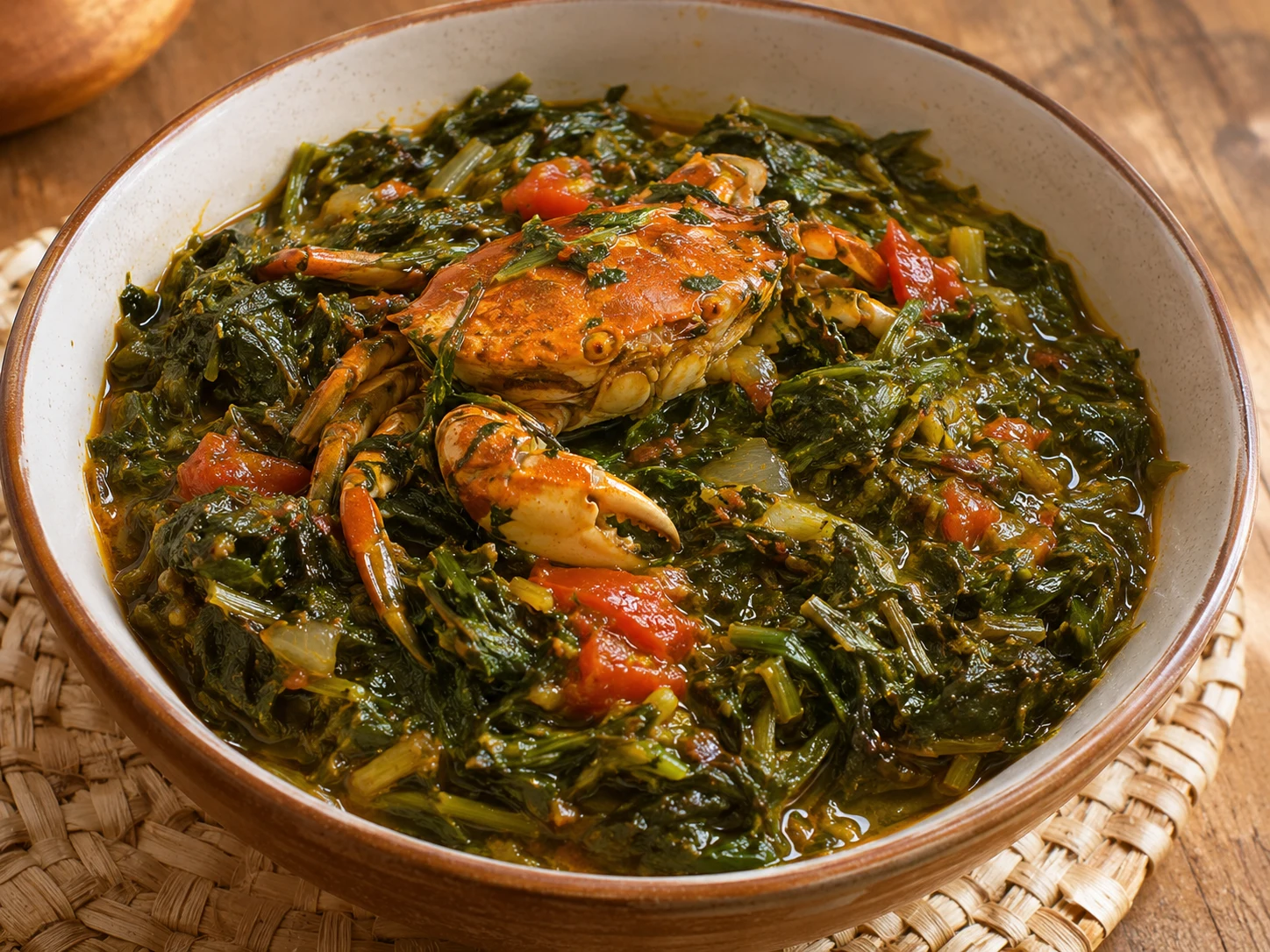
Gboma Dessi is one of West Africa's iconic stews, carrying the memory of the fields, the conviviality of communal meals, and the art of blending green flavors, meat, and palm oil. Originating from Togo and Ghana, and popular in Benin, it embodies the genius of the "leaf-based" cuisines of the Guinean and coastal regions, where gboma means "spinach" or, by extension, any broad-leafed leafy green (Amaranthus, Solanum, moringa leaves, sweet potato leaves...). Lean yet deeply nourishing, Gboma Dessi resonates as a celebration of West African terroir, climate, and seasonal rhythm. Behind its apparent simplicity – a green stew made from chopped leaves, oil, meat or fish – lies remarkable inventiveness: family recipes jealously guarded, refined choices of aromatics and cooking techniques, and a combination of proteins and leaves that ensures both taste and rare nutritional intake in the African gastronomic landscape. Let's delve into the history, preparation, social, ritual, and nutritional values of Gboma Dessi, to reveal its central and very current place.
1. ORIGIN, ETYMOLOGY AND HISTORY
1.1. Gboma: the word, the plant, the tradition In many languages of Togo, Ghana, Benin, "Gboma" (Ewe, Mina, Adja, Akan...) refers to African spinach, mainly Amaranthus spp. or Solanum macrocarpon, as well as other green leaves used seasonally: jute mallow ("krin-krin"), moringa, sweet potato leaves, cassava (manioc), chard, cocoyam leaves, or chopped okra. "Dessi" simply means "sauce," "stew," but also "prepared," "processed." Gboma Dessi is therefore "spinach stew" or "well-sauced leaves." It is not a clear soup, but a thick dish where reduced and simmered leaves form the raw material of the sauce. 1.2. Terroir and diffusion Gboma Dessi is fully part of the "leaf-based cuisine" tradition of West Africa, a legacy of an agrarian lifestyle where every domestic vegetable garden fed the family with green vegetables. Particularly widespread in Togo, Ghana, and Benin, it has spread to all regions bordering the Gulf of Guinea and has given rise to numerous local or ethnic variations. Its adoption accelerated with exchanges and migrations between peoples, such as the Ewes, Adjas, Fons, Akan... Its recipe has evolved with agricultural seasons and ingredient availability, but the logic – to draw "glory from local greens" – remains immutable.
2. THE PLANTS AND INGREDIENTS AT THE HEART OF GBOMA DESSI
2.1. The leaves: nutritional and aromatic foundation Amaranthus (amaranth): most common, considered a "strength vegetable," tender, slightly bitter. Solanum macrocarpon (African eggplant leaves, true gboma): more pronounced flavor. Cassava leaves, sweet potato, jute mallow, moringa, cabbage, chard, chopped okra: depending on the season or family tradition. Differences in taste, texture, and tenderness are at the root of many culinary debates. 2.2. Proteins and complements Meats: beef, goat, lamb, tripe (offal), chicken, pork (depending on dietary taboos) Fish: smoked fish (tilapia, mackerel, sardinella), fresh fish, dried shrimp (crayfish), crabs Snails, lagoon crab: seasonal sources of noble proteins 2.3. Fat and flavor enhancers Red palm oil, sometimes mixed with peanut oil for flavor or cost reasons Onions, garlic, chili, ginger: basic aromatics Fresh or concentrated tomato, optional: adds umami and roundness Bouillon cube, shrimp powder, soumbala: more or less introduced in modern households
3. PREPARATION METHOD: AN ART OF FIRE AND PESTLE
3.1. Preparation of leaves Fresh harvest, careful cleaning (to remove sand, insects) Leaf stripping/pounding/chopping: leaves are most often pounded in a mortar or finely chopped to avoid long fibers and allow better integration into the sauce 3.2. Cooking Blanch or pre-cook the leaves for a few minutes in boiling water, then drain (some families keep this water for an accompanying "soup"). Prepare the aromatic base: sauté onions, garlic, ginger, tomato, chili in palm oil. Add proteins (pre-cooked meat or smoked fish, shellfish, snails), sauté to thoroughly combine fat and flavors. Incorporate the chopped/pounded leaves, mix well, then add a little water or broth to adjust the texture without "drowning" the sauce. Cook over low heat, covered or uncovered depending on the desired consistency, for about thirty minutes, being careful not to burn the bottom. Final seasoning: bouillon cube, shrimp powder, soumbala Finish: another ladle of palm oil (according to tradition), or reduce over high heat to accentuate the "stew" effect. 3.3. Plating & serving Traditionally served in large dishes or bowls, sometimes accompanied by whole okra, clearly visible pieces of meat, Gboma Dessi is enjoyed hot, shared, often with fingers.
4. ACCOMPANIMENTS AND MEAL SETTING
Gboma Dessi is never eaten alone. Depending on the region and occasion: Akoumé (corn paste, eba): a favorite dish in Togo and Ghana, shaped into balls by hand, dipped in the sauce Fufu / foufou, pounded yam, gari (cassava flour), white rice Sometimes steamed plantains, local bread, millet couscous (in northern Togo) In families, the dish is often shared by hand; in ceremonies, each guest receives their piece of "honorary" meat or fish
5. SOCIAL PLACE AND VALUES OF GBOMA DESSI
5.1. Identity and festive dish Gboma Dessi is the "national sauce" of Togo (with akoumé), a dish for family celebrations, reunions, Sundays, weddings and baptisms, but also daily food in many households in southern Togo, Ghana, Benin. Its "green power," the cook's touch, perfect tenderness, and the distribution of meat or fish are celebrated as symbols of generosity and community equity. 5.2. Ritual and transmission Family transmission: the right hand for pounding or chopping, for seasoning spices and oil, is a sign of culinary maturity, often recognized among mothers, daughters, and aunts. Shared meal: the practice of "eating from the same pot" strengthens the community, breaks loneliness, and reminds of equality. During major events (bereavements, weddings, returns to the village), Gboma Dessi takes center stage, connecting generations, social classes, and faiths. 5.3. Place in the local economy The harvesting, processing, and sale in markets, school canteens, and urban restaurants provide income for thousands of rural women, market gardeners, traders, and processors. Amaranth and gboma are thus "subsistence crops" and sources of empowerment.
6. NUTRITIONAL VALUE AND HEALTH BENEFITS
Excellent source of micronutrients: iron, calcium, zinc, vitamins A, C, K, B9, fiber, plant proteins Good for eyesight, bones, digestion, immunity; prevention of anemia, beriberi (multiple benefits compared to simple tomato sauce) Spices, red palm oil: rich in beta-carotene, essential fatty acids if consumed in moderation. Animal or fish proteins: complete proteins, omega 3 if sea fish, iodine, B12.
7. INNOVATIONS, MODERNITY AND DIASPORA
7.1. Contemporary cuisine and diaspora In the diaspora (Paris, London, Berlin, New York), Gboma Dessi conquers Afro restaurants, combines local vegetables and African leaves from supermarkets, adapts to vegan versions, less fatty or enriched with superfoods (spirulina, baobab powder...), and is accompanied by semolina, quinoa, gluten-free flours. 7.2. Street food and fusion "Akoumé-gboma" bowls served to go, gboma-fufu wraps, modernized presentations on naan bread, tarts, mini-bites in buffets, show the vitality and adaptability of the dish to modern tastes and urban eating.
8. SYMBOLISM, LIMITS, PERSPECTIVES
Gboma Dessi is a symbol of humility ("poor man's dish" or village dish) but also of prestige during celebrations; it carries a memory of resistance, adaptability (women reinvent the recipe according to the season) and care (rich in micronutrients, a dish recommended for children, convalescents, the elderly). Access to leafy greens, seasonal or expensive out of season, can limit its consumption; the rise of industrial sauces sometimes threatens the tradition of the fresh daily dish.
CONCLUSION Gboma Dessi crystallizes the living spirit of African cuisine: the strength of the collective, the engineering of taste, the celebration of local and seasonal, the sensory link between the earth, the gesture, the celebration and memory. This green stew, which exalts the genius of "eating together" and the art of "making do with what you have," remains and will remain a pillar of food, well-being and celebration in West Africa and the diaspora, a symbol of a humble and noble, rooted and inventive, popular and heritage cuisine.
Prepare this speciality
Choose a detailed recipe, adjust the portions and prepare your ingredients before starting. Our cooking tips and food safety advice complement the steps described in the recipes.
Explore further: Cooking tips · Food hygiene and safety advice.
In my books

Continue exploring the continent’s cuisines with Africa at the Table — 54 countries, 54 iconic dishes, by Alioune FALL. This book is in English.
In the kitchen : Gboma Dessi
Recipes from the site to put your knowledge into practice:
Discover these cuisines at a restaurant
Explore our restaurant and caterer directories. Choose your destination and check the establishment’s menu to confirm which dishes are offered and available.
Continue exploring
Enjoy discovering ingredients and African cuisines? Join our newsletter. The illustrated PDF 10 sauces africaines incontournables is in French and is offered after confirming a subscription to the French or bilingual edition.