Iru
Senegal, Mali, Benin, Burkina...
Understanding : Iru
INTRODUCTION
Among the flagship condiments of West Africa, Iru – also called soumbala (in Burkina, Mali, Niger), dawadawa (Ghana, Nigeria), netetou (Senegal, Gambia), ogiri (Igbo, Yoruba...) – holds a unique and highly symbolic position. Iru consists of small, intensely fragrant fermented seeds with a deep umami taste, which punctuate, flavor, and enhance stews, soups, and sauces from the Sahel to the savanna, including the Gulf of Guinea. Much more than a simple flavor enhancer, Iru is the result of patient transformation, millennia-old female savoir-faire, and a history of transmission, local agronomy, health, and conviviality. Its place in African cuisine is all the stronger because it is adaptable: a pillar of rural diets, domestic, a bulwark against hunger, a natural preservative, a symbol of solidarity, and sometimes, a vector of economic empowerment for women. This detailed description reviews the history, botany, manufacturing process, culinary uses, nutritional and symbolic values, social and economic place, regional variations, and modern challenges surrounding Iru in African cuisine.
1. BOTANICAL ORIGIN AND HISTORY
1.1. The source plant: the néré tree The base of Iru is the seed of the néré tree (Parkia biglobosa), a giant tree with hanging pods, typical of the Sudano-Sahelian savanna, nicknamed the “miracle tree,” “tree of life,” and “shade provider” par excellence. Native to West Africa, the néré grows from Senegal to Nigeria, extending to Cameroon, Mali, Benin, Burkina Faso, and northern Côte d'Ivoire. Besides its seeds, everything is used: edible fruits (sweet pulp), fodder leaves, medicinal bark, wood, etc. 1.2. A millennial heritage The use of Iru dates back centuries, even millennia, even before the introduction of industrial bouillon cubes. Local peoples (Yoruba, Fula, Dogon, Mossi, Senufo, Soninké, Mandingue...) master the fermentation, preparation, and preservation of these seeds, which become the salt, the natural “Maggi,” the distinctive taste of an entire civilization.
2. HARVESTING, PREPARATION AND FERMENTATION: A FEMININE ART
2.1. Seed harvesting The néré tree produces long pods filled with yellow pulp enclosing hard brown seeds. Collection takes place during the dry season, from February/March until May: the dry pod must be “broken,” the seeds extracted, sorted, and washed. 2.2. Preparation
- Boiling: The seeds are boiled for a long time to soften the shell (up to a day), then drained.
- Husking: Women pound or tread the seeds to remove the shell. This step is arduous, collective, often accompanied by songs.
- Fermentation: The peeled seeds are wrapped in banana leaves, kapok tree leaves, or bags, then left to ferment for 2 to 4 days, sometimes longer, at room temperature, away from direct sunlight.
- Daily stirring to ensure uniform fermentation.
- At the end, they become soft, fill the air with a powerful, chocolatey, cheesy scent, sometimes marked with notes of coffee, and their color turns brownish-ochre. 2.3. Finishing and preservation • The seeds can be ground or pounded into a paste (ogiri, netetou, soumbala mou), or kept whole/half-crushed (iru “beans” or “granules”). • They are sometimes shaped into balls, patties, or cubes for storage, or salted to extend their shelf life. • They can be stored for several weeks to several months, away from heat, and can be dried for export. 2.4. Savoir-faire and transmission This process mobilizes all African female genius: patience, a “nose” for fermentation, the courage of the pestle, solidarity among village women. This knowledge is passed down from mother to daughter, from market gardeners to apprentices, in an “ecology of gesture.”
3. CULINARY USES AND EMBLEMATIC RECIPES
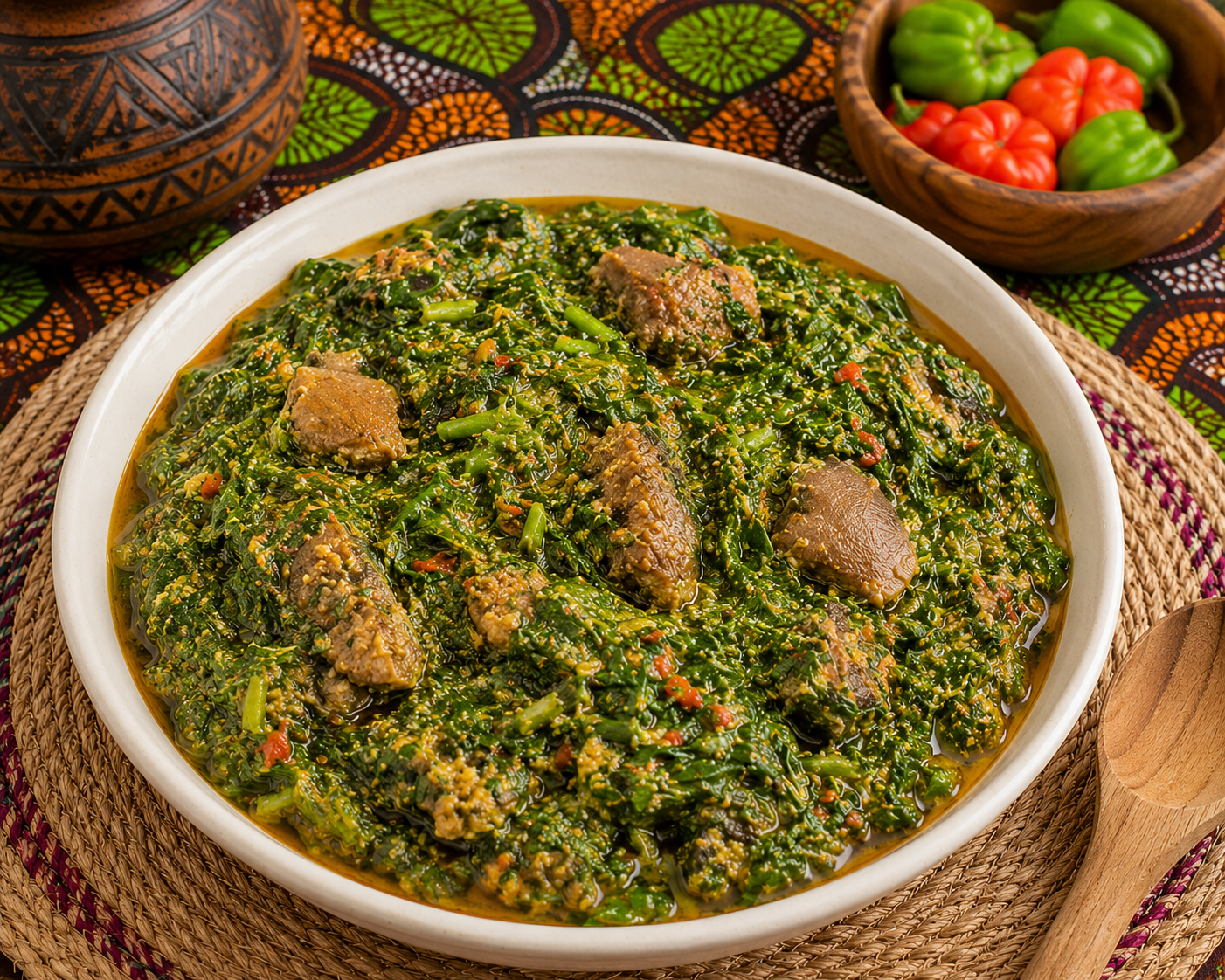
3.1. Universal seasoning Iru gives body, depth, and a rare aromatic intensity, comparable to soy sauce, miso paste, or anchovies: it provides natural umami. Uses: • Added, crumbled, or whole in seed sauces (peanut, okra, spicy tomato…) • Incorporated into thick soups (ogbono, ewedu, egusi) in Nigeria • Aromatic base for mafé (peanut stew), sauce toro, soumbala-fonio • Flavors “riz gras” (fatty rice), vegetable stews, leaf preparations (pondu, saka-saka) • Serves as a flavor enhancer in marinades, grilled dishes, smoked fish, porridges, etc. In Nigeria: essential in egusi, obe ata, it defines the identity of efo riro or ayamashe (Green Stew). In Ghana/Togo/Benin: soumbala accompanies light soup, abobo, palaver sauce, ablo, porridges. In Burkina/Niger/Mali: pounded patties added as “dippers” to millet balls, fonio, tô. 3.2. Festive, family, or market dishes A “real” dish from the market mamas would not be authentic without Iru – it is the scent of home, of “eating well,” the taste of returning to the village, the art of the cooking pot.
4. NUTRITIONAL VALUE AND HEALTH
4.1. Nutritional profile Iru/soumbala is a powerhouse of plant proteins (30 to 40%), rich in essential amino acids, fiber, potassium, iron, calcium, magnesium, B vitamins, C, and antioxidants. It also contains enzymes produced during fermentation, which make certain nutrients more bioavailable and improve digestibility. It is an ally in the fight against malnutrition and famine, particularly during lean seasons, to supplement millet, cassava, or yam, which are poor in essential amino acids. 4.2. Recognized traditional and scientific virtues • Promotes digestion, regulates intestinal flora (natural probiotics) • Lowers blood pressure, balances cholesterol • Renews the microbiota, aids assimilation • Prevents protein and mineral deficiencies Its fermentation reduces certain anti-nutrients and natural toxins present in legumes.
5. SOCIAL, SYMBOLIC AND ECONOMIC PLACE
5.1. Product of female solidarity The artisanal production of Iru is a lever for empowerment: sales in markets, creation of women's groups, self-production, transmission of power and knowledge, sharing of income. “Preparing Iru means nourishing the community,” mothers say. 5.2. Rituals, ceremonial, traditions Iru is involved in wedding sales, celebrations, and welcoming ceremonies. It is offered to strangers to honor hospitality, accompanies fertility rituals, reconciliation, and initiation rituals (enthronement, funerals). 5.3. Sign of identity, of terroir The quality of a family's or village's Iru, the recognition of its scent, its texture, signify its origin, the “hand” of the cook. Each region (Yoruba, Mossi, Senufo, Mandingue…) has its variations, its secrets, its small cults.
6. REGIONAL VARIATIONS AND MODERN ALTERNATIVES
6.1. Substitutes and variations Apart from the néré tree, other seeds can be used if the tree is absent, rare, or protected: soybean seeds (ogiri n’egusi, Nigeria), pumpkin seeds, African peas, or even fava beans, depending on the region. 6.2. Industrial competitor Traditional iru sometimes recedes in the face of the success of industrial bouillon cubes, which are cheaper, easier to transport, but also much less healthy. Many nutritionists, chefs, and “African food” activists advocate for a return to natural soumbala/iru, for health and the valorization of heritage. 6.3. Ready-to-cook Iru and diaspora With globalization, iru is exported in sachets, dried, in paste form, or freeze-dried. Afro-fusion chefs are reinterpreting iru in vinaigrettes, spreads, and aromatic creams.
7. CHALLENGES AND INNOVATIONS
7.1. Resource protection (threatened néré) Overgrazing, logging, and bushfires threaten the regeneration of the néré tree. NGOs and local groups promote replanting, conservation, agroforestry, and community management. 7.2. Process improvement • Optimization of fermentation times, • Innovation in containers, preservation, • Modern packaging, hygiene, quality certifications (for export, catering). 7.3. Urban adaptation Afro-urban “fermentation laboratories” are emerging to teach the skill to the urban or diaspora generation, selling Iru/soumbala online and in international grocery stores.
CONCLUSION Iru is the memory of Africa's savanna hills, the spirit of the shared cooking pot, the audacity of women entrepreneurs, the power of a millennial tradition capable of reinventing and adapting itself. By perpetuating it, by relearning how to make it, we defend not only the authentic taste of African cuisines but also food sovereignty, biodiversity, social memory, and rural dignity. More than a condiment, Iru is the living salt of conviviality, the signature of shared pleasure — and the pride of a continent that, in a simple fermented grain, has managed to condense the art of transforming, nourishing, and uniting.
Where to find it
Look for the exact food-grade form required by the recipe at markets and specialist shops. Check the product name, ingredients, condition and storage instructions.
Explore further: Cooking tips · Food hygiene and safety advice.
In my books
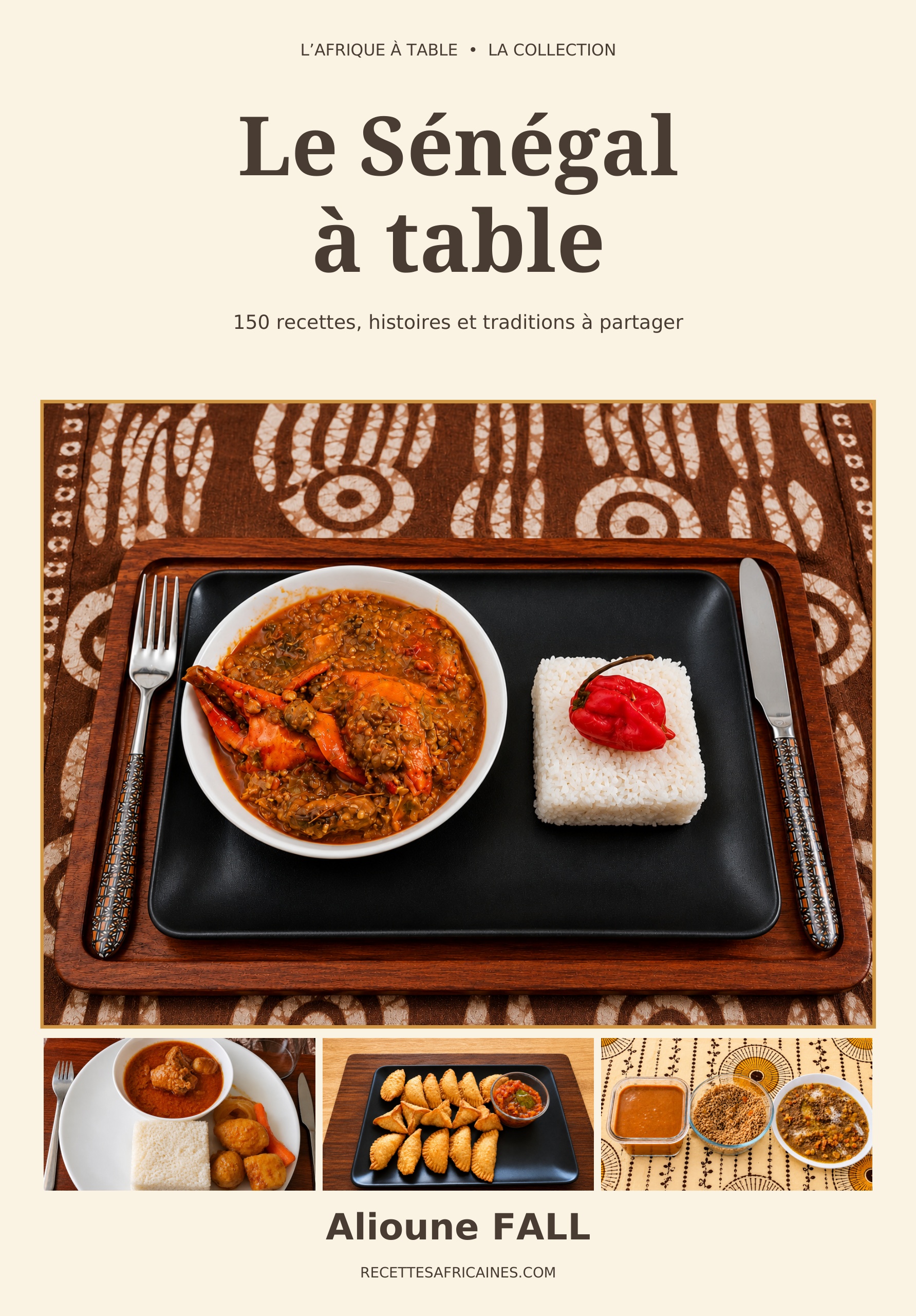
Explore Senegalese cooking with Le Sénégal à table, my collection of 150 recipes, stories and traditions to share. This book is in French, by Alioune FALL.
In the kitchen : Iru
Recipes from the site to put your knowledge into practice:
Discover these cuisines at a restaurant
Explore our restaurant and caterer directories. Choose your destination and check the establishment’s menu to confirm which dishes are offered and available.
Continue exploring
Enjoy discovering ingredients and African cuisines? Join our newsletter. The illustrated PDF 10 sauces africaines incontournables is in French and is offered after confirming a subscription to the French or bilingual edition.