Kankankan
Senegal, Mali, Guinea
Understanding : Kankankan
INTRODUCTION
Kankankan – sometimes called kankan, kenkan, or “smoked meat spice” – is an African spice blend, leaving a smoky, deeply warm, and pungent mark on West African cuisine, particularly in Guinea but also in Mali, Ivory Coast, Senegal, Burkina Faso, and the diaspora. This deep red condiment ignites street food and home cooking, bringing flavor, aroma, warmth, conviviality, and the pride of homemade food. Behind the power of this powder lies much more than a simple flavor: Kankankan is the art of culinary recycling, the genius of women for preserving and enhancing meat leftovers, the taste for complex spice combinations, and the living translation of a history of fire, smoked meat, sharing, celebration, and popular innovation. This detailed description explores its origins, composition, manufacturing method, culinary and social uses, nutritional benefits, symbolism, and even its role in urban and diasporic dynamics, showcasing the importance of Kankankan as an intangible heritage of contemporary African cuisine.
1. ORIGINS, HISTORY, AND SPREAD
1.1. Rural Genesis and Mark of Innovation Kankankan is said to have originated from the peasant necessity to optimize meat leftovers, especially smoked or dried meat during hunting periods, large celebrations, or abundance: very dry meat was pounded, mixed with chili peppers, garlic, onion, ginger, and sometimes nutmeg, then dried again or grilled, creating a concentrated powder, explosive with flavor – sometimes supplemented with bouillon cubes to enhance umami. 1.2. Transmission and Urbanization Long a domestic, rural, or pastoral preparation, Kankankan accompanied, with the rural exodus, Guinean, Malian, Senegalese migrations... to African cities and the diaspora (France, United States, Belgium), where it became a condiment “of nostalgia” or “of pride,” pride in a taste of home inseparable from a plate of rice, attiéké, grilled plantain, or African sandwiches. The condiment has only recently become industrialized: it is now sold in packaged form, in markets and Afro shops worldwide.
2. COMPOSITION AND REGIONAL VARIATIONS
2.1. Basic recipe There isn't one unique Kankankan but a multitude of family recipes; the base, however, often remains: • Pounded smoked / dried / grilled meat (beef, chicken, fish, lamb, or even goat or pork leftovers depending on regions and taboos) • Dried chili pepper (red, sometimes with seeds for potency) • Black pepper or Guinea pepper (in forested regions) • Dried or fried garlic, onion • Fresh or dried ginger • Crumbled bouillon cube (Maggi), salt, and sometimes a little sugar to balance bitterness • Paprika, cloves, nutmeg (optional depending on tradition) 2.2. Ethnic and “Proprietary” Variation In Mali, Kankankan is sometimes enriched with néré powder (soumbala), bitter kola nut, or pounded bay leaves. In Ivory Coast, it is adapted with grilled peanut powder, pumpkin seeds, dried herbs... Guinean “premium” kankankan may contain more meat, bird's eye chili, or rare forest spices – each canton, each “patient mother” has her “secret” recipe.
3. MANUFACTURING METHOD
3.1. The meat The meat is first braised, grilled, or smoked/dried, traditionally over a wood fire, sometimes with spices, salt: it must be very dry, almost crispy, to resist spoilage. It is pounded in a traditional mortar, possibly passed through the oven or pan to dry out any residual fat. 3.2. Other ingredients • Garlic, onion, and ginger are peeled, sliced, often fried or grilled to develop the aroma (option: sun-drying for rural recipes). • Dried chili peppers and pepper are pounded until a fine powder is obtained. • Spices (cloves, nutmeg, bay leaf, soumbala, various seeds) are dry-roasted and added. 3.3. Assembly All elements are pounded until a homogeneous texture is obtained, then incorporated into a pan over low heat for 5 to 10 minutes (to “kill” any residual moisture). It is left to cool, then the kankankan is stored in an airtight jar at room temperature, away from humidity. It keeps for several weeks, ready to use.
4. CULINARY USES AND PAIRINGS
4.1. Accompaniment and Enhancer Everyday dish for street food: • Sprinkled on white rice, attiéké, boiled yam, foutou, grilled plantain • Spread in kagni sandwiches, Afro burgers, local pita breads • Quick sauce to flavor simple steamed vegetables, pasta, or instant couscous 4.2. Festive Aroma and Snack It enhances soup, flavors grilled dishes (choukouya, suya, skewers, chicken bicycle...). Sprinkled on fries at the market, on hard-boiled eggs, or mixed with crushed chili for an ultra-spicy table sauce. As a snack, some consume it directly, like nibbling on “dried meat” or jerky! 4.3. Ingredient in Family Cooking Added at the end of cooking in a bourguignon or tomato sauce to enhance everything, or as seasoning in meat/fish marinade before barbecue. In the diaspora, it is incorporated into lasagna, pizza, omelet, or burger recipes for an African touch.
5. SOCIAL, IDENTITY, AND SYMBOLIC PLACE
5.1. Memory and Peasant Pride For many, Kankankan evokes childhood, the village, the taste “of coming home,” the maternal hand. Preparing “one's own” Kankankan is an act of love, care, a mark of identity and pride. 5.2. Support for Conviviality Kankankan circulates in students' lunchboxes, in travelers' luggage to “eat African everywhere,” it is offered during celebrations, weddings, in packages for family “left in the village.” It symbolizes generosity (“come eat, there's my kankankan!”), modernity, and tradition combined. 5.3. Economic and Emancipatory Instrument Its production and resale, long informal, have become a lever for female entrepreneurship (WhatsApp groups and shops), a support for single women, a windfall during holidays (Ramadan, Tabaski, Christmas, national holidays...). Kankankan is now featured in Afro-food boxes, themed brunches, and urban markets.
6. NUTRITIONAL VALUE AND BENEFITS
• Concentrated animal proteins (if Kankankan is rich in meat) • Long shelf life: does not fear transport without refrigeration • Rich in iron, salt, trace elements (thanks to meat, spices) • Digestive stimulant, antibacterial, moderate antioxidant (due to chili peppers, ginger) • Beware of salt, fat & chili, which can sometimes be very high (moderation recommended: very spicy and salty over time)
7. CHALLENGES, EVOLUTION, AND CONTEMPORARY TRENDS
7.1. Standardization and Transformation The popularity of Kankankan leads to standardization (semi-industrial production): possible loss of local flavor and family recipe. But also hygiene, preservation, traceability, export opportunities in the diaspora and agri-food (sachets, jars, “healthy” variants). 7.2. Fusion Food and Innovations New uses: • Vegan Kankankan (peanut and dried mushroom base to replace meat) • Version with cashews, pumpkin seeds, wild plants • Kankankan-flavored burgers, pizzas, poke bowls, ramen, chips • African barbecue sauces, appetizer dips, protein mueslis 7.3. Food Sovereignty and Local Valorization Promote local meats, the craft of smoking, sustainable management of animal resources, autonomy of spice supply chains, and fair remuneration for women processors.
CONCLUSION Kankankan, born on the embers of the village or in the pot of a populous neighborhood, affirms the power of an African taste that is both ancestral and furiously contemporary. Through its scent, its aromas, the warmth of chili peppers, the imprint of smoked meat, and the magic of artisanal blending, it enhances plates, stirs memory, socializes meals, and carries the pride of a continent capable of transforming necessity into culinary genius. By perpetuating, adapting, and sharing Kankankan, Africa offers itself to the world, on the tip of the tongue and in the palm of the hands, the inimitable flavor of its collective heritage and its future promises.
Where to find it
Look for the exact food-grade form required by the recipe at markets and specialist shops. Check the product name, ingredients, condition and storage instructions.
Explore further: Cooking tips · Food hygiene and safety advice.
Search Amazon.fr — affiliate link →
Check availability and delivery on Amazon.fr. Compare ingredients, packaging and sellers.
As an Amazon Associate I earn from qualifying purchases.
In my books
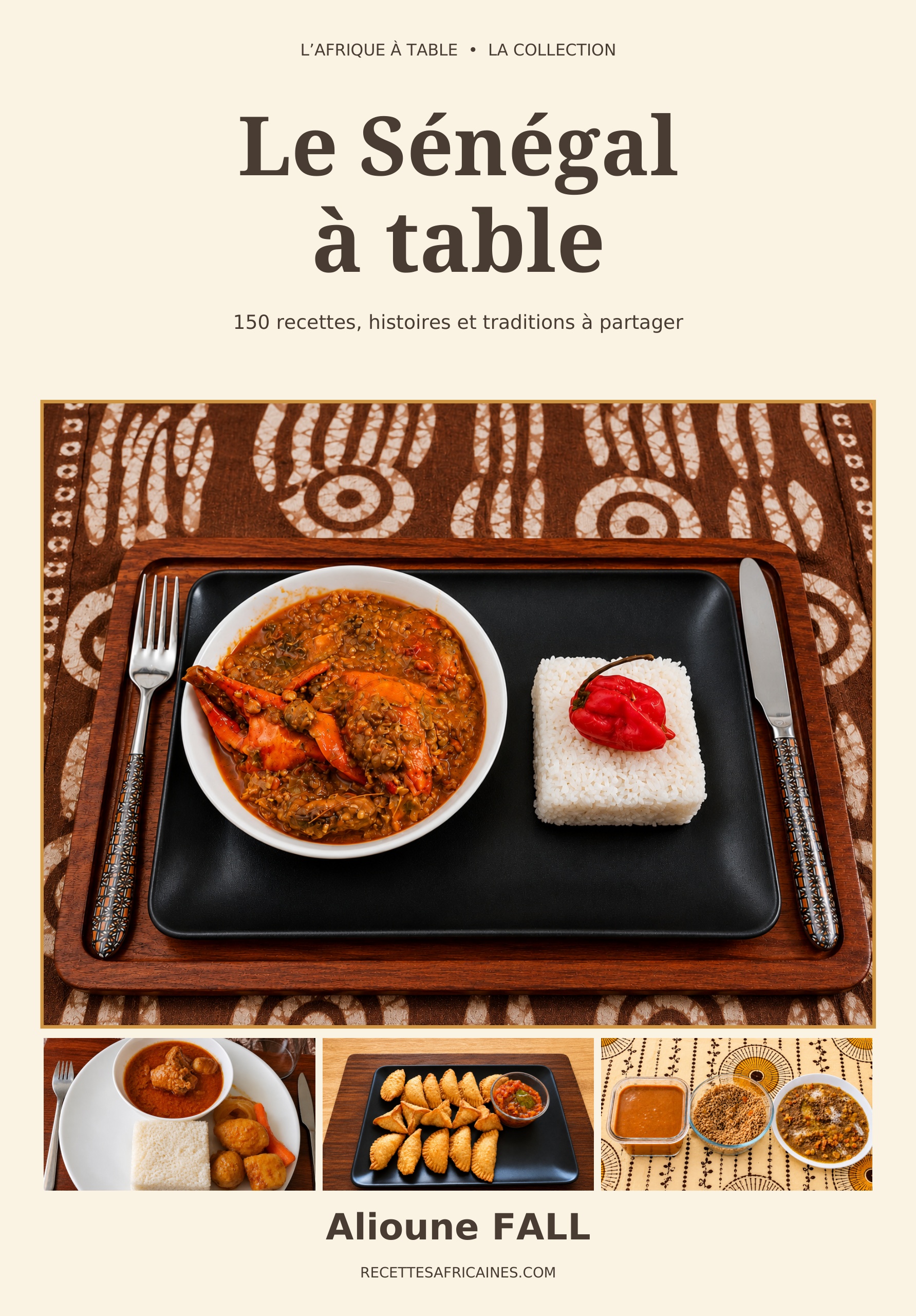
Explore Senegalese cooking with Le Sénégal à table, my collection of 150 recipes, stories and traditions to share. This book is in French, by Alioune FALL.
In the kitchen : Kankankan
Recipes from the site to put your knowledge into practice:
Discover these cuisines at a restaurant
Explore our restaurant and caterer directories. Choose your destination and check the establishment’s menu to confirm which dishes are offered and available.
Continue exploring
Enjoy discovering ingredients and African cuisines? Join our newsletter. The illustrated PDF 10 sauces africaines incontournables is in French and is offered after confirming a subscription to the French or bilingual edition.