Ndolé
Cameroon
Understanding : Ndolé
INTRODUCTION
If one had to name a dish that alone symbolizes the richness and diversity of Cameroonian culinary heritage, ndolé would undoubtedly top the list. A true emblem, it embodies the spirit of the land, peasant inventiveness, conviviality, and national pride. Both festive and familial, ndolé is an institution, celebrated by all ethnic groups in Cameroon, honored at festivals, weddings, major ceremonies, and present on the tables of small restaurants as well as the greatest chefs. It has gained recognition far beyond its borders: having become an ambassador of Cameroonian cuisine in Paris, Washington, London, or Douala, it embodies the generalization, creativity, and hospitality of Central Africa. But what does this dish tell us? Why is it the object of so much attachment, variations, and innovations? Let's discover ndolé, its history, its secrets, its variants, and its symbolism.
Prepare this speciality
Choose a detailed recipe, adjust the portions and prepare your ingredients before starting. Our cooking tips and food safety advice complement the steps described in the recipes.
Explore further: Cooking tips · Food hygiene and safety advice.
History and uses
ORIGINS AND ETHNIC ROOTS
The Sawa people and bitter leaves The word "ndolé" comes from Duala, the language of the Sawa peoples, an ethnic group from the Cameroonian coast (Douala region). Originally, it refers to the bitter leaf plant (Vernonia amygdalina), a shrub with dark green foliage, used for centuries to prepare medicinal and nourishing dishes. In Sawa tradition and among the Bakoko, Bassa, Bakweri, and other coastal neighbors, the consumption of bitter leaves dates back to pre-colonial times. These peoples, often fishermen and farmers, accompanied fish, shellfish, or bush meat with local leafy greens, cooked for a long time with peanuts or palm oil. Over time, ndolé has been enriched by multiple influences: the arrival of peanuts from South America, refinement brought under colonization, mixing with other communities and trade products. Each family, each region has added its touch, enriching a basic recipe into a constantly renewed palette of flavors and accompaniments.
MAIN INGREDIENTS OR THE SECRET OF A UNIQUE DISH
- Ndolé leaves (Vernonia amygdalina) This is the pillar of the dish: these bitter leaves, sold fresh, dried, or frozen in the diaspora, contain alkaloids and bitter principles beneficial to health. Traditionally, they are washed then blanched in several changes of water – sometimes up to 7 times – to remove excess bitterness while preserving their unique taste.
- Peanuts The second pillar of the dish, peanuts, introduced to Africa in the 16th century, bring creaminess, richness, protein, and a sweet flavor that balances the vegetable bitterness. They are roasted then ground until they form a dense paste integrated into the sauce.
- Animal proteins Ndolé is a rich dish, to which is added: Beef (often shank or smoked meat) Smoked or fresh fish (carp, capitaine, mackerel…) Shrimp, prawns, crabs, or mussels Beef skin (kanda), tripe, or even snails in some variants
- Seasonings and aromatics Onions, garlic, leek, Penja pepper (Cameroon), fresh chili, salt, Maggi bouillon, palm oil or peanut oil. Some add a hint of tomato or ginger in modern variants.
PREPARATION AND SECRET OF A SUCCESSFUL NDOLÉ
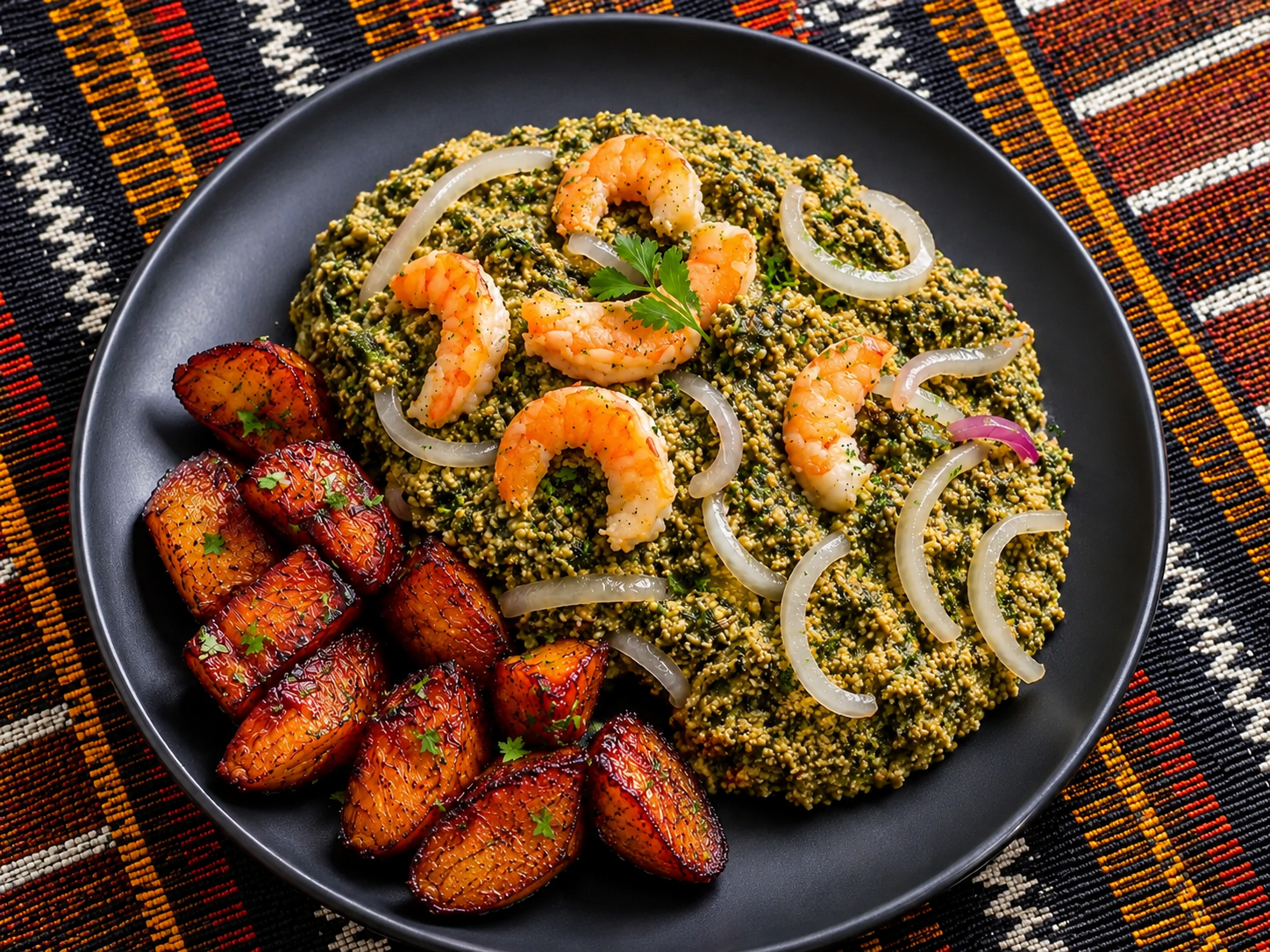
Preparing an anthology-worthy ndolé requires patience, know-how, and respect for the steps: Preparation of the leaves Start by washing, tearing, and blanching the ndolé leaves several times to remove excess bitterness. A trick is to rub the leaves with a little salt or baking soda to speed up the process. In the end, they become tender without losing their character. Cooking the peanuts: The peanuts are roasted, then ground or crushed with a mill or blender, mixed with a little water, then cooked over low heat. This results in a thick paste with an almost oily surface – a sign of proper cooking. Preparation of proteins: Meanwhile, meat, fish, or shellfish are first boiled, grilled, or fried separately, then set aside. Assembly: In a large pot, sauté onions and garlic, then add the peanut paste, a little water, the leaves, and optionally a little palm or peanut oil. Then incorporate the meat, fish, and/or seafood. Everything simmers for a long time to blend the flavors, until a thick, shiny, deep green sauce is obtained. Finishing: Adjust the seasoning, then serve on a platter, briefly garnished with sautéed onions or shrimp.
In my books

Continue exploring the continent’s cuisines with Africa at the Table — 54 countries, 54 iconic dishes, by Alioune FALL. This book is in English.
Explore further
TRADITIONAL ACCOMPANIMENTS
Ndolé is always served with a starchy food, to balance the fiber, calorie, and texture intake. The classics are: Miondo: fermented cassava paste sticks, rolled in banana leaves and steamed Bâton de manioc: a denser paste but of the same origin Ripe or green plantain: boiled, fried, or mashed White rice Yams, taro, potatoes: boiled or mashed In the diaspora, miondo is sometimes replaced by bread or semolina.
VARIANTS AND CULINARY INNOVATIONS
Once reserved for special occasions, ndolé has become democratized and has inspired countless variants: SEAFOOD NDOLÉ: the festive version, with prawns, shrimp, crabs, or mussels VEGETARIAN NDOLÉ: without meat or fish, focusing on peanut paste and a variety of vegetables or mushrooms QUICK NDOLÉ: using frozen leaves and ready-to-use peanut paste, popularized in cities and the diaspora REVISITED NDOLÉ: mini appetizers, rolled in cassava paste, interpreted by Michelin-starred chefs.
NUTRITIONAL VALUE AND BENEFITS
Ndolé is a complete dish: Ndolé leaves: rich in vitamins A, C, B2, iron, calcium, potassium, antioxidants, fiber, and essential amino acids. Peanuts: very caloric, a major source of protein, unsaturated fats, vitamins E, B3, folic acid. Meats/fish/seafood: complete proteins, minerals, omega-3 depending on the species. Starchy accompaniments: energy, satiety, complex carbohydrate intake. This very nourishing dish supports effort, growth, and convalescence. Its high content of leaves and peanuts also makes it an anti-anemic food, recommended for pregnant women, athletes, and growing children… while remaining festive and convivial. Caution: it remains rich (the calorie and fat intake is significant, especially in the festive version).
SYMBOLISM AND PLACE IN SOCIETY
A unifying and identity-defining dish In Cameroon, ndolé transcends ethnic boundaries. Every household, whether Sawa, Bamiléké, Beti, or Hausa, recognizes it as a national jewel. A symbol of hospitality, social success, and extended family, it graces the tables of weddings, baptisms, and funerals. Cameroonians in the diaspora send fresh or frozen leaves around the world to perpetuate the tradition during celebrations.
A PAN-AFRICAN CULTURAL MARKER
While essentially Cameroonian, ndolé has penetrated all of Central Africa: versions are found in Gabon, Congo, Equatorial Guinea, and the Central African Republic, sometimes adapted with amaranth or spinach leaves. In African restaurants in Paris, London, Abidjan, or Brussels, it is one of the first dishes offered and the most appreciated by customers, African or not.
NDOLÉ TODAY: between tradition and innovation Ndolé sparks interest and pride among younger generations. Culinary blogs, TV shows, and social media highlight grandmother's recipes and chefs' reinterpretations. It is the subject of cooking competitions at major Francophone or African gastronomic festivals. In Côte d'Ivoire, Senegal, or Mali, many cooks draw inspiration from it to create hybrid sauces, symbols of cultural blending. Derivative products are emerging: “dehydrated ndolé”, ready-to-use sauces, canned goods, ingredients exported thanks to the growth of the diaspora.
CONCLUSION
Ndolé is a story, an emotion, a sharing: it combines African creativity, a sense of celebration, family transmission, and attachment to the land. Through its aroma, color, and richness, it embodies the promise of a warm home, renewed vitality, and an Africa that shines through its flavors. Both heritage and innovation, it remains the rallying dish for hearts, the pride of an entire people, and one of the most beautiful expressions of African culinary genius.
In the kitchen : Ndolé
Recipes from the site to put your knowledge into practice:
Discover these cuisines at a restaurant
Explore our restaurant and caterer directories. Choose your destination and check the establishment’s menu to confirm which dishes are offered and available.
Continue exploring
Enjoy discovering ingredients and African cuisines? Join our newsletter. The illustrated PDF 10 sauces africaines incontournables is in French and is offered after confirming a subscription to the French or bilingual edition.