Safou
Central and West Africa
Understanding : Safou
INTRODUCTION
Safou, also known as "atanga" (Gabon, Cameroon), "plumier", "African plum", "bush pear" (Anglophone), "bwè" (Ivory Coast), "unu" (Nigeria), "nsafou" (DR Congo), is one of the emblematic fruits of equatorial and Central Africa. Originating from the Dacryodes edulis tree, this oily fruit with fatty, purple or greenish flesh holds a legendary place in traditional cuisine, markets, local economy, and collective imagination. Much more than a simple foodstuff, safou is a marker of identity — a link between rural and urban, a source of family memories and rituals, and increasingly a focus of culinary innovation and local nutritional valorization. Consumed raw, roasted, boiled, fermented, or incorporated into sweet and savory preparations, it accompanies large meals, celebrations, rainy seasons, back-to-school periods, or moments of urban conviviality. In this in-depth description, we will explore the history, botany, preparation methods, social and economic importance of safou, its regional culinary uses, its nutritional benefits, its symbolic dimensions, its supply chains, and the challenges related to its valorization for Africa today and tomorrow.
1. ORIGIN, BOTANY AND DISTRIBUTION
1.1. The fruit and the tree Safou comes from Dacryodes edulis, a tree of the Burseraceae family, reaching 8 to 20 meters in height, with compound leaves, small white or pale pink flowers, and producing clusters of oval or oblong fruits. • Fruit: Safou measures 4 to 12 cm, has a smooth, thin skin that turns from green to purple/black when ripe, and oily, tender, fragrant flesh surrounding a hard central pit. Some cultivars will produce short, fleshy fruits, others thinner and firmer. • Tree: Growing throughout the humid equatorial zone (Atlantic coastal strip of Central Africa, forests of the Congo Basin, southern Nigeria, Ivory Coast, Ghana, western Kenya…), the safou tree is a species more or less domesticated depending on the region, sometimes planted around houses, or exploited through wild harvesting. 1.2. History and symbolism • Safou has been part of the food and cultural pharmacopoeia for generations. It appears in traditional tales, founding myths, initiation and ordeal narratives, and the oral literature of the Bantu, Fang, Beti, Bakongo, Ewondo peoples. • It symbolizes the “rainy season” and the anticipation of abundance (it generally ripens between April and September), the generosity of the mother earth, and the sharing of the home.
2. PRODUCTION, HARVESTING AND SUPPLY CHAINS
2.1. Production • The tree fruits from 3 to 5 years (earlier for grafted cultivars), and can produce up to 800 fruits per year at maturity. • Production is mostly family-based, informal: trees scattered in fields, peasant orchards, forest margins. • Harvesting is done manually: fruits are either picked up after falling, or harvested with a pole or by climbing the tree. 2.2. Supply chains, markets and trade • Women and children are very actively involved in collecting, sorting, and selling. Urban markets in Douala, Libreville, Brazzaville, Kinshasa, Abidjan, Lagos see mountains of safou arrive in season, piled in pyramids or sold by the handful. • Safou are sold fresh, but also in “smoked”, dried, sometimes fermented versions, or processed into paste, oil, butter for export or local use. • A growing portion makes its way to the African diaspora: the fruit travels in suitcases, is sold online, or integrated into African grocery stores in Europe, Canada, and the USA. 2.3. Economic and social importance • Crucial income for many families during the harvest season: school funding, dowry, medical care… • Seasonal jobs in collection, transport, processing, sales. • Safou also structures alliances and solidarity: sharing with neighbors, family, wedding or funeral gifts.
3. CULINARY METHODS AND USES IN AFRICAN CUISINE
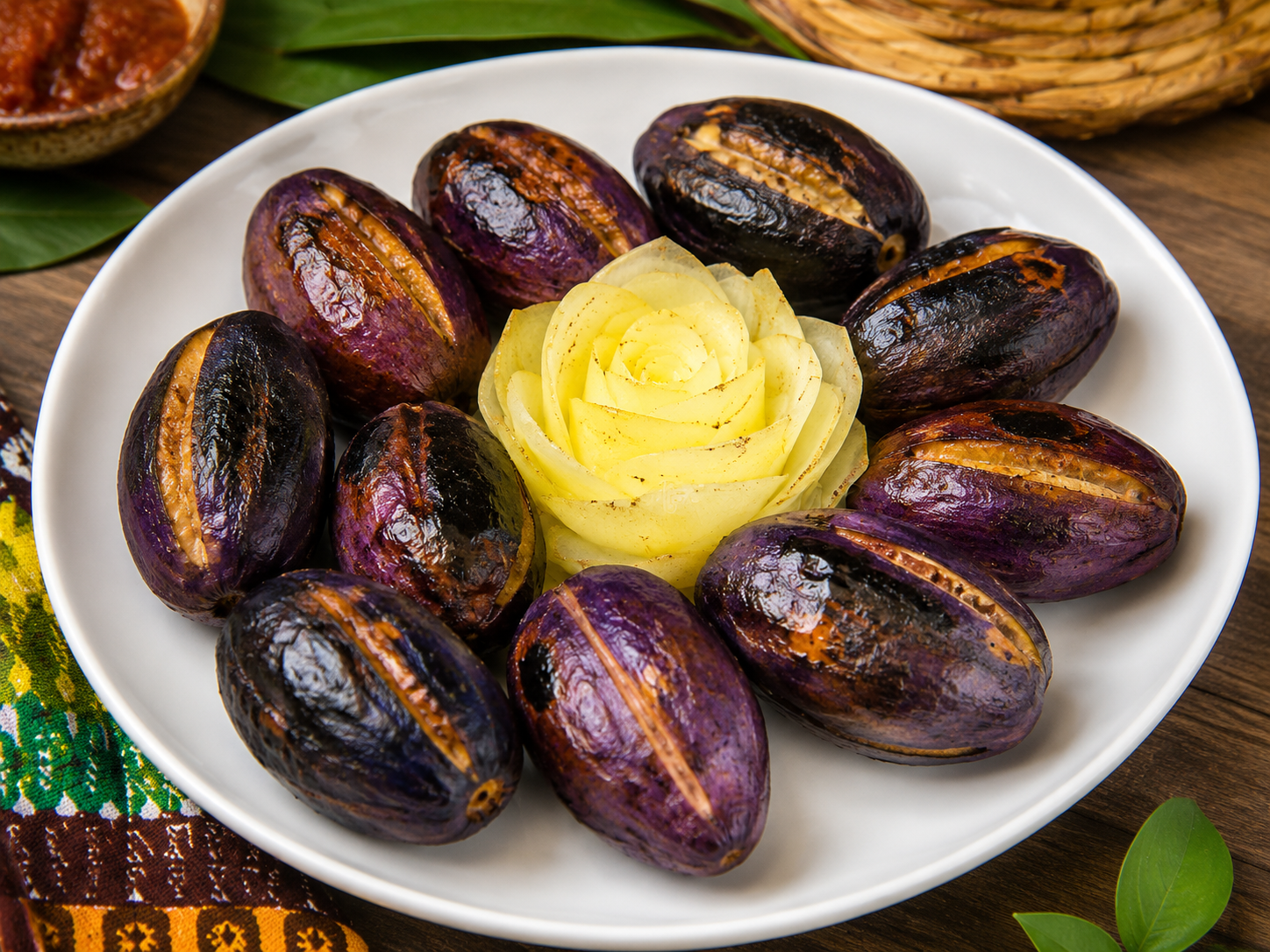
3.1. Traditional preparation methods • Roasted over a wood fire, on embers: whole fruit (often split/scored to prevent explosion during cooking), placed in hot ashes or on the grill. The flesh softens, becomes shiny, oily, almost buttery: this is the most celebrated version of safou. • Boiled in water or steamed, ideal for less fleshy varieties, avoiding burning it: the texture becomes silky. • Accompaniment to cassava: the classic duo is cassava stick (fufu, chikwangue, bobolo) + hot safou – throughout the forest zone of Central/West Africa. • Consumed raw at extreme ripeness, especially certain varieties with very tender flesh. 3.2. Modern integrations • Mashed into a puree for spreads, pancakes, safou bread, or even “Afro” guacamole. • Stuffed with fish, minced meat, vegetables, then baked: a festive variation. • Ingredient for sauces for vegetables or meats (particularly in Gabonese, Cameroonian, and Congolese cuisine). • Desserts: compote, blended smoothie, artisanal ice cream, urban cakes and biscuits. • Safou oil or butter used in Afro-fusion cuisine or pastry. 3.3. Street food and diaspora • At the stall, grilled safou is eaten hot, sprinkled with salt, chili, spices. • It is also sold on skewers, accompanying bread or fritters, and can be found in Afro brunches or African specialty restaurants in major global cities.
4. GASTRONOMIC AND CULTURAL VALUE
4.1. Sensory explosion • Unique flavor: a balance between acidity, bitterness, sweet softness, buttery taste, slightly “cheesy” when ripe. • Texture: creamy, melting, soft, oily, it is equally appealing hot or cold. 4.2. Role in meal structure • Served as a starter, snack, main dish (with side dish), or accompaniment to fish, roasted meat, leaf broth. • Important during major seasonal festivities, family reunions, as a snack for children and adults. 4.3. Identity and transmission • The harvesting and cooking of safou marks the calendar: the safou season announces a period of abundance, solidarity, and sharing. • Knowing how to “grill safou without burning it”, choosing the right fruit, showing the best combination with cassava = recognized skill, family pride, a criterion of esteem in the community.
5. NUTRITIONAL BENEFITS AND ADVANTAGES OF SAFOU
5.1. Concentrate of energy and micronutrients • Very rich in lipids (between 48–67% depending on the cultivar), mainly unsaturated (oleic acid, palmitoleic) • Source of protein (up to 4–5% for the densest varieties) • Good content of fiber, potassium, calcium, magnesium, phosphorus, copper, zinc • Vitamins C, A, E, antioxidants • Presence of pigments (anthocyanins, purple), protective polyphenols 5.2. Health benefits • Ideal food for children, breastfeeding mothers, athletes, elderly adults • Prevention of protein-energy malnutrition in children • Improvement of digestive comfort • Its richness in “good” vegetable fats also makes it an excellent substitute, from a vegan perspective or as an alternative to animal butter 5.3. Traditional medicinal uses • Maceration in decoction to treat certain skin diseases, soothe burns, joint pain (safou oil) • Supposed (traditionally) to strengthen fertility, accelerate lactation, support recovery from certain convalescences
6. SYMBOLIC, SOCIAL AND RITUAL PLACE
6.1. Foods of rites and celebration • Present during dowries, rites of passage, funerals, returns from initiation, safou symbolizes attachment to the land, to family, to the maternal lineage (the tree is planted at the birth of a child, according to some traditions). • It is offered as a gift, accompanies large “wintering” meals, serves as a link between urban family and village. 6.2. Transmission and solidarity • The art of cooking, the selection of varieties, orchard maintenance, innovation are transmitted between generations, structuring maternal relationships, entry into adulthood, the celebration of returning home • Safou serves as a medium for transactions, exchange: bartering for vegetables, fish, bread.
7. SUPPLY CHAIN, MODERNITY AND CONTEMPORARY CHALLENGES
7.1. Agricultural challenges and valorization • Vulnerability of the fruit to breakage, transport, overripeness. • Under-equipment in structured supply chains: few preserves, embryonic industrial processing. • Risk of loss of local varieties due to genetic erosion, deforestation. 7.2. Agroecological and culinary innovations • Selection, grafting, multiplication of high-value varieties (large fruit, thick flesh, maximum lipid content) • Culinary hybridization (safou in urban dishes, pastries, ice creams, fusion sauces) • Emergence of an artisanal or organic “safou oil” sector 7.3. Diaspora and global gastronomy • Safou is entering gourmet grocery stores, global gastronomy (fusion restaurants, African competitions, cookbooks, social networks) • Support for “Afrofood power”, ambassador of biodiversity, showcase of African terroir worldwide
CONCLUSION Safou, a fruit of equatorial generosity, is a living symbol of the richness, memory, solidarity, and innovative power of Central and West Africa. Its melting flesh, its flavors, its versatility, its virtues make it much more than a food: it is a social binder, a family capital, a modern African “superfood” that connects childhood, celebration, land, and the future. Preserving, transmitting, and valorizing safou in its uses and knowledge is paving the way for culinary, nutritional, economic, ecological, and symbolic sovereignty essential for present and future African generations.
ENJOY YOUR MEAL!
© Photo credit: recettesafricaines.com. All rights reserved.
Where to find it
Look for the exact food-grade form required by the recipe at markets and specialist shops. Check the product name, ingredients, condition and storage instructions.
Explore further: Cooking tips · Food hygiene and safety advice.
In my books

Continue exploring the continent’s cuisines with Africa at the Table — 54 countries, 54 iconic dishes, by Alioune FALL. This book is in English.
In the kitchen : Safou
Recipes from the site to put your knowledge into practice:
Discover these cuisines at a restaurant
Explore our restaurant and caterer directories. Choose your destination and check the establishment’s menu to confirm which dishes are offered and available.
Continue exploring
Enjoy discovering ingredients and African cuisines? Join our newsletter. The illustrated PDF 10 sauces africaines incontournables is in French and is offered after confirming a subscription to the French or bilingual edition.