Guinea Pepper (Djar, Selim Pepper)
Senegal, Guinea
Understanding : Guinea Pepper (Djar, Selim Pepper)
INTRODUCTION
Selim pepper (Xylopia aethiopica), sometimes called “Senegal pepper,” “Guinea pepper,” “kili,” “kili poivré,” “djar,” “ëru,” “pébé,” “un gué,” “hwentia,” or “Guinea pepper,” is an emblematic spice of West and Central Africa. Although it shares the word “pepper” with the fruit of Piper nigrum (Asian pepper), Selim pepper is not a true botanical pepper, but its aroma, robustness, and versatility make it one of the oldest, most mysterious, and most valuable pillars of African cuisine. This long, black or grayish, tapered fruit, with a woody, musky, camphorated scent, has traversed centuries. Traditionally used as an aromatic, a remedy, a festive spice, it marks dishes from Senegal to Nigeria, from the banks of the Senegal River to the Cameroonian forest, to urban markets and the Afro-Caribbean diaspora. A true “spice of history,” Selim pepper is reinventing itself today in global gastronomy while remaining firmly rooted in African know-how and heritage. This detailed description traces its origin, botany, harvest, uses, nutritional and medicinal contributions, ritual dimensions, its place in contemporary African cuisine, its economy, and its challenges for the future.
1. ORIGIN, BOTANY, AND SPREAD OF SELIM PEPPER
1.1. Botanical presentation Selim pepper is the dried fruit of a large forest or open savanna tree, Xylopia aethiopica, of the Annonaceae family. • Description: The tree reaches up to 20 m, with elongated, leathery leaves, fragrant yellow flowers, but above all, blackish-gray pods 3–6 cm long, twisted, containing several shiny, hard seeds, enveloped in an aromatic pulp. • Distribution areas: It grows from Senegal to Cameroon, in Sierra Leone, Ivory Coast, Ghana, Benin, Togo, Nigeria, DRC, Congo, Gabon, and as far as Angola. • Harvest: Traditionally wild (foraging in the bush) or semi-cultivated in family gardens or forest orchards. 1.2. Etymology and history • “Selim” is said to come from ancient trading posts (Salioum/Séloum region in Senegal) from where it was exported via the river to Europe. • Its other nickname, "Guinea pepper," refers to the time when Europeans sought an alternative to Indian pepper and when the West African coast was a major exporter of spices. • Traces of Selim pepper can be found in many Arabic manuscripts, texts by Portuguese navigators, in the inventories of the Hanseatic League, and in medieval European pharmacopoeia.
2. SCENT, TASTE, AND PREPARATION METHODS
2.1. Sensory profile • Smell: powerful, woody, camphorated, hints of smoke, resin, musk, licorice, eucalyptus. • Taste: pungent but rounded, warm, balsamic, slightly bitter, finely lemony, very different from black pepper but just as complex. • Texture: the pod is leathery, fibrous; the seeds, more vibrant and peppery, are sometimes extracted, sometimes ground whole with the capsule. 2.2. Preparation and use in cooking • Used dry or roasted (to enhance the aroma), pounded in a mortar or rolled with a rolling pin. • It is added whole or broken into stews, sauces, and simmered dishes to infuse its aroma, or ground into powder to incorporate into spice blends. • It can be toasted over fire, infused in broth, or put in hot oil.
3. PLACE IN AFRICAN CUISINES: RECIPES, USES, AND DIVERSITY
3.1. West Africa • Senegal (thiéboudienne, kandia soup, mafé, yassa…): Selim pepper pod added whole to broths, oily rice, with smoked fish or meat. • Guinea, Mali: essential in fonio broth, rice with sauce, mafé, and in “lafi,” a fortifying broth consumed for breakfast. • Ghana (hwentia) and Nigeria (udja or uda): flavors “soups,” oxtail pepper soup, light soup, palm nut soup, or Egusi and Ogbono sauces. Essential in Ashanti, Yoruba, Igbo, and Ewe cuisine, often combined with other spices (melon seeds, grains of paradise, alligator pepper). • Ivory Coast, Benin, Togo: the aroma of kédjénou, foutou, bushmeat dishes, garba, and fish in sauce. 3.2. Central Africa • Cameroon, Gabon, Congo: recurrent in palm nut sauces, river fish dishes, ndolé, broths, and certain offal dishes. • Sometimes integrated into blends of Penja pepper, pébé (Alligator pepper seed), grains of paradise. 3.3. Diaspora and global gastronomy • Reintroduced into some “afro-foods,” Michelin-starred cuisines, flavored oils, spiced rums, dried meats, fusion broths, pastries, and desserts with “exotic pepper.” • Used in Afro-Caribbean (Jamaica, Trinidad), Brazilian gastronomy, sometimes reinterpreted in creative European or Middle Eastern cuisines.
4. SYMBOLISM AND RITUAL/TRADITIONAL USES
4.1. Spice of rituals, celebrations, and healing • Amulet and blessing: its camphorated and purifying scent makes it a protective tool in rituals (blessing a new home, accompanying funerals, dispelling “evil spirits”). • Offering: offerings to ancestors or served in a chaure, in major religious ceremonies (vodun, Fulani rituals, Muslim blessings). • Support for maternity, convalescence: integrated into decoctions for new mothers, breastfeeding women, or during infant anemia. 4.2. Transmission and heritage Transmitted as a remedy and social marker (gift in dowry, inclusion in a meal of respect for an elder or village chief), it consecrates the culinary mastery of matriarchs and the know-how of healers.
5. MEDICINAL AND NUTRITIONAL VIRTUES
5.1. Traditional pharmacopoeia • Digestive stimulant, antiseptic, anti-inflammatory. • Against colds and flu: Selim pepper infusion in water, milk, or “night herbal tea.” • Decongestant: against coughs, popular formula with honey and lemon. • Warming: “warms the blood” (treatment for postpartum effects, colds). • Rich in antioxidants, minerals, low in calories, no notable allergens. 5.2. Use in cosmetics and hygiene • Maceration in oil as a hair fortifier, massage oil, scented bath, incense, or space purification.
6. MODERNITY, MARKET, AND AGRICULTURAL CHALLENGES
6.1. Economic place • Commercialization in local markets, Afro-diasporic bazaars, exotic shops (“Selim pepper,” “Kili”). • Collection circuits, fair trade, product sometimes exported to France, USA, United Kingdom. • Source of complementary income for rural communities, often women and youth. 6.2. Gastronomic innovation • Growing introduction into Afro-urban gastronomy, food trucks, pop-ups (Selim pepper in gin, chocolate, bread, in marinades, gastriques, pickles). • Cross-use with other spices (pink peppercorns, Penja pepper, grains of paradise…) in “Afrofusion” blends. • Valorization in slow food and fair trade (origin tracer, terroir, highlighting biodiversity). 6.3. Challenges • Wild overexploitation, pressure on resources (deforestation, lack of replanting). • Quality variability, absence of calibration standards. • Competition from Asian peppers, relative disaffection in the face of the rise of industrial cubes, imported spices.
7. LIMITATIONS AND PRECAUTIONS
• Safe traditional use (low dose), but excessive use is rare. • May contain strong compounds (berries), generally non-toxic. • Sector to be structured for quality, traceability, genetic diversity, and sustainable access for small producers.
CONCLUSION Selim pepper is the scent of African memory, a link between the forest, the cooking pot, celebration, prayer, hospitality, and convalescence. Modest in its form, grand in its history, it offers all African and diasporic cuisine a warm, woody, subtly pungent note that enhances rice as much as broth, meat as much as fish, the grandmother's spoon as much as the contemporary chef's toque. Preserving, transmitting, and reinventing Selim pepper means protecting our biodiversity, our tastes, our homelands of speech, care, and gastronomy — yesterday, today, tomorrow.
Where to find it
Look for the exact food-grade form required by the recipe at markets and specialist shops. Check the product name, ingredients, condition and storage instructions.
Explore further: Cooking tips · Food hygiene and safety advice.
Search Amazon.fr — affiliate link →
Check availability and delivery on Amazon.fr. Compare ingredients, packaging and sellers.
As an Amazon Associate I earn from qualifying purchases.
In my books
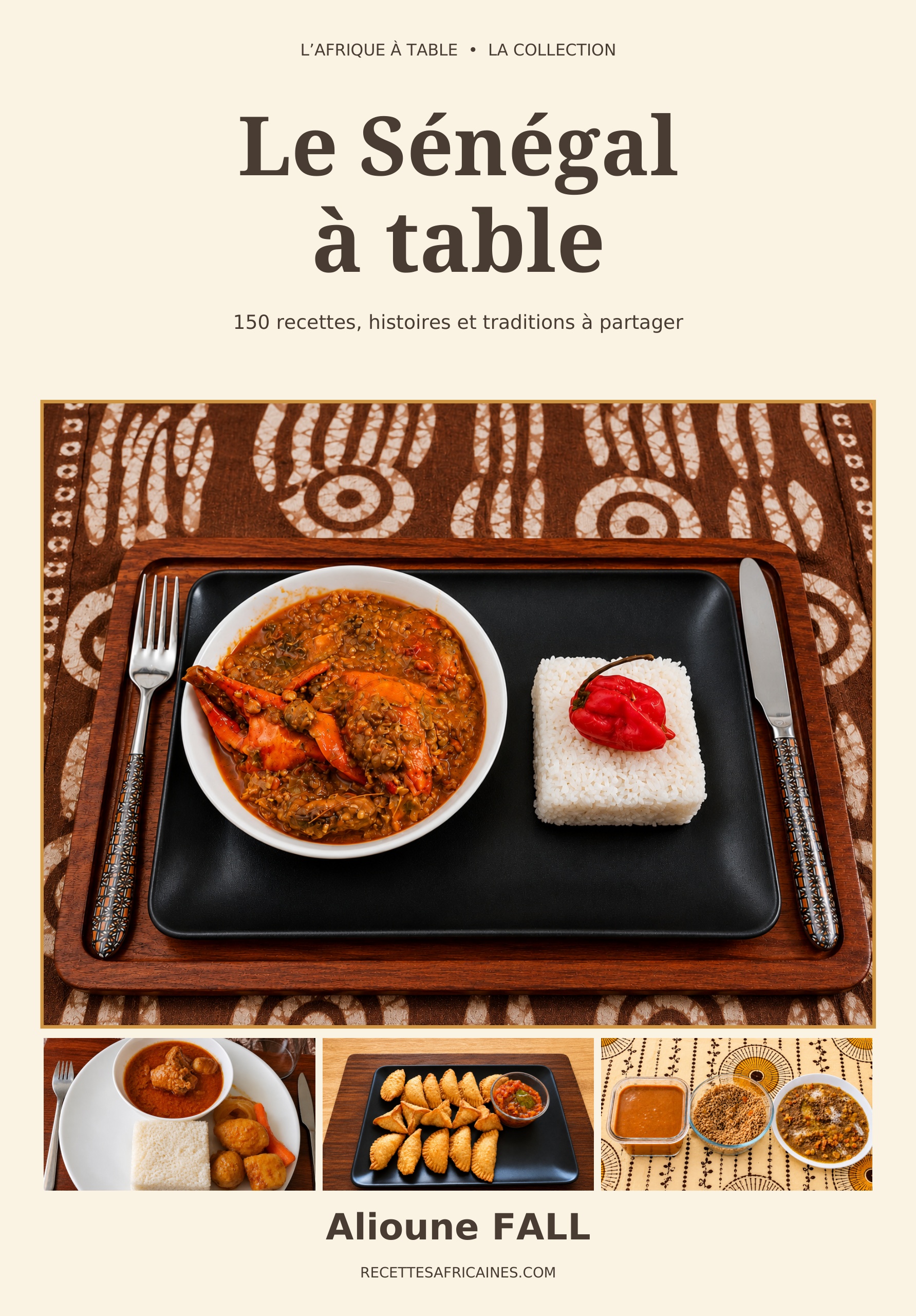
Explore Senegalese cooking with Le Sénégal à table, my collection of 150 recipes, stories and traditions to share. This book is in French, by Alioune FALL.
In the kitchen : Guinea Pepper (Djar, Selim Pepper)
Recipes from the site to put your knowledge into practice:
Discover these cuisines at a restaurant
Explore our restaurant and caterer directories. Choose your destination and check the establishment’s menu to confirm which dishes are offered and available.
Continue exploring
Enjoy discovering ingredients and African cuisines? Join our newsletter. The illustrated PDF 10 sauces africaines incontournables is in French and is offered after confirming a subscription to the French or bilingual edition.