Uda
West Africa
Understanding : Uda
INTRODUCTION
“Uda” is the Nigerian (Igbo language) name for the spicy fruit of the Xylopia aethiopica tree, an African pepper with a warm, smoky, woody, camphoraceous, and peppery aroma. This fruit, sometimes called “Guinea pepper,” “Selim pepper,” “kili,” “pèbé,” “hwentia,” or “djar” depending on the region and language, holds a major historical and culinary place in West Africa (Nigeria, Ghana, Sierra Leone, Cameroon, Benin, Togo), Central Africa (Cameroon, Gabon, DRC, Congo), and even in the Caribbean diaspora. Used for centuries as a spice and flavoring, as well as a medicinal remedy or ritual ingredient, uda defines identity cuisines, structures sensory heritage, and connects African societies through its aromatic and symbolic power. In contemporary Nigerian cuisine, uda is not just a “strong taste”: it is the imprint of tradition, the seal of motherhood, the transversal link that runs through stews from the Niger Delta region to Igbo rituals – from birth to death, from market to family table. Its spread in the West among Afro-Caribbean communities and modern gastronomy also attests to a “reinvention of African terroir.” Here is a detailed description of uda, its history, botany, uses, recipes, symbolism, health value, economy, and future.
1. BOTANY, HISTORY, AND SPREAD OF UDA
1.1. The tree and the fruit • Xylopia aethiopica grows in semi-dense forests, gallery forests, and open savannas from the Gulf of Guinea to the Congo. • Height: 10 to 20 meters; evergreen leaves, yellow flowers, slender habit. • The fruit: elongated, black-brown, rigid pods, 3 to 7 cm long, resembling small curved beans. Each contains several hard aromatic seeds. • Distribution area: Nigeria, Ghana, Benin, Togo, Cameroon, Gabon, Mali, Sierra Leone, DR Congo, parts of East Africa; spread throughout the Afro world through Atlantic trade. 1.2. History and transmission • Used in African pharmacopoeia and royal cuisines since antiquity, mentioned in Arab and European texts (slave, colonial, caravan goods). • Exported from the 16th century to Europe (replacing black pepper when it was rare or expensive); sometimes appeared in old English grocery stores as “Guinea pepper,” “Negro pepper.” • Symbolizes the richness of the “African spice country” (under trade routes, trans-Saharan routes, royal gardens).
2. HARVESTING, PRESERVATION, AND PROCESSING TECHNIQUES
2.1. Harvest • Harvesting takes place in the dry season, when ripe fruits naturally dry on the tree or fall to the ground. The pods are collected, sorted, sun-dried, or sometimes lightly smoked to enhance their aroma. 2.2. Preparation • Dried fruits are used whole, dry-roasted to enhance their smoky/camphoraceous side, then crushed or ground in a mortar. • The pod, hard and fibrous, contains the most aromatic part: sometimes it is used whole for infusion, sometimes it is broken to release the seeds. • It stores easily: kept dry and away from light, it retains its aroma for months.
3. PLACE IN AFRICAN CUISINE: USES AND RECIPES
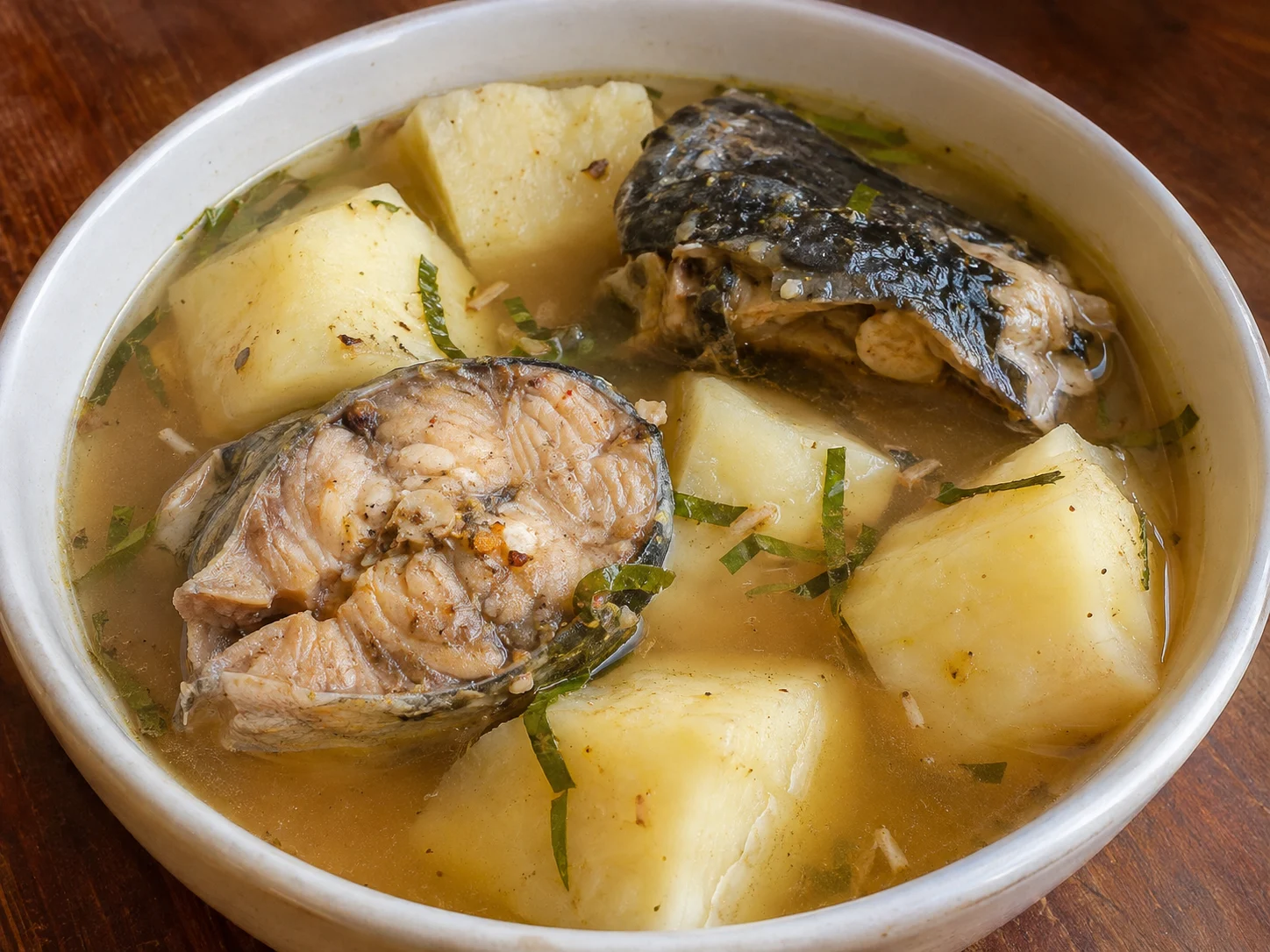
3.1. Nigeria: cradle and innovation In Igbo, Yoruba, and Urhobo cuisine, uda marks the specificity of several major dishes: • Pepper Soup (Uda Pepper Soup): spicy broth of freshwater fish, chicken, beef, or goat, flavored with uda (sometimes pounded with grains of paradise, black pepper, and Negro pepper), served at funerals, baptisms, celebrations, or for postpartum women. • Ofe Nsala (White Soup), Ofe Ogbono: thick soups where uda gives character and warmth. • Okwuru Oghu Uda (meat and river fish stews with uda). • Marinades and sauces for grilled fish, “point-and-kill” (popular restaurants). • Seasoning for porridge (pap, akamu) or yam paste dishes. 3.2. Ghana, Togo, Benin, Ivory Coast • Uda (hwentia, kili, djar…) flavors light soups, palm nut soups, tomato sauces, meat or vegetable dishes, festive sauces (Banku palm nut soup, fufu). • Integrated into the market for fish, crab, shrimp soups, and even kelewele (spicy plantain fritters). 3.3. Cameroon, “pèbé,” “Guinea pepper” • In Bassa, Fang, Bamileke cuisine, it is added to yellow sauces (safou, ndolé), palm oil stews, grilled dishes, skewers. • Essential spice for “mbongo tchobi,” “ndolé,” “koki,” “red soups.” 3.4. Central Africa and diaspora • Flavoring for “leaf” sauces, soups, marinades, grilled fish or poultry, infusions.
4. RITUAL, SOCIAL, AND SYMBOLIC PLACE
4.1. Motherhood, birth, women's health • Uda is the ritual spice for pregnant women and new mothers. It “warms the blood,” cleanses the uterus after childbirth, and is prepared in “pepper soup” to be consumed in the first few postpartum days. • This custom extends from Nigeria to Ivory Coast, symbolizing care, protection, and the transmission of maternal vigor. 4.2. Funerals, celebrations, and initiation • Present during rites of passage, purification, funerals, return from hunting, offerings to ancestors or local deities. • Offering uda “pepper soup” is to honor the deceased, celebrate renewal, and belonging to the community. 4.3. Ethnic and family identity • The quality of uda “pepper soup” “identifies” the cook, inscribes a terroir, a savoir-faire, a memory.
5. HEALTH BENEFITS AND PHARMACOPOEIA
5.1. Nutritional richness • Xylopia aethiopica provides: alkaloids, tannins, flavonoids, saponins, essential oils (α-terpineol, myrcene, sabinene). • Proven medicinal effects: anti-inflammatory, antiseptic, analgesic, antiparasitic, diuretic, digestive stimulant. 5.2. Traditional uses • Uda pepper soup: “cleanses the belly,” stimulates breast milk, dispels “coldness” after birth, accelerates recovery. • Infusions for colds, coughs, abdominal pain, menstrual disorders. • Sometimes used to treat infertility, sexual impotence, to ward off the evil eye. • Applied as a decoction, lotion, or fumigation. 5.3. Precautions • The powerful aroma and oils should be consumed in moderation. • There is an “unproven” belief about natural contraception: its excess can delay menstruation – hence ritualized consumption.
6. SECTORS, ECONOMY, TRANSMISSION
6.1. Cultivation and markets • Wild or semi-cultivated harvest, little exploited on an industrial scale. • Mainly women manage harvesting, drying, and selling locally and in Nigerian, Ghanaian, Beninese, Togolese urban markets. • Presence in Afro grocery stores, organic markets (Europe, North America), carried by the diaspora. 6.2. Transmission • The recipe for pepper soup (which combines uda, grains of paradise, Guinea pepper, cloves, African nutmeg…) is a secret, valued through transmission. • Women's networks: “mothers’ pepper soup,” festive recipes, rites of passage. 6.3. Modernization and innovation • Emergence of “ready-to-use” spice blends for the diaspora, Afro-globalized restaurants. • Integration into creative cuisine: barbecue, marinades, aromatic oils, jams, “Afrofusion” sauces.
7. DIASPORA AND GLOBAL GASTRONOMY
7.1. Global spread • Nigerian, Ghanaian, Ivorian diaspora: pepper soup popular on the streets of London, New York, Paris. • Integration into blogs, YouTube recipes, Afro-Caribbean restaurants. • Commercialization in hybrid forms (uda oils, “Guinea pepper powder”). 7.2. Creative gastronomy • Michelin-starred chefs, Afro food trucks, exploits of “fusion” street food (uda in ketchup, chutney, hamburger, tartare). • Highly sought-after pairing with fish, seafood, grilled pork, revisited chicken.
8. LIMITATIONS, CHALLENGES, PROSPECTS
• Poorly structured market: dependence on wild harvesting, risks of over-exploitation/deforestation. • Fluctuating quality, lack of standardization: agroforestry must be promoted, terroirs preserved. • Still low recognition by the young urban generation and international cuisine (outside Afro circles, lack of guides, organic valorization). • Great pharmaceutical and aromatic potential, but a fragile sector without support, documentation, adapted public policies.
CONCLUSION Uda is not just a simple pepper, but the aromatic messenger, the hand of motherhood, the breath of ritual, and the foundation of conviviality in African cuisines. It connects birth, celebration, memory, health, festivity, and mourning. Through its sensory power, its ability to structure taste, memory, and identity, uda embodies the richness, diversity, and vitality of West and Central African cuisine. Preserving, innovating, and transmitting the use of uda means inscribing ancient know-how, family solidarity, the power of the tree and African taste into modernity, around every pot, every dish — in Nigeria, Ghana, in the diaspora, and on all tables where Africa is shared.
Where to find it
Look for the exact food-grade form required by the recipe at markets and specialist shops. Check the product name, ingredients, condition and storage instructions.
Explore further: Cooking tips · Food hygiene and safety advice.
Search Amazon.fr — affiliate link →
Check availability and delivery on Amazon.fr. Compare ingredients, packaging and sellers.
As an Amazon Associate I earn from qualifying purchases.
In my books

Continue exploring the continent’s cuisines with Africa at the Table — 54 countries, 54 iconic dishes, by Alioune FALL. This book is in English.
In the kitchen : Uda
Recipes from the site to put your knowledge into practice:
Discover these cuisines at a restaurant
Explore our restaurant and caterer directories. Choose your destination and check the establishment’s menu to confirm which dishes are offered and available.
Continue exploring
Enjoy discovering ingredients and African cuisines? Join our newsletter. The illustrated PDF 10 sauces africaines incontournables is in French and is offered after confirming a subscription to the French or bilingual edition.