Uziza
West and Central Africa
Understanding : Uziza
INTRODUCTION
At the heart of West African and particularly Nigerian cuisine, the flavor of uziza — whether it's its leaves (uziza leaf) or its fruits ("uziza seeds", or peppercorns — Piper guineense) — embodies the delicate complexity and aromatic depth of the African terroir. Used in stews, soups, postpartum dishes, and even in traditional pharmacopoeia, uziza's influence extends from Nigeria (where it is king in Igbo, Yoruba, Efik, and Ibibio cuisines), Cameroon, Ghana, and into the Afro-Caribbean diaspora. Behind this name lie living traditions, fascinating botany, medicinal virtues, and a strong presence in contemporary African culinary identity. This detailed description explores the origins, botanical characteristics, types of uses, culinary varieties, symbolic and nutritional dimensions, as well as the evolution of uziza's status in modernity and globalization.
Where to find it
Look for the exact food-grade form required by the recipe at markets and specialist shops. Check the product name, ingredients, condition and storage instructions.
Explore further: Cooking tips · Food hygiene and safety advice.
Search Amazon.fr — affiliate link →
Check availability and delivery on Amazon.fr. Compare ingredients, packaging and sellers.
As an Amazon Associate I earn from qualifying purchases.
History and uses
1. ORIGINS, HISTORY, AND BOTANY OF UZIZA
1.1. Botany and Distribution Area Piper guineense is a climbing plant of the Piperaceae family, a cousin of the Indian black pepper (Piper nigrum), but different in its aroma, composition, and use. It grows naturally in the humid forests of West and Central Africa: Nigeria, Cameroon, Ghana, Benin, Gabon, and as far as Congo. Fleshy and robust, it can reach 10 to 15 m in length, with large, shiny, very fragrant leaves. The fruit (or seed), produced after flowering, appears in a compact spike of small, rough, black-brown grains, with a pungent, camphoraceous, sometimes slightly resinous and lemony flavor. 1.2. An Ancient and Vibrant History • Widely used in ancestral Igbo, Efik, and Yoruba cuisines, mentioned in oral literature, culinary tales of the Igbo country, West Cameroon, and in ancient pharmacopoeias. • In the past, uziza pepper served as a currency of exchange, a ritual gift, or a dowry for local noble or royal families. • It traveled from the medieval period on African trade routes and to Europe under the names "West African Black Pepper" or "Ashanti pepper."
2. PRODUCTION, HARVESTING, AND PROCESSING
2.1. Cultivation and Harvest • A robust, undemanding plant, cultivated in polyculture in home gardens or harvested in the wild. • Leaves are harvested at any time (young shoots for more tenderness, mature leaves for strong aroma). • Fruits are harvested at maturity, naturally dried for aromatic concentration, then stored whole or ground into powder. 2.2. Preparation Techniques • Leaves are carefully washed, finely chopped, sometimes blanched, then added at the end of cooking to soups and stews. • Seeds can be lightly toasted, then crushed in a mortar, or added whole during cooking to release their essential oils and powerful aromas. 2.3. Preservation • Fresh leaves should be consumed quickly, but can be dried to retain their aroma. • Fruits can be stored for several months in airtight jars, away from moisture.
3. CULINARY USES AND PLACE IN AFRICAN CUISINE
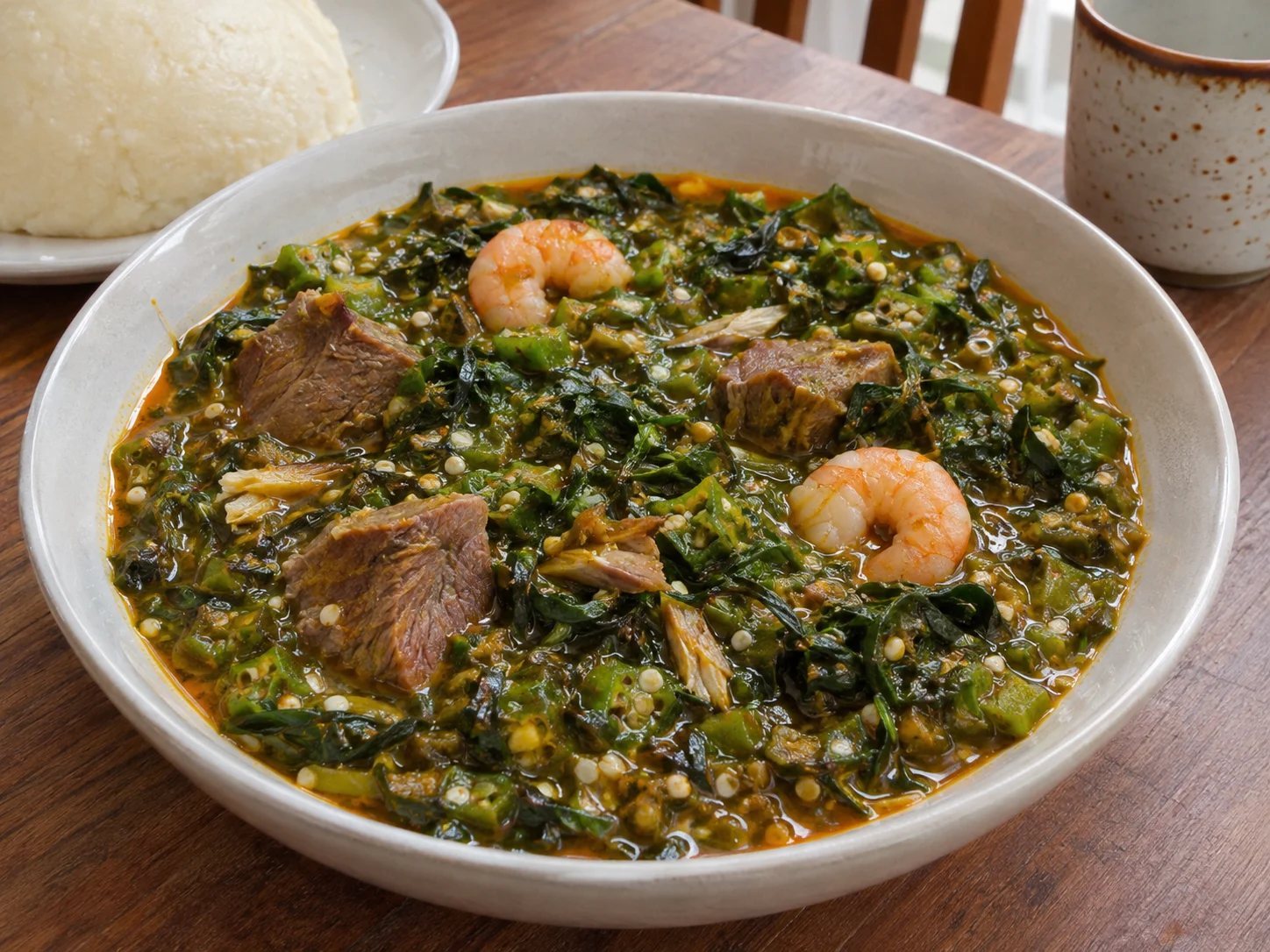
3.1. Nigerian Soups and Sauces • Ofe Nsala ("white soup," Igbo): a thick soup made with fish or meat, flavored with uziza seeds (and often uda/xylopia aethiopica), and garnished with uziza leaves. The fresh, peppery, slightly lemony taste enhances the sweetness of the meat. • Ofe Oha: a major local Igbo soup, combining uziza leaf and oha leaf to create an herbaceous and aromatic dimension. • Pepper Soup (meat or fish): uziza seeds are combined with other "African peppers" (grains of paradise, uda) in the spice blend, giving depth, warmth, and complexity to this festive or restorative broth (often consumed to "warm" or "cleanse" the body). • Egusi Soup: the famous melon seed paste stew sometimes includes uziza leaf for its fresh aroma, and ground seeds to strengthen the blend. 3.2. Various Dishes • Stew, tomato sauces, beans stews: subtle aroma of uziza leaves added before removing the pot from the heat. • Yam porridge, plantain porridge, Okra soup: finely chopped leaves or ground grains provide a "peppery-aromatic" finish. • Grilled meat or fish, or as a marinade for poultry. 3.3. Cuisines of Cameroon, Ghana, Benin • Ndolé (Cameroon): sometimes uziza seeds (dikam kah) are added to enhance the bitterness of Douala's king dish. • Light soup, palm nut soup (Ghana): uziza (hwentia) is used both as a leaf and a grain to achieve the "Afro fusion" flavor. 3.4. Diaspora and Modern Cuisine • Popular in African markets, "Afrofusion" restaurants in London, Atlanta, Paris. • Uziza powder used as a sprinkling spice, in sauces for grills, dips, burgers, or vegan curries. • The uziza-ginger-chili combination is appealing in tiki drinks, mixology, and new pastry.
In my books

Continue exploring the continent’s cuisines with Africa at the Table — 54 countries, 54 iconic dishes, by Alioune FALL. This book is in English.
Explore further
4. SOCIAL, SYMBOLIC, AND HERITAGE DIMENSIONS
4.1. Ritual, Maternity, and Health • Traditionally consumed by women after childbirth to "replenish, warm, and purify the uterus," promote lactation, and accelerate convalescence. • Used in the preparation of "strength soups" for pregnant, breastfeeding, or frail women. • Offered during family ceremonies, funerals, weddings as a sign of friendship, union, and good health. 4.2. Family, Transmission, Identity • Knowing how to cultivate, prepare, and use uziza is part of female transmission, a sign of maternal or grandmotherly expertise. • Secret recipes, subtle dosage, "uziza hand" = respect, honor in the community. 4.3. Rooting in Markets and Peasant Economies • Often sold fresh or dried in urban markets or village stalls. • Market led by women, structuring local incomes and the West African spice network. • Presence in diaspora export channels, Afro e-commerce, organic stores.
5. NUTRITIONAL AND MEDICINAL VIRTUES
5.1. Composition • Leaves are rich in fiber, minerals (iron, potassium, calcium, magnesium), vitamins (A, C, K, beta-carotenes), antioxidants. • Fruits contain essential oils, piperine, limonene, sabinene, myristicin (powerful aromatic compounds). 5.2. Health Benefits • Digestive stimulant: improves digestion, reduces flatulence, bloating, carminative active ingredients. • Anti-inflammatory, antimicrobial effect: traditionally recommended for mild infections, gastric discomfort. • Antioxidant virtues: protects against free radicals, fights cellular aging. • Gynecological benefits: used in decoction to promote postpartum female health. 5.3. Traditional Uses • Herbal teas, decoctions, or poultices. Macerated leaves are used as a herbal tea "against cold," abdominal pain, menstrual disorders. • Also used to "protect the baby from evil spirits" in some ethnic groups.
6. DIASPORA, MODERNITY, AND CULINARY INNOVATION
6.1. Diaspora and Transmission • Uziza leaves and grains transported in suitcases, shared in Afro communities, sold in specialty grocery stores, online shops, and "world food" applications. • A meeting place, a proud assertion of identity, and sensory memory for the second generation of Africans abroad. 6.2. Innovations and Trends • Afrofusion recipes: uziza in mashed potatoes, in quiches, with baked fish, gourmet vegan dishes, cakes, noodles, barbecue sauces. • Ready-to-use spice blends for soups, dips, grills, healthy snacks. • Cooking workshops, Afro master classes, foodie blogs promoting this "100% African terroir" spice. 6.3. Perspectives • Agronomic research to increase productivity and resistance, improve plant quality, organic or fair trade labeling. • Valorization in the agri-food industry, premium sauces, herbal teas, wellness products. • Introduction into trendy urban restaurant menus, food education projects for African children.
7. CHALLENGES AND ISSUES
• Erosion of local biodiversity due to urbanization, risks of loss of prior knowledge transmission. • Still an informal market, lack of quality standards, certifications. • Vulnerability to overconsumption or uncontrolled industrialization: importance of returning to craftsmanship, local culture, respect for ecological rhythm.
CONCLUSION Uziza is a symbol of the power, finesse, and genius of African cuisines. Through the richness of its uses, the beauty of its transmission, the complexity of its aromas, and its beneficial virtues, uziza embodies the spirit of a continent that knows how to combine tradition, creativity, resilience, and discovery. It enhances soup, seals brotherhood around the shared bowl, soothes, heals, tells stories, and invents a unique art of taste in the world. Preserving, reinventing, and transmitting uziza means defending a culinary, farming, family, and medicinal heritage at the heart of African and universal identity.
In the kitchen : Uziza
Recipes from the site to put your knowledge into practice:
Discover these cuisines at a restaurant
Explore our restaurant and caterer directories. Choose your destination and check the establishment’s menu to confirm which dishes are offered and available.
Continue exploring
Enjoy discovering ingredients and African cuisines? Join our newsletter. The illustrated PDF 10 sauces africaines incontournables is in French and is offered after confirming a subscription to the French or bilingual edition.