Yaji
West African Sahel
Understanding : Yaji
INTRODUCTION
Yaji, also known as "suya spice" or "suya seasoning," is the most famous spice blend in West Africa and one of the most distinctive seasonings in Nigerian and Sahelian cuisine. Widely associated with "suya" grilled meats—a star street food dish in Nigeria, Niger, northern Cameroon, Ghana, and the Fulani communities of the Sahel—yaji has today become a much stronger cultural symbol, transcending its primary function to shape the urban, festive, and diasporic culinary identity of an entire region. Both a Hausa heritage, a "master griller's" secret, a versatile condiment, and a driver of innovation, yaji stands out for its aromatic power, its subtle balance of spiciness, warmth, umami, nuttiness, and smoky flavor. It seduces, entices, and brings people together; it has been exported far beyond African borders, inspiring Afro-fusion chefs, new agri-food entrepreneurs, and gourmets worldwide. This text offers a detailed exploration of yaji: its history, ethnoculinary context, composition, artisanal techniques, contemporary evolution, culinary uses, social and heritage place, influence in modern gastronomy, and transmission challenges.
1. ORIGINS AND HISTORY OF YAJI
1.1. Sahelian and Hausa roots Yaji is rooted in the culture of the Fulani and Hausa people, great herders, traders, and navigators of the West African Sahel. As early as the 19th century, with the consolidation of Hausa states and the development of urban markets (Kano, Sokoto, Zaria…), suya appeared on street corners: skewered meat, charcoal-grilled, pre-cut, then coated with the famous spice blend, served hot and thinly sliced. Over time, each "suya seller" (barbecue master) developed their secret recipe, transmitted orally and perceived as a source of local prestige. But the basic structure of the yaji blend gradually became standardized as urban street food and the West African market grew. 1.2. Regional and diaspora diffusion From the markets of northern Nigeria to the outskirts of Lagos and Port-Harcourt, from Abuja to the avenues of Accra, from Ouaga to Niamey, and even to the Afro neighborhoods of London and Paris, yaji became the olfactory and gustatory signature of the Sahel. It accompanies grilled meats, chicken, fish, chikwangue, yam, plantain... and finds its place on the tables of new Afro brunches, food trucks, trendy restaurants, fusion menus, and culinary festivals of the diaspora.
2. COMPOSITION AND PREPARATION OF YAJI
2.1. Basic ingredients (traditional structure) Yaji is a complex blend where each ingredient plays a role as a binder, support, or sensation enhancer: • Ground peanuts or roasted peanut powder: provides texture, binds spices, brings nutty flavor and umami. • African dried chili (ata gungun, bawa, African chili: strong, red, smoked or not): for the pungent and colorful power of the blend. • Dried garlic (powdered or grated): aromatic warmth. • Dried or fresh ginger reduced to powder: powerful, slightly lemony root aroma. • Ground dried onion. • Crumbled bouillon cube (Maggi, Knorr - indicating modernization), salt, sometimes a hint of sugar. • Black pepper, grains of paradise, sometimes Selim pepper (uda), nutmeg, cloves, or cinnamon, depending on families and regions. 2.2. Artisanal formulation
- Roasting: Peanuts are roasted then de-oiled (by pressing or simply decanting the fat). Spices are sometimes toasted, then ground/pounded.
- Mixing: Peanut powder is mixed with spices, salt, and the bouillon cube, to give a sandy, granular but dry consistency (otherwise the marinade would become pasty, preventing a crispy crust).
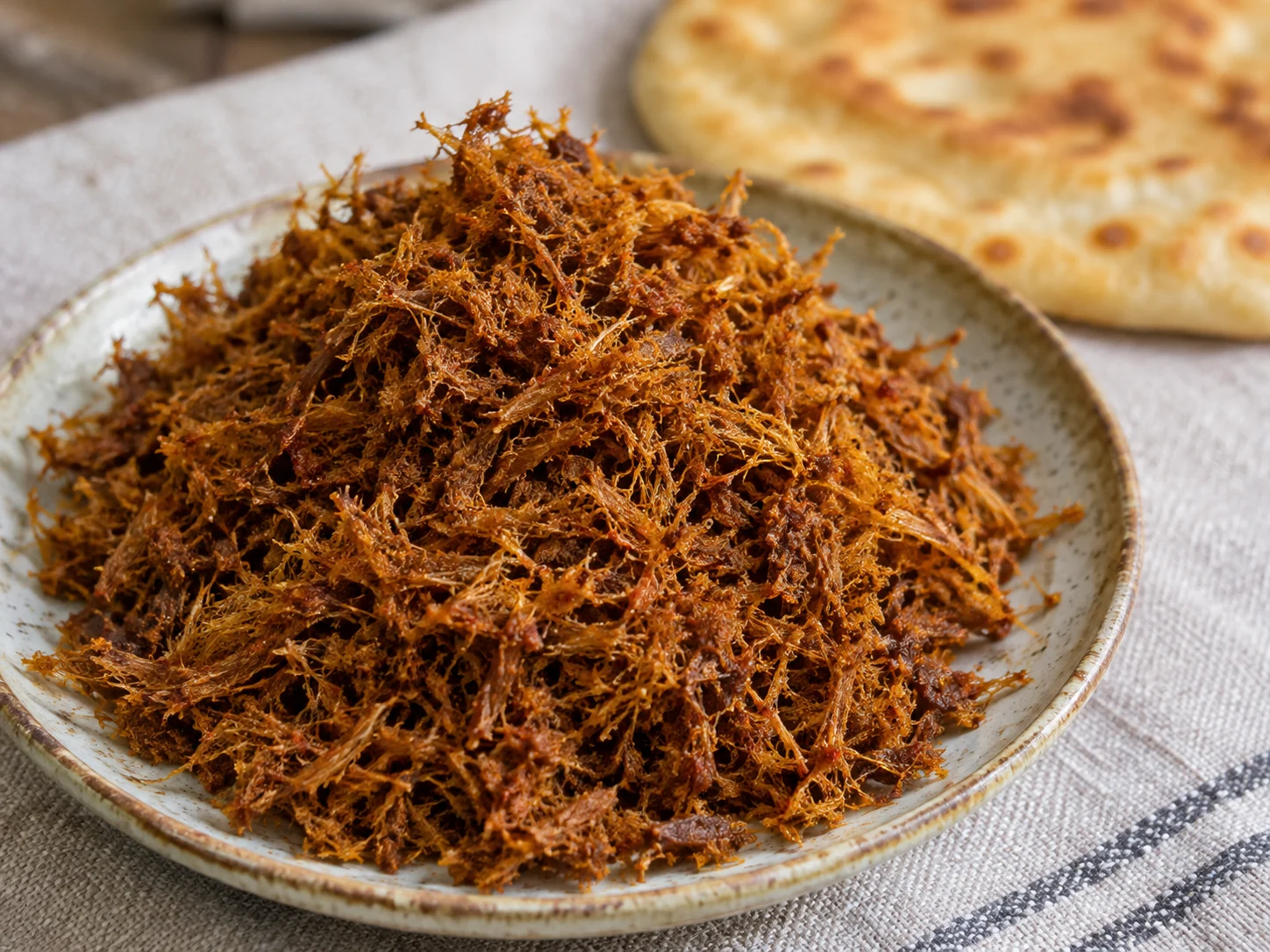
- Storage: The mixture is kept away from humidity, in airtight jars, and can be stored for several weeks. 2.3. Modern variations • Inclusion of paprika, curry, anise, fennel, or dried herbs, for more depth. • Vegan recipes (without bouillon cube), 100% organic, reduced in oil or salt. • Ready-to-use format for export, or in the form of sauce, liquid marinade, or snack (chips, popcorn, dried fruits sprinkled with yaji). 2.4. Aroma and texture Yaji should be hot, aromatic, warm, nutty, and not too greasy, but it should not completely overpower the meat: it caramelizes on the embers, forming a fragrant and colorful crust.
3. CULINARY USES AND ROLE OF YAJI IN AFRICA
3.1. Suya: the king of street food • Classic: thin slices of beef marinated in yaji, skewered, grilled over high heat, crumbled while still hot over a fresh yaji powder pool at the end of cooking (to enhance the spiciness). • Chicken suya, liver, kidneys, tripe, leg of lamb, fish suya, shrimp suya. • Traditional serving: on newspaper, with onion rings, tomato, sometimes fresh cabbage leaves, fried plantain, or yam. 3.2. Innovations and “yaji lifestyle” • Yaji chips: fried plantain, sweet potato chips, sprinkled popcorn. • Yaji mayonnaise, yaji ketchup: as a street-food dipping sauce. • Yaji sauce for hamburgers, pizzas, or as a topping for poke bowls. • Yaji-marinated grilled meats in family cooking: barbecue, dibi, lamb, roasted vegetables. • Yaji soup or sauce: introduction into traditional West African dishes (jollof rice, beans, pasta, suya tomato sauces). • Vegan or Afro-fusion dishes (grilled tofu, mushroom skewers with yaji).
4. SOCIAL, SYMBOLIC, AND HERITAGE PLACE
4.1. Sharing, identity, conviviality • Community meal: yaji is at the heart of an African street ritual (sometimes outdoors, under the moon). Buying suya with friends, family, colleagues, sharing from the same plate, strengthening the sense of belonging, conviviality, and hospitality. • Marker of social ascent and urban success: “lacking suya means lacking prestige.” • Place for political, economic, religious gatherings: the “suya joint” (popular barbecue) is a space for democracy and interclass solidarity. 4.2. Transmission and “chef’s touch” • The secret of “good yaji” is jealously guarded, passed down from father to son (or from mother to daughter in women's workshops in the north). • The art of dosage, grilling timing, the perfect “touch” of powder on hot meat, highlights the chef's talent. 4.3. Rituals and celebrations • Star of Ramadan nights, private parties, ceremonies, after-work events, election vigils, football matches. • Symbol of peace: quarrels are resolved over a shared plate of suya.
5. NUTRITIONAL VALUE, HEALTH, AND DEBATES
5.1. Dietary balance • Source of animal protein (meat, fish), carbohydrates (side dish), healthy fats (ground peanuts). • Micronutrient intake from ginger, garlic, onion, chili. 5.2. Benefits and moderation • Yaji spices (chili, ginger) stimulate digestion, improve circulation, and offer a “booster” effect. • Peanuts: good omega-9s, energy source, sensitive for those with intolerances. • To be consumed in moderation – excess salt/bouillon cube, meat, strong chili, or grilled foods (digestive/cardiac risks). • Aligns with the new health-conscious demand (less salt, vegan, local agriculture).
6. MODERNITY, DIASPORA, AND AFRO-FUSION CREATIVITY
6.1. Diaspora and globalization • Yaji enters spice aisles worldwide: Berlin, Paris, Montreal, London, New York. • Sold as powder in Afro grocery stores, but also e-commerce, cooking kits, food boxes, recipes on global apps. 6.2. Creative gastronomy • Afro-fusion chefs, trendy gourmet tables, pop-up events. • Marriage of yaji with Mediterranean, Asian, European cuisines: tagine sauces, fries, tapas, ice creams, “spicy yaji” cocktails. • Alliance of yaji and plant-based: tofu, vegetables, chickpeas, vegan burgers. 6.3. Female entrepreneurship and local innovation • Actors in local markets, short supply chains, start-ups for premium, organic, traceable yaji sauces. • Culinary workshops, street food festivals, Afro master classes.
7. CHALLENGES, LIMITS, AND PERSPECTIVES
• Industrial standardization threatens the diversity of traditional recipes. • Variable quality (beware of oversalted, industrial blends). • Search for traceability, quality labels, organic. • Need for oral transmission: documentation, books, social media, video. • Highlighting its value against competition from mass spices and globalized franchises.
CONCLUSION Yaji is much more than just a "suya seasoning": it is the scent of the street, the memory of sharing, the link between generations, the flagship of popular, festive, innovative, and identity-defining cuisine of West Africa. From the embers of Kano to the fusion table of Brooklyn, from the market of Lagos to the Pan-African diaspora, yaji lives, evolves, is transmitted, inspires, and connects. Preserving, transmitting, modernizing, and celebrating yaji means defending the creativity, conviviality, independence, and modernity of African gastronomy—in all its spice, warmth, and brilliance.
Where to find it
Look for the exact food-grade form required by the recipe at markets and specialist shops. Check the product name, ingredients, condition and storage instructions.
Explore further: Cooking tips · Food hygiene and safety advice.
Search Amazon.fr — affiliate link →
Check availability and delivery on Amazon.fr. Compare ingredients, packaging and sellers.
As an Amazon Associate I earn from qualifying purchases.
In my books

Continue exploring the continent’s cuisines with Africa at the Table — 54 countries, 54 iconic dishes, by Alioune FALL. This book is in English.
In the kitchen : Yaji
Recipes from the site to put your knowledge into practice:
Discover these cuisines at a restaurant
Explore our restaurant and caterer directories. Choose your destination and check the establishment’s menu to confirm which dishes are offered and available.
Continue exploring
Enjoy discovering ingredients and African cuisines? Join our newsletter. The illustrated PDF 10 sauces africaines incontournables is in French and is offered after confirming a subscription to the French or bilingual edition.