Gnetum (Koko)
Central Africa, particularly the forests of the Congo Basin
Understanding : Gnetum (Koko)
🌿 Short Definition
Gnetum, most often Gnetum africanum in the food trade, is a vine with leathery leaves harvested in humid forests. The leaves are washed and then cut into very thin ribbons before cooking. They have a supple, slightly firm texture, and a subtle vegetal taste that absorbs the flavors of smoked fish, shellfish, oilseeds, and palm oil very well. In the market, "koko" commonly refers to these leaves prepared for cooking.
🧭 Origin and Botanical Identity
This plant belongs to an ancient botanical lineage, distinct from ordinary leafy greens. It grows in undergrowth in the humid tropical zones of Central and West Africa. Harvesting the leaves, rather than uprooting the vine, allows the plant to regrow. Names change according to languages: eru in parts of Anglophone Cameroon, okok in other Cameroonian communities, fumbwa in both Congos, nkumu in Gabon. This diversity of names speaks to the circulation of forest knowledge more than a difference in ingredient.
Where to find it
Look for the exact food-grade form required by the recipe at markets and specialist shops. Check the product name, ingredients, condition and storage instructions.
Explore further: Cooking tips · Food hygiene and safety advice.
History and uses
🍲 Full Introduction and Culinary Uses
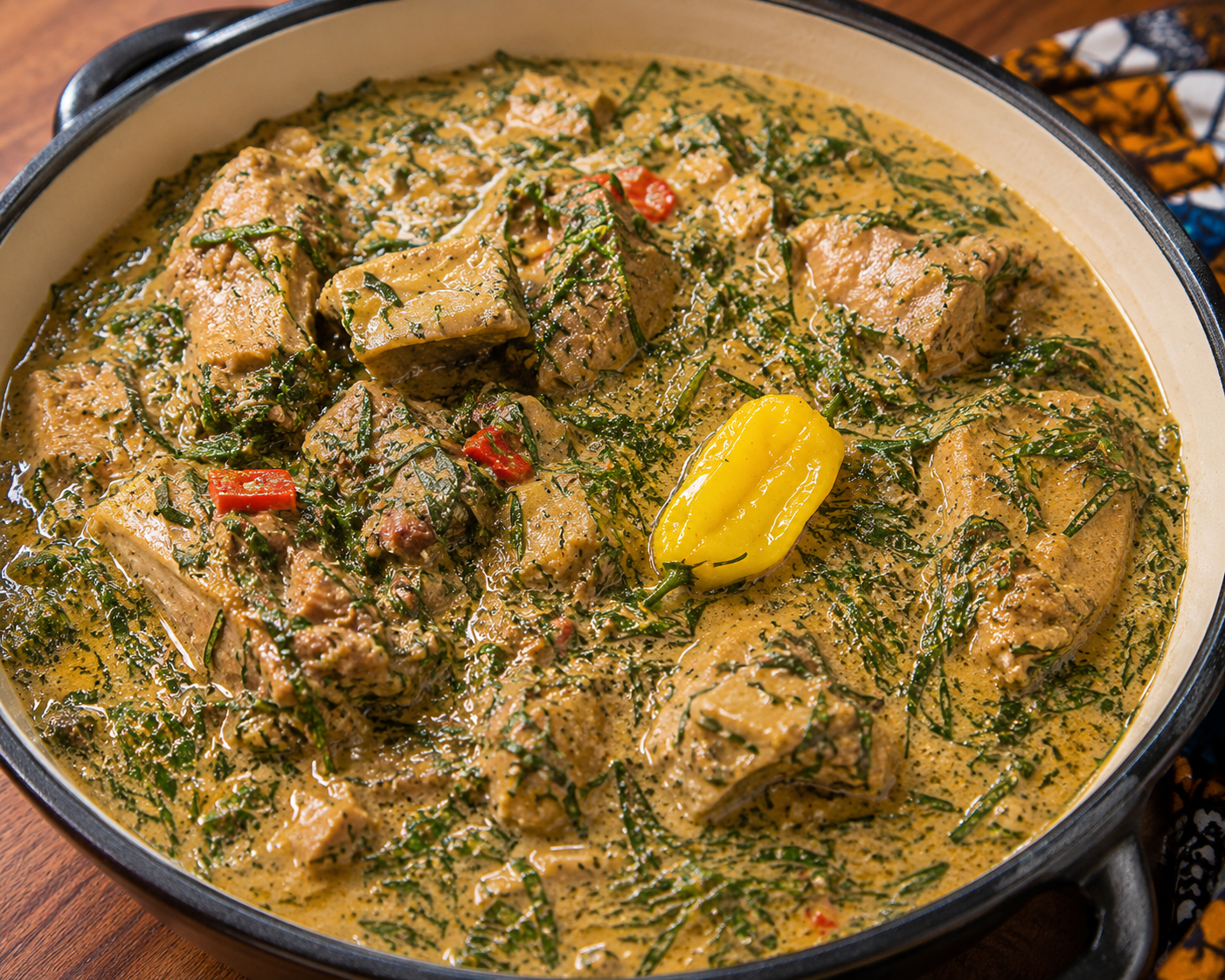
After careful washing, the leaves are very finely shredded to soften during simmering. In Cameroonian eru, they are cooked with waterleaf or spinach, palm oil, smoked fish, meat, or dried shrimp. In okok, they are often bound with a peanut or seed paste, with smoked fish and chili. Gnetum can also enrich a soup, a leaf sauce, or a stuffing. Its flavor is not aggressive: it serves as a vegetal base for smoked, salty, and spicy ingredients. Gentle cooking and progressive seasoning preserve its personality.
📜 Historical and Cultural Context
Gnetum is a product of the forest and the subsistence economy long before it became an urban product. Its harvesting, transport, cutting, and sale support many households, particularly women traders and processors. In Cameroon, eru is present in family meals, ceremonies, and regional cuisine restaurants; its cost can also make it a festive dish. Diasporas have developed circuits for dried or frozen leaves, which has given koko an emotional value: cooking these leaves recreates a table, a language, and transmitted gestures.
🍽️ Accompaniments and Drinks
An eru or okok sauce is readily served with water fufu, corn fufu, cassava couscous, cassava stick, boiled plantain, or gari. These starches allow the sauce to be scooped up without masking the leaves. Grilled fish or braised meat can complete the meal, but the dish is already nourishing when it contains shrimp or smoked fish. For drinks, fresh water, a lightly sweetened ginger infusion, or a light bissap provide freshness; very sweet or alcoholic drinks are not necessary for a balanced meal.
💚 Nutritional Benefits
Like many leafy greens, Gnetum provides fiber and micronutrients, with a naturally low energy density before the addition of fats. The leaves contribute notably to the intake of provitamin A, vitamin C, calcium, iron, and magnesium; their composition varies according to freshness, season, and cooking. Fibers contribute to satiety and digestive comfort as part of a diversified diet. It is preferable to speak of nutritional contribution rather than a remedy: Gnetum does not replace medical follow-up or a varied diet.
In my books

Continue exploring the continent’s cuisines with Africa at the Table — 54 countries, 54 iconic dishes, by Alioune FALL. This book is in English.
Explore further
📊 Nutritional Information for 100g of Plain Cooked Leaves
Published analytical data varies depending on the species, drying method, and recipe. As an indication, 100g of Gnetum leaves cooked without oil provide approximately 30 to 50 kcal, 4 to 7g of carbohydrates, less than 0.1g of natural salt, 3 to 5g of fiber, 0.5 to 1.5g of lipids, and 3 to 5g of protein. They primarily provide carotenoids (precursors to vitamin A), vitamin C, and minerals such as calcium, potassium, magnesium, and iron. Palm oil, peanuts, smoked fish, and seasoning cubes significantly alter the calories, lipids, and salt content of the final dish.
🗺️ Countries where the term is used
In Cameroon, the terms eru, okok, and koko are the most common depending on the region and market. Fumbwa is frequent in the Republic of Congo and DR Congo. Gnetum is also consumed in Gabon, Equatorial Guinea, eastern Nigeria, and Angola. Using the local name, asking if the leaves are fresh, dried, or already shredded, and specifying the desired recipe helps avoid confusion with other forest leaves.
🔎 Synonyms and Associated Recipes
Useful synonyms are eru, okok, fumbwa, nkumu, Gnetum africanum, and koko leaves. On the website, see Eru (recipe 11), Koko Sauce (recipe 498), and Water fufu and eru (recipe 871). These recipes illustrate three ways to construct the dish: rich leaf sauce, adaptation around koko, and classic association with fermented cassava paste.
🛒 Purchase, Storage, and Precautions
Fresh leaves should be green, supple, and free of abnormal fermentation odor. When already cut, check that they contain no sand or hard stem fragments; several rinses in a large amount of water are still useful. In the refrigerator, use them quickly, ideally within two or three days. Dried or frozen leaves are practical off-season, but often require soaking or slightly longer cooking. Store leftover sauce cooled in a closed container and reheat thoroughly before consumption. People on a low-sodium diet will benefit from limiting smoked fish, industrial broth, and added salt.
👩🏾🍳 Cooking Tips
Start by cooking the longest ingredients, such as meat or smoked fish, then add the leaves when the broth is already fragrant. Waterleaf or spinach add moisture; if the sauce seems too liquid, let it reduce uncovered rather than adding a lot of oil. Taste before salting: smoked products are often already salty. A small amount of fresh chili adds depth without overpowering the flavor of the leaves. For a vegetarian version, replace fish and meat with beans, mushrooms, or smoked tofu, and use oil in measured quantities.
In the kitchen : Gnetum (Koko)
Recipes from the site to put your knowledge into practice:
Discover these cuisines at a restaurant
Explore our restaurant and caterer directories. Choose your destination and check the establishment’s menu to confirm which dishes are offered and available.
Continue exploring
Enjoy discovering ingredients and African cuisines? Join our newsletter. The illustrated PDF 10 sauces africaines incontournables is in French and is offered after confirming a subscription to the French or bilingual edition.