Hibiscus
West Africa, Asia
Understanding : Hibiscus
INTRODUCTION
A symbol of freshness, vitality, and conviviality, hibiscus – more precisely its dried floral calyces – holds a unique and recognizable place in African gastronomy, medicine, and rituals. Whether called bissap in Senegal, karkadé in Egypt and Sudan, zobo in Nigeria, foléré in Cameroon, dabileni in Mali, or sobolo in Ghana, edible hibiscus (Hibiscus sabdariffa) sets the rhythm of popular markets, religious festivals, and breaks from the Sahara to the equatorial forest. From a simple thirst-quenching juice to hibiscus jam, from homemade liqueur to sweet and sour condiment, this flower embodies culinary creativity, connection to the land, the transmission of maternal gestures, and Africa's irreducible taste for sharing. But hibiscus is also a medicinal plant, a natural dye, a cultural and commercial asset, and a matter of modernity and health. This detailed text explores the history, botany, culture, processing, culinary uses, nutritional and medicinal values, and social symbolism of hibiscus in Africa, as well as its modern variations and future.
Where to find it
Look for dried food-grade hibiscus calyces in African grocery shops or the herbal tea aisle. Check the ingredients and distinguish them from ornamental plants.
Explore further: Cooking tips · Food hygiene and safety advice.
Search Amazon.fr — affiliate link →
Check availability and delivery on Amazon.fr. Compare ingredients, packaging and sellers.
As an Amazon Associate I earn from qualifying purchases.
History and uses
1. ORIGINS, BOTANY, AND SPREAD
1.1. Species, origin, and adaptation Edible hibiscus, Hibiscus sabdariffa, originates from West Africa and Asia (India, Malaysia): it spread through Saharan and maritime routes to become one of the most cultivated plants in the Sahelian, Guinean, Nilotic, and equatorial territories of the continent. Easy to cultivate, tolerant of dry or poor soils, it has continuously conquered new markets and is now sponsored by the FAO and the African Union as a “resilience plant.” This annual or biennial herbaceous plant, belonging to the Malvaceae family, features large lobed leaves, red or green stems, and above all: superb white, yellow, or pinkish flowers, from which the fleshy red calyx is harvested, forming the basis of all culinary and medicinal preparations. 1.2. Spread and economic importance From Senegal to Nigeria, from Egypt to Madagascar, from Chad to Benin, hibiscus cultivation has integrated into all African agricultural systems, providing supplementary income (sale of dried calyces in local and international markets) outside of the main agricultural seasons (millet, rice, corn, peanuts...). African hibiscus thus fuels regional, trans-Saharan, and export trade (Europe, Americas, Middle East).
2. HARVESTING, PREPARATION, AND PROCESSING
2.1. Harvesting and drying The calyx is harvested when the flower is mature (3 to 4 months after sowing), manually and in several passes, to select only juicy, well-colored, unfaded calyces. The calyces are separated from the core (the seed, sometimes used in animal feed or as an oil source), washed, then dried in the shade on racks or mats, or in the sun. Drying, which is crucial, results in a stable product (storage for several months) that can be used on demand for infusions, jams, syrups, or dyes. 2.2. Processing and preservation The calyces can be: • Used whole (infusion, jam, compote, marinades), • Reduced to powder (pastry, dye, condiments), • Or macerated in sugar or alcohol (artisanal liqueurs, flower wines, fermented drinks). In African markets, women sell dry bissap/hibiscus in bulk, sometimes already cleaned or bagged, or in the form of artisanally pressed paste.
3. CULINARY USES OF HIBISCUS IN AFRICA
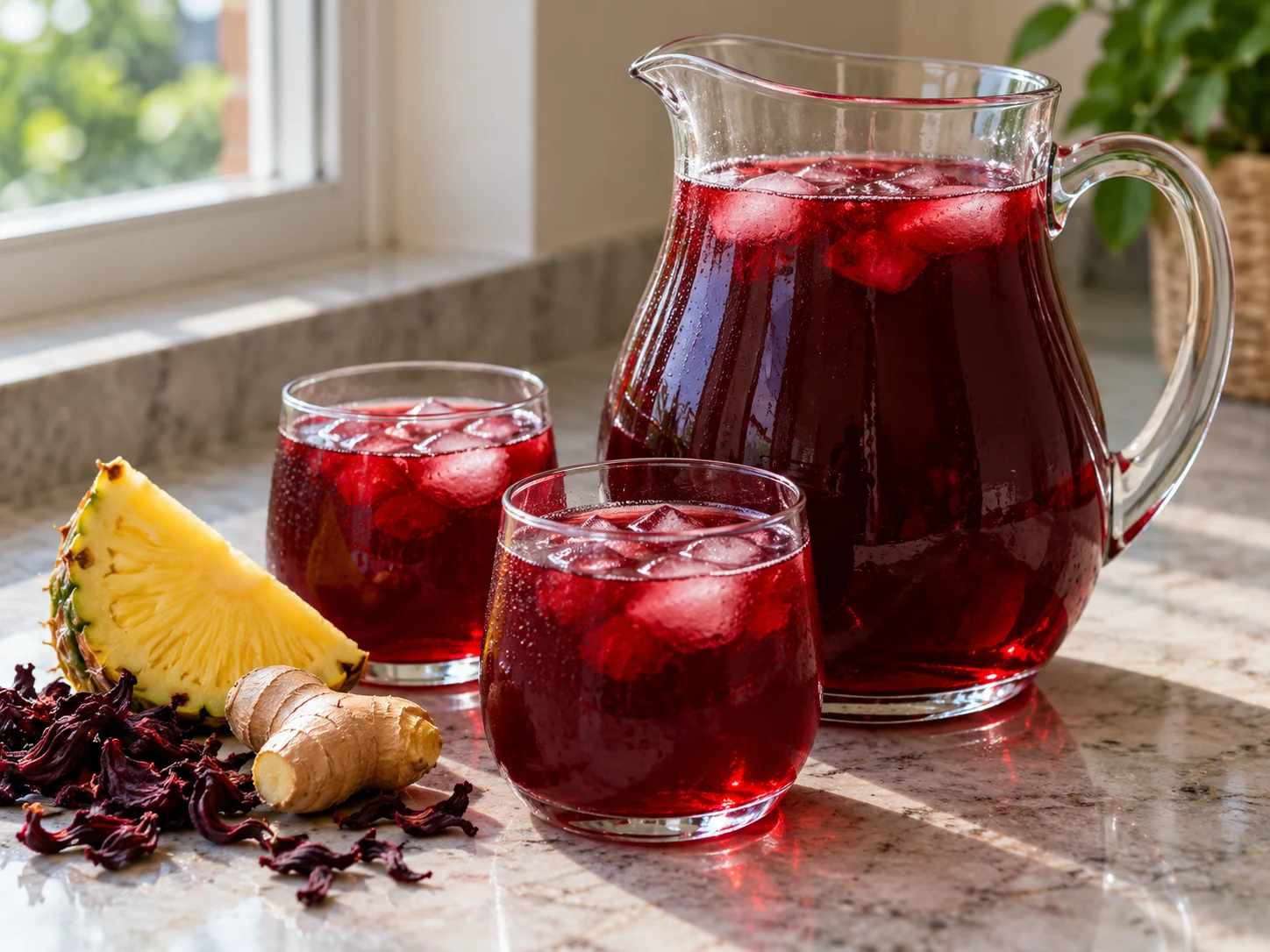
3.1. Iconic drinks Hibiscus juice is what makes the flower famous across the continent. • Bissap (Senegal, Mali, Mauritania, Ivory Coast): cold or hot infusion of dried calyx, filtered, sweetened (or not) and flavored with mint, orange blossom water, vanilla, lime, or ginger — sometimes served iced with fresh mint leaves or pineapple. • Karkadé (Sudan, Egypt): national drink served both hot and cold, at weddings or important meetings, flavored with sugar, sometimes cinnamon or cardamom. • Zobo (Nigeria, Ghana, Cameroon, Benin): often enriched with ginger, pineapple or fruit juice, spicy, colorful, sometimes sparkling, essential for parties and celebrations. • Foléré (Cameroon, Chad): sweet or tangy variation, often mixed with local fruits (baobab, tamarind, lemon). Bissap/hibiscus is served during the breaking of the Muslim fast, weddings, community meals, and visits from friends — it is the quintessential welcome drink throughout West and Central Africa. 3.2. Jams, sauces, sweets Hibiscus calyx cooked slowly with sugar yields tangy jams, highly appreciated in families and in small hotels or urban bakeries. It accompanies local breads, yogurts, and sweetened fonio. In sauces (fish or meat marinades), it provides acidity, color, and fruity aroma. 3.3. Pastries and desserts Hibiscus infusion colors and flavors biscuits, cakes, creams, sorbets, and festive cakes. "Bissap mojitos," ice creams, and entremets are appearing in urban Africa as well as in the diaspora. 3.4. Traditional dye Hibiscus powder is used to color food (couscous, rice, drinks, pies), but also: soap, hair, and fabric ("tie and dye" traditional to West Africa).
In my books
Explore Senegalese cooking with Le Sénégal à table, my collection of 150 recipes, stories and traditions to share. This book is in French, by Alioune FALL.
Explore further
4. ICONIC RECIPES
A. Bissap Juice (basic recipe, Senegal)
- 50 to 100g of dried calyx for one liter of water.
- Boil for 10 minutes, filter, sweeten to taste.
- Add: mint, orange/lemon zest, ginger, clove bud, vanilla, orange blossom water.
- Let cool then serve very chilled. B. Karkadé (Egypt, Sudan)
- Infuse calyces in boiling water for 5-10 min.
- Flavor with cinnamon, sweeten, serve hot or with ice cubes. C. Sobolo (Ghana, Nigeria)
- Bissap + fresh ginger slices + pineapple/mango juice + sugar.
- Infuse, cool, strain, serve iced.
5. NUTRITIONAL VALUE AND HEALTH
5.1. Nutritional richness Hibiscus is a natural source of antioxidants: anthocyanins, flavonoids, polyphenols, vitamin C. It contains organic acids (citric, malic, tartaric), dietary fiber, and beta-carotene. 5.2. Medicinal virtues and uses Traditionally recommended for: • Lowering blood pressure (hypotensive effect documented in biomedical research). • Promoting digestion, soothing infant colic. • Mild diuretic effect, supporting kidney function. • Aiding recovery and freshness during intense heat or fever. • Skin care, fighting cellular aging (hibiscus masks, hair lotions, soap, bath). In African pharmacopoeia, it is used to treat mild infections, strengthen the body after illness, or supplement the nutrition of children and mothers.
6. SOCIAL, RITUAL, AND SYMBOLIC PLACE
6.1. A drink of welcome, connection, and family Offering bissap, zobo, or karkadé is a way to welcome others, demonstrate generosity, and celebrate a successful party or ceremony. Hibiscus juice marks all stages of life: baptisms, weddings, Ramadan, Eid, Christmas, funerals. 6.2. Community transmission From harvesting to selling, from preparation to consumption, hibiscus involves the entire village, especially women, in solidarity chains: self-production, processing, sales, transmission of recipes (dosage, mixing, family "secret"). 6.3. Market and local development The production, processing, and sale of bissap provide an autonomous source of income (bissap sisters, young entrepreneurs), stimulating rural and urban economies, especially among women and youth.
7. MODERNITY, DIASPORA, AND INNOVATIONS
7.1. Afro-fusion cuisine & gastronomy Hibiscus inspires a new generation of African and Afro-descendant chefs: bissap reduction for duck breast or foie gras, chocolate/bissap ganache, shortbread, flavored candies, hibiscus vinegar, cocktails, "pink latte." 7.2. Export and international trade In dried form, powder, stabilized juice, or jam, African hibiscus embraces the superfood, "clean label," organic, and fair trade sectors, conquering European, American, and Asian markets, while maintaining its heritage roots on the continent. 7.3. Agricultural innovations Work on selecting drought-resistant varieties, introducing improved seeds, combating unauthorized pesticides, and training in artisanal and semi-industrial processing aims to seal bissap's place in the agriculture of tomorrow.
8. LIMITATIONS, PRECAUTIONS, AND CHALLENGES
• Risk of over-intensive extraction, soil depletion, necessity of preservation-oriented agricultural policies. • Lack of access to the international market for many small African producers. • Industrial standardization that can impoverish the diversity of recipes.
CONCLUSION Hibiscus, through bissap, karkadé, zobo, and all its African variations, proves to be much more than a flower: it embodies the vitality of Africa, its agricultural and culinary heritage, the strength of its women, the memory passed down from mother to daughter, and the continent's ability to combine tradition and innovation. Refreshing, colorful, subtle, and unifying, the hibiscus flower will long continue to enchant palates, adorn celebrations, and proudly carry Africa's sensory voice, united, creative, and radiant.
In the kitchen : Hibiscus
Recipes from the site to put your knowledge into practice:
Discover these cuisines at a restaurant
Explore our restaurant and caterer directories. Choose your destination and check the establishment’s menu to confirm which dishes are offered and available.
Continue exploring
Enjoy discovering ingredients and African cuisines? Join our newsletter. The illustrated PDF 10 sauces africaines incontournables is in French and is offered after confirming a subscription to the French or bilingual edition.