Mofo Akondro
Madagascar
Editorial collection: RecettesAfricaines.com · Publication director: Alioune FALL.
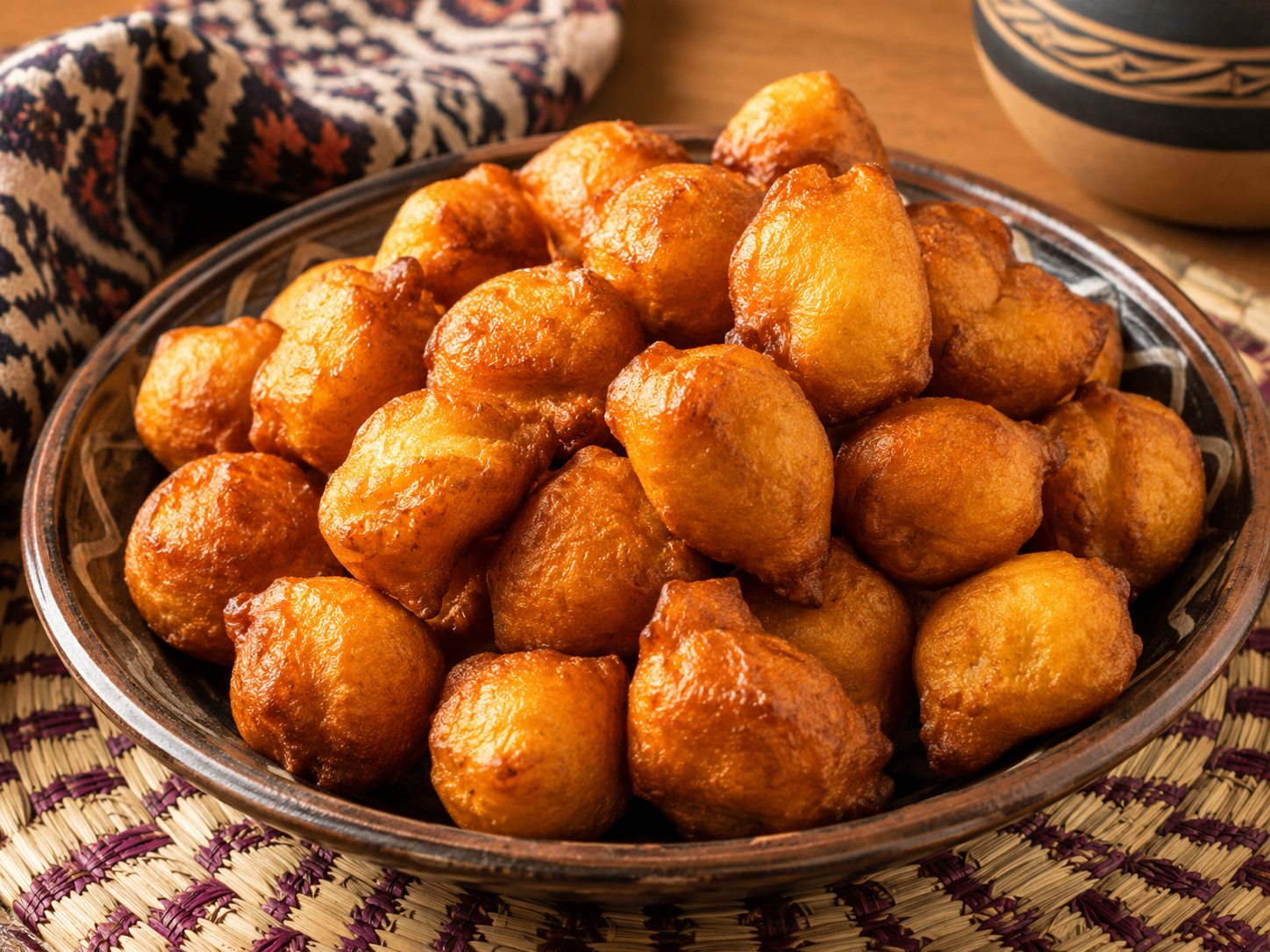
Banana fritters within the mofo family
Mofo akondro is a Malagasy preparation of ripe banana combined with batter and fried. Fruit may remain in pieces or be incorporated more extensively, depending on the version. Mofo covers a family of breads and bites, while akondro here refers to banana. This distinction prevents all mofo being classified as identical pastries. Mofo akondro is understood through the fruit's central role and the contrast between a cooked coating and a softer interior. Shape can vary without removing that principle. It cannot, however, establish which flours, milk or raising agents have been used. The name explains the family, while reliable composition is needed to describe a particular example accurately.
A documented household practice
The Malagasy site Ma.Mi.Na publishes a contribution about mofo akondro showing cut banana coated in batter. It identifies the intended contrast between crisp outside and tender inside. This is an attributed preparation, not a rule applying to every Madagascar household. Other recipes may use different flours and enrichments. The entry preserves this diversity and does not infer an invention date from a recent online publication. Long-transmitted foods may only acquire written documentation much later. Household preparation and the sale of small bites should consequently be described cautiously, without inventing an exclusive local origin. One well-documented version helps explain the food while leaving other family practices open to description.
Fruit ripeness as an initial reference
Ripe banana supplies more than sweetness. Its flesh also softens and can be handled differently from firm fruit. Cutting or mashing it leaves either an identifiable centre or fruit distributed more widely through the batter. This explains varied shapes and textures within the same family name. Brown skin alone does not describe every quality of the fruit: the condition of its flesh and the intended serving matter too. The entry does not prescribe one ripeness stage for every recipe. It emphasises that banana actively affects structure rather than simply decorating a finished fritter. Its preparation determines how much of the fruit remains individually perceptible when the food is eaten.
Coating and batter variations
Batter must adhere sufficiently to surround the fruit while retaining a thickness suited to the intended result. A heavy coating gives a stronger impression of batter; a thinner layer lets banana play a more obvious role. Flour and liquid affect adhesion, flexibility and surface browning. Rice-and-wheat combinations may therefore differ from single-flour preparations. Milk, egg and raising agents cannot be inferred from the name mofo akondro alone. They should be recorded from verified composition rather than attributed to every bite in an image bank. Explaining the interaction between fruit and coating provides a more useful definition than imposing the ingredient list of one familiar recipe on the whole family.
What frying transforms
Frying exposes the coating to hot fat and quickly develops a firmer surface. Inside, moisture from fruit and batter contributes to another transformation: flesh softens and the coating must cook through its thickness. Golden colour alone is not proof that the centre has developed as intended. Piece size and evenness of coating influence the resulting contrast. Skill concerns that balance rather than simply the presence of oil in a pan. Specific temperatures and timings belong in the linked recipe. The entry explains why visually similar fritters can have markedly different coatings and more or less yielding banana centres, even when they share a recognisable outline and a similar surface colour.
Fruit sweetness and contrasting sensations
Mofo akondro combines ripe-banana flavour with browned batter. Natural fruit sweetness may suffice in some versions; added sugar strengthens it without defining every preparation. The surface can be crisp immediately after cooking and soften as moisture moves from inside. This explains differences between a bite eaten promptly and another observed later. A tender centre should not be described as a uniform cream when fruit pieces remain. Additional aromas, where used, complement the profile without erasing banana. A helpful sensory account specifies the balance between fruit, batter and coating instead of merely calling the food sweet. Temperature and time since cooking both help explain the texture actually experienced.
Portions, sharing and serving
Bite-sized pieces allow simple serving, with one or several depending on the occasion. A drink may accompany them without being compulsory to their identity. Snacks, breakfast and afternoon eating are possible contexts rather than one uniform national timetable. Serving affects texture too: stacking hot pieces can retain more moisture than arranging them with more space. That technical observation does not establish a cultural rule. A dictionary describes effects and gestures, while situated testimony supplies the habits of the people concerned. Contemporary adaptations therefore retain a place without being presented as universal traditions. The food and the particular conditions of its presentation should remain distinguishable when comparing examples.
Mofo akondro and neighbouring preparations
Mofo anana incorporates leaves and generally has a savoury orientation that distinguishes it from banana fritters. Mofo gasy commonly involves rice batter cooked in a hollowed pan, with a different shape and heat treatment. These distinctions show that mofo alone cannot identify a food: main material and process must also be considered. Banana fritters elsewhere may share the principle of coated, fried fruit without automatically becoming synonyms for the Malagasy name. Comparison explains technique but misleads when it erases the names and uses of the cuisines concerned. Recognising both the common gesture and the distinct context gives the reader a clearer understanding than treating all related foods as identical.
Reading the recipe and illustration carefully
An illustration can show shape, colour and a cut revealing fruit, without proving the batter's exact composition. Credit should also distinguish documentary photography from generated illustration. For this food, identifiable banana is more informative than an anonymous heap of round fritters. The linked recipe provides a verifiable example and the references lead to attributed Malagasy testimony. Allergen questions depend on the flours and enriching ingredients actually used. Keeping name, structure, serving and limits of knowledge separate allows the entry to explain mofo akondro without copying a recipe method or promising exclusive authenticity. An image helps the reader recognise an example; it is not a substitute for ingredient information or historical evidence.
Explore further
Sources and review
Consulted and reviewed on 19 November 2026.